Cloud Service Types: IaaS, PaaS, and SaaS
Not sure you’re ready?
Take the ~3-minute readiness diagnostic and see where you stand.
When a company decides to build a new factory, executives face a fundamental choice about how much of the underlying infrastructure they want to own and maintain. They could buy the land, pour the concrete, run the electrical grid, and build the assembly lines from scratch—a monumental upfront investment that grants absolute control but demands total responsibility for every broken pipe and blown fuse. Alternatively, they could lease a fully powered, empty warehouse, freeing themselves to focus only on the assembly lines. Or, in the extreme, they could simply contract an existing factory to manufacture their product, paying only for the finished goods rolling off the line.
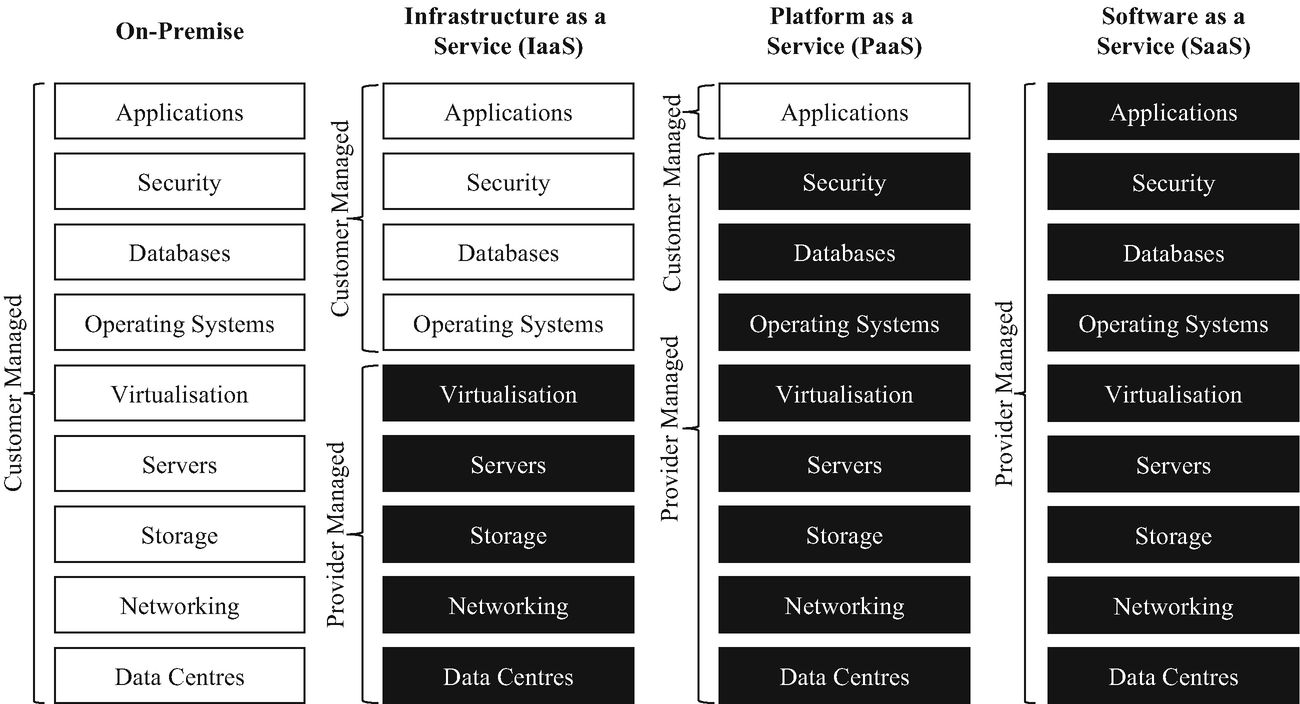
This spectrum of ownership and responsibility mirrors exactly how modern organizations consume computing power. In an on-premises data center, the customer manages the entire computing stack from physical hardware to the application. Moving to the cloud fundamentally shifts this dynamic, allowing businesses to rent varying degrees of infrastructure, platforms, and software rather than owning them outright. Understanding where the cloud provider's job ends and your job begins is not just a technical detail—it is the financial and operational linchpin of modern IT strategy.