Vulnerability Response and Handling
Not sure you’re ready?
Take the ~3-minute readiness diagnostic and see where you stand.
When a critical zero-day vulnerability is announced at 3:00 PM on a Friday, the textbook answer—"apply the patch immediately"—often collides with operational reality. The vendor may not have yet released a patch, or the vulnerable server might process millions of dollars in transactions per hour, rendering a sudden mid-day reboot catastrophic. In the Security Operations Center (SOC), the space between the discovery of a vulnerability and its ultimate remediation is where true security engineering happens. Mastering vulnerability response and handling requires moving beyond mere identification and stepping into the systemic application of compensating controls, disciplined patch management, and rigorous risk calculations.

To handle a vulnerability effectively, we must first understand the tools at our disposal. Security controls are divided into three primary categories: technical, administrative, and physical.
Think of these categories as the materials used to build a defense system:
- Technical controls use technology hardware or software to manage organizational risk. When you configure a firewall rule to block traffic from a known malicious IP, you are wielding a technical control.
- Administrative controls use policies, procedures, and guidelines to manage organizational risk. An acceptable use policy, mandatory security awareness training, and your incident response playbook are administrative. They govern human behavior.
- Physical controls use tangible mechanisms to protect physical access to organizational assets. Mantrap doors, security guards, and server rack locks ensure that a threat actor cannot simply walk into your data center with a USB drive.

Beyond their categories, controls are classified by the function they perform in time relative to an incident.
| Control Type | Operational Definition |
|---|---|
| Preventive | Preventive controls are designed to stop a security incident from occurring. Examples include endpoint antivirus preventing malware execution or a firewall dropping unauthorized packets. |
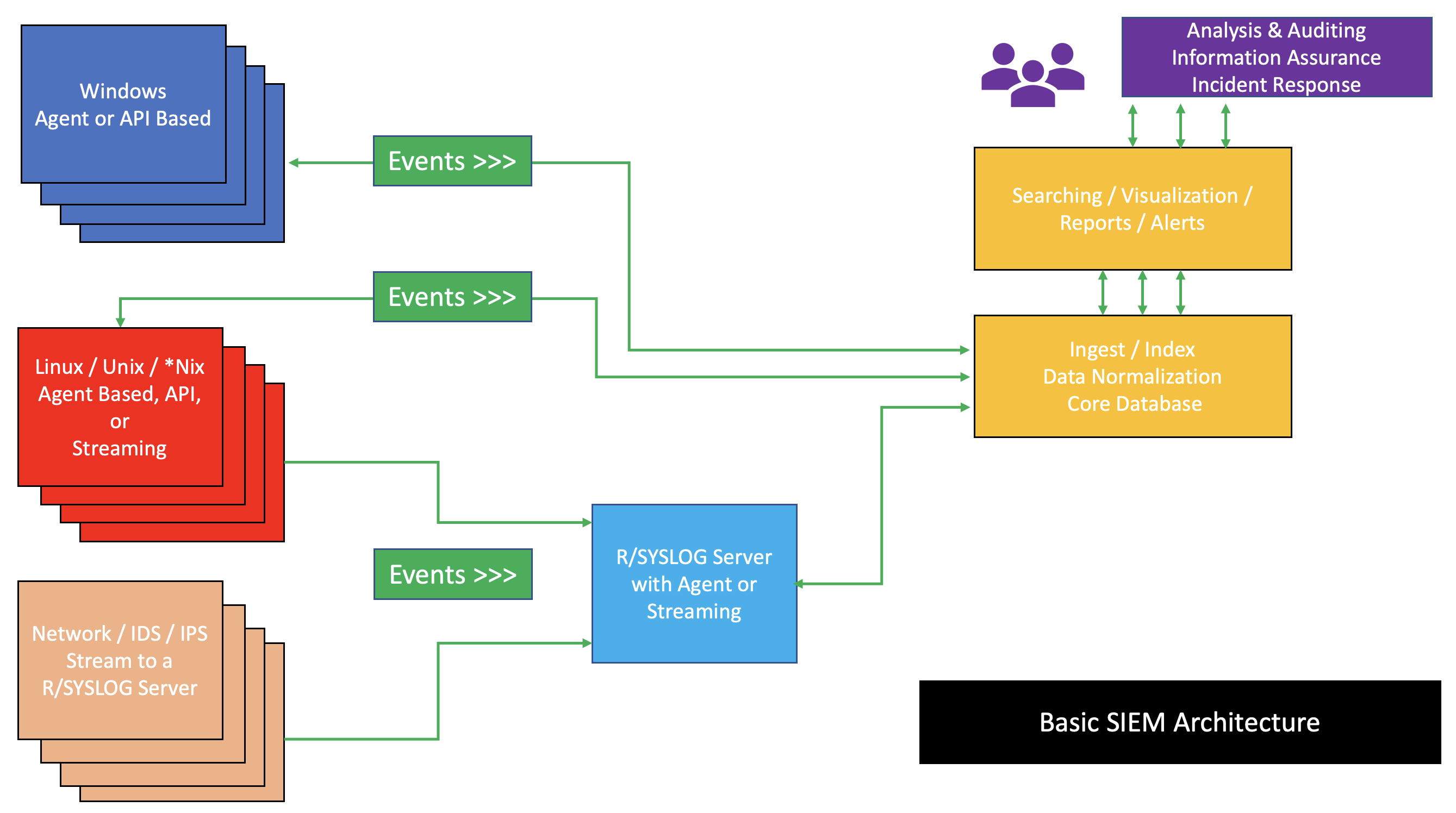
| Detective | Detective controls are designed to identify and record security events after the events have occurred. Your SIEM (Security Information and Event Management) alerts and IDS (Intrusion Detection System) logs are classic detective mechanisms. |
| Corrective | These serve a dual purpose in incident response. First, corrective controls are designed to mitigate the damage caused by a security incident (e.g., automatically isolating an infected host). Second, corrective controls are designed to restore a system to a secure operational state after a security incident (e.g., restoring from a clean backup). |
| Deterrent | Deterrent controls are designed to discourage attackers from attempting to breach a targeted system. While a preventive control blocks the action, a deterrent control dissuades the attempt. A warning banner stating that all activities are monitored is a deterrent. |
The Power of Compensating Controls
In an ideal world, every system would use primary, preventive technical controls. In reality, legacy systems exist, and patches break custom applications. Enter the compensating control.
Compensating controls are alternative security mechanisms implemented when a primary security control cannot be used.
Why do these matter so much to a SOC analyst? Because they are the operational bridge between vulnerability discovery and permanent remediation. For example, compensating controls are often used to protect legacy systems that no longer receive vendor security patches. If you have a Windows Server 2008 machine running a proprietary manufacturing application that the business refuses to retire, you cannot patch it against modern exploits. Instead, you isolate it. Network segmentation is a common compensating control used to isolate unpatched vulnerable systems from the broader network, ensuring that even if the system is compromised, the blast radius is strictly contained.
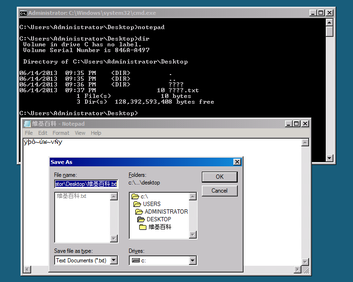
Furthermore, compensating controls are frequently implemented as temporary risk mitigation until a permanent software patch can be deployed. Imagine your organization runs a web application that is suddenly found susceptible to SQL injection. The developers need two weeks to rewrite the code safely. In the interim, a Web Application Firewall can serve as a compensating control for an unpatched web application vulnerability, filtering out malicious SQL queries before they ever reach the vulnerable code.
Remediation is fundamentally a logistics problem. Patch management is the systemic process of identifying, acquiring, testing, and installing software updates. To understand the gold standard for this architecture, professionals turn to the National Institute of Standards and Technology. NIST Special Publication 800-40 Revision 4 is titled 'Guide to Enterprise Patch Management Technologies'. It shifts the focus from merely "applying patches" to integrating patch management seamlessly into enterprise risk management.
The Patching Lifecycle
Deploying a patch without testing is akin to playing Russian roulette with your production environment. A broken patch is just a self-inflicted Denial of Service. Therefore, a patch testing process must be completed in a non-production staging environment before deploying patches to production systems.
Even with testing, production deployments can fail due to environment-specific variables. This is why a patch rollback plan outlines the specific technical steps required to revert a system to the pre-patched state if an update causes system failures.
The timing of these deployments is dictated by the urgency of the threat:
- Standard scheduled patching occurs during pre-approved maintenance windows to minimize disruption to normal business operations. This is your routine "Patch Tuesday" deployment.
- Out-of-band patching refers to the immediate deployment of critical security updates outside of the normal scheduled patch window. When a vulnerability is being actively exploited in the wild (a zero-day), you cannot wait for the third weekend of the month.
To govern this timing, organizations use Service Level Agreements which define the maximum acceptable timeframe for applying patches based on vulnerability severity scores. The math here is straightforward: high-severity vulnerabilities require shorter patch deployment Service Level Agreements than low-severity vulnerabilities. A critical CVSS 9.8 vulnerability might carry an SLA of 48 hours, while a low-severity CVSS 3.1 issue might allow for 90 days.
Crucially, the job is not done simply because the deployment tool reports "Success." Vulnerability response verification requires rescanning the target system after a patch is applied to definitively confirm the remediation. Trust, but aggressively verify.
Configuration Management: Fighting Entropy
Systems naturally drift from secure states as administrators make ad-hoc changes. Configuration management involves establishing and maintaining the designated performance and security attributes of an IT system.
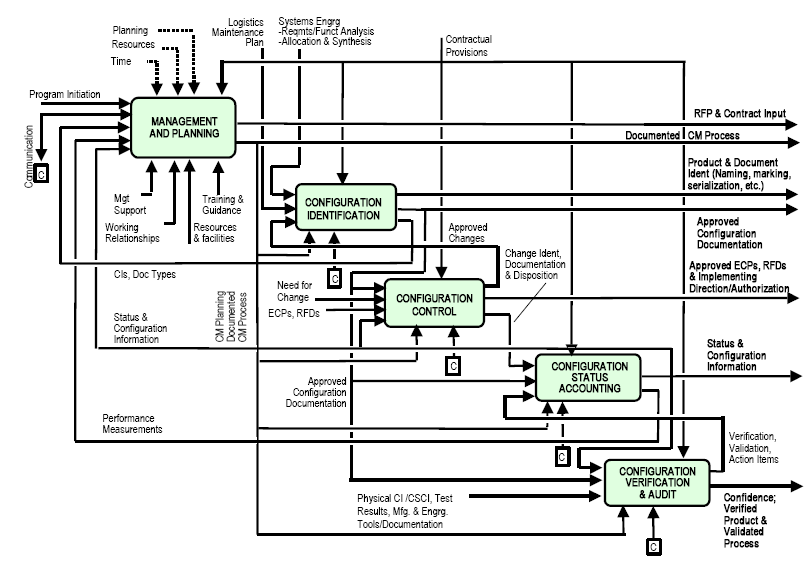
The foundation of this process is the baseline. A security baseline is a formally documented set of minimum security controls required for a specific system or environment (such as disabling guest accounts, enforcing specific cipher suites, or setting password complexity).
To enforce this, we use configuration monitoring, which detects unauthorized deviations from an approved system security baseline. If a system administrator turns off the local firewall on a server to troubleshoot a connection and forgets to turn it back on, configuration monitoring alerts the SOC to this secure-state regression.
To prevent these unauthorized deviations in the first place, change management processes require all system configuration modifications to be documented, reviewed, and approved before technical implementation. Change management prevents the "cowboy IT" culture that leads to self-inflicted vulnerabilities.
In cybersecurity, risk behaves like energy in physics: you cannot entirely destroy it, but you can transform it, move it, or choose to absorb it. Every vulnerability discovered by the SOC requires a business decision on how to handle the resulting risk.
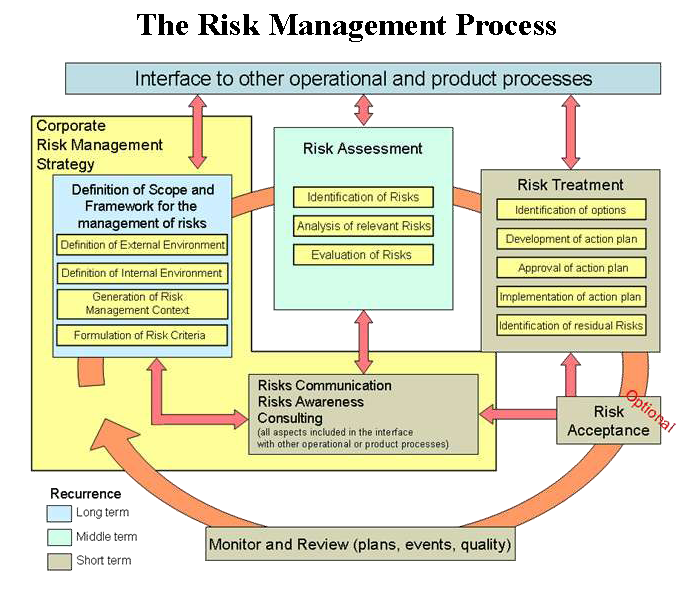
The Four Risk Treatment Strategies
-
Risk Mitigation This is your primary directive as a security professional. Risk mitigation is the implementation of security controls to reduce the likelihood or impact of a specific threat. Patching a system, installing an EDR sensor, and segmenting a network are all acts of mitigation.
-
Risk Transfer Sometimes, the potential financial impact of a risk is too vast to absorb, even after mitigation. Risk transfer involves shifting the financial burden of a realized risk to a third-party entity. Today, purchasing cybersecurity insurance is a primary method of executing a risk transfer strategy. It doesn't stop the breach, but it helps the business survive the resulting ransomware extortion costs, legal fees, and forensic investigations.
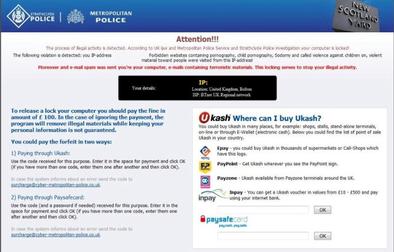
Ransomware attacks extort organizations by locking systems. Cyber insurance is often purchased as a risk transfer mechanism to offset these catastrophic financial damages. -
Risk Avoidance When a risk is simply too severe and cannot be mitigated or transferred effectively, the only mathematical answer is to walk away. Risk avoidance involves discontinuing a specific business activity or technology to eliminate the associated vulnerability entirely. If an outdated FTP server is fundamentally unsecurable and poses a massive risk to customer data, shutting down the FTP server entirely is risk avoidance.
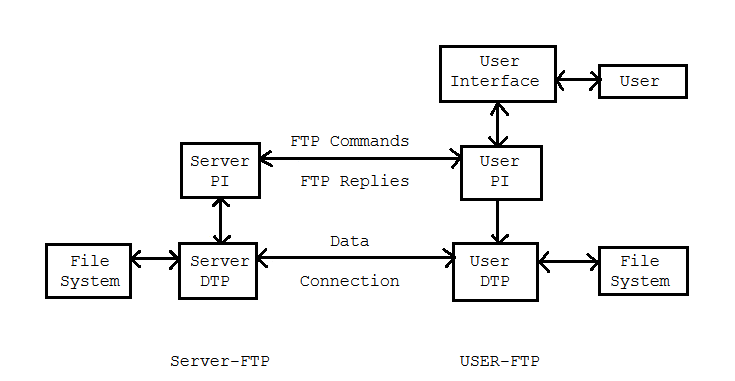
The File Transfer Protocol (FTP) architecture transmits data in cleartext, posing a severe risk. Decommissioning an FTP server entirely is a textbook execution of risk avoidance. Source: FTP model by Ale2903, CC BY-SA 4.0. -
Risk Acceptance We cannot fix everything. Risk acceptance occurs when an organization formally acknowledges a risk and actively chooses not to implement additional mitigation controls. This usually happens when the cost of the control exceeds the value of the asset, or when applying a fix would fatally break a critical business process.
Managing Acceptance: Exceptions and Monitoring
Risk acceptance cannot be an informal shrug of the shoulders. It requires strict governance. When a vulnerability cannot be patched due to operational constraints, analysts rely on risk exceptions. Risk exceptions are formally documented management approvals to temporarily bypass a required organizational security control. By documenting the exception, the organization assigns ownership of that risk to a specific leader.
However, risk is not static. A vulnerability that was considered low risk in January might become a massive liability in June if an automated exploit is released. Because the threat landscape shifts, an organization must continuously monitor accepted risks to ensure the risk exposure level does not exceed the organizational risk appetite. If the exposure grows beyond what the business is willing to lose, the risk must be pulled out of "acceptance" and pushed back into "mitigation."
As an analyst, your mastery of these concepts transforms you from a mere alert-watcher into a true security engineer. You are no longer just finding holes; you are calculating their operational weight and orchestrating the structural controls, patches, and risk strategies required to keep the enterprise standing.