Analysis and evaluation of risk exposures
Not sure you’re ready?
Take the ~3-minute readiness diagnostic and see where you stand.
Imagine constructing a magnificent, multi-story building on a fault line. The architecture might be flawless and the interior design exquisite, but if the foundation lacks seismic engineering, a single tremor will reduce the entire structure to rubble. In financial planning, wealth accumulation is the architecture, but risk exposure—the measure of potential future financial loss resulting from a specific activity, condition, or event—is the fault line.
Before we can confidently recommend a single investment or retirement vehicle, we must engineer the foundation. To do this, we classify these seismic threats into the four primary categories of risk exposures in financial planning: property, liability, personal, and business. If we do not actively identify and mitigate these exposures, we leave our clients' financial life's work completely vulnerable to random chance.
We do not merely guess what might go wrong; we apply a rigorous, systematic framework. The risk management process requires identifying exposures, evaluating the potential loss frequency and severity, selecting a risk management technique, implementing the plan, and monitoring the plan.
Think of this process as the diagnostic engine of your financial planning practice. You cannot protect a client from a threat you haven't identified, and you cannot select the proper insurance product without first evaluating exactly how often that threat occurs (frequency) and how devastating it would be if it did (severity).
Property risk exposures involve the potential for financial loss due to the damage, destruction, or theft of real or personal property. When a client's home or vehicle is compromised, the financial shockwaves travel in two distinct phases.
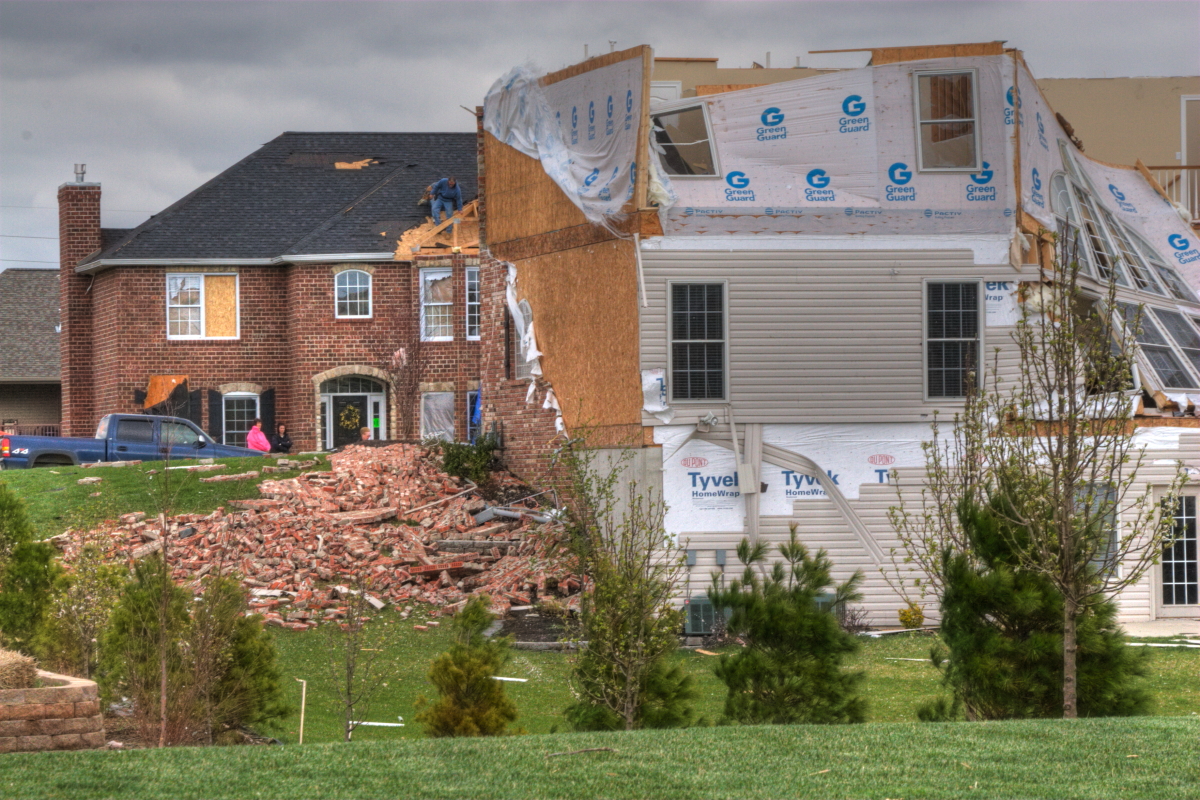
First is the direct property loss, which is the immediate physical damage or destruction of property resulting directly from a covered peril. If a tree falls through a client’s roof during a storm, the shattered trusses and ruined drywall represent the direct loss. However, the client still needs a place to sleep. This leads to the indirect property loss—the financial consequence or loss of use that occurs as a secondary result of a direct property loss. The thousands of dollars spent on a hotel while the roof is being repaired is the indirect loss.
Valuing Property: Actual Cash Value vs. Replacement Cost
When mitigating property risk, how the insurance contract values the damaged asset makes the difference between a client recovering smoothly and falling into debt.
- Replacement cost is the financial amount required to repair or replace damaged property with materials of similar kind and quality without any deduction for depreciation. If a five-year-old television is stolen, replacement cost buys the client a brand-new television of identical quality today.
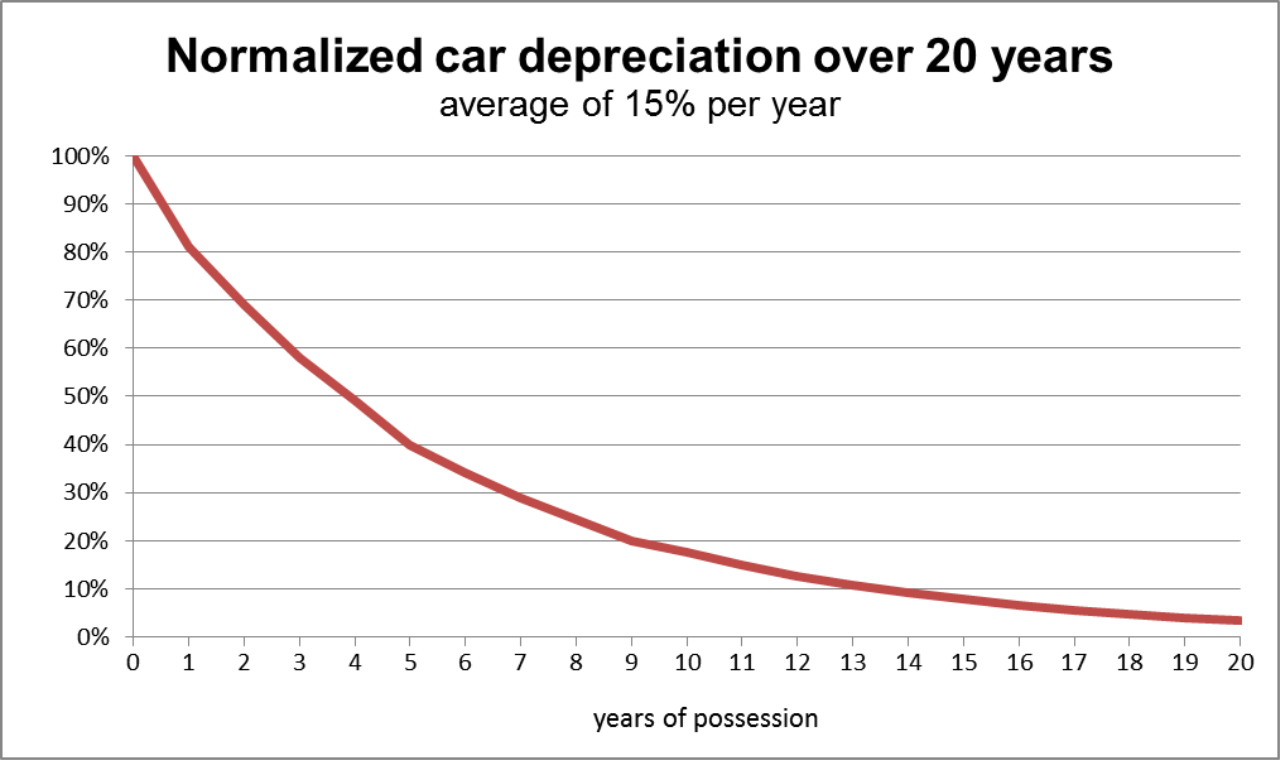
- Actual Cash Value, by contrast, is a property valuation method calculated as the current replacement cost of the property minus accumulated depreciation. If the policy pays Actual Cash Value, the client receives only what a heavily used, five-year-old television is worth on the open market—leaving a frustrating shortfall when they go to the store to replace it.
The Mathematics of the Coinsurance Clause
Insurance is a shared pool of risk, and actuaries demand that property owners carry their fair weight. Coinsurance clauses in property insurance require the insured to carry insurance equal to a specified minimum percentage of the property's replacement cost to receive full coverage for partial losses.
For residential properties, the standard coinsurance requirement for modern homeowners insurance policies is 80 percent of the home's total replacement cost.
Why does this matter to you as a CFP® professional? Because if a client attempts to save money by underinsuring their home, they face severe penalties. An insurance company will only pay a proportional share of a partial property loss if the homeowner carries less than the required coinsurance percentage.
The Coinsurance Formula The proportional payout formula for a coinsurance deficiency is the amount of insurance carried divided by the amount of insurance required, with that fraction then multiplied by the loss amount.
If a home costs $500,000 to rebuild, the 80 percent coinsurance requirement dictates the client must carry at least $400,000 of coverage. If they only carry $300,000, they are carrying 75 percent of the required amount ($300,000 / $400,000). Therefore, if a kitchen fire causes $100,000 in damage, the insurer will only pay $75,000, minus the deductible. The client is forced to absorb the rest.
While property loss is generally capped at the value of the asset itself, liability risk exposures involve the potential for legal responsibility to pay financial damages to a third party. Liability is the true wealth eraser because the potential loss is theoretically limitless.
To analyze liability, we must understand the mechanics of fault. The baseline is negligence, which is the legal failure to exercise the standard of care that a reasonably prudent person would have exercised in a similar situation. If a client is texting while driving and rear-ends another vehicle, they are negligent.

However, the law sometimes removes the requirement to prove fault entirely. Strict liability is a legal doctrine imposing responsibility for damages on a party regardless of whether that party was negligent or at fault.
A fascinating and perilous application of strict liability is the doctrine of the attractive nuisance. An attractive nuisance is a hazardous physical condition or object on a property that is naturally likely to attract and potentially injure children—such as an unsecured swimming pool, an abandoned well, or a trampoline. The law heavily favors the protection of youth: property owners face strict liability for injuries to trespassing children caused by attractive nuisances located on the owner's property. Your client cannot argue that the child shouldn't have been there; the presence of the nuisance itself seals their liability.

Another critical expansion of fault is vicarious liability, a legal doctrine that assigns liability for an injury to a person or entity who did not directly cause the injury but holds a specific legal relationship to the at-fault party. The most common scenario you will see? Employers face vicarious liability for the negligent actions of their employees when those actions are performed within the normal scope of employment. If your client’s delivery driver runs a red light and strikes a pedestrian while on the clock, your client's business is on the hook.
Structuring Auto and Umbrella Coverage
When structuring a client's defense against liability, the first layer is their base insurance. Split limit auto liability policies are typically expressed in three sequential numbers, such as 250/500/100.
You must be able to read these like sheet music:
- In a 250/500/100 auto insurance policy, the first number represents the maximum bodily injury coverage per person in thousands of dollars. (Here, $250,000).
- The second number represents the maximum bodily injury coverage per accident in thousands of dollars. (Here, $500,000 total for all injured parties).
- The third number represents the maximum property damage coverage per accident in thousands of dollars. (Here, $100,000).
However, $500,000 is merely a speed bump against a severe catastrophic injury lawsuit. To build an impenetrable wall, we utilize Personal Liability Umbrella Policies (PLUPs), which provide excess liability coverage above the maximum limits of underlying homeowners and auto insurance policies.
Because the umbrella policy acts as a secondary failsafe, insurance companies require the insured to maintain specific minimum liability limits on their underlying auto and homeowners policies to qualify for a Personal Liability Umbrella Policy. If your client lowers their auto coverage to 100/300/50, they may inadvertently void their umbrella coverage.
How much umbrella coverage is enough? A financial planner should recommend total personal liability coverage limits that are at least equal to the client's total net worth. However, protecting current assets isn't enough if your client is a high-earner. A financial planner should also factor in the present value of a client's future income stream when recommending personal liability coverage limits, as courts can garnish future wages to satisfy massive judgments.
If your client provides specialized knowledge or services, they carry unique targets on their backs. General liability policies exclude professional mistakes. Thus, professional liability insurance protects working professionals against financial claims alleging negligence, errors, or omissions in the performance of their professional services.
We categorize these based on the industry:
- Malpractice insurance is a specific classification of professional liability insurance designed exclusively for healthcare and medical professionals.
- Errors and Omissions insurance is a classification of professional liability insurance designed for non-medical service professionals like financial planners, accountants, and real estate agents.
If your client sits on a corporate board or acts as a C-suite executive, they face the risk of shareholder lawsuits. Directors and Officers liability insurance protects the personal assets of corporate board members and executives from lawsuits alleging wrongful management acts.
Finally, for small business owners, we must assess Key person risk, which is a business risk exposure involving the potential for severe financial harm due to the death or disability of a crucial employee. If the top salesperson or the visionary founder unexpectedly passes away, the loss of revenue and the cost of recruiting a replacement can bankrupt the firm.
The most valuable asset most clients possess is not their investment portfolio; it is their ability to wake up every day and generate income. Personal risk exposures involve the potential loss of income or assets due to premature death, disability, illness, or unemployment.
Calculating the Premature Death Exposure (Life Insurance)
When evaluating how much life insurance a client needs to protect their dependents, financial planners utilize three distinct mathematical philosophies:
| Approach | Methodology |
|---|---|
| Human Life Value Approach | Determines the appropriate amount of life insurance coverage by calculating the present value of an individual's projected future earnings. It treats the human being strictly as an economic engine. |
| Needs Approach | Calculates life insurance coverage requirements by evaluating the specific future financial goals, living expenses, and debt obligations of surviving dependents. It is pragmatic, asking: What exactly will the family have to pay for if the primary earner dies tomorrow? |
| Capital Retention Approach | Determines life insurance needs by calculating the exact capital required to produce a target income stream without depleting the original principal. This is the "golden goose" method—the death benefit is large enough that the family only ever spends the interest, leaving the principal untouched in perpetuity. |
Quantifying Disability and Long-Term Care Risks
A severe disability is often more financially catastrophic than death, as the loss of income is compounded by ongoing living and medical expenses. Disability income insurance needs are calculated by subtracting a client's available passive income and reliable ongoing financial resources from their projected ongoing living expenses. We are solving for the precise income deficit that must be replaced.
Finally, as clients age, the risk of cognitive or physical decline threatens to consume decades of carefully accumulated wealth. A financial planner evaluates long-term care risk exposure by analyzing the client's family medical history, projected life expectancy, and available liquid assets to fund potential care costs. A robust portfolio might easily self-insure a three-year stay in a care facility, but a family history of Alzheimer's—often resulting in a decade or more of necessary care—requires the deliberate transfer of that risk to an insurance carrier.

Through this comprehensive evaluation of property, liability, personal, and business exposures, we step beyond mere wealth management. We build financial fortresses capable of withstanding the inevitable tremors of reality.