Principles of risk and insurance
Not sure you’re ready?
Take the ~3-minute readiness diagnostic and see where you stand.
A financial plan is structurally identical to a suspension bridge. It relies on the precise calculation of known loads—cash flows, tax liabilities, investment durations—while bracing against the violent, unpredictable shear forces of reality. A brilliantly optimized investment portfolio means absolutely nothing if a single, underinsured liability claim wipes out your client’s entire net worth.
As a financial planner, mastering the principles of risk and insurance is not merely about selling policies; it is about constructing a mathematically sound defense for your client's capital. To do this, we must deconstruct the mechanics of loss, the statistical laws that make transferring that loss possible, and the precise legal architecture of an insurance contract.
Here is the definitive breakdown of how we identify, isolate, and neutralize risk.
The risk management process involves identifying, analyzing, and treating potential financial loss exposures. Before you can recommend a solution, you must categorize the threat based on two metrics: frequency (how often it happens) and severity (how much financial damage it causes).
Every loss exposure is treated using one—or a combination—of the following fundamental strategies:
| Frequency | Severity | Optimal Risk Treatment Strategy |
|---|---|---|
| High | High | Risk Avoidance |
| High | Low | Risk Retention |
| Low | High | Risk Transfer |
1. Risk Avoidance
Risk avoidance completely eliminates an exposure to a specific potential loss. If a client has a 16-year-old child with a reckless driving record and a taste for speeding, allowing them to drive a high-performance sports car is a risk characterized by both high frequency and high severity. Risk avoidance is the optimal strategy for managing risks characterized by both high frequency and high severity. The solution? Sell the sports car. The exposure drops to zero.
2. Risk Retention
Risk retention occurs when an individual or entity accepts the financial burden of a potential loss. This is precisely what your clients do with minor, expected costs. Risk retention is the optimal strategy for managing risks characterized by high frequency and low severity (e.g., minor door dings in a grocery store parking lot).
You deal with partial risk retention in your practice every day. When a client pays out of pocket before their insurance kicks in, they are retaining risk. Thus, both insurance policy deductibles constitute a form of partial risk retention, and health insurance copayments constitute a form of partial risk retention.
3. Risk Transfer
This is the domain of the CFP professional. Risk transfer shifts the financial consequences of a potential loss to a distinct third party. It is the exact opposite of retention. Risk transfer is the optimal strategy for managing risks characterized by low frequency and high severity (e.g., a catastrophic house fire, or the premature death of a primary breadwinner). Naturally, purchasing an insurance policy is the primary method of executing risk transfer.
4. Risk Reduction and Sharing
In conjunction with the strategies above, we use mitigation tactics:
- Risk reduction activities specifically lower the probability of a potential loss occurring (e.g., installing a burglar alarm).
- Risk reduction activities specifically lower the financial severity of a loss that does occur (e.g., a fire sprinkler system doesn't stop the fire from starting, but it severely limits the damage).
- Risk sharing distributes the financial impact of a single risk exposure across multiple parties, commonly seen in business partnerships or syndicated insurance pools.

You cannot buy an insurance policy against the stock market dropping, nor can you buy a policy against your own regret. Why? Because insurance companies rely on strict mathematical parameters to survive.
For an insurance company to assume a risk, it must meet several non-negotiable criteria:
The Law of Large Numbers
To predict losses, an insurable risk requires a large number of homogeneous exposure units. Insurers must pool thousands of similar risks (like single-family homes in the Midwest) so the statistics become reliable.
The Law of Large Numbers states that actual aggregate losses converge with expected aggregate losses as the sample size increases.
Because of this statistical gravity, insurance companies utilize the Law of Large Numbers to accurately predict future aggregate losses. They don't know which house will burn down, but they know exactly how many will.
The Anatomy of the Loss Itself
For a risk to be insurable, the loss event must be:
- Strictly accidental from the perspective of the insured party.
- Completely unintentional from the perspective of the insured party. (If you intentionally burn your house down, the math breaks).
- Definitively determinable regarding the time of occurrence. (When exactly did it happen?)
- Definitively determinable regarding the physical location. (Where exactly did it happen?)
- Objectively measurable in exact financial terms. (We can price the lumber to rebuild a house; we cannot financially measure the sentimental value of a lost family photo album).
Economic and Systemic Viability
Finally, the risk must make economic sense for both sides.
- An insurable risk requires a mathematically calculable overall probability of loss. If the insurer cannot calculate the odds, they cannot price the risk.
- An insurable risk requires the corresponding insurance premium to be economically feasible for the prospective buyer. A policy that costs $90,000 a year to protect a $100,000 asset is functionally useless.
- Crucially, an insurable risk must not expose the issuing insurance company to a catastrophic financial loss. This is why standard homeowners policies exclude nuclear war and widespread flooding; if every house in a million-home pool is destroyed simultaneously, the insurer goes bankrupt.
To master risk, you must distinguish between the cause of a loss and the accelerants of a loss.
A peril is the exact, immediate physical cause of a financial loss. It is the "what happened." For example, fire is classified as a specific peril in standard property insurance policies.
A hazard is a specific underlying condition that actively increases the probability of a loss occurring, or a specific underlying condition that actively increases the severity of a resulting loss. Hazards are the gasoline poured onto the potential peril. We divide these into three distinct categories:
- Physical Hazard: A tangible environmental condition that increases the likelihood of a peril occurring. In the real world, black ice on a highway is universally classified as a physical hazard.
- Moral Hazard: A character flaw that leads an individual to intentionally cause a financial loss. Staged auto accidents for insurance fraud are a direct result of moral hazard.
- Morale Hazard: An attitude of extreme carelessness created specifically by the existence of insurance coverage. When a client subconsciously thinks, "I have insurance, so who cares if something happens," they exhibit morale hazard. Leaving a valuable vehicle unlocked with the keys inside is a classic example of morale hazard.

An insurance policy is a highly specific legal instrument. Understanding these legal concepts is critical for the CFP® exam, because violating them destroys your client's coverage precisely when they need it most.
The Principle of Indemnity & Insurable Interest
The legal principle of indemnity dictates that an insured party must not financially profit from an insurance claim. It attempts to return the insured party to their exact pre-loss financial state. If a $10,000 car is totaled, the insurer pays $10,000—not $20,000.
To enforce this, we require Insurable Interest, meaning the policy owner must suffer a genuine financial loss upon the occurrence of the insured event.
CFP Exam Warning: Pay extreme attention to the timing of this interest.
- Property & Casualty: In property and casualty insurance, an insurable interest is not legally required at the inception of the policy, but it must definitively exist at the exact time of the loss. (You can buy a policy on a house you are about to close on, but if it burns down before you own it, you suffer no loss and get no payout).
- Life Insurance: The exact opposite. In life insurance, an insurable interest must definitively exist at the exact inception of the policy, but it is not legally required at the time of the insured individual's death. (You can insure a spouse, get divorced, and legally keep the policy running).
The Principle of Subrogation
If a drunk driver crashes into your client's house, your client's homeowner’s policy pays to rebuild the wall. But the insurer now has the right to sue the drunk driver to recover their money.
The principle of subrogation transfers the insured's legal right of recovery against a negligent third party directly to the insurance company.
- Subrogation fundamentally places the ultimate financial burden of a loss onto the specific negligent third party.
- It prevents an insured party from legally collecting financial compensation from both the insurer and the negligent third party (which enforces the Principle of Indemnity).
- Critical Fact: The principle of subrogation is never applied to life insurance contracts. If a negligent driver kills someone, the life insurance pays out, and the family can still sue the driver for wrongful death.

The Principle of Utmost Good Faith
Insurance runs on information. The principle of utmost good faith imposes a remarkably strict duty of absolute honesty on both the insurer and the insured. When this breaks down, the contract collapses through three primary mechanisms:
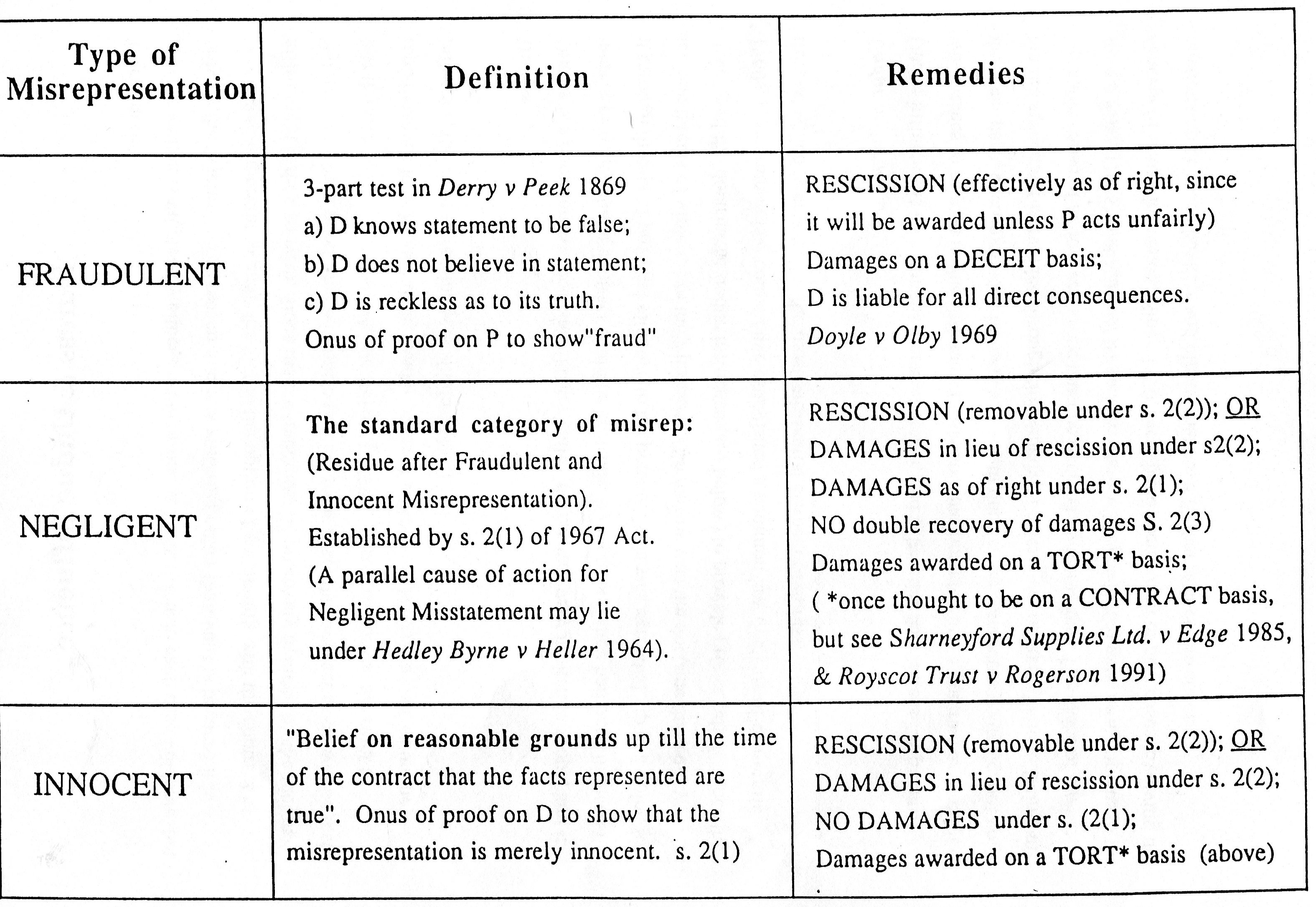
- Representations: A representation is an oral or written statement made by the insurance applicant during the standard application process. If the applicant lies, it becomes a misrepresentation. However, a material misrepresentation grants the insurance company the legal right to completely void the insurance contract. A lie is legally "material" if the insurer would have outright declined coverage upon knowing the truth, or if the insurer would have charged a higher premium upon knowing the truth.
- Concealment: What if the applicant doesn't lie, but just stays quiet? Concealment is the applicant's intentional withholding of a legally material fact from the insurance company. Proven concealment grants the insurance company the definitive legal right to void the insurance contract.
- Warranties: A warranty is a strict guarantee made by the insured that becomes a binding structural part of the insurance contract (e.g., "I promise the building will have a working burglar alarm active every night"). Any breach of a contractual warranty gives the insurance company the absolute right to deny a subsequent claim, even if the breach didn't cause the loss.
Standard insurance policies possess specific legal classifications that dictate how they are enforced in a court of law. As a planner, you must recognize these five classifications instantly:
- Aleatory Contracts: An aleatory contract involves a potentially unequal exchange of financial value between the transacting parties. A client might pay $500 in premiums and die the next day, triggering a $1,000,000 payout. The values exchanged are vastly unequal. All standard insurance policies are legally classified as aleatory contracts.
- Contracts of Adhesion: A contract drafted entirely by one party and presented on a take-it-or-leave-it basis is called a contract of adhesion. Because standard insurance contracts are drafted exclusively by the issuing insurance company, the insured has no power to negotiate the terms. Because of this power imbalance, courts universally resolve any ambiguity in a contract of adhesion in favor of the insured party. If the policy wording is confusing, the insurer loses.
- Unilateral Contracts: A unilateral contract dictates that only one party makes a legally enforceable promise to perform. All standard insurance policies are legally classified as unilateral contracts. Why? Because the insurance company makes a legally enforceable promise to pay all properly covered claims. Conversely, an insured individual is never legally forced to pay ongoing insurance premiums. They can stop paying whenever they want; the only consequence is the policy lapses.
- Conditional Contracts: A conditional contract explicitly requires one party to fulfill specific duties before the other party performs. (e.g., The insured must provide proof of loss before the insurer pays). All standard insurance policies are legally classified as conditional contracts.
- Personal Contracts: A personal contract legally covers the individual person rather than the actual physical property itself. The insurance follows the person's economic interest, not the bricks and mortar. Property and casualty insurance policies are legally classified as personal contracts. Consequently, property insurance contracts cannot be transferred to a new owner without the insurer's explicit written consent. (You cannot just hand over your auto insurance policy to the guy who buys your used car). Conversely, life insurance policies are freely assignable to third parties without the insurance company's consent, making them a powerful tool for estate planning and charitable giving.