Business owner insurance solutions
Not sure you’re ready?
Take the ~3-minute readiness diagnostic and see where you stand.
Closely held businesses are structurally precarious. Unlike a publicly traded corporation, where a CEO’s death causes a brief dip in the stock price before the board appoints a successor, the sudden death or disability of a founding owner triggers a cascade of immediate crises. It creates power vacuums, severe liquidity demands, and the sudden introduction of grieving, often unprepared family members into the boardroom. For the financial planner, the client’s business is frequently their largest, most illiquid asset. Protecting it—and by extension, the client's family and legacy—requires precise legal and financial engineering. We use life and disability insurance not merely as a payout, but as a structural framing mechanism to guarantee liquidity exactly when the underlying legal agreements demand it.
When an owner dies, their shares pass to their heirs. The surviving business owners rarely want to be in business with the deceased owner’s spouse, and the spouse rarely wants illiquid private shares instead of cash. A buy-sell agreement is a legally binding contract that forces the sale of those shares at a predetermined valuation.
But a contract without cash is just a piece of paper. We fund these agreements with life insurance because it delivers exactly the required amount of liquid capital at the exact moment the contract executes.
Generally, life insurance death benefits paid to fund a buy-sell agreement are generally received income tax-free. However, the structure of the agreement dictates who owns the policies, how many policies are needed, and the tax consequences for the surviving owners.
Cross-Purchase Agreements
In a cross-purchase buy-sell agreement, the burden is on the owners themselves. This arrangement requires each business owner to purchase a life insurance policy on every other business owner.
If Owner A and Owner B are in business, A buys a policy on B, and B buys a policy on A. When B dies, A receives the tax-free death benefit and uses that cash to buy B’s shares directly from B’s estate.
The Mathematical Burden The total number of life insurance policies required for a cross-purchase agreement equals the number of owners multiplied by the number of owners minus one: N × (N - 1).
- For 3 owners: 3 × 2 = 6 policies.
- For 10 owners: 10 × 9 = 90 policies.
Because of this geometric explosion in required policies, pure cross-purchase agreements become administratively impossible for businesses with more than two or three owners. Furthermore, life insurance premiums paid by business owners for cross-purchase buy-sell agreements are not tax-deductible.
So why use them? Because of a massive tax advantage for the survivors: surviving business owners receive a stepped-up income tax basis in the shares acquired through a cross-purchase buy-sell agreement. If Owner A originally invested $10,000, and buys B's shares for $1,000,000, A's basis in the newly acquired shares is exactly $1,000,000. When A eventually sells the business, they will pay significantly less in capital gains tax.
Entity-Purchase Agreements (Stock Redemption Plans)
To solve the administrative nightmare of dozens of policies, we use the entity itself. An entity-purchase buy-sell agreement, which is also known as a stock redemption plan when dealing with corporations, requires the business entity to purchase a single life insurance policy on the life of each owner.
The Mathematical Simplicity The total number of life insurance policies required for an entity-purchase agreement equals the total number of business owners: N.
- For 10 owners: 10 policies.
When an owner dies, the business receives the death benefit and uses it to redeem (buy back) the shares from the deceased owner's estate, absorbing them into the company. As with a cross-purchase, life insurance premiums paid by a business for an entity-purchase buy-sell agreement are not tax-deductible.
However, simplicity comes at a cost. Because the business bought the shares and not the surviving owners, surviving business owners do not receive a stepped-up income tax basis for shares acquired by the business in an entity-purchase agreement. The surviving owners' percentage of ownership increases, but their tax basis remains trapped at their original investment amount.
The Wait-and-See Compromise
Planners and business owners often find themselves paralyzed. They want the stepped-up basis of the cross-purchase, but they want the administrative ease and flexibility of the entity-purchase. Enter the wait-and-see buy-sell agreement.
This structure doesn't lock the business into a rigid path until the actual moment of death. It unfolds in a strict, chronological hierarchy:
- First Option: A wait-and-see buy-sell agreement grants the business entity the primary option to purchase a deceased owner's shares.
- Second Option: If the business declines (perhaps to allow the owners to get the stepped-up basis), it grants the surviving owners the secondary option to purchase any remaining shares of a deceased owner.
- Mandatory Trigger: To guarantee the deceased's family isn't left holding the bag, the agreement mandates the business entity to purchase any deceased owner shares not purchased during the first two option periods.
| Feature | Cross-Purchase | Entity-Purchase |
|---|---|---|
| Who buys the policy? | Individual Owners | The Business Entity |
| Number of Policies | N × (N - 1) | N |
| Premiums Deductible? | No | No |
| Stepped-Up Basis? | Yes | No |
You will encounter scenarios where business owners want to restructure their buy-sell agreements, or where an owner retires and wants to sell their policy to a younger partner. Be exceedingly careful.
We established that life insurance death benefits are generally income tax-free. But there is a lethal trap: the transfer for value rule converts otherwise tax-free life insurance death benefits into taxable ordinary income. If you sell or trade a life insurance policy for anything of material value, the IRS strips away the tax-free wrapper. The death benefit, minus what was paid for the policy and subsequent premiums, becomes fully taxable.
Fortunately, the tax code provides safe harbors. You can transfer a policy for value without triggering the tax bomb if the transfer falls under a specific exception.
Exceptions to the Transfer for Value Rule:
- A transfer of a life insurance policy to the insured individual is an exception.
- A transfer of a life insurance policy to a partner of the insured is an exception.
- A transfer of a life insurance policy to a partnership in which the insured is a partner is an exception.
- A transfer of a life insurance policy to a corporation in which the insured is an officer or shareholder is an exception.
Notice what is dramatically missing from that list. A transfer of a life insurance policy to a co-shareholder who is not a partner is not an exception to the transfer for value rule.
Why this matters: If your clients own an S-Corporation and try to shift from an entity-purchase to a cross-purchase by distributing or selling the corporate-owned policies to the individual owners, they have just triggered the transfer for value rule. Shareholders in a corporation are not considered "partners" under tax law. The next time someone dies, the surviving owner will receive the $2,000,000 death benefit as taxable ordinary income.
Beyond the owners themselves, some businesses rely entirely on the unique genius, relationships, or technical skill of a single individual. Key person insurance reimburses a business for financial losses caused by the death or disability of a crucial employee. It provides the runway needed to recruit a replacement, cover lost revenue, or pay off jittery creditors.
To function properly and avoid unintended tax consequences, the mechanics must be flawless:
- The business entity must be the legal owner of a key person life insurance policy.
- The business entity must be the designated beneficiary of a key person life insurance policy.
- The business entity is responsible for paying the premiums on a key person life insurance policy.
Because the business is the ultimate beneficiary, premiums paid by a business for key person life insurance are not tax-deductible. Consequently, death benefits from key person life insurance are generally received income tax-free by the business entity.
The Section 101(j) Trap
Historically, corporations abused employer-owned life insurance by taking out secret policies on low-level employees, profiting tax-free from their deaths without the employees' knowledge. Congress halted this by enacting Internal Revenue Code Section 101(j).
Today, for a business to receive a key person death benefit tax-free, they must clear a strict procedural hurdle before the policy is issued:
- Internal Revenue Code Section 101(j) requires an employer to provide written notice to an employee before issuing employer-owned life insurance. They must disclose the maximum face amount they intend to take out.
- Internal Revenue Code Section 101(j) requires an employer to obtain written consent from an employee before issuing employer-owned life insurance. The employee must explicitly agree that the coverage can continue even if they leave the company.
Failure to obtain written employee consent before issuing employer-owned life insurance subjects the death benefit to ordinary income taxation. If your client forgets to have the key software engineer sign the consent form before the policy is bound, that multimillion-dollar death benefit becomes fully taxable.
We've discussed death, but disability is statistically a far more likely peril for a working-age business owner. If a dentist, architect, or specialized consultant is severely injured in a car accident, the revenue stops immediately. However, the lease on the office, the utility bills, and the receptionist's salary do not.
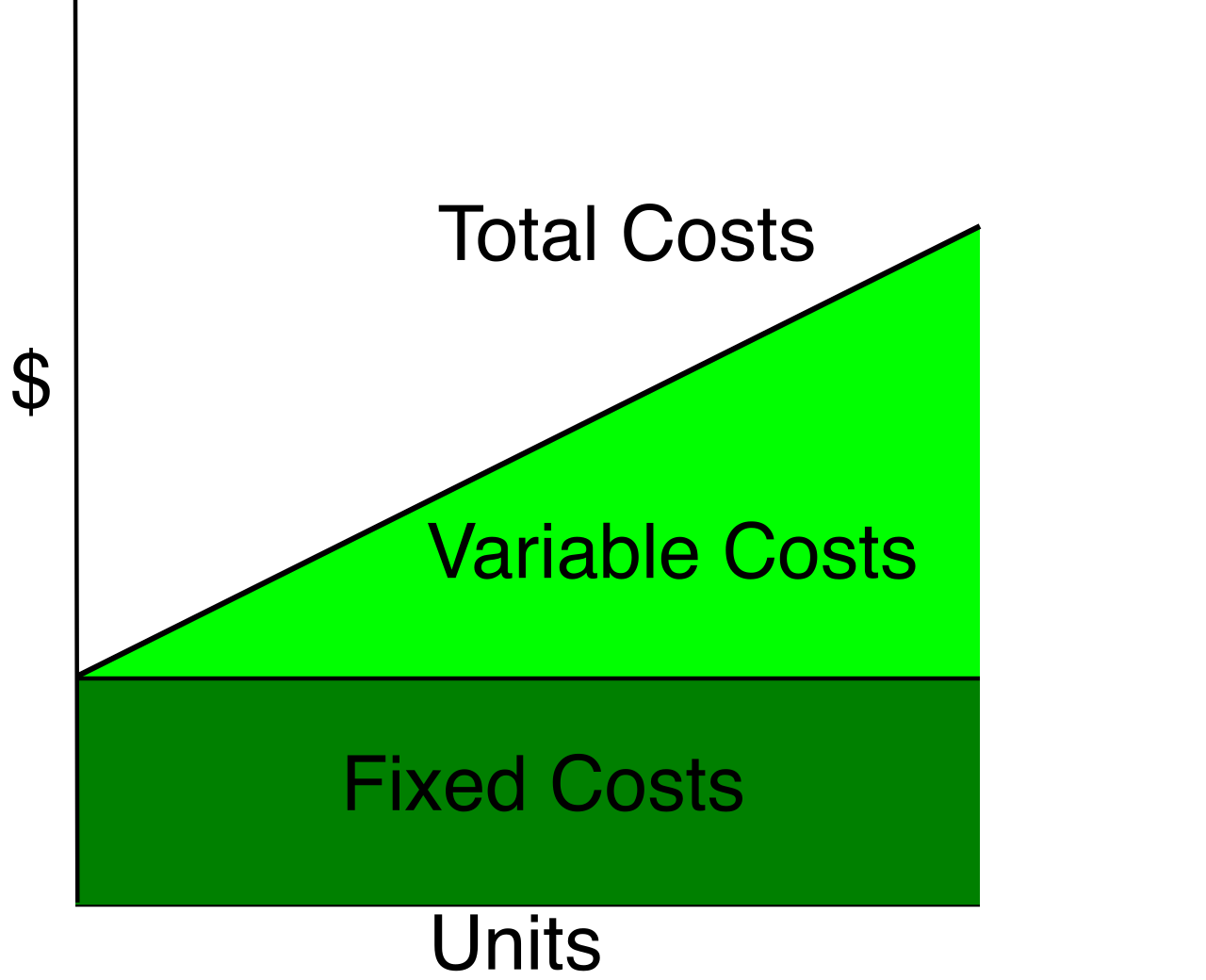
Personal disability income insurance protects the owner's family at home. Business overhead expense insurance covers ongoing operational costs if the business owner becomes disabled. It ensures that the business infrastructure survives the owner's recovery period.
What BOE Covers:
- Business overhead expense insurance covers recurring fixed expenses such as facility rent.
- Business overhead expense insurance covers recurring expenses such as non-owner employee salaries. (The receptionist, the paralegal, the dental hygienist).
What BOE Does NOT Cover:
- Business overhead expense insurance does not cover the disabled business owner's personal salary. (That is what their personal individual disability policy is for).
- Business overhead expense insurance does not replace the lost profits of the business entity. It is strictly designed to break even and keep the lights on.
The Tax Treatment and the Clock
Because BOE is strictly a mechanism to pay standard, deductible business expenses, the IRS treats the policy differently than standard life or disability insurance. Premiums paid for business overhead expense insurance are tax-deductible as ordinary business expenses. Symmetrically, because the premiums were deducted, benefits received from business overhead expense insurance are taxable as ordinary income to the business entity. (The tax impact is usually a wash, as the taxable benefit is immediately used to pay tax-deductible expenses like rent).
Finally, understand the temporal nature of this tool. Business overhead expense insurance policies typically limit the benefit payment period to a maximum of twelve to twenty-four months.
Why? Because BOE is a bridge, not a permanent destination. If an owner is disabled for longer than two years, the business model is functionally broken. A 12 to 24 month window provides exactly enough time for the owner to either fully recover and return to work, or recognize the permanence of the disability and execute an orderly sale or liquidation of the business.