Life insurance (individual and group)
Not sure you’re ready?
Take the ~3-minute readiness diagnostic and see where you stand.
A life insurance contract is fundamentally a financial time machine. When a client possesses future earning potential or future estate tax liabilities, life insurance allows them to instantly capitalize those future dollars and bring them into the present, precisely when a catastrophic trigger—mortality—occurs. As a financial planner, your task is to manipulate these instruments to engineer estate liquidity, shelter asset growth, and immunize both family and corporate balance sheets against the sudden loss of human capital. To do this, you must understand the underlying physics of how these contracts operate, how they are taxed, and how they inevitably warp the gravity of a client’s estate.
All life insurance rests on a continuum between pure risk transfer and capital accumulation.
At one end of the spectrum is term life insurance. The primary purpose of term life insurance is pure death benefit protection. You are renting coverage. Term life insurance provides temporary coverage for a specified period, and because you are only paying for the exact mortality risk you present in a given timeframe, term life insurance policies do not accumulate a cash value.
If we dissect term insurance further, we find structural variations designed for specific planning needs:
- Annual Renewable Term (ART): This is mortality priced at its most granular level. An annual renewable term life policy provides a level death benefit for one year. Because the risk of death increases with age, the premium for an annual renewable term life policy increases each year based on the attained age of the insured.
- Level Term: To smooth out the increasing costs of ART, actuaries average the premiums over a block of time. A level term life policy features a constant premium amount for a specified duration (e.g., 10, 20, or 30 years).
- Decreasing Term: Often paired with amortizing liabilities like mortgages, decreasing term life insurance features a death benefit that gradually reduces over the life of the policy, while the premium typically remains flat.
At the other end of the spectrum is whole life insurance, which provides guaranteed lifelong death benefit protection. Whole life is a closed system—a highly engineered financial vault. In exchange for transferring the long-term risk to the insurer, whole life insurance requires the policyholder to pay a fixed premium amount. Inside this vault, whole life insurance guarantees a minimum cash value growth rate.
If the insurance company experiences favorable mortality, expense, or investment outcomes, participating whole life insurance policies may pay dividends to policyholders.
Taxation of Dividends: Because these policies are essentially overfunded by design to guarantee performance, the IRS acknowledges that dividends are not true "income." Life insurance policy dividends are generally treated as a non-taxable return of premium. However, if the client chooses to leave those dividends with the insurer to earn interest, the interest earned on life insurance policy dividends left on deposit with the insurer is subject to ordinary income tax.
In the late 20th century, the financial environment changed, and clients demanded transparency and flexibility. The industry responded by pulling apart the gears of the whole life chassis to create universal life insurance.
Universal life insurance separates the mortality, expense, and cash value policy components. Instead of a rigid, fixed premium, universal life insurance allows the policyowner to adjust the premium payment amounts. They can also adjust the death benefit amount as their needs change. The cash value inside this unbundled structure acts like a sponge, soaking up excess premiums, and the cash value of a universal life insurance policy earns a declared interest rate from the insurer.
Universal life offers two distinct geometric shapes for its death benefit payout:
- Option A of a universal life insurance policy provides a level death benefit. As the cash value inside the policy grows, the pure risk portion (the net amount at risk) shrinks, keeping internal costs low.
- Option B of a universal life insurance policy provides an increasing death benefit equal to the face amount plus the accumulated cash value. This is highly utilized by planners who want their clients' families to receive both the purchased death benefit and the accumulated cash.
But what if the client wants control over how the cash value is invested? This brings us to variable life insurance, which shifts the investment risk of the cash value from the insurer to the policyowner. Variable life insurance policies allow the cash value to be invested in separate subaccounts (essentially mutual fund clones). Because the client is now interacting directly with market risk, selling variable life insurance requires the agent to hold a securities license.
When we merge the ultimate flexibility of universal life with the investment control of variable life, we get variable universal life (VUL) insurance. Variable universal life insurance combines flexible premium payments with subaccount investment options.
The Internal Revenue Code heavily incentivizes the use of life insurance to prevent widows and orphans from becoming wards of the state. While individual life insurance premiums paid by the insured are not tax-deductible, the internal mechanics of permanent policies are highly tax-advantaged.
First, the cash value inside a permanent life insurance policy grows on a tax-deferred basis. You do not receive a 1099 for the internal growth.
When a client wants to access that cash, the standard tax rules are exceptionally favorable. Withdrawals from a standard life insurance policy are taxed on a First-In-First-Out (FIFO) basis. First-In-First-Out taxation allows life insurance policyholders to withdraw an amount equal to the total premiums paid without incurring income tax. Only once they withdraw beyond their cost basis do they trigger a tax event. Even better, loans taken against the cash value of a standard life insurance policy are not subject to income tax. If a client decides to walk away entirely, surrendering a life insurance policy results in ordinary income tax on the amount of cash value received that exceeds the total premiums paid.
The Modified Endowment Contract (MEC)
In the 1980s, planners realized they could dump massive amounts of single-premium cash into policies just to reap the tax-deferred growth and tax-free loans, utilizing the policy as a pure investment rather than for mortality protection. The IRS closed this loophole.
A life insurance policy becomes a Modified Endowment Contract (MEC) if the cumulative premiums paid during the first seven years exceed the maximum seven-pay test limit. If a policy fails this test, the IRS reclassifies it, stripping away its favorable FIFO and loan treatment.
If a policy is deemed a MEC, the tax geometry flips:
- Withdrawals from a Modified Endowment Contract are taxed on a Last-In-First-Out (LIFO) basis. This means the taxable earnings come out first.
- Loans taken against a Modified Endowment Contract are treated as taxable distributions to the extent of policy earnings.
- To further punish utilizing a MEC as a pre-retirement ATM, withdrawals of earnings from a Modified Endowment Contract prior to age 59.5 are subject to a ten percent penalty tax.
The ultimate payoff of a life insurance contract—the death benefit—is heavily protected. Life insurance death benefits paid as a lump sum are generally exempt from federal income tax.
However, there is a catastrophic error planners can make: triggering the transfer-for-value rule. The transfer-for-value rule is triggered when a life insurance policy is sold to another party for valuable consideration. When this happens, the IRS essentially says, "You are no longer protecting a life; you are trading a commodity." As a penalty, the transfer-for-value rule subjects the death benefit of a life insurance policy to income tax (excluding the purchase price and subsequent premiums paid).
Because business continuity often requires moving policies around, the IRS grants vital safe harbors. An exception to the transfer-for-value rule exists when a life insurance policy is transferred:
- Directly to the insured person.
- To a business partner of the insured.
- To a corporation in which the insured is an officer.
In the corporate sphere, underwriting changes from an individual medical assessment to statistical probability. Group life insurance underwriting evaluates the risk characteristics of the entire group rather than individual members. Because the risk is spread across a working-age population, guaranteed issue group life insurance does not require individual employees to submit evidence of medical insurability.
The IRS provides a baseline subsidy for this employee benefit: employer-paid premiums for the first $50,000 of group term life insurance are tax-free to the employee. However, executives and high-earners often receive much larger multiples of their salary in death benefit. Employer-paid group term life insurance coverage exceeding $50,000 generates imputed taxable income for the employee. The imputed income from employer-provided group term life insurance is calculated using IRS Table I rates, which assigns a monthly cost per $1,000 of coverage over the $50,000 threshold based on the employee's age.
Key Person Insurance
What happens when the corporation itself relies entirely on the unique skills of a founder or top executive? The firm's balance sheet faces a mortality risk. Key person life insurance is purchased by a business to compensate for financial losses caused by the death of a crucial employee.
In this structure, the business entity acts as the owner of a key person life insurance policy, and the business entity acts as the beneficiary of a key person life insurance policy. Because the business stands to receive the payout, premiums paid by a business for key person life insurance are not tax-deductible as a business expense. However, mirroring individual rules, the death benefit from a key person life insurance policy is generally received income tax-free by the business, providing instant liquidity to recruit a replacement or weather a drop in revenue.
While death benefits are generally income tax-free, they are certainly not estate tax-free by default. The IRS will pull the massive influx of capital back into the taxable estate if the decedent is not careful.
Life insurance death benefits are included in the gross estate if the decedent possessed any incidents of ownership at the time of death. What is an incident of ownership? The right to change the beneficiary of a life insurance policy constitutes an incident of ownership, as does the right to borrow against it or surrender it. Furthermore, life insurance death benefits are included in the gross estate if the proceeds are payable directly to the estate of the decedent, as this allows the funds to be used to satisfy the estate's debts.
To escape this estate tax gravity, planners utilize an Irrevocable Life Insurance Trust (ILIT). An Irrevocable Life Insurance Trust is used to remove life insurance proceeds from the gross estate of the insured. However, to satisfy the IRS, the insured must relinquish all incidents of ownership to the Irrevocable Life Insurance Trust to achieve estate tax exclusion.
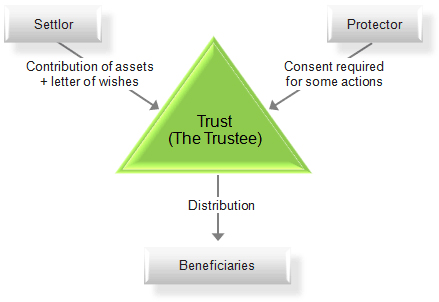
The 3-Year Lookback: You cannot cheat death at the last minute. Transferring ownership of a life insurance policy within three years of death causes the death benefit to be included in the gross estate of the transferor. If an ILIT is needed, it is structurally safer for the trustee of the ILIT to purchase a new policy directly rather than having the client transfer an existing one.
When dealing with married couples facing massive estate tax liabilities, the taxes typically hit upon the death of the surviving spouse due to the unlimited marital deduction. To solve this specific timing problem, we use survivorship life insurance (also known as second-to-die insurance). Survivorship life insurance pays the death benefit only upon the death of the second insured individual. Because it covers two lives, premiums are highly cost-effective, and survivorship life insurance is frequently used to provide liquidity for estate taxes due at the death of the second spouse.
Life insurance contracts contain strict standardized clauses that dictate how they function when things go wrong or when a client wishes to pivot.
- Section 1035 Exchanges: The tax code allows clients to upgrade or alter their financial vehicles without triggering a taxable event. Section 1035 of the Internal Revenue Code allows for the tax-free exchange of one life insurance policy for another life insurance policy. Because life insurance represents greater risk to the insurer than an annuity, water can flow downhill: a policyholder can execute a tax-free Section 1035 exchange from a life insurance policy to an annuity contract. However, water cannot flow uphill. A policyholder cannot execute a tax-free Section 1035 exchange from an annuity contract to a life insurance policy.
- The Grace Period: To prevent catastrophic loss of coverage due to a simple banking error or oversight, a Grace Period provision prevents a life insurance policy from lapsing immediately upon a missed premium payment. The standard Grace Period for an individual life insurance policy is thirty-one days.
- The Incontestability Clause: Clients occasionally lie on applications. However, to provide certainty to beneficiaries, the Incontestability Clause prevents the insurer from canceling a life insurance policy due to misrepresentation after the policy has been in force for two years.
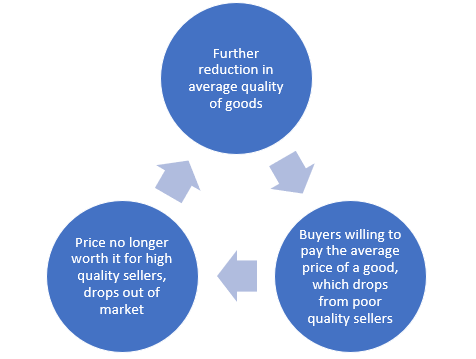
- The Suicide Clause: To prevent severe adverse selection (someone purchasing a policy with the immediate intent to end their life to enrich their family), the Suicide Clause limits the death benefit to a refund of premiums if the insured commits suicide within the first two years of the life insurance policy. After two years, the full death benefit is payable.