Insurance needs analysis
Not sure you’re ready?
Take the ~3-minute readiness diagnostic and see where you stand.
When a financial planning client walks into your office, they bring two distinct economic realities: a balance sheet of accumulated capital, and an engine of future human capital. Insurance needs analysis is the mathematical discipline of measuring that human engine, projecting its future output, and structuring capital to replace it when it inevitably breaks down due to death, disability, or physiological decline. We are not merely selling policies; we are building a synthetic bridge across a financial chasm. If the bridge is too short, the family falls into economic ruin. If the bridge is vastly over-engineered, the client sacrifices current living standards to fund unnecessary premiums.
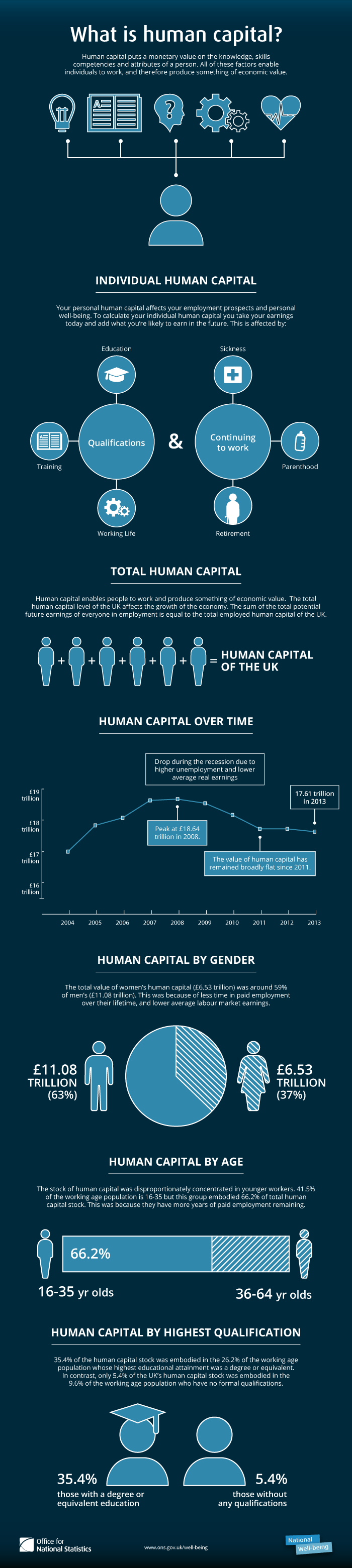
To build this bridge accurately, we must master how to quantify the precise amount of life, disability, or long-term care insurance a client requires. We do this through a series of rigorous valuation frameworks, each with its own underlying assumptions about money, time, and human behavior.
When calculating life insurance needs, we are attempting to answer a seemingly impossible question: What is the exact dollar value of a human life to those who depend on it? The CFP Board requires you to synthesize this using two primary, but philosophically opposed, methodologies: the Human Life Value approach and the Needs Analysis approach.
The Human Life Value (HLV) Approach
Think of the Human Life Value approach as valuing a machine that prints money. It measures the economic value of a human life to their dependents. Instead of asking what the family needs to survive, HLV asks what the deceased would have produced had they lived. It calculates the present value of the portion of future earnings devoted to the surviving family.
The Human Life Value calculation is highly standardized. Let’s walk through the exact mechanics:
- Determine the Gross Revenue: The first step in the Human Life Value calculation is estimating the individual's average annual earnings over their remaining productive working years.
- Calculate the Leakage: Not every dollar a person earns goes to their family. The individual consumes part of it, and the government takes its share. Therefore, the Human Life Value calculation requires deducting expected income taxes from estimated future gross earnings. Furthermore, it requires deducting expected life insurance premiums and deducting personal self-maintenance costs (food, clothing, personal transportation) from those gross earnings.
- Isolate the Output: Once these deductions are made, the remainder is the net economic benefit provided to the household. The Family's Share of Earnings in the Human Life Value approach equals total gross earnings minus taxes, life insurance premiums, and self-maintenance costs.
- Discount to Present Value: A dollar delivered 20 years from now is not worth a dollar today. The final step of the Human Life Value approach calculates the present value of the Family's Share of Earnings over the remaining working years. Because we are projecting out a highly critical safety net, the Human Life Value approach typically uses a conservative discount rate to calculate the present value of future earnings.
Crucial Limitation: The Human Life Value approach strictly looks at the supply side of the equation. Consequently, the Human Life Value approach ignores the specific future financial needs of the surviving dependents. If a family has a massive mortgage or a child with special medical needs, the HLV model does not care. It only replaces what the deceased would have earned, which may be vastly insufficient (or overly abundant) compared to actual liabilities.
The Needs Analysis Approach
If HLV is valuing the money-printing machine, the Needs Analysis approach is meticulously budgeting the family's future checkbook. The Needs Analysis approach calculates life insurance requirements based on the specific financial objectives of the surviving dependents.
This approach divides financial requirements into two distinct categories: lump-sum cash needs and ongoing income needs.
1. Lump-Sum Cash Needs
When a person dies, a sudden wave of immediate capital requirements crashes over the family. Lump-sum cash needs in the Needs Analysis approach include:
- Final medical expenses and estate clearance costs (probate, funeral costs, immediate debt settlement).
- Emergency funds (replenishing liquidity).
- Mortgage payoff amounts and education funds (clearing major future liabilities off the family balance sheet immediately).
2. Ongoing Income Needs (The Time Segmentation)
After the immediate debts are cleared, the family must eat, pay property taxes, and live their lives. But their ongoing income needs do not remain flat over time. The Needs Analysis breaks the timeline into three highly testable phases:
| Income Phase | Definition & Duration | Why it Matters |
|---|---|---|
| Readjustment Period | Lasts one to two years following the insured's death. | The readjustment period in the Needs Analysis approach is designed to provide the surviving family with the same income level experienced prior to the death. We do not force a grieving family to immediately downsize their lifestyle. |
| Dependency Period | Spans from the end of the readjustment period until the youngest child turns 18. | Income needs drop slightly as the family settles into a new normal, but remain elevated because minors are in the household requiring support. |
| Blackout Period | The time during which a surviving spouse receives no Social Security survivor benefits. | This is the most dangerous gap in a family's financial plan. The blackout period begins when the youngest child reaches age 16, and ends when the surviving spouse reaches age 60. |
Understanding the Social Security Blackout: To master the Blackout Period, you must understand the rules of the Social Security system. Social Security survivor benefits are payable to a surviving spouse caring for a child under age 16. Once that youngest child blows out 16 candles on their birthday cake, the surviving spouse's benefit abruptly ceases. The government expects that spouse to re-enter the workforce. Later in life, Social Security widow or widower survivor benefits can begin as early as age 60. The years between the child turning 16 and the spouse turning 60 represent a total cessation of government support—the Blackout Period.
3. Calculating the Net Requirement
Once we have tallied the lump sum and the present value of the ongoing income needs, we offset this liability with the assets the family already possesses.
- The Needs Analysis approach subtracts the value of existing income-producing capital assets from the total calculated financial needs.
- It also subtracts existing life insurance coverage from the total calculated financial needs.
The Formula: The net life insurance requirement in the Needs Analysis approach equals total financial needs minus existing assets and current life insurance.
Once you have determined the required ongoing income through Needs Analysis, how exactly does the death benefit generate that income? You must choose the mathematical engine that will drive the capital. Do we live off the interest, or do we slowly cannibalize the principal?
The Capital Retention Approach
Imagine an endless well of water. You only scoop out the water that flows in naturally, leaving the water level exactly where it was.
The Capital Retention approach determines the amount of life insurance required to generate ongoing income without depleting the original principal.
Because it protects the principal, the Capital Retention approach calculates the required principal by dividing the annual income shortfall by the expected investment rate of return. However, simply using a nominal return would result in the family's purchasing power being crushed by inflation over time. Therefore, an inflation-adjusted rate of return is used in the Capital Retention approach to maintain the purchasing power of the generated income.
Inflation-Adjusted Return Formula: The inflation-adjusted rate of return is calculated as one plus the nominal return divided by one plus the inflation rate, minus one: (1+Inflation Rate1+Nominal Rate)−1

Because you are merely skimming the interest and adjusting for inflation, the Capital Retention approach requires the largest life insurance face amount compared to the Human Life Value and Capital Utilization approaches. However, it yields a massive estate planning benefit: The Capital Retention approach ensures the original life insurance death benefit is left as an inheritance for heirs after the surviving spouse dies.
The Capital Utilization Approach
Now imagine a water tank with a small leak at the bottom. The water is actively being drained, and eventually, the tank will be bone dry.
The Capital Utilization approach determines life insurance needs by assuming the principal is gradually depleted over the surviving spouse's life expectancy. By utilizing an annuity-style drawdown (consuming both principal and interest), the Capital Utilization approach requires a smaller life insurance face amount than the Capital Retention approach. It is highly efficient for clients with limited budget for premiums, but leaves nothing behind for the next generation.
While life insurance replaces a destroyed human capital engine, disability insurance replaces an engine that has seized up but is still incurring maintenance costs. A disabled client stops producing income but continues to consume resources—often at a higher rate due to medical needs.
Disability insurance needs analysis calculates the gap between a client's monthly living expenses and available income sources during a period of disablement.
The Tax Wedge in Disability Planning
When projecting available income, you cannot look at gross disability benefit statements; you must look at net cash flow. A $5,000 monthly benefit can mean very different things depending on who paid the premium. Disability needs calculations must account for the income taxability of existing disability benefit payouts.
- Employer-paid group disability benefits are taxable as ordinary income to the employee. If a company pays the premium and deducts it as a business expense, the IRS will tax the employee when they receive the benefit. A $5,000 benefit might only yield $3,800 in usable cash flow.
- Employee-paid individual disability benefits are received completely tax-free. Because the employee paid the premium with after-tax dollars, the benefit is untouched by the IRS.
The Illusion of the Social Security Safety Net
Many clients believe they do not need private disability coverage because "Social Security will take care of me." As a financial planner, you must dispel this dangerous myth. Social Security Disability Insurance (SSDI) is incredibly difficult to qualify for.
To receive SSDI, the individual must have a severe physical or mental impairment lasting at least 12 months or resulting in death. It does not cover partial or temporary disabilities. Even if a client clears this high medical hurdle, Social Security Disability Insurance imposes a strict five-month waiting period before benefit payments begin. If your client has no emergency fund, they will face a devastating financial crisis long before the first government check arrives.
Later in life, the risk shifts from replacing lost income to protecting accumulated wealth against astronomical custodial care costs. Long-Term Care insurance needs analysis estimates the daily or monthly cost gap between projected care expenses and self-insurable income.
Understanding Self-Insurance
To size an LTC policy properly, we don't necessarily insure the entire nursing home bill. We offset the bill with wealth the client is already generating. Self-insurable income for Long-Term Care calculations includes guaranteed pensions, Social Security benefits, and interest from dedicated investment assets. If a facility costs $9,000 a month, and the client generates $4,000 a month in guaranteed pensions and Social Security, the insurable gap is $5,000.
Why Government Programs Fall Short
Just as clients misunderstand SSDI, they fundamentally misunderstand Medicare and Medicaid. You must know exactly where the boundaries of these programs lie.
The Medicare Misconception: Medicare is a health insurance program designed to cure you, not to board you. It offers extremely limited post-acute care.
- Medicare only pays for up to 100 days of skilled nursing care following a qualifying inpatient hospital stay of at least three days.
- Crucially, Medicare does not provide coverage for strictly custodial care (help with eating, bathing, dressing). If a client has Alzheimer's but no acute medical need requiring a registered nurse, Medicare pays absolute zero.

The Medicaid Reality: Medicaid will pay for custodial long-term care, but it is a poverty program. Medicaid requires individuals to spend down their countable financial assets to a specified state limit before covering long-term care costs. A client cannot maintain a multi-million dollar portfolio and expect Medicaid to pay their nursing home bills. Planning for LTC means calculating how to protect the client's balance sheet from this required spend-down.
Mastering insurance needs analysis is not merely an exercise in rote memorization. It requires viewing the client's life chronologically and mathematically. You must see the Human Life Value as a proxy for raw earning power, and Needs Analysis as the granular roadmap of family liabilities. You must navigate the tax traps of disability payouts and the rigid limitations of government safety nets. When you understand the underlying mechanics of these calculations, you stop guessing at face amounts—and start architecting structural certainties for the families who rely on you.