Characteristics, uses and taxation of investment vehicles
Not sure you’re ready?
Take the ~3-minute readiness diagnostic and see where you stand.
A capitalist economy operates on a remarkably simple mechanical principle: capital must flow from those who have it to those who need it. When a corporation wants to build a new manufacturing plant, or a municipality needs to construct a toll bridge, they do not simply check their bank accounts; they tap into the global reservoir of investor capital. The mechanisms they use to draw from this reservoir—and the specific wrappers investors use to hold these investments—are not just financial trivia. They are the structural beams of every financial plan you will ever construct.

As a practitioner, your job is not merely to select investments. Your job is to understand the precise aerodynamic drag that taxes, structural inefficiencies, and market mechanics will impose on your client’s wealth over time. To do this, we must dissect the fundamental atomic units of the market, understand how the financial industry packages them together, and master the intricate rulebook the Internal Revenue Service uses to tax them.
Before we can understand complex portfolios, we must understand the individual building blocks. When an investor deploys capital, they are fundamentally making one of two choices: they are either buying a piece of a business, or they are lending their money out.
Equities: The Architecture of Ownership
When a client purchases an individual stock, they are buying a tangible piece of a living enterprise. An individual stock represents a fractional ownership interest in a corporation. But not all ownership is created equal.
The standard vehicle is common stock. Common stockholders possess voting rights for corporate board of directors elections. They hold the ultimate levers of power, but they sit at the very back of the line if the company fails.
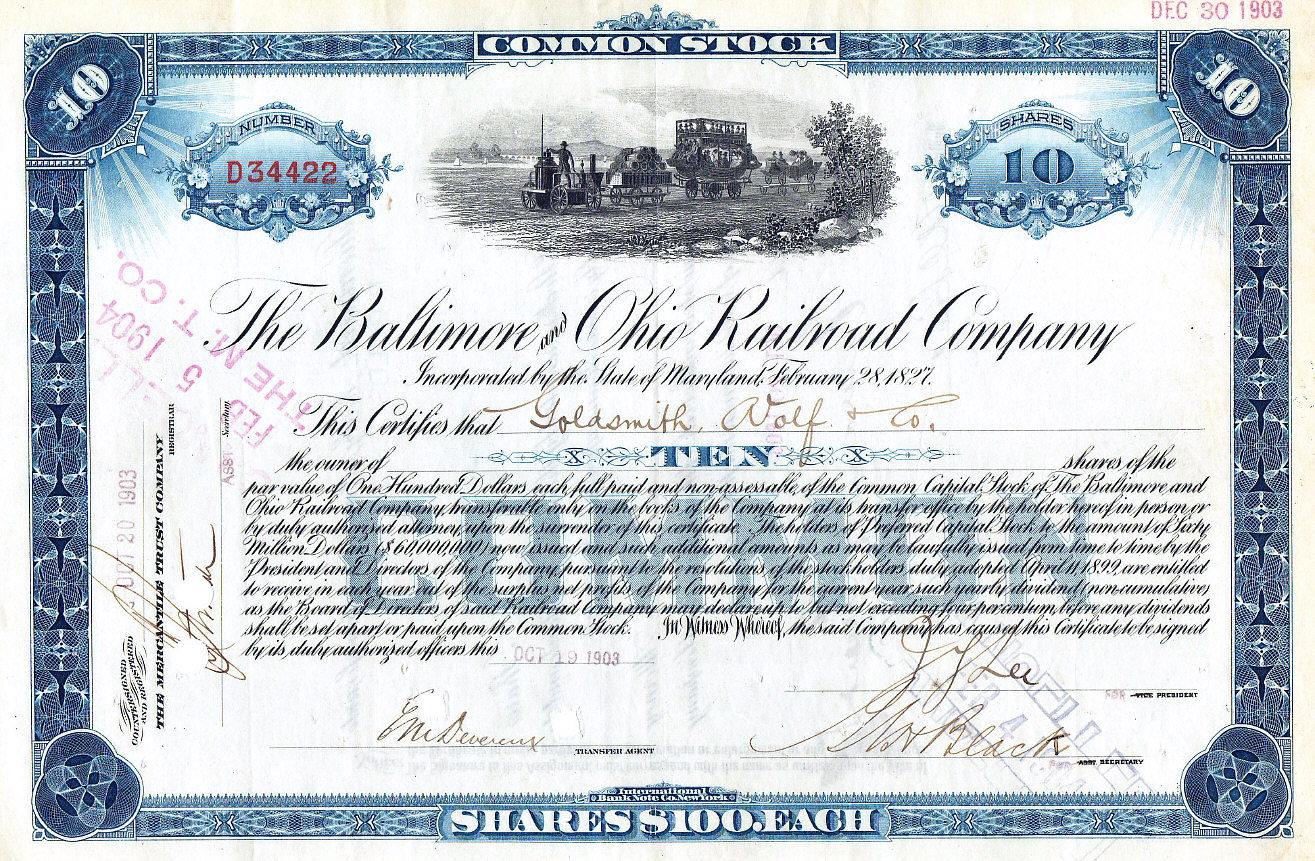
Contrast this with preferred stock, which acts as a hybrid mechanism between equity and debt. Preferred stock pays a fixed dividend amount, making it highly attractive to investors seeking predictable cash flow rather than volatile growth. Because of this fixed nature, it sacrifices voting rights. However, it gains a vital structural advantage: preferred stockholders have priority over common stockholders in corporate liquidation events. If the ship goes down, the bondholders get the lifeboats first, but the preferred shareholders get the next available seats, leaving the common shareholders with whatever is left.
Fixed Income: The Mechanics of the Loan
If stocks are ownership, bonds are IOUs. A bond is a debt instrument representing a loan made by an investor to a borrower. The taxation of the interest paid on these loans is determined entirely by who is doing the borrowing. This distinction is one of the most frequently tested, highly practical areas of your profession.
| Borrower | Security Type | Federal Tax | State/Local Tax |
|---|---|---|---|
| Corporation | Corporate Bond | Fully Taxable | Fully Taxable |
| Federal Government | U.S. Treasury Security | Fully Taxable | Exempt |
| State/Local Gov. | Municipal Bond | Exempt | Taxable (unless resident of issuing state) |
Let's explore the operational reality of these rules. Interest income from corporate bonds is fully taxable at both the federal and state levels. It offers the highest yield because the investor shoulders both default risk and maximum tax drag.
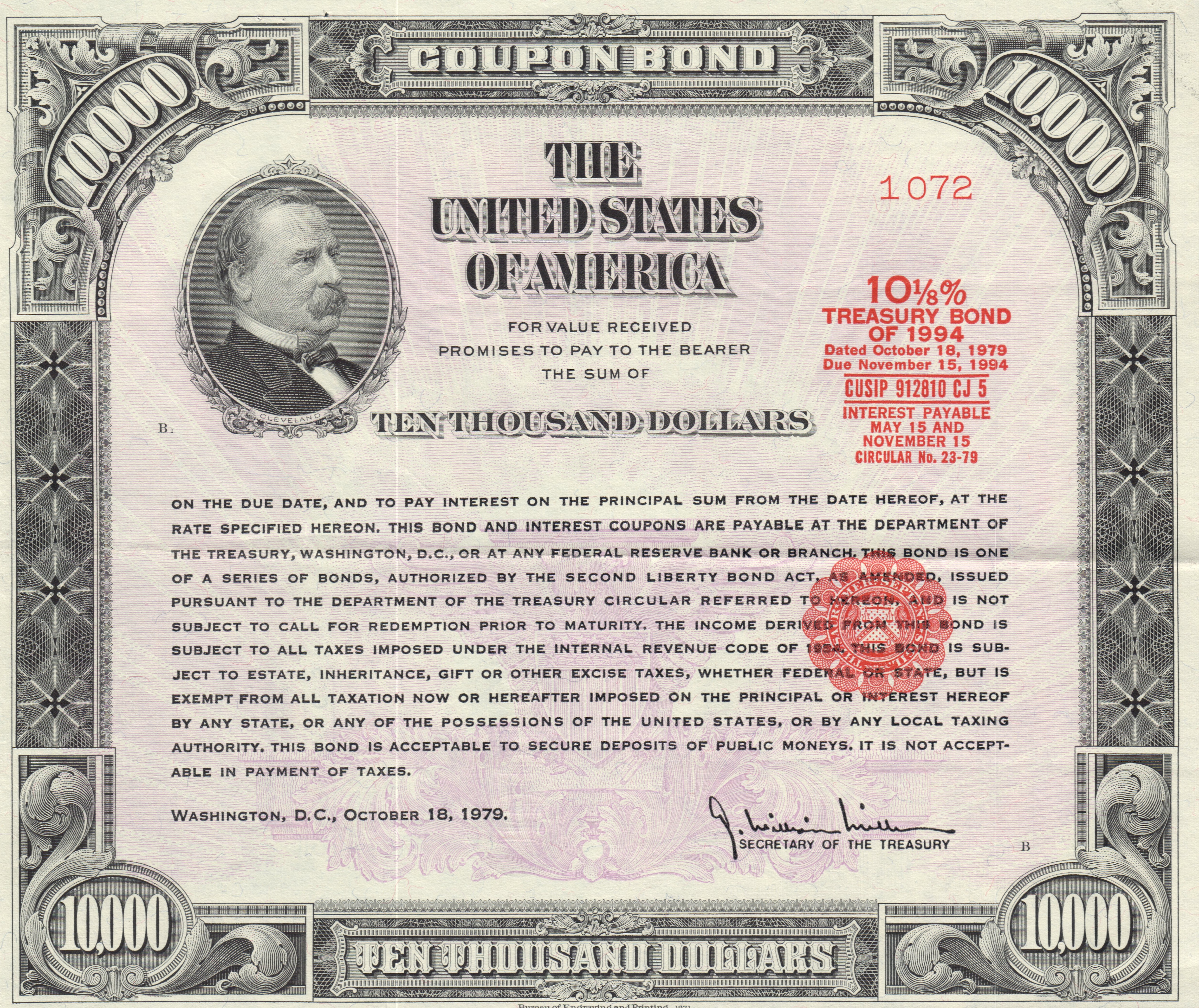
Interest income from United States Treasury securities is subject to federal income tax, but by constitutional precedent, interest income from United States Treasury securities is exempt from state and local income taxes. This makes Treasuries particularly potent for clients residing in high-tax states like California or New York.
Municipal bonds ("munis") fund local infrastructure. To subsidize this public borrowing, interest income from municipal bonds is generally exempt from federal income tax. Furthermore, municipal bond interest is exempt from state income tax if the purchasing investor resides in the issuing state.
Exam Trap: Do not confuse interest with price appreciation! While the interest on a muni bond is tax-free, municipal bond capital gains realized upon a sale in the secondary market are fully subject to federal capital gains taxes. If your client buys a muni bond at $900 and sells it at $1,000, that $100 gain is taxable.
Furthermore, watch closely for what the municipal bond is funding. If it funds a sports stadium or an airport rather than a public school, it is likely a "private activity" bond. Interest from private activity municipal bonds may be subject to the federal Alternative Minimum Tax (AMT).
The Physics of the Zero-Coupon Bond
Normally, bonds pay out cash interest twice a year. But consider the zero-coupon bond. Zero-coupon bonds are originally sold at a deep discount to the stated face value and pay no periodic cash interest payments during the life of the bond. You buy it for $600, you wait ten years, and it matures at $1,000.
The IRS, however, is deeply impatient. They will not wait ten years to tax that $400 of growth. This difference between the discounted purchase price and the face value is known as Original Issue Discount (OID). Original Issue Discount on a taxable bond generates phantom income. This means Original Issue Discount phantom income is taxed as ordinary interest income annually even though no cash is distributed to the investor. You must warn your clients: they will owe taxes on money they haven't actually received yet.
Buying individual securities requires immense capital to achieve diversification. To solve this, Wall Street created pooled investment vehicles. Think of these like public transportation for capital—many investors pool their resources to travel toward a shared destination. But the engineering of these vehicles drastically changes their behavior, pricing, and tax efficiency.
Open-End Mutual Funds
When a client buys a traditional mutual fund, they are directly transacting with the fund company itself. Open-end mutual funds continuously issue new shares to investors when money comes in, and they destroy shares when investors redeem them.
Because of this continuous flow, you cannot price the fund throughout the day. Open-end mutual fund shares are priced once per day at the end of the trading session. The math is straightforward: the price of an open-end mutual fund share directly equals the net asset value (NAV) per share—the total value of all the underlying stocks and bonds, divided by the number of shares outstanding.
Closed-End Mutual Funds
Imagine a mutual fund, but instead of constantly expanding and contracting, the doors are locked after day one. Closed-end mutual funds issue a fixed number of shares through an initial public offering (IPO). Once issued, the fund company is done dealing with investors. If you want to buy in, you must buy from someone who wants to sell out.
Consequently, closed-end mutual fund shares trade on secondary market exchanges. Because price is dictated by the panic and euphoria of other humans rather than a strict mathematical calculation at the end of the day, closed-end mutual fund share prices can trade at a premium or a discount to the underlying net asset value.
Exchange-Traded Funds (ETFs)
ETFs represent a monumental leap in financial engineering. Like closed-end funds, Exchange-Traded Funds trade on secondary market exchanges throughout the regular trading day, which means Exchange-Traded Fund share prices fluctuate intra-day based on market supply and demand dynamics.
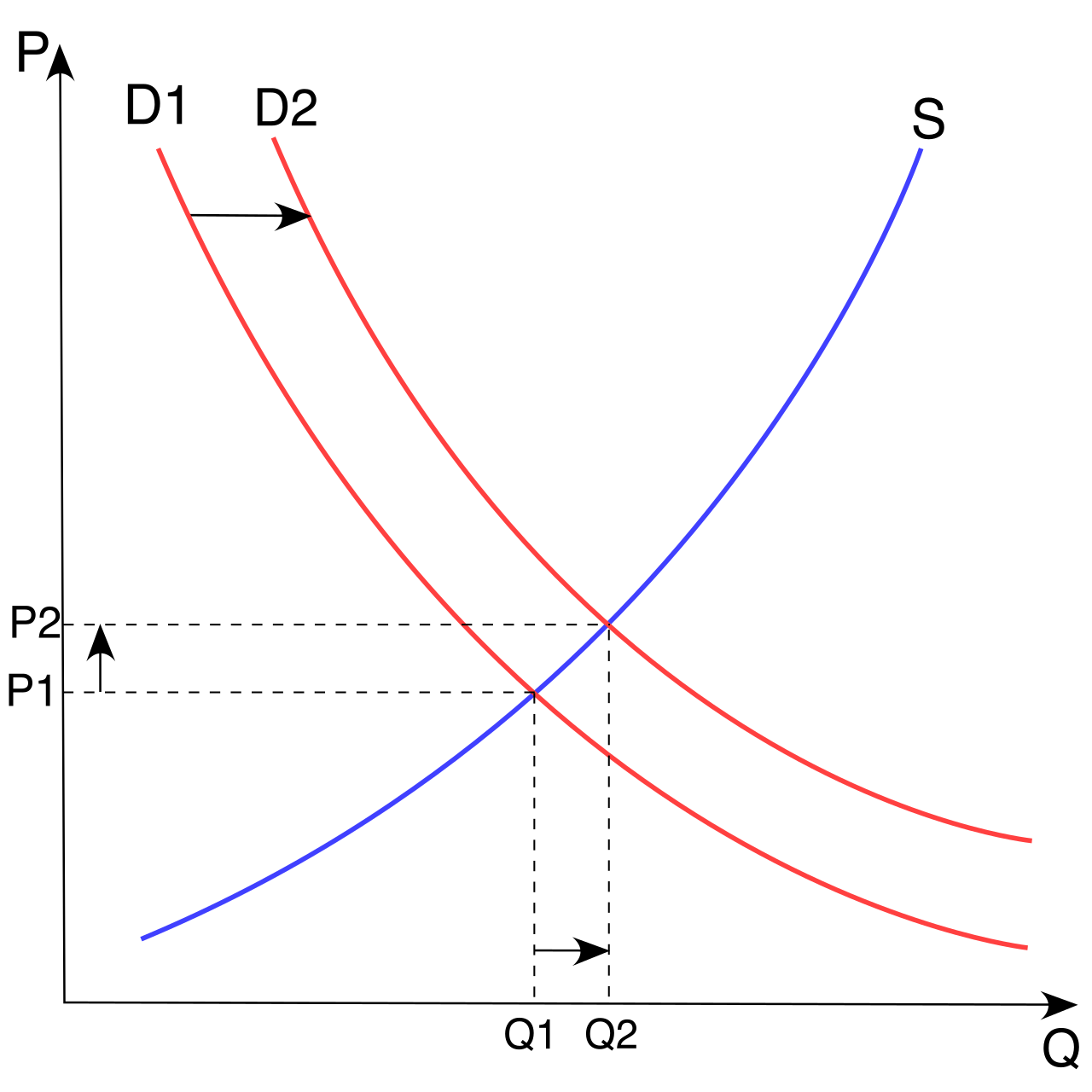
But here is where the magic happens: why don't ETFs suffer from the massive premiums and discounts that closed-end funds do? Because Exchange-Traded Funds utilize an in-kind creation and redemption mechanism with authorized participants.
If an ETF’s price rises above its NAV, institutional middle-men (authorized participants) buy the underlying stocks, bundle them up, and trade them directly to the ETF provider in exchange for newly created ETF shares. This "in-kind" (stock-for-stock) swap isn't a cash sale, meaning it doesn't trigger capital gains taxes within the fund. The in-kind redemption mechanism typically makes Exchange-Traded Funds highly tax-efficient compared to actively managed mutual funds.
Unit Investment Trusts (UITs)
Finally, we have the UIT. Think of a UIT as a time-capsule portfolio. Unit Investment Trusts hold a fixed, unmanaged portfolio of securities. There is no active manager trading stocks inside; the portfolio is set in stone. Furthermore, Unit Investment Trusts have a specific, predetermined termination date. When the clock runs out, the trust dissolves: at the termination date of a Unit Investment Trust, the underlying securities are sold and the proceeds are distributed to investors.
When capital flows back to the investor, it triggers a tax filter. Understanding the nuances of this filter separates a product-pusher from an elite financial planner.
Dividends: Ordinary vs. Qualified
When corporations share profits with owners, they pay dividends. The default rule is harsh: ordinary dividends are taxed at the ordinary income tax rates of the investor.
However, to encourage long-term economic investment, Congress created a loophole. Qualified dividends are taxed at favorable long-term capital gains tax rates. But an investor cannot simply buy a stock the day before the dividend, collect it, and sell the next day to get this rate. They must prove commitment.
The Holding Period Rule: A stock must be held for more than 60 days during the 121-day period beginning 60 days before the ex-dividend date for a dividend to be deemed qualified.
Capital Gains and Losses
When an asset is sold for more than its purchase price, a capital gain is realized. The IRS distinguishes between tourists and permanent residents via a hard temporal line: one year.
- Short-term capital gains apply to capital assets held for exactly one year or less. The penalty for a short holding period is severe: short-term capital gains are taxed at ordinary income tax brackets.
- Long-term capital gains apply to capital assets held for strictly more than one year. The reward for patience is substantial: long-term capital gains are taxed at preferential federal tax rates of 0%, 15%, or 20%, depending on the client's taxable income.
The Net Investment Income Tax (NIIT)
For high-earning taxpayers, the pain doesn't stop at standard rates. The Affordable Care Act introduced an additional layer of friction. The Net Investment Income Tax imposes an additional 3.8% surtax on certain investment income for high-earning taxpayers. Specifically, the Net Investment Income Tax applies directly to interest, dividends, and realized capital gains. It acts as a blanket thrown over the investment returns of the wealthy.
The Mutual Fund Tax Headache
Here is a scenario you will see constantly: A client buys into an open-end mutual fund in November. In December, they receive a massive 1099 form for taxable capital gains, even though they haven't sold a single share! Why?
By law, mutual funds often distribute taxable capital gains to shareholders annually regardless of individual shareholder trading activity. If the portfolio manager inside the fund sells Apple stock for a gain, that gain is passed through to the shareholders.
Furthermore, the characterization of that gain has nothing to do with how long your client held the mutual fund. Mutual fund capital gains distributions are classified as long-term or short-term based strictly on the holding period of the underlying assets by the fund itself.
If the manager held a stock for three months and sold it, the resulting distribution to the client is a short-term gain. Be acutely aware of how this is reported: short-term capital gains distributions from mutual funds are reported to the investor and taxed as non-qualified ordinary dividends.
What if the manager doesn't sell? Undistributed capital gains residing within an open-end mutual fund simply increase the overall net asset value of the fund shares. The tax is deferred until the client finally sells their mutual fund shares.
When your client finally decides to sell an investment, you don't just calculate the tax; you often get to choose the tax by choosing which specific shares to sell. This requires an intimate understanding of cost basis methodologies.
Selecting the Method
- Specific Identification: This is a planner's scalpel. The specific identification cost basis method allows an investor to choose exactly which distinct shares of a security are sold. If a client bought Apple at $50 in 2015, and more Apple at $180 in 2023, you can choose to sell the $180 shares today to minimize the recognized capital gain.
- First-In, First-Out (FIFO): If you fail to use the scalpel, the IRS uses a meat cleaver. The First-In, First-Out method is the default cost basis method utilized by the IRS if no specific method is chosen by the investor. This assumes the oldest shares are sold first, which typically represent the lowest cost basis and thus trigger the highest possible tax liability.
- Average Cost: The average cost basis method calculates the per-share cost by dividing the total dollar investment amount by the total number of shares owned. Note a vital restriction here: the average cost basis method is an option exclusively available for the sale of mutual fund shares. You cannot use average cost for individual stocks or ETFs.

The Wash Sale Rule: The IRS Anti-Gaming Mechanism
Investors are clever. A clever investor might notice their Tesla stock is down $10,000. They might think: "I'll sell it today, instantly realize the $10,000 tax deduction, and buy it right back two seconds later. I keep my position, and I get a tax break!"
The IRS anticipated this. The IRS wash sale rule disallows a realized capital loss for current tax reporting purposes if you attempt this maneuver.
The wash sale rule applies if a substantially identical security is purchased within a 30-day window before or after a loss-generating sale. (This creates a total 61-day danger zone: the day of the sale, 30 days prior, and 30 days post).
However, the loss is not gone forever; it is merely deferred. To maintain the physics of the tax ledger, a disallowed wash sale loss is explicitly added to the cost basis of the newly purchased replacement shares. When the client eventually sells those replacement shares in a legitimate, non-wash transaction, the embedded loss will finally be realized.

Mastering these concepts transforms you from a spectator of markets into an architect of wealth. When you know precisely how a vehicle trades, how it generates yield, and how the tax code treats that yield, you have the absolute power to dictate the efficiency of a financial plan. Study the mechanisms, respect the tax filters, and apply them with precision.