Insurance policy and company selection
Not sure you’re ready?
Take the ~3-minute readiness diagnostic and see where you stand.
When a client purchases an insurance policy, they are not buying a physical asset; they are trading present capital for a contingent future promise. That promise is mathematically modeled, legally bounded, and heavily reliant on an institution remaining solvent decades into the future. If the carrier fails before a claim is made, or if a contractual exclusion negates the payout at the exact moment of catastrophe, the financial plan shatters. The practitioner’s role is not merely to source coverage, but to ruthlessly audit both the promisor (the insurance company) and the fine print of the promise itself.
Before examining the mechanics of a specific policy, we must investigate the entity issuing it. Insurance rating agencies evaluate the financial strength of an insurance company. Why does this matter? Because financial strength ratings indicate an insurance company's ability to pay future claims to policyholders. An insurance contract is only as reliable as the balance sheet backing it.
When analyzing an insurer, financial planners rely on four major rating agencies. Each has its own distinct grading taxonomy:
| Rating Agency | Highest Rating | Scope & Distinctions |
|---|---|---|
| A.M. Best | A++ | A.M. Best is a credit rating agency that focuses exclusively on the insurance industry. They assign an A++ only to companies with a superior ability to meet ongoing insurance obligations. Conversely, they assign a Financial Strength Rating of F to insurance companies currently in liquidation. |
| Standard & Poor's | AAA | Evaluates global capital markets; Standard & Poor's provides financial strength ratings for insurance companies, with their highest awarded rating being AAA. |
| Moody's | Aaa | Evaluates global debt and corporate credit. Moody's Investors Service assigns financial strength ratings to insurance companies, with their highest rating being Aaa. |
| Fitch Ratings | AAA | Fitch Ratings provides insurer financial strength ratings, capping their scale with a highest awarded rating of AAA. |
Monitoring these ratings is an ongoing fiduciary imperative. A rating agency downgrade signals an increased risk of an insurance company defaulting on future policy claims.
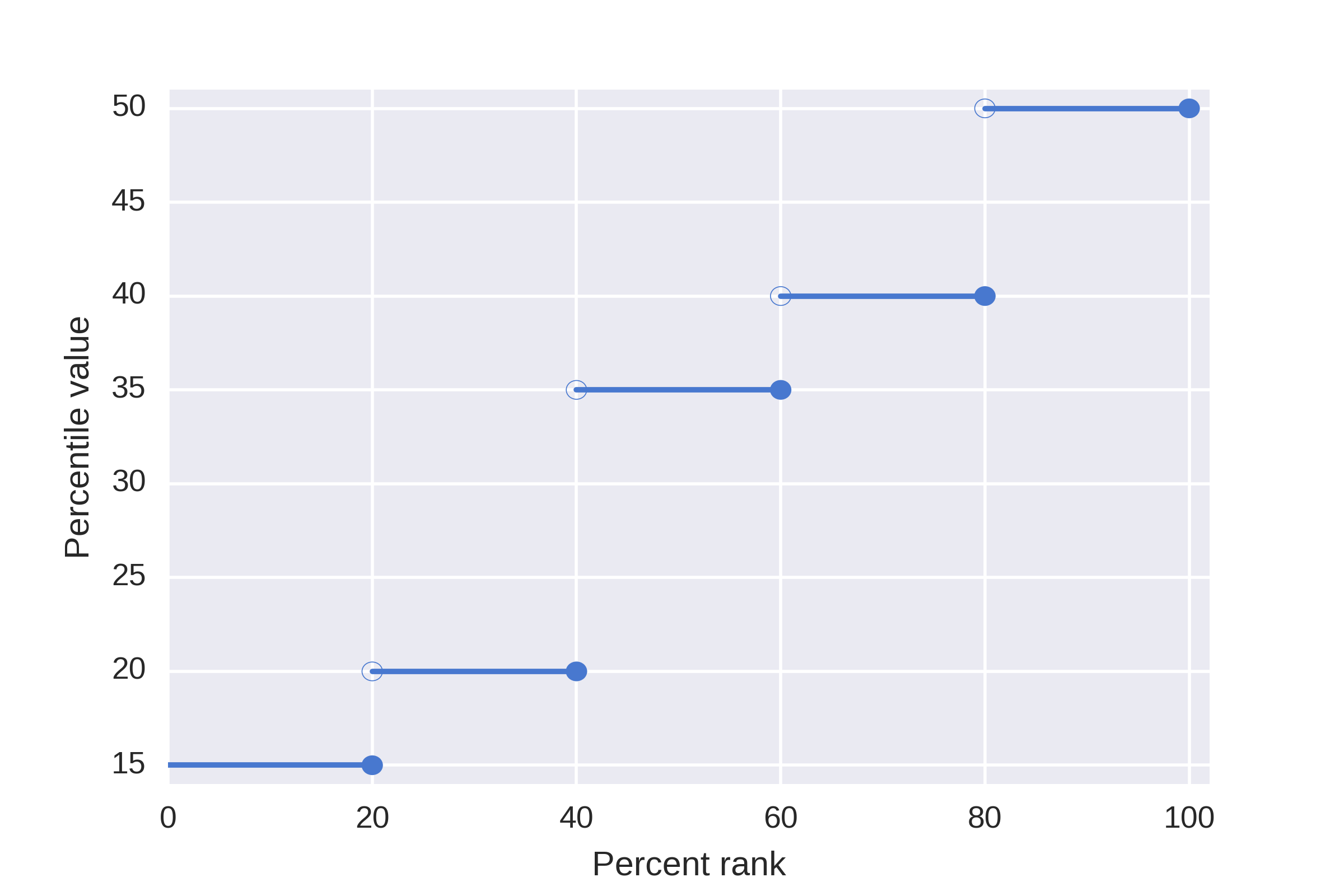
Because an "A" rating at one agency might mean something entirely different than an "A" at another, the industry uses a unifying metric called the Comdex. The Comdex is a composite index that averages the ratings of major insurance rating agencies. Rather than a standalone letter grade, a Comdex score ranges from 1 to 100 and represents the percentile ranking of an insurance company among all rated insurance companies. A Comdex of 95 means the carrier is ranked in the 95th percentile globally—a vital shorthand for stripping away the noise of competing alphabetical rating systems.
Regulatory Note: The National Association of Insurance Commissioners (NAIC) provides regulatory support for state insurance departments, standardizing practices and drafting model legislation. However, it is crucial to remember that the NAIC does not issue financial strength ratings for insurance companies. That role belongs strictly to private entities like A.M. Best and Moody's.
When evaluating carriers, you must understand how they are capitalized and who holds ultimate ownership.
A stock insurance company is a corporation owned by shareholders, who expect a return on their invested equity. By contrast, a mutual insurance company is legally owned by the policyholders.
Because mutual companies lack traditional shareholders, mutual insurance companies can distribute surplus funds by paying dividends to participating policyholders when mortality and investment experience are better than expected. The tax code treats this favorably: policy dividends paid by mutual insurance companies are classified by the IRS as a return of excess premium. Because you are simply getting a refund on an overcharge, policy dividends paid by mutual insurance companies are generally not taxable as ordinary income.
The Premium vs. Strength Dilemma
The market pricing of risk forces a delicate calculation. Selecting an insurance carrier requires balancing the cost of policy premiums against the long-term financial strength ratings of the carrier.
Clients will frequently spot cheaper policies and ask why they shouldn't just take the lowest quote. The economic reality is that lower-rated insurance companies frequently offer lower premium costs to attract potential policyholders. They compensate for their perceived default risk by competing heavily on price. If a client is purchasing a 30-year term policy or lifelong disability coverage, saving a few dollars today by utilizing a lower-rated carrier drastically increases tail-end default risk.
State Guaranty Funds
What happens if the worst occurs and the carrier's balance sheet breaks? State guaranty funds provide a financial safety net for policyholders if an insurance company becomes insolvent.
However, this is not a limitless federal bailout. State guaranty fund coverage limits vary by state and policy type (often capping life insurance death benefits at $300,000 or $500,000 depending on the jurisdiction). Therefore, financial planners must verify state guaranty fund limits when recommending insurance policies that exceed standard coverage caps. Recommending a $5,000,000 life policy from a poorly rated carrier exposes the client to a catastrophic shortfall if the carrier folds and the state guaranty fund only covers the first $300,000.
A bare-bones policy rarely fits a complex human life. Evaluating policy suitability requires matching the specific financial risks of the client to the definitions and triggers within the insurance contract. We tailor these contracts using riders.
Disability Income Riders
Disability insurance relies heavily on strict definitions of work.
- Own-Occupation Rider: This is the gold standard for highly specialized professionals (like surgeons or trial lawyers). An own-occupation rider defines disability strictly as the inability to perform the material duties of the insured's specific profession. If a surgeon damages their hands, they receive full benefits even if they choose to teach at a medical school.
- Residual Disability Rider: Recovery is often a spectrum, not an absolute. A residual disability rider provides partial benefit payments if the insured returns to work but experiences a loss of income due to an ongoing disability.
- Cost of Living Adjustment (COLA) Rider: Inflation silently erodes fixed payouts. A COLA rider increases disability benefit payments annually based on a specified inflation index.
- Future Increase Option Rider: Designed for young professionals on an upward trajectory, a future increase option rider permits a disability policyholder to increase their monthly benefit amount as their income rises without medical underwriting.
Life Insurance Base Modifications
- Waiver of Premium Rider: This rider acts as a fail-safe, waiving life insurance policy premiums if the insured becomes totally disabled. To prevent insurers from processing trivial, short-term claims, the waiver of premium rider typically includes a waiting period of three to six months before premiums are waived.
- Guaranteed Insurability Rider: Similar to the future increase option in disability, a guaranteed insurability rider allows the insured to purchase additional life insurance coverage at specified future dates without proof of insurability.
- Term Conversion Rider: A powerful flexibility tool, a term conversion rider permits the policyowner to exchange a term life insurance policy for a permanent life insurance policy without a medical exam, locking in insurability if health declines during the term.
- Return of Premium Rider: For clients averse to "wasting" money on term insurance, a return of premium rider refunds the accumulated premiums paid if the insured outlives the term of a term life insurance policy.
Supplemental Coverage within a Single Policy
- Primary Insured Rider: Sometimes a client needs layered coverage. A primary insured rider allows a policyowner to purchase additional term insurance on the primary insured under a single policy, essentially stacking a term block on top of a permanent base.
- Child Term Rider: For minor dependents, a child term rider provides a small amount of term life insurance coverage on the lives of the insured's children, guaranteeing insurability for them later in life.
Event-Driven Death and Living Benefits
- Accidental Death Benefit Rider: Often called "double indemnity," an accidental death benefit rider pays a multiple of the base policy face amount if the insured dies as a direct result of an accident.
- Family Income Rider: Rather than a lump sum, a family income rider provides a monthly income stream to beneficiaries upon the death of the insured for a predetermined period, matching cash flows to a family's ongoing budgetary needs.
- Accelerated Death Benefit Rider: Life insurance shouldn't only operate after death. An accelerated death benefit rider pays a portion of the life insurance death benefit while the insured is still living if the insured is diagnosed with a terminal illness.
- Long-Term Care Rider: Addressing modern longevity risk, a long-term care rider allows a policyowner to accelerate a portion of the life insurance death benefit to pay for qualified long-term care expenses.
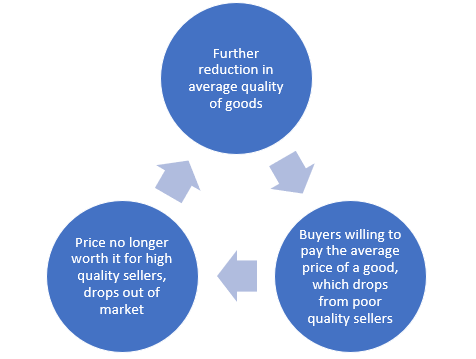
Equally critical to what an insurance company promises to pay is what it explicitly refuses to pay. Insurers use exclusions to strip out adverse selection and unquantifiable catastrophic risks.
- Suicide Clause: To prevent individuals from purchasing a policy with the immediate intent of self-harm to enrich heirs, the suicide clause in a life insurance policy denies the full death benefit if the insured commits suicide within a specified initial period. By statute in almost all jurisdictions, the standard suicide clause waiting period in life insurance policies is two years from the policy issue date. (If suicide occurs during this period, the insurer merely refunds premiums paid without interest).
- Aviation Exclusion: Flying on a commercial Boeing 737 is covered. However, an aviation exclusion denies life insurance death benefits if the insured dies while acting as a private pilot or crew member, reflecting the drastically higher mortality risk of general aviation.
- Hazardous Hobby Exclusion: Actuaries cannot effectively price adrenaline. A hazardous hobby exclusion prevents death benefit payouts if the insured dies while participating in designated high-risk activities like scuba diving or skydiving.
- War Clause: Insurers cannot absorb the mass-casualty statistics of armed conflict. A war clause excludes life insurance coverage for deaths caused directly by war or combat activities.

Ultimately, policy selection is an exercise in rigorous risk transfer. By synthesizing institutional strength ratings, structural carrier differences, tailored riders, and explicit contractual boundaries, you transform an abstract piece of paper into an unbreakable mathematical fortress for your client.