Disability income insurance (individual and group)
Not sure you’re ready?
Take the ~3-minute readiness diagnostic and see where you stand.
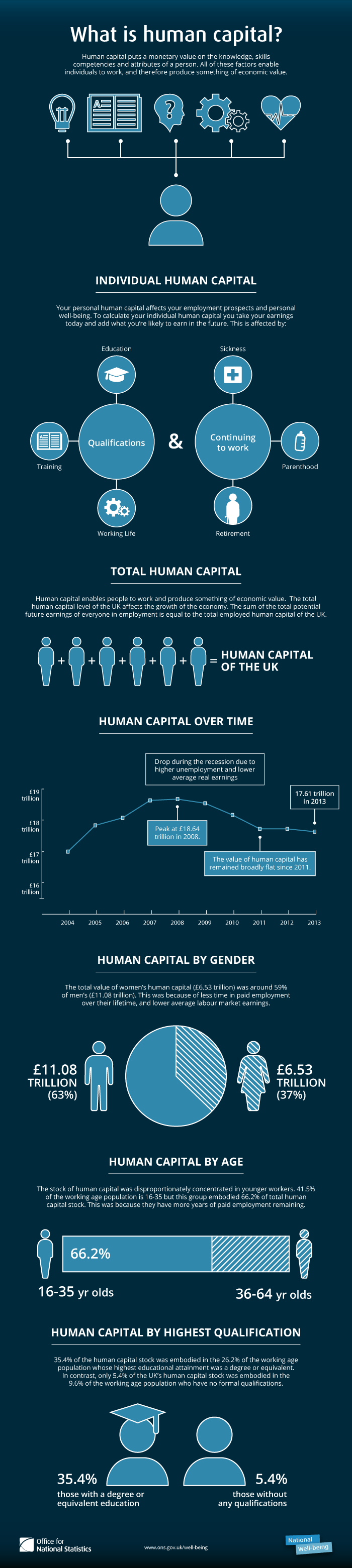
The greatest financial asset most clients possess is not their investment portfolio, real estate, or business equity—it is their human capital. Human capital is simply the present value of a lifelong stream of future earnings. When an individual suffers a severe illness or injury, that capital is instantly marked to zero, while the liabilities—mortgages, medical bills, and daily living expenses—remain steadfastly intact. Disability income insurance is the protective moat around a client’s human capital. Without it, the most sophisticated wealth management plan is built on a fault line.
To master this topic for the CFP® exam, you must strip away the marketing jargon and understand the mechanical levers of these policies: how the contract defines "disabled," how it structurally pays out, and how the IRS taxes the money that flows from it.
A client who says, "I have disability insurance," has told you almost nothing. The entire value of the contract hinges on a few lines of text defining exactly what constitutes a disability. We can visualize these definitions on a spectrum from the most generous (and expensive) to the most stringent.
Own-Occupation Definitions
At the most protective end of the spectrum is true own-occupation disability insurance. This policy pays benefits if the insured cannot perform the principal duties of their regular profession. The power of this definition lies in its exclusivity. Under a true own-occupation disability policy, an insured can work in an entirely different profession and still receive full disability benefits.
Real-World Application: Imagine a highly compensated orthopedic surgeon who develops a severe hand tremor. They can no longer perform surgery, satisfying the "true own-occupation" trigger. If that surgeon decides to take a job as a medical school professor, they will collect their new professor salary plus their full, unreduced disability benefit.
Because this is a massive liability for the insurer, you will often see a slightly tighter variation: a modified own-occupation disability policy. This contract pays benefits if the insured cannot perform their regular profession and is not actively working in any other profession. If our surgeon with the tremor takes the teaching job, the modified policy stops paying.
The Stricter Standards: Any-Occupation and Social Security
Moving down the spectrum of generosity, we find any-occupation disability insurance. This pays benefits only if the insured cannot perform the duties of any job for which they are reasonably suited by education, experience, or training. The tremor prevents the surgeon from operating, but their extensive medical education makes them perfectly suited to teach or act as a consultant. Under an any-occupation definition, they receive nothing.
To balance cost and protection, many insurers issue a split-definition disability policy. This is a pragmatic hybrid that typically applies an own-occupation definition for an initial period (usually two to five years) before permanently transitioning to an any-occupation definition. It gives the client a window to retrain or adjust their lifestyle before the stricter standard kicks in.
Finally, the most difficult hurdle to clear is the federal standard. Social Security defines disability as the inability to engage in any substantial gainful activity due to a physical or mental impairment expected to last at least 12 months or result in death. Clients cannot rely on Social Security as their primary safety net; the definition is brutally strict, and the denial rate is notoriously high.
Once you understand if a policy will pay, you must determine when and how much.
The Chronology of a Claim
Disability policies are fundamentally categorized by their duration. Short-term disability insurance policies typically provide benefit periods ranging from 13 weeks to 52 weeks. They are designed to bridge the gap for temporary recoveries. Long-term disability (LTD) insurance policies pick up where short-term leaves off, typically providing benefit periods extending from two years up to the insured's standard retirement age (usually age 65 or 67).
Between the onset of the injury and the arrival of the first check lies the elimination period. You should conceptualize the elimination period in a disability policy as a time-based deductible. Just as a higher dollar deductible lowers auto insurance premiums, a longer elimination period in a disability policy mathematically results in a lower premium cost.
Overriding the Elimination Period: Presumptive Disability
There is a tragic exception to the standard waiting game. Presumptive disability provisions automatically qualify an insured for full disability benefits upon the total loss of sight, hearing, speech, or the use of two limbs. Because the catastrophic nature of the disability is undeniable, presumptive disability provisions typically waive the elimination period for the insured, initiating payouts immediately.
Capping the Replacement: The Economics of Moral Hazard
If a client earns $100,000 a year, you cannot buy them $100,000 a year in disability coverage. The insurance industry enforces strict income replacement ceilings.
- Group disability policies typically cap the replacement of the insured's pre-disability income at 60 percent.
- Individual disability policies typically cap the replacement of the insured's pre-disability income between 60 percent and 70 percent.
Why? The insurance industry fundamentally understands human behavior. Income replacement limits in disability insurance prevent moral hazard by ensuring the insured retains a financial incentive to return to work. If a client could earn 100 percent of their income by staying home, the motivation to complete physical therapy and re-enter the workforce drops precipitously.
Recovering from a disability is rarely a binary switch; it is often a gradual return to work. Policies accommodate this through two distinct, yet easily confused, provisions:
| Provision Type | The Trigger Mechanism | How it Pays |
|---|---|---|
| Partial Disability | Based on Duties. | Pays a fixed percentage of the total disability benefit when an insured can only perform some duties of their occupation (e.g., working 20 hours instead of 40). |
| Residual Disability | Based on Dollars. | Pays a benefit proportional to the insured's percentage of lost income caused by the disability. |
If a client returns to work full-time but, due to their previous injury, can only handle a smaller client load—resulting in a 40 percent drop in income—a residual disability provision will replace 40 percent of the original disability benefit.
When a client buys an individual policy, they are buying a promise. The strength of that promise depends on the policy's renewability clause.
- A non-cancelable disability policy offers the ultimate client protection. It guarantees that the insurer cannot cancel the coverage and cannot increase the premium rate for the life of the policy. The price you lock in today is the price you pay forever.
- A guaranteed renewable disability policy guarantees that the insurer cannot cancel the coverage. However, under a guaranteed renewable disability policy, the insurer reserves the right to increase premiums for an entire class of policyholders (e.g., all accountants in Ohio). They cannot single out an individual due to declining health, but they can raise rates across the board.
Key Riders to Know
Clients customize their coverage using riders. For the exam, recognize these fundamental add-ons:
- Waiver of premium rider: Automatically suspends premium payments while the insured is actively receiving disability benefits.
- Cost of Living Adjustment (COLA) rider: Increases the monthly disability benefit on an annual basis during a continuous disability to offset inflation. This is vital for young clients facing decades of potential long-term disability.
- Future Increase Option (FIO) rider: Allows an insured to purchase additional disability coverage at specified future dates without undergoing new medical underwriting. This protects the insurability of young professionals whose incomes will rapidly climb.
- Social Security supplement rider: Pays an additional monthly disability benefit if the insured applies for and is denied Social Security disability benefits. It smooths out the income gap left by the government's stringent "any substantial gainful activity" definition.
The taxation of disability benefits is one of the most heavily tested concepts on the CFP® exam. Do not memorize disparate rules; understand the underlying IRS logic. I call it the "Seed and Harvest" rule: If the IRS taxes the seed (the premium), the harvest (the benefit) is tax-free. If the seed is tax-deductible or pre-tax, the IRS will tax the harvest.
Individual Policies
When a client purchases their own policy out of pocket, individual disability insurance premiums paid by a taxpayer are not tax-deductible. Because they are paying with after-tax dollars (the IRS taxed the seed), the result is perfectly symmetrical: when an individual pays individual disability insurance premiums using after-tax dollars, the resulting disability benefits are received completely income tax-free.
Group Policies and Employer Contributions
In the corporate world, employers often provide group disability as a fringe benefit. An employer can deduct the premiums paid for group disability insurance as an ordinary business expense.
How does this affect the employee?
- 100% Employer Paid: When an employer pays all premiums for a group disability policy without adding the cost to the employee's taxable income (a tax-free seed for the employee), the resulting benefits are fully taxable to the employee as ordinary income.
- Cafeteria Plans: If the employee pays premiums using pre-tax dollars through a cafeteria plan, the seed was never taxed. Consequently, disability benefits received from a policy where the employee paid premiums using pre-tax dollars through a cafeteria plan are fully taxable to the employee.
- Split Premiums: Often, the cost is shared. If a disability insurance premium is split between an employer and an employee, the taxation of the disability benefit is strictly proportional to the percentage of the premium paid by the employer. If the employer pays 60 percent of the premium (not included in the employee's W-2) and the employee pays 40 percent with after-tax dollars, exactly 60 percent of any future disability benefit will be taxable, while 40 percent will be tax-free.
The Real-World Planning Implication
This taxation dynamic directly interacts with the income replacement limits we discussed earlier. If a client has an employer-paid group policy capping benefits at 60 percent of their $100,000 salary, they will receive $60,000 a year if disabled. But because the employer paid the premium, that $60,000 is fully taxable! After taxes, their true income replacement might be closer to 40 or 45 percent—a catastrophic shortfall. This is exactly why planners urge high-earning clients to secure supplemental, individual, after-tax policies to fill the void.