Distribution rules and taxation
Not sure you’re ready?
Take the ~3-minute readiness diagnostic and see where you stand.
Imagine the U.S. tax code as a vast dam holding back a reservoir of untaxed wealth. For decades, the government allows workers to pour money into this reservoir—tax-deferred retirement accounts—letting the pressure build through the sheer force of compound growth. But the government’s patience is finite; eventually, it mandates the opening of the spillways to reclaim its share. This controlled release is governed by the rigid mathematics of Required Minimum Distributions (RMDs), while a complex system of penalties and precise exceptions dictates what happens when individuals attempt to access the reservoir too early. For a financial planning professional, mastering this hydraulic system is not merely a compliance exercise; it is the fundamental architecture of retirement income planning. The exact timing of a withdrawal, the specific type of account, and the precise nature of the client's life circumstances—from turning 55 to funding a child's education or leaving a legacy—dictate the taxation of a lifetime's worth of savings.

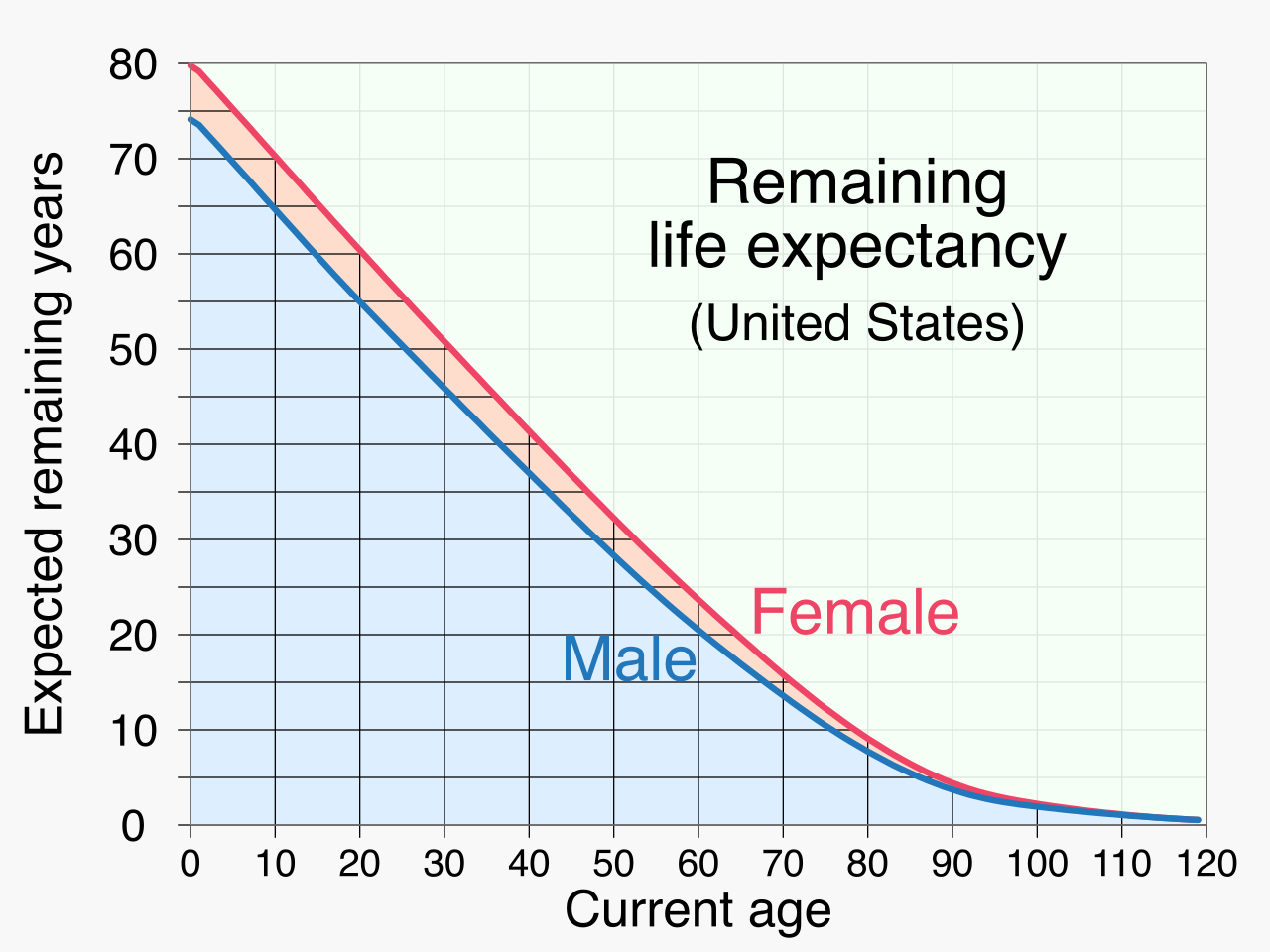
At its core, a Required Minimum Distribution is a simple division problem governed by legislative mortality assumptions. The government looks at the retirement account balance at the end of the preceding calendar year (December 31) and divides it by an applicable life expectancy factor.
Account owners generally use the Uniform Lifetime Table to determine this life expectancy factor. However, the tax code recognizes a mathematical necessity for spouses with significant age gaps: an account owner must use the Joint and Last Survivor Table if their spouse is the sole primary beneficiary and is more than 10 years younger than the owner.
The onset of these distributions is governed by the Required Beginning Date (RBD), which is April 1 of the year following the calendar year the account owner reaches the applicable RMD age. The SECURE 2.0 Act recently shifted these tectonic plates, establishing two distinct age brackets:
- For individuals born between 1951 and 1959, the applicable RMD age is 73.
- For individuals born in 1960 or later, the applicable RMD age is 75.
Crucial Timing Mechanism: The first RMD must be completed by the Required Beginning Date. However, RMDs for all years subsequent to the first distribution year must be taken by December 31. If an account owner chooses to delay their first RMD until April 1 of the year following their applicable RMD age, they are mathematically forced to take two distributions in that single calendar year (one by April 1, the second by December 31), potentially pushing themselves into a significantly higher tax bracket.
Not all accounts are subject to this lifetime pressure. Roth IRAs and, thanks to SECURE 2.0, Designated Roth accounts in employer retirement plans (like Roth 401(k)s) do not require minimum distributions during the lifetime of the original account owner.
If a client fails to take an RMD, the penalty is severe: an excise tax equal to 25 percent of the shortfall amount. However, the tax code offers a measure of grace, reducing this penalty to 10 percent if the shortfall is corrected within a two-year correction window.
The Geography of Accounts: Aggregation Rules
When an individual holds multiple retirement accounts, the IRS enforces strict rules on how those RMDs are calculated and withdrawn. Think of this as the geography of the money:
- Traditional IRAs: An individual must calculate the RMD for each IRA separately, but they may withdraw the total aggregate RMD amount from any one or more of their Traditional IRAs.
- 403(b) Accounts: Similarly, an individual with multiple 403(b)s must calculate them separately but may aggregate the distributions and take the total from any one or more 403(b)s.
- 401(k) Plans: Here, isolation is absolute. An individual with multiple 401(k) plans must calculate and withdraw the RMD separately from each individual 401(k) plan. There is no cross-pollination.
The Still-Working Exception
For those who continue to labor past their RMD age, the tax code offers the still-working exception. This allows participants in qualified employer plans to delay their Required Beginning Date until April 1 of the year following the year they actually retire.
However, this exception is highly restricted:
- It does not apply to Traditional IRAs.
- It is not available to any employee who owns more than 5 percent of the employer sponsoring the qualified retirement plan.
When a retirement account owner dies, the rules fracture. Beneficiaries are categorized into three distinct classes, each with its own timeline for draining the account.
1. Eligible Designated Beneficiaries (EDBs)
A designated beneficiary is simply an individual explicitly named as a beneficiary by the account owner. Eligible Designated Beneficiaries are a privileged subset permitted to stretch RMDs over their own single life expectancy. The tax code restricts this group to:
- A surviving spouse (who also possesses the unique right to elect to treat the inherited IRA as their own IRA).
- A minor child of the deceased account owner.
- A disabled or chronically ill individual.
- An individual who is not more than 10 years younger than the deceased.
The Minor Child Trap: A minor child of the deceased qualifies as an EDB only temporarily. Upon reaching the age of majority, they instantly lose their EDB status. At that exact moment, the remaining inherited account balance shifts to the 10-year rule and must be fully distributed within 10 years.
2. Non-Eligible Designated Beneficiaries
Any designated beneficiary who does not meet the strict criteria above is a Non-Eligible Designated Beneficiary. They are bound by the 10-year rule, meaning they must fully distribute the inherited retirement account by December 31 of the 10th year following the year of the original owner's death.
The IRS imposes a critical nuance based on when the original owner died:
- Death BEFORE the Required Beginning Date: The beneficiary is not required to take annual RMDs in years 1 through 9; they simply must drain the account by year 10.
- Death ON OR AFTER the Required Beginning Date: The original owner had already triggered the taxation spillway. Therefore, the beneficiary must take annual RMDs during years 1 through 9, and the account must still be empty by the end of year 10.
3. Non-Designated Beneficiaries
These are non-living entities: estates, charities, and non-see-through trusts. They receive the harshest treatment.
- If the owner dies before the RBD, the entire balance must be distributed by the end of the fifth year following the year of death.
- If the owner dies on or after the RBD, the entity must take RMDs over the deceased owner's remaining single life expectancy (often called a "ghost life expectancy").
To prevent retirement accounts from acting as mere short-term tax shelters, distributions from qualified plans and IRAs taken before age 59.5 are generally subject to a 10 percent early withdrawal penalty. This penalty is an additional levy applied strictly to the taxable portion of a distribution.
However, the tax code provides highly specific gates through this barbed wire. It is vital to categorize these exceptions by the type of account they apply to, as conflating them is a catastrophic error in financial planning.
Universal Exceptions (Both IRAs and Qualified Plans)
These life events and structures exempt early withdrawals from the 10 percent penalty regardless of whether the funds sit in an IRA or a 401(k):
- Death & Disability: Distributions made to a beneficiary on or after the participant's death, or distributions attributable to the participant's total and permanent disability.
- Medical & Emergency: Unreimbursed medical expenses exceeding 7.5 percent of Adjusted Gross Income.
- IRS Levy: Distributions made to satisfy an IRS levy against the plan.
- 72(t) Substantially Equal Periodic Payments (SEPP): A mathematical escape hatch. You can bypass the penalty by taking a series of substantially equal periodic payments. These payments must continue for the longer of five years or until the account owner reaches age 59.5. Warning: Modifying this schedule before the required timeframe expires triggers the 10 percent penalty on all previous pre-59.5 distributions, plus interest.
- SECURE Act Innovations:
- Qualified Birth or Adoption: Limited to $5,000 per parent, per event.
- Terminally Ill Individuals.
- Domestic Abuse Victims: Up to the lesser of $10,000 or 50 percent of the vested account balance.
- Personal Emergency Expenses: Up to $1,000 per year.
The "Qualified Plan ONLY" Exceptions
These exceptions do not apply to Individual Retirement Accounts.
- Qualified Domestic Relations Orders (QDRO): Distributions to an alternate payee under a QDRO.
- The Rule of 55: Exempts distributions if the employee separates from service during or after the calendar year they turn age 55. This applies exclusively to the qualified plan of the specific employer from which the employee separated. You cannot use the Rule of 55 to drain an old 401(k) from a prior employer.
- Public Safety Employees: For qualified public safety employees, the separation from service exception shifts to an earlier timeline: it applies if separation occurs during or after the year the employee reaches age 50, OR if the employee has 25 years of service under the plan, regardless of their age.
The "IRA ONLY" Exceptions
These exceptions do not apply to distributions from qualified retirement plans.
- Qualified Higher Education Expenses: For the taxpayer, their spouse, children, or grandchildren.
- First-Time Homebuyer: Up to a strict lifetime limit of $10,000.
- Health Insurance Premiums: To pay premiums while unemployed.
In the realm of financial planning, few strategies possess the elegance of Net Unrealized Appreciation (NUA). It is one of the only mechanisms in the U.S. tax code that legally converts highly taxed ordinary income into lower-taxed long-term capital gains.
NUA is defined as the difference between the fair market value of employer stock at the time of distribution and the cost basis of that stock inside the qualified plan.
The Mechanism of Action
To execute this strategy, the distribution of the employer stock must qualify strictly as a lump-sum distribution. This means distributing the employee's entire account balance within a single tax year. Furthermore, the aggregation rule demands aggregating all qualified plans of the same type sponsored by the employer.
This lump-sum distribution must occur immediately after a specific triggering event: separation from service, reaching age 59.5, total disability, or death.
The Taxation Timeline
When the employer stock is distributed out of the plan and into a taxable brokerage account under the NUA strategy, the tax treatment splits into two distinct channels:
- At Distribution (The Cost Basis): The cost basis of the stock is taxed as ordinary income in the year of distribution. Crucially, if the employee is under 59.5 and no exception (like the Rule of 55) applies, this cost basis portion is also subject to the 10 percent early withdrawal penalty.
- Deferred (The NUA Amount): The entire NUA amount is completely deferred from taxation until the employer stock is actually sold by the taxpayer.
When the taxpayer eventually sells the stock, the magic happens. The original NUA amount established at distribution is taxed at long-term capital gains rates, regardless of the length of time the stock was actually held outside the qualified plan. The moment it leaves the plan, the NUA is cemented as long-term.
However, the market does not stop moving. Any appreciation on the employer stock that occurs after the distribution date is tracked separately. This post-distribution appreciation is taxed as either short-term or long-term capital gain based strictly on the holding period outside the plan.
The Legacy of NUA
NUA carries a unique characteristic through the estate planning process. If employer stock utilizing the NUA strategy is held until death and transferred to heirs, the original NUA amount does not receive a step-up in basis. Instead, that preserved NUA amount is treated as Income in Respect of a Decedent (IRD) when the stock is eventually sold by the heirs. The heirs will pay the long-term capital gains tax on the NUA that the original owner deferred.