Key factors affecting plan selection for businesses
Not sure you’re ready?
Take the ~3-minute readiness diagnostic and see where you stand.
Designing a corporate retirement plan is not merely a financial exercise; it is an architectural one. You are constructing a mechanism that must simultaneously capture maximum tax advantages for the business owner, navigate the volatile physics of corporate cash flow, and withstand the relentless regulatory gravity of the IRS and ERISA. Recommend a rigid defined benefit plan to a highly profitable but cyclical startup, and you will bankrupt them during their next downturn. Recommend a Simplified Employee Pension (SEP) to a 50-person landscaping company with 80% annual turnover, and you will drain the owner’s equity by funding the accounts of transient workers who quit three weeks later. To master plan selection, you must view the Internal Revenue Code not as a list of restrictions, but as an engineering toolkit. Every plan design is a calculated response to a specific combination of cash flow stability, workforce demographics, and the owner’s personal wealth goals.
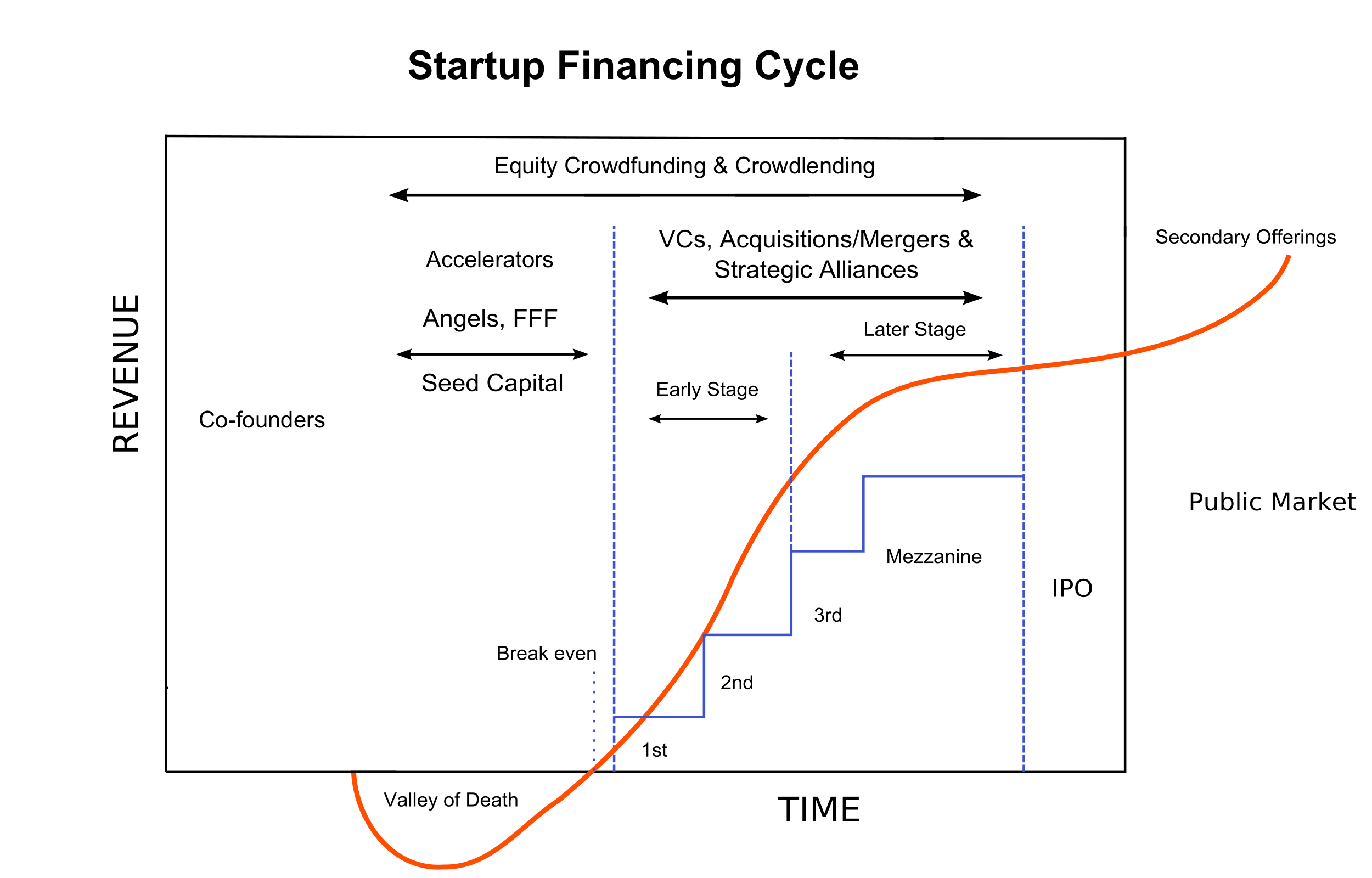
The fundamental dividing line in retirement plan architecture is the consistency and predictability of a business's cash flow. Before you ask a business owner how much they want to save, you must determine how reliably their business generates cash.
When cash flow is highly erratic, mandatory contributions are a hazard. This is where the Simplified Employee Pension (SEP) plan shines. SEP plans allow employers to change contribution amounts each year based on business profitability. In years of low cash flow, employers can skip contributions entirely in a Simplified Employee Pension plan, making it the ultimate pressure-release valve for cyclical businesses.
Conversely, if a business boasts highly stable and predictable corporate cash flow, you can look toward defined benefit pension plans. These plans provide the highest potential deductible contributions for older business owners, functioning like a high-capacity vacuum for excess corporate profits. However, the mandatory annual funding requirements of defined benefit plans necessitate this stable cash flow. You cannot simply decide to skip a year. Furthermore, these plans come with massive administrative friction. Administrative costs for defined benefit plans are generally the highest among all retirement plans due to actuarial fees and Pension Benefit Guaranty Corporation (PBGC) premiums, plus the fact that defined benefit pension plans require an enrolled actuary to determine annual funding requirements.
Minimizing Complexity
For business owners prioritizing minimal administrative complexity and low setup costs, you should bypass qualified plans entirely and select a Simplified Employee Pension plan or a SIMPLE IRA.
- Simplified Employee Pension plans do not require the sponsoring employer to file an annual Form 5500.
- Savings Incentive Match Plan for Employees (SIMPLE) IRAs also do not require the sponsoring employer to file an annual Form 5500.
There is one exception in the qualified plan space for micro-businesses: the Solo 401(k). A Solo 401(k) plan is only available to businesses whose exclusive eligible workers are the owner and the owner's spouse. These Solo 401(k) plans are exempt from filing an annual Form 5500 until total plan assets exceed $250,000, offering the robust benefits of a 401(k) without the initial administrative drag.
Once you understand the cash flow, you must analyze the workforce. Business demographics dictate the ultimate cost of the plan. Transient employees and high turnover can silently bleed a business dry if the plan isn't designed to defend against it.
The Walls of Eligibility
The first defense mechanism is eligibility. Employers can restrict qualified retirement plan participation to employees who have attained age 21 and completed one year of service. Utilizing the maximum statutory age and service requirements dramatically reduces employer plan costs by excluding transient employees.
If an employer wishes to be even more restrictive, an employer cannot require more than two years of service as a condition for participation in a qualified retirement plan. However, there is an immediate trade-off: employees must be 100 percent vested in all employer contributions immediately upon entry if an employer requires two years of service for plan participation.
Important Caveat for 401(k) Plans: While you can restrict employer contributions, traditional 401(k) plans cannot require more than one year of service as a condition for employees to make elective deferrals. Furthermore, under the SECURE Act, employers must offer dual eligibility provisions to long-term part-time employees in 401(k) plans, allowing them to defer their own wages even if they haven't met the standard 1,000-hour requirement.
SEP plans have entirely different eligibility architecture. Employers must include any employee in a Simplified Employee Pension plan who is at least 21 years old and has worked for the employer in three of the last five years. While the statutory three-of-five-year eligibility rule effectively allows employers to exclude short-term transient employees from Simplified Employee Pension plan contributions, it contains a hidden trap. Including part-time employees who meet the three-of-five-year service requirement significantly increases the overall cost of a Simplified Employee Pension plan, as even someone working minimal hours for three years must receive a contribution.
Vesting as Cost Recovery
A business with high employee turnover should strongly favor a retirement plan with a vesting schedule. Vesting schedules significantly reduce the net cost of employer contributions for businesses with high employee turnover because unearned funds revert to the plan.
For example, traditional 401(k) plans allow employers to implement a vesting schedule for employer matching contributions. When an employee leaves early, terminating non-vested employees in a traditional 401(k) plan generates plan forfeiture accounts. Employers can use plan forfeitures from unvested terminating employees to offset future employer contributions, turning turnover into a cost-saving mechanism.
By contrast, the immediate vesting requirement makes a Simplified Employee Pension plan less cost-effective for businesses experiencing high employee turnover, because employer contributions to a Simplified Employee Pension plan are immediately 100 percent vested to the employee. Similarly, Savings Incentive Match Plan for Employees (SIMPLE) IRAs require all employer contributions to be 100 percent vested immediately upon deposit.
When an employer wants to implement a simple, non-qualified solution, you are generally choosing between a SEP and a SIMPLE IRA. Understanding their strict mechanical differences is paramount.
A SIMPLE IRA requires the sponsoring employer to have 100 or fewer eligible employees. Mechanically, an employee is eligible for a SIMPLE IRA if they received at least $5,000 in compensation during any two preceding years and expect to earn $5,000 in the current year.
The constraints of a SIMPLE IRA:
- Employers sponsoring a SIMPLE IRA must make either a mandatory matching contribution or a nonelective contribution to eligible employees every year.
- Therefore, mandatory annual employer contributions make a SIMPLE IRA inappropriate for businesses with highly unpredictable cash flow.
- Employee elective deferrals in a SIMPLE IRA are strictly limited to a lower maximum statutory dollar amount than elective deferrals in a 401(k) plan.
- Consequently, a SIMPLE IRA is suboptimal for a business owner whose primary goal is to maximize their personal elective deferral amount.
The constraints of a SEP IRA: While flexible with cash flow, employer contributions to a Simplified Employee Pension plan must be the exact same percentage of compensation for all eligible employees. The uniform contribution percentage rule makes a Simplified Employee Pension plan extremely expensive for business owners with a large number of rank-and-file employees. If the owner wants to give themselves 25% of their compensation, they must give the 22-year-old receptionist 25% of theirs.
When business owners outgrow IRAs and want to maximize their deferrals, they turn to Traditional 401(k)s. But traditional 401(k)s operate under strict nondiscrimination testing to ensure the highly compensated employees (HCEs) aren't benefiting disproportionately compared to rank-and-file workers.
The most dangerous hurdle for small businesses is top-heavy testing. Top-heavy testing rules require minimum employer contributions to non-key employees if more than 60 percent of plan assets belong to key employees. Because founders and owners generally max out their accounts early, small businesses with high owner account balances frequently fail top-heavy testing in traditional 401(k) plans.
The elegant architectural solution to this is the Safe Harbor 401(k).
- Safe Harbor 401(k) plans are exempt from Actual Deferral Percentage (ADP) nondiscrimination testing.
- Safe Harbor 401(k) plans are exempt from Actual Contribution Percentage (ACP) nondiscrimination testing.
- Adopting a Safe Harbor 401(k) design completely exempts a top-heavy plan from the mandatory top-heavy minimum contribution requirements.
This makes a Safe Harbor 401(k) ideal for highly compensated owners who want to maximize their own deferrals without being limited by rank-and-file participation rates. The cost of this freedom? Safe Harbor 401(k) plans require the employer to make fully vested matching or nonelective contributions to eligible employees.
When an employer wants to make defined contributions but heavily skew the dollars toward themselves or key personnel, standard pro-rata formulas fail. We must use age and compensation as levers.
Age-Weighted Profit-Sharing Plans: These plans use both the employee's age and compensation to determine the annual allocation of employer contributions. Because older employees have fewer years to compound interest before retirement, the IRS allows larger allocations for them to hit equivalent retirement targets. Therefore, an age-weighted profit-sharing plan is optimal when older business owners want to receive significantly larger contribution allocations than younger employees.
- Warning: A business owner seeking to maximize retirement contributions for a young highly compensated employee should strictly avoid age-weighted profit-sharing plans, as the math will severely penalize the young executive.
New Comparability Profit-Sharing Plans: This is the scalpel of the defined contribution world. Instead of strict age/comp math, employees are divided into distinct "classes" (e.g., Owners, Executives, Rank-and-File). New comparability profit-sharing plans allow business owners to maximize their own contribution allocations while meeting minimum gateway testing. They are specifically designed to minimize employer contributions for younger rank-and-file employees, providing ultimate control over the flow of employer dollars.
Target Benefit Plans: Often misunderstood, target benefit plans are defined contribution plans that allocate employer contributions based on the employee's age and compensation. Unlike a standard profit-sharing plan, target benefit plans aim to fund a specific predetermined retirement benefit for each participant at retirement age. However, because it is structurally a defined contribution plan, the employee bears the investment risk; if the account falls short of the "target," the employer is not obligated to make up the difference.
When a highly profitable business owner has exhausted standard 401(k) limits and is rapidly approaching retirement, they need a bigger bucket.
Enter the Cash Balance Plan. A cash balance plan is a defined benefit plan that displays participant benefits as an individual account balance. This optical illusion makes it highly popular with employees—who understand account balances better than complex annuity formulas—while still operating under defined benefit rules.
Because they use defined benefit mathematics, cash balance plans allow employers to make significantly larger deductible contributions than traditional defined contribution plans. To build the ultimate retirement fortress, employers can pair a cash balance plan with a 401(k) plan to maximize total owner retirement contributions. This "combo plan" strategy allows the owner to max out the 401(k) limits (both deferrals and profit-sharing) and then stack massive cash balance contributions on top, often sheltering hundreds of thousands of dollars annually from immediate taxation.
Final Synthesis for the Planner
Your role is to diagnose the structural realities of the business. You must weigh the owner's desire for massive tax deductions against their tolerance for administrative friction (Form 5500s, actuaries). You must map the volatility of their cash flow against the rigidity of plan funding requirements (DB vs. SEP). Finally, you must measure the demographic reality of their workforce—using eligibility criteria, vesting schedules, and Safe Harbor designs to aggressively insulate the owner’s wealth from the erosive costs of high turnover and nondiscrimination failures.