Eldercare and special needs planning
Not sure you’re ready?
Take the ~3-minute readiness diagnostic and see where you stand.
Longevity is the great triumph of modern medicine, but it introduces an agonizing financial calculus. We have engineered bodies that can easily outlive their cognitive decline and physical autonomy by decades, yet the financial infrastructure to support this reality is fragmented and merciless. When you sit across from a client terrified of cognitive decline, or parents agonizing over who will care for a severely disabled child after they are gone, you are not just managing portfolios. You are navigating a complex intersection of tax law, healthcare policy, and property rights to engineer a life of dignity.
To build a plan that survives contact with reality, you must understand exactly how the system behaves when the money runs out, when the mind fades, and when the state steps in.
When clients think of aging, they assume the healthcare system will catch them. This is the first illusion you must shatter. Medicine cures; it does not babysit.
The Great Medicare Misunderstanding
The single most dangerous misconception your clients hold is that Medicare will fund their decline. Medicare does not pay for ongoing custodial care for the elderly. It is designed for acute recovery, not permanent maintenance.
If a client falls and breaks a hip, Medicare Part A acts as a sprinter. It covers up to 100 days of skilled nursing facility care per benefit period, but only if strict conditions are met:
- It requires a qualifying hospital stay of at least three consecutive days prior to admission.
- It is not free forever. Medicare skilled nursing coverage requires the patient to pay daily copayments starting on day 21.

Once the client stops improving, or day 100 is reached, the sprinter stops. The client is now facing custodial care—assistance with daily living rather than medical rehabilitation. At this point, the financial burden falls entirely on the family, unless they exhaust their wealth and turn to the state.
Medicaid: The Payer of Last Resort
When the private money vanishes, Medicaid serves as the primary government payer for long-term custodial care in the United States. Because Medicaid is a needs-based program, applicants must be financially impoverished to qualify. Naturally, people try to game the system by giving their money away to their children right before moving into a nursing home.
To prevent this, Medicaid utilizes a strict 60-month look-back period to monitor uncompensated asset transfers. If you try to give your wealth away within five years of applying, the state catches it.
The Penalty Equation Uncompensated asset transfers made during the Medicaid look-back period result in a penalty period of ineligibility for long-term care benefits. How long is the penalty? It is purely mathematical. The Medicaid penalty period is calculated by dividing the uncompensated transfer amount by the average monthly private pay cost of nursing home care in the state. (E.g., If you give away $60,000 and the state average nursing home cost is $6,000/month, you are disqualified from Medicaid for 10 months.)
Spousal Impoverishment Rules
The law is harsh, but it does not require a healthy spouse to starve because their partner developed Alzheimer’s. Under the Medicaid spousal impoverishment rules, the healthy "community spouse" is protected:
- They are allowed to retain a minimum amount of income without disqualifying the institutionalized spouse from Medicaid.
- They are permitted to retain a Maximum Community Spouse Resource Allowance in countable assets.
The Primary Residence Fortress
For Medicaid purposes, the family home is treated uniquely. A primary residence is generally an exempt asset for Medicaid eligibility if the applicant intends to return to the home. However, there are limits:
- For a single applicant, Medicaid enforces a state-specific maximum home equity limit for a primary residence to remain an exempt asset. If the equity exceeds this cap, the house must be sold or borrowed against to fund care.
- The ultimate shield: A primary residence remains an exempt asset for Medicaid eligibility regardless of the equity value if a community spouse continues to reside in the home.
Private Defense Mechanisms
To avoid the indignity of Medicaid spend-down, we use private insurance and asset liquidation.
Long-Term Care (LTC) Insurance
LTC insurance shifts the risk of custodial care to an underwriter. But the policy does not pay out simply because a client feels old. Long-term care insurance benefits are triggered when the insured cannot perform a specified number of Activities of Daily Living (ADLs).
There are exactly six standard Activities of Daily Living recognized by long-term care insurance: bathing, dressing, eating, transferring, toileting, and continence. Standard long-term care insurance policies require the inability to perform at least two Activities of Daily Living for a period expected to last at least 90 days to trigger benefits.
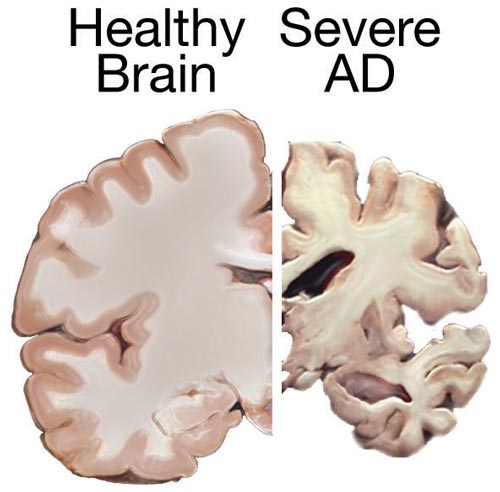
Alternatively, physical capability might be perfectly intact, but the mind is gone. Therefore, Long-term care insurance benefits can be triggered by a medical certification of severe cognitive impairment.
The Partnership Cheat Code What if the client buys a policy, exhausts the benefits, and still needs care? Long-Term Care Partnership Programs allow individuals to shield assets from Medicaid spend-down requirements equal to the benefits paid by a qualifying long-term care insurance policy. If a partnership policy paid out $200,000 in benefits, the client can keep $200,000 of their own wealth and still qualify for Medicaid.
Housing and Liquidations
If insurance isn't an option, we look at the balance sheet.
- Continuing Care Retirement Communities (CCRCs): These facilities offer tiered levels of care ranging from independent living to skilled nursing care within a single community. Clients pay a hefty entry fee and monthly fees, but a portion of the entry fee and monthly fees paid to a CCRC may be deductible as an itemized medical expense on a tax return.
- Home Equity Conversion Mortgage (HECM): A federally insured reverse mortgage. A Home Equity Conversion Mortgage allows homeowners to convert home equity into cash without monthly mortgage payments. To qualify, it requires the youngest borrower to be at least 62 years old.
- The Triggers: The loan must be repaid. A HECM becomes due and payable when the last surviving borrower dies OR if the borrower permanently moves out of the home for 12 consecutive months (such as moving permanently to a nursing home).
- Viatical Settlements: If a client owns life insurance and is chronically or terminally ill, viatical settlements allow a chronically ill individual to sell a life insurance policy to a third party for an immediate lump sum of cash to fund eldercare. Because public policy favors the sick, proceeds from a viatical settlement are generally received income tax-free if the insured is chronically or terminally ill.
Legal Prerequisites: Control Before the Fall
As a planner, you must force clients to act while they still possess legal capacity. A durable power of attorney must be executed before an individual experiences severe cognitive decline to ensure an appointed agent can legally manage financial affairs.

If you fail to get this in place, the family must go to court for Guardianship, which is a legal process where a court appoints a surrogate decision-maker to manage the personal or financial affairs of an incapacitated individual. Guardianship is public, expensive, and removes the client's fundamental civil rights. Avoid it at all costs.
Eldercare focuses on the end of a long life; special needs planning focuses on protecting a vulnerable life that may span decades. The core challenge here is that special needs individuals rely heavily on government safety nets that are hyper-sensitive to the beneficiary having any wealth.
The Fragile Foundation: SSI and Medicaid
Supplemental Security Income (SSI) is a federal program providing monthly cash assistance to individuals with disabilities who have extremely limited income and resources. How limited? The general countable resource limit for an unmarried individual to qualify for Supplemental Security Income is $2,000. If a well-meaning grandmother leaves $5,000 directly to a disabled grandchild, that grandchild loses their SSI, and critically, they will likely lose their Medicaid, cutting off their medical lifelines.
The Moat Around the Money: Special Needs Trusts (SNT)
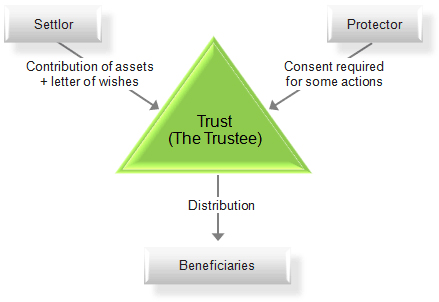
To give a disabled person a quality of life above mere subsistence without ruining their government benefits, we build a legal moat: A Special Needs Trust (SNT). A Special Needs Trust provides supplemental funds for a disabled beneficiary without disqualifying the beneficiary from needs-based government benefits.
But how the trust is funded dictates its rules. You must master the distinction between First-Party and Third-Party trusts.
| Feature | First-Party SNT | Third-Party SNT | Pooled SNT |
|---|---|---|---|
| Source of Funds | Funded exclusively with assets belonging directly to the disabled individual (e.g., a personal injury settlement or a direct inheritance). | Funded with assets belonging to someone other than the disabled beneficiary (e.g., parents funding a trust for their child). | Administered by a non-profit organization that manages individual sub-accounts for multiple disabled beneficiaries. |
| Age Limit to Establish | Can only be established for a disabled individual who is under the age of 65 at the time the trust is created. | No age restriction. | No age restriction. |
| Medicaid Payback at Death? | Must include a provision directing the trustee to reimburse the state Medicaid agency upon the beneficiary's death. | Does not require a Medicaid payback provision upon the death of the disabled beneficiary. The remainder goes to the family's chosen heirs. | Usually, funds remaining either pay back Medicaid or stay with the non-profit pool. |
The Danger of In-Kind Support and Maintenance (ISM)
Having an SNT is not enough; the trustee must know exactly how to spend the money. Distributions from a Special Needs Trust must focus on supplemental care to avoid reducing a beneficiary's Supplemental Security Income. Supplemental care means therapies, vacations, education, or specialized equipment.
If the trustee uses trust funds to buy groceries or pay the rent, the government notices. Paying for a special needs beneficiary's food or shelter directly from a Special Needs Trust is treated as In-Kind Support and Maintenance. Receiving In-Kind Support and Maintenance reduces a beneficiary's Supplemental Security Income cash benefit. (Typically by a presumed maximum value of roughly one-third of the federal benefit rate).
The ABLE Account Revolution (The 2026 Landscape)
Trusts are expensive to draft and administer. Recognizing this, Congress created a parallel tool: The Achieving a Better Life Experience (ABLE) Act allows states to create tax-advantaged 529A savings programs for eligible people with disabilities.
ABLE accounts operate similarly to 529 college savings plans but are designed to pay for qualified disability expenses. As of 2026, the playing field expanded massively. To qualify for an ABLE account in 2026 and beyond, the onset of the qualifying disability must have occurred before the beneficiary's 46th birthday. (Prior to 2026, the age limit was 26, locking out millions who developed conditions like MS, ALS, or severe mental health disorders in their 30s).
ABLE Account Mechanics and Limits
- Funding: The total annual contributions to an ABLE account from all sources combined cannot exceed the annual federal gift tax exclusion amount.
- The Working Beneficiary Exception: Employed ABLE account beneficiaries can make additional contributions beyond the standard annual limit if the beneficiary does not participate in an employer-sponsored retirement plan.
- The $100,000 Fulcrum: Unlike a trust, an ABLE account does count toward SSI eventually, but with a massive buffer. The first $100,000 in an ABLE account is exempt from the Supplemental Security Income resource limit calculation.
- What happens if the account goes over $100,000? An ABLE account balance exceeding $100,000 results in the suspension of the beneficiary's Supplemental Security Income cash benefits. However, the government drew a line in the sand regarding healthcare: The suspension of Supplemental Security Income due to an ABLE account balance exceeding $100,000 does not terminate the beneficiary's Medicaid eligibility.
- The Catch: Like a First-Party SNT, the state wants its cut when it's over. Upon the death of an ABLE account beneficiary, remaining funds must be used to reimburse the state for Medicaid expenses incurred after the account's creation.
The Human Element: The Letter of Intent
Finally, law and finance cannot capture the nuances of human routine. When parents of a special needs child pass away, the successor trustee knows where the money is, but they might not know the child's favorite food, their anxiety triggers, or their preferred daily routine.
This is solved by a Letter of Intent. A Letter of Intent is a non-binding document written by guardians detailing specific wishes for the future care and lifestyle of a special needs dependent. It has no legal teeth, but practically, it is the instruction manual for the child's life.

As a CFP professional, ensuring the financial structures (Trusts, ABLE accounts) are paired with the human structures (Letters of Intent, DPOAs) is the difference between a plan that looks good on paper and a plan that actually works in the real world.