Social Security and Medicare planning
Not sure you’re ready?
Take the ~3-minute readiness diagnostic and see where you stand.
Building a resilient retirement income plan is an exercise in applied physics. Two massive, interlocking forces—Social Security and Medicare—dictate the gravitational pull of a client's cash flow in their later decades. A miscalculation in timing the claim of a retirement benefit, or a missed enrollment window for healthcare coverage, does not merely result in a temporary setback; it triggers permanent, compounding penalties that erode capital for life. For the financial planner, mastering the mechanics of these programs is not about memorizing trivia; it is about engineering a fail-safe framework that maximizes guaranteed lifetime income while shielding the portfolio from catastrophic healthcare liabilities.
To understand Social Security, you must first understand its anchor point. Everything in the Social Security universe revolves around a single, unyielding mathematical center of gravity: the Full Retirement Age (FRA).

For individuals born in 1960 or later, the Full Retirement Age for Social Security is 67.
When a worker claims their benefit at this exact age, they receive their Primary Insurance Amount (PIA). The Primary Insurance Amount is the baseline Social Security retirement benefit a worker receives upon claiming at Full Retirement Age. Think of the PIA as 100 percent of the earned payload. Any deviation from this anchor point alters the trajectory of the benefit for the rest of the client's life.
The Physics of Early Claiming and Delayed Credits
Individuals can claim Social Security retirement benefits as early as age 62. However, this flexibility carries a severe thermodynamic cost. Claiming Social Security retirement benefits before Full Retirement Age results in a permanent reduction of the monthly benefit amount. The system penalizes you for expanding the payout horizon.
Conversely, if a client possesses the capital to delay claiming, the system rewards their patience with Delayed Retirement Credits (DRCs). Delayed Retirement Credits increase a worker's Social Security benefit for each month of delayed claiming past Full Retirement Age.
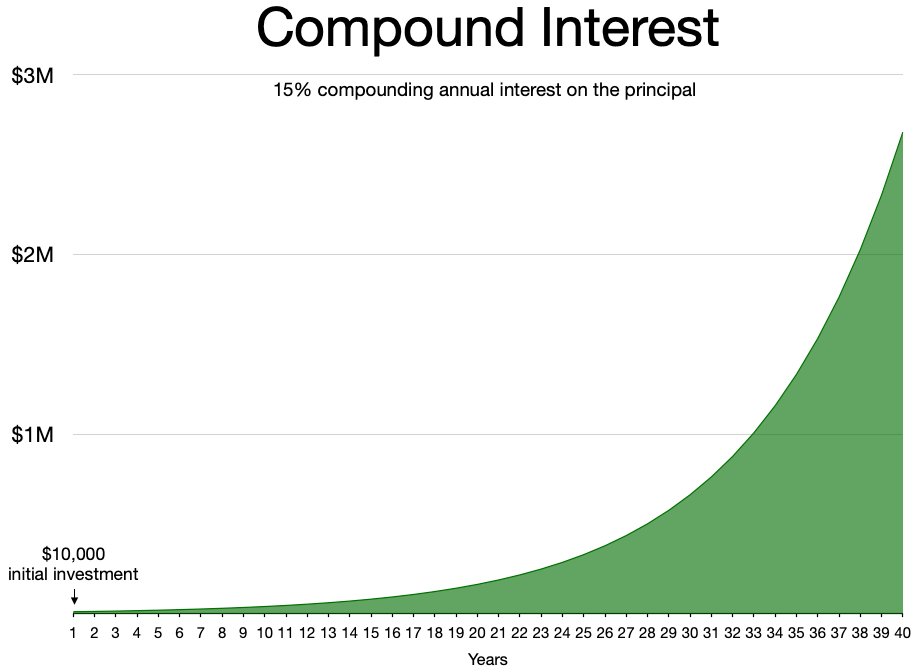
The Power of Delay: Delayed Retirement Credits increase the Social Security Primary Insurance Amount by 8 percent per year up to age 70.
This 8 percent is not tied to market performance; it is a guaranteed, risk-free compounding rate. However, this growth has a hard stop. Social Security retirement benefits do not accrue Delayed Retirement Credits beyond age 70. Advising a client to delay claiming past age 70 is equivalent to advising them to leave cash burning in an incinerator—there is zero mathematical justification for it.
The complexity of Social Security multiplies exponentially when a spouse or ex-spouse is introduced. The system provides derivative benefits, but these operate under entirely different rules than individual benefits.
Spousal Benefits
A spousal Social Security benefit is calculated as a maximum of 50 percent of the primary earner's Primary Insurance Amount. It is fundamentally anchored to the primary earner's baseline, not their delayed, age-70 benefit.
To access this benefit, a spouse must be at least age 62 to claim a spousal Social Security benefit unless caring for a qualifying child. If they wait until their own Full Retirement Age, they get the full 50 percent. But if they jump the gun? Claiming a spousal Social Security benefit before Full Retirement Age results in a permanent reduction of the spousal benefit amount.
Furthermore, the government does not reward spouses for waiting past the anchor point. Spousal Social Security benefits do not accrue Delayed Retirement Credits if claimed after the claiming spouse's Full Retirement Age. Once a spouse hits FRA, their spousal benefit has reached its maximum potential.
The Divorced Spouse
The system does not punish clients for a failed marriage, provided it had longevity. A divorced individual can claim a spousal Social Security benefit based on an ex-spouse's work record if the marriage lasted at least 10 consecutive years. However, the claimant's current relationship status is the ultimate disqualifier: a divorced individual must be currently unmarried to claim a spousal Social Security benefit based on an ex-spouse's work record.
Survivor Benefits
Do not conflate spousal benefits with survivor benefits. They are entirely distinct species.
While a spousal benefit is capped at 50 percent of the PIA, a surviving spouse is entitled to receive 100 percent of the deceased spouse's actual Social Security benefit if claimed at the survivor's Full Retirement Age. Notice the word "actual." If the deceased spouse delayed until age 70 and earned those massive 8 percent annual credits, the surviving spouse inherits that highly inflated, actual benefit amount.
Because death disrupts normal retirement timelines, the system allows earlier access to survivor capital. A surviving spouse can begin receiving reduced Social Security survivor benefits as early as age 60. Even more accelerated, a disabled surviving spouse can begin receiving reduced Social Security survivor benefits as early as age 50.
Perhaps the most potent planning lever available to widows and widowers is the ability to decouple their benefits. A surviving spouse can switch from a survivor benefit to their own individual retirement benefit at a later date. This allows a planner to, for example, have the client claim a reduced survivor benefit at age 60 while allowing their own individual retirement benefit to accrue Delayed Retirement Credits until age 70, executing a perfectly timed "step-up" strategy.
The government giveth, and the government taketh away. As a planner, your job is to guide clients safely through three massive traps built into the Social Security code.
1. The Retirement Earnings Test
If a client decides to claim benefits early but continues to generate wage income, they will trigger a clawback. The Social Security retirement earnings test temporarily withholds benefits for individuals who work and claim benefits before reaching Full Retirement Age.
How aggressive is this clawback?
- For years prior to reaching Full Retirement Age, the Social Security earnings test deducts $1 in benefits for every $2 earned above the annual limit.
- In the calendar year an individual reaches Full Retirement Age, the rules loosen. The Social Security earnings test deducts $1 in benefits for every $3 earned above a separate higher limit.
The crucial word here is temporarily. The withheld benefits are not vaporized; they are credited back into the PIA recalculation later. More importantly, this friction disappears entirely at the anchor point. The Social Security earnings test no longer applies once a worker reaches Full Retirement Age. From that day forward, the client can earn ten million dollars a year in wages and keep every single penny of their Social Security benefit.
2. The Taxation of Benefits
Social Security benefits are not strictly tax-free, nor are they strictly taxable. They exist in a quantum state determined by Provisional Income, which determines the portion of Social Security benefits subject to federal income taxation.
The Provisional Income Formula: Provisional income is calculated by adding Adjusted Gross Income, non-taxable interest, and 50 percent of the individual's Social Security benefit.
Why non-taxable interest? Because the IRS refuses to let municipal bond yields serve as a hiding place from Social Security taxation. Depending on where this Provisional Income figure lands on the IRS thresholds, up to 85 percent of a taxpayer's Social Security benefits can be subject to federal income taxation.
3. The Public Sector Traps: WEP and GPO
If your client spent their career as a teacher in Texas or a police officer in Ohio, paying into a state pension system instead of Social Security, you must account for two punitive rules. These rules exist to prevent "double dipping" into systems heavily weighted toward low-wage earners.
- Windfall Elimination Provision (WEP): The Windfall Elimination Provision reduces the Primary Insurance Amount for workers receiving a pension from employment not subject to Social Security taxes. It attacks the client's own benefit.
- Government Pension Offset (GPO): The Government Pension Offset reduces Social Security spousal or survivor benefits for individuals receiving a pension from non-covered government employment.
The GPO is particularly devastating. The Government Pension Offset reduces a Social Security spousal or survivor benefit by two-thirds of the individual's non-covered government pension amount. In many cases, this completely wipes out the spousal or survivor benefit entirely.
If Social Security is the physics of cash flow, Medicare is the biological shield that prevents that cash flow from being decimated by hospital bills.
General eligibility for Medicare benefits begins at age 65. The timing of entry into this system is mercilessly strict. The Initial Enrollment Period for Medicare lasts for exactly seven months. Specifically, the Initial Enrollment Period includes the three months before the 65th birthday month, the birthday month, and the three months following the birthday month. Miss this window, and the consequences are lifelong.
Medicare is not a single, monolithic entity; it is an alphabet soup of interconnected parts. Let's dissect the anatomy of the program.
Original Medicare: Parts A and B
Medicare Part A acts as your catastrophic physical infrastructure coverage. Medicare Part A primarily covers inpatient hospital care, skilled nursing facility care, hospice care, and home health care.
For the vast majority of Americans, Medicare Part A is premium-free for individuals who have accumulated at least 40 quarters of Medicare-covered employment. However, "premium-free" does not mean "cost-free." Medicare Part A requires an out-of-pocket deductible for each inpatient hospital benefit period. Notice the term benefit period—this is not an annual deductible; a client could theoretically pay this deductible multiple times in a single calendar year if they are discharged and readmitted under a new benefit period.
Part A also has highly restrictive rules for rehabilitation. While Medicare Part A covers up to 100 days of skilled nursing facility care per benefit period, there is a rigid prerequisite: Medicare coverage of a skilled nursing facility requires a prior qualifying inpatient hospital stay of at least three consecutive days. "Observation status" does not count.
Medicare Part B, on the other hand, is your day-to-day medical engine. Medicare Part B primarily covers outpatient medical services, physician visits, preventive care, and durable medical equipment.
Unlike Part A, Medicare Part B requires enrollees to pay a standard monthly premium. And for your affluent planning clients, this premium is a moving target. The Income-Related Monthly Adjustment Amount (IRMAA) increases Medicare Part B premiums for enrollees with higher incomes. Because the government is always looking in the rearview mirror, the Income-Related Monthly Adjustment Amount uses Modified Adjusted Gross Income from two years prior to determine current premium surcharges. A massive capital gain realized at age 63 will trigger an IRMAA surcharge at age 65.
Delaying Part B is perilous. Delaying Medicare Part B enrollment without creditable employer coverage results in a permanent 10 percent premium penalty for each full 12-month period of delay.
The Prescription Drug Component: Part D
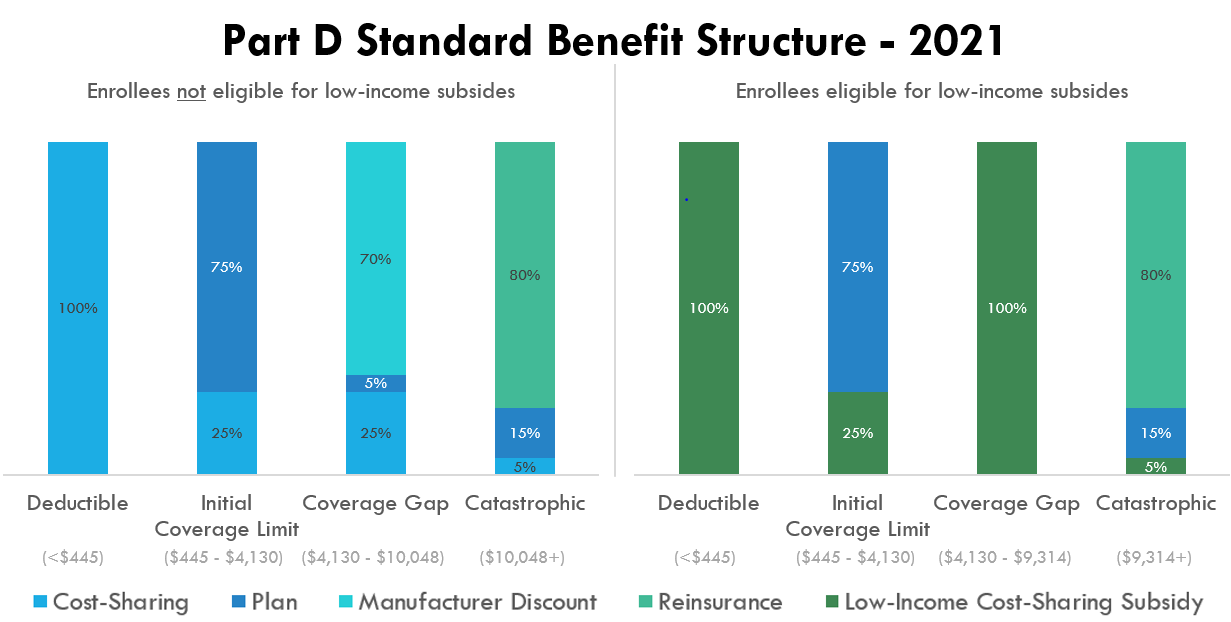
Original Medicare generally ignores the pharmacy counter. To solve this, Medicare Part D provides coverage for prescription drugs. Medicare Part D plans are sold by private insurance companies approved by Medicare.
Just like Part B, success has a surcharge. High-income enrollees must pay an Income-Related Monthly Adjustment Amount surcharge on their Medicare Part D premiums.
The penalty for missing the Part D window utilizes a different mathematical formula than Part B. Delaying Medicare Part D enrollment without creditable prescription drug coverage results in a permanent monthly premium penalty. The Medicare Part D late enrollment penalty is calculated as 1 percent of the national base beneficiary premium for each full month of delay.
Bridging the Gaps: Medigap vs. Medicare Advantage
Original Medicare (Parts A and B) leaves patients liable for a vast array of deductibles, copayments, and 20% coinsurance gaps. To protect the portfolio, clients must choose one of two distinct paths: Medigap or Part C.
Path 1: Medigap (Supplement) Medicare Supplement Insurance policies help pay out-of-pocket costs associated with Original Medicare. Medicare Supplement Insurance is commonly known as Medigap.
Timing here is absolutely paramount. The Medigap Open Enrollment Period lasts for six months starting the month an individual is age 65 or older and enrolled in Medicare Part B. During this precise, vanishing window, the client holds all the leverage. Insurance companies are prohibited from using medical underwriting to deny coverage or charge higher premiums during the Medigap Open Enrollment Period. If your client waits until month seven to apply and they have a pre-existing condition, the insurer can legally deny them coverage.
Path 2: Medicare Advantage (Part C) Alternatively, the client can opt out of the traditional structure entirely. Medicare Part C plans are offered by Medicare-approved private health insurance companies. Medicare Part C serves as an alternative to Original Medicare by bundling Part A and Part B coverage into a single plan.
Because it is bundled, most Medicare Part C plans include prescription drug coverage, meaning a standalone Part D plan is unnecessary. However, this convenience comes with strict geographic and logistical boundaries: Medicare Part C plans typically require enrollees to use a specific network of doctors and hospitals.
The Mutually Exclusive Rule: You cannot mix and match these two paths. Medigap policies cannot be used to pay out-of-pocket costs for a Medicare Advantage plan. If a client buys Part C, their Medigap policy is useless.
The Blind Spots: What Medicare Will Not Touch
As comprehensive as this system appears, it possesses massive, intentional blind spots that a financial planner must bridge with separate capital or insurance.
Above all, Medicare generally does not cover long-term custodial care or assistance with activities of daily living. If your client develops severe cognitive decline and requires an assisted living facility simply to help them dress and eat, Medicare will not pay a dime.
Furthermore, Original Medicare ignores standard age-related biological decay. Medicare generally does not cover routine dental care, routine vision care, or hearing aids.
The role of a CFP® professional in Social Security and Medicare planning is not merely to process paperwork. It is to recognize these systems as an interconnected matrix of deadlines, formulas, and irreversible decisions. By mastering the distinction between an actual survivor benefit and a capped spousal benefit, by engineering provisional income to avoid taxation, and by shielding capital through flawlessly timed Medigap enrollment, you transform complex federal bureaucracy into guaranteed financial security for your clients.