Types of retirement plans
Not sure you’re ready?
Take the ~3-minute readiness diagnostic and see where you stand.
A retirement system is essentially a thermodynamic engine for human wealth, converting present-day labor into future financial energy. As financial planners, you must precisely govern how this capital flows through various pressure valves—taxes, contribution limits, and vesting schedules—to maximize the work it can perform decades down the line. We are dealing with two fundamental architectures: systems where the final output is structurally guaranteed, and systems where the output relies entirely on the efficiency of the inputs and the friction of the market. Understanding the mechanics of defined benefit plans, defined contribution platforms, and individual retirement arrangements (IRAs) is not about memorizing isolated trivia. It is about designing the precise machinery your clients will rely upon when their human capital is entirely depleted.
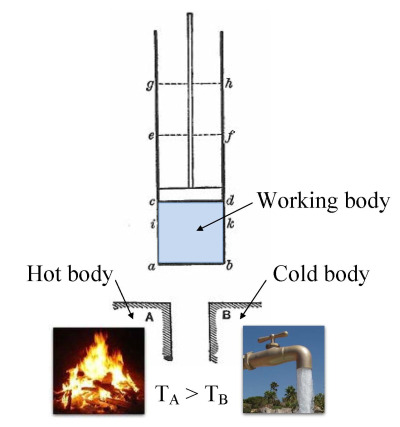
When an employer establishes a retirement plan, they must fundamentally decide who bears the risk of the unknown future. This divides the world of employer-sponsored retirement plans into two distinct universes.
A defined benefit plan promises a specified monthly benefit at retirement based on a formula—typically factoring in salary history and years of service. Think of a defined benefit plan like buying a ticket on a commuter train. The passenger (the employee) knows exactly where they will end up and when they will arrive. The conductor (the employer) must worry about the cost of the fuel, the maintenance of the engine, and the condition of the tracks. Thus, the employer bears all investment risk in a defined benefit retirement plan. If the plan’s investments underperform, the employer must make up the shortfall. Because these promises are so absolute, they are backstopped by the federal government: the Pension Benefit Guaranty Corporation insures benefits in most traditional defined benefit plans up to specific limits.
Conversely, a defined contribution plan does not promise a specific retirement benefit amount. Returning to our transportation analogy, a defined contribution plan is like handing an employee the keys to a car and a map. The ultimate benefit in a defined contribution plan depends strictly on total contributions and investment performance. If the driver gets lost or the car breaks down, the liability rests entirely with them; the employee bears all investment risk in a defined contribution plan.
To prevent these defined contribution "vehicles" from becoming tax shelters for unlimited wealth, Congress caps their capacity. For the 2026 tax year, the overall limit for combined employee and employer contributions to a defined contribution plan is $72,000. Furthermore, this machinery can only calculate benefits up to a certain fuel capacity: for the 2026 tax year, the annual compensation limit used to calculate retirement plan contributions is $360,000.
Within the defined contribution universe, the structural chassis varies based on the type of employer.
The 401(k) Plan
The most ubiquitous vehicle in the private sector, a 401(k) plan is a specific type of defined contribution profit-sharing plan. Its defining feature is that a 401(k) plan permits employees to make elective deferrals from their salary.
These deferrals come in two flavors:
- Traditional 401(k) employee deferrals reduce taxable income in the year of the contribution, deferring the tax liability until the funds are withdrawn.
- Roth 401(k) employee deferrals are made exclusively with after-tax dollars, allowing the capital to grow and be distributed entirely tax-free.
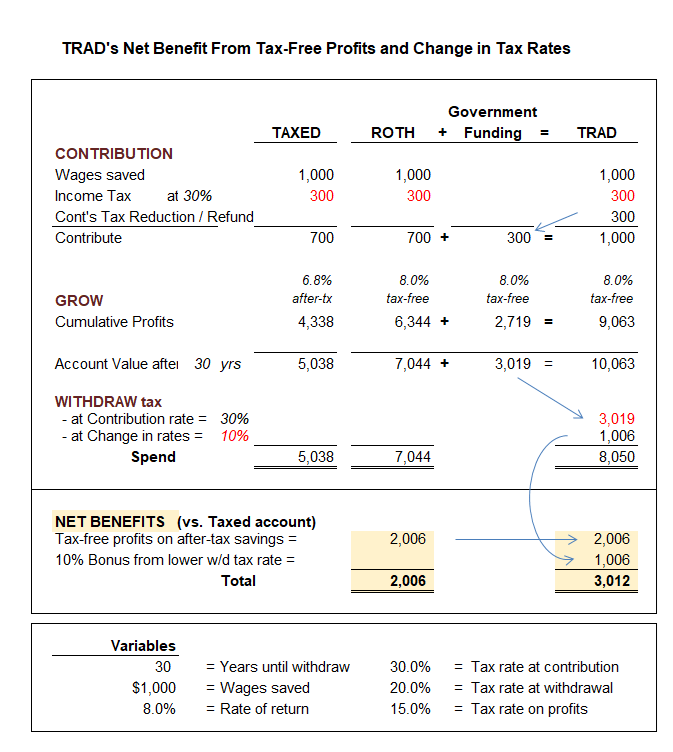
For the 2026 tax year, the standard 401(k) employee elective deferral limit is $24,500. To accommodate workers nearing the end of their human capital accumulation phase, the tax code permits "catch-up" contributions. For 2026, the standard 401(k) catch-up contribution for individuals age 50 and older is $8,000. Furthermore, a special 401(k) super catch-up limit of $11,250 applies to individuals aged 60 through 63.
Important Legislative Shift: To accelerate current tax revenue, Congress instituted a rule regarding high-income earners: employees with prior-year wages above a designated IRS threshold must make all catch-up contributions to a designated Roth account.
Employers frequently incentivize participation by matching contributions. However, unlike employee deferrals (which are always the employee's property), employer matching contributions in a 401(k) plan may be subject to a multi-year vesting schedule—functioning as a "golden handcuff" to retain talent.
The Tax-Exempt Equivalents: 403(b) and 457(b) Plans
What the 401(k) is to the corporate world, the 403(b) and 457(b) are to the non-profit and governmental sectors.
A 403(b) plan is a tax-advantaged retirement savings plan. By law, only specific entities can offer them: public education organizations are eligible to establish 403(b) retirement plans, as are Section 501(c)(3) tax-exempt organizations. Beyond standard deferral limits, a 403(b) plan may offer a special 15-year catch-up contribution for employees with at least 15 years of service with the same qualified employer.
A 457(b) plan, structurally speaking, is quite different. It is a non-qualified deferred compensation plan. State and local government entities are eligible to establish 457(b) retirement plans, along with certain tax-exempt organizations.
The most critical concept for a financial planner to grasp regarding the 457(b) is its isolation from other tax codes. Employee deferrals to a 457(b) plan do not aggregate with deferrals to a 401(k) plan for the annual deferral limit. Similarly, employee deferrals to a 457(b) plan do not aggregate with deferrals to a 403(b) plan for the annual deferral limit. Why this matters: If you have a client working at a state university hospital that offers both a 403(b) and a 457(b), an employee can contribute the maximum annual elective deferral amount to both a 401(k)/403(b) plan and a 457(b) plan during the same tax year, effectively doubling their tax-advantaged savings space.
Governmental 457(b) plans also feature a uniquely powerful tool: they offer a special three-year catch-up provision for employees nearing normal retirement age. The special three-year catch-up provision in a governmental 457(b) plan allows an employee to contribute up to double the standard annual deferral limit.
Liquidity and Distribution Rules in Employer Plans
Life occasionally demands early access to capital. 401(k) plans are legally permitted to offer participant loans, as are 403(b) plans, and governmental 457(b) plans are legally permitted to offer participant loans as well. Additionally, thanks to recent legislative overhauls, SECURE 2.0 legislation eliminated lifetime Required Minimum Distributions for designated Roth accounts within employer retirement plans, harmonizing them with Roth IRAs.
Not all businesses possess the administrative bandwidth to operate complex 401(k) machinery. For these entities, Congress created retirement plans built on the Individual Retirement Account (IRA) chassis. Because they utilize the IRA chassis, participant loans are strictly prohibited in both SEP IRAs and SIMPLE IRAs, and both SEP IRAs and SIMPLE IRAs are subject to Required Minimum Distributions during the account owner's lifetime. Furthermore, unlike the multi-year vesting schedules permitted in 401(k)s, all employer contributions to a SEP IRA are 100 percent vested immediately upon deposit, as are all employer contributions to a SIMPLE IRA.
| Feature | SEP IRA | SIMPLE IRA |
|---|---|---|
| Employer Size | Any size | Restricted to employers with 100 or fewer employees. |
| Exclusivity | Can maintain other plans | An employer establishing a SIMPLE IRA cannot maintain any other employer-sponsored retirement plan. |
| Funding Source | Only the sponsoring employer can make contributions to a SEP IRA. | SIMPLE IRAs allow for both employee elective deferrals and mandatory employer contributions. |
| Employer Obligation | Employers must contribute the identical percentage of compensation for all eligible employees participating in a SEP IRA. | Employers sponsoring a SIMPLE IRA are legally required to make mandatory employer contributions. |
| Specific Limits (2026) | Max employer contribution capped at 25 percent of the employee's compensation. Absolute dollar limit is $72,000. | Standard base employee limit is $17,000. Catch-up (50+) is $4,000. Super catch-up (60-63) is $5,250. |
To calculate a SIMPLE IRA employer contribution, the employer has two paths: it can be fulfilled through a matching contribution of up to 3 percent of employee compensation, or it can be fulfilled through a 2 percent non-elective contribution to all eligible employees (meaning the employee receives 2% regardless of whether they defer their own salary).
Participation in a SEP IRA is strictly governed by law rather than employer discretion. SEP IRA plans mandate coverage for eligible employees who have reached age 21, and they mandate coverage for employees who have worked for the employer in at least three of the prior five years. Additionally, an employee must receive a statutory minimum amount of compensation during the current year to be eligible for a SEP IRA contribution.
Warning on SIMPLE IRA Liquidity: Because SIMPLE IRAs require immediate vesting, the IRS harshly penalizes "hit and run" employees who try to cash out immediately. Distributions from a SIMPLE IRA taken before age 59.5 are generally subject to a 10 percent early withdrawal penalty. However, the early withdrawal penalty for a SIMPLE IRA increases to 25 percent if the distribution occurs within the first two years of participation.
Outside the workplace, the individual manages their own tax destiny via Individual Retirement Arrangements (IRAs). The physics of these two accounts are direct opposites: one offers immediate tax relief with taxable future output; the other offers zero immediate relief for a tax-free future.
Universal IRA Rules
Whether Traditional or Roth, certain foundational laws of physics apply:
- Income Requirement: Traditional IRA contributions require the contributing individual to have earned income, as do Roth IRA contributions.
- Spousal Provisions: If a couple operates as a single economic unit where only one partner works, spousal IRA rules allow a non-working spouse to fund a Traditional IRA using the working spouse's earned income. Similarly, spousal IRA rules allow a non-working spouse to fund a Roth IRA using the working spouse's earned income.
- Age Limits Removed: There is no maximum age limit restricting regular contributions to a Traditional IRA, and there is no maximum age limit restricting regular contributions to a Roth IRA.
- Contribution Limits (2026): For the 2026 tax year, the base individual contribution limit for a Traditional IRA is $7,500, and the base individual contribution limit for a Roth IRA is $7,500.
- Catch-Up Mechanics: For the 2026 tax year, the standard catch-up contribution limit for individuals age 50 and older is $1,100 for both Traditional and Roth IRAs. Note the timing rule: an individual must reach age 50 by the end of the calendar year to qualify for an IRA catch-up contribution.
- No Loans: Participant loans are strictly prohibited in Traditional and Roth IRAs.
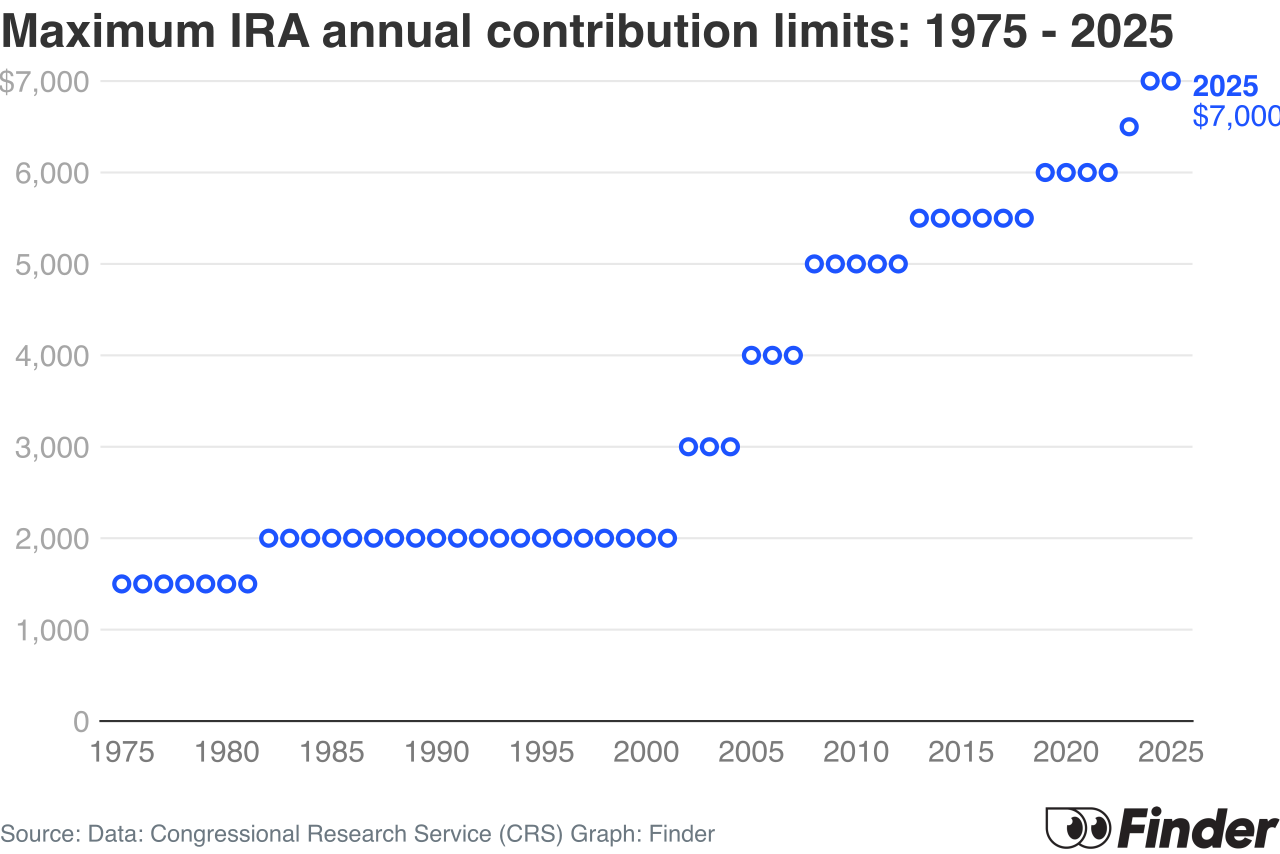
If a client accidentally overfunds these accounts, the system responds aggressively. Contributions to an IRA exceeding the annual limit are subject to a 6 percent excise tax for every year the excess funds remain in the account. Taxpayers can avoid the 6 percent excess IRA contribution penalty by withdrawing the excess amount and associated earnings before the tax return due date.
The Traditional IRA
The appeal of the Traditional IRA is tax deferral, but the IRS heavily regulates access to this deduction. A Traditional IRA contribution is fully tax-deductible for taxpayers lacking coverage from an employer-sponsored retirement plan.
However, if the client is already shielded by an employer plan, the IRS begins closing the pressure valve. Traditional IRA contribution deductibility phases out based on modified adjusted gross income for taxpayers actively participating in a workplace retirement plan. Because married couples file jointly, Traditional IRA contribution deductibility phases out based on modified adjusted gross income for individuals whose spouse actively participates in a workplace retirement plan.
Finally, because the government eventually demands its deferred tax revenue, Traditional IRAs are subject to Required Minimum Distributions during the account owner's lifetime.
The Roth IRA
The Roth IRA operates in reverse. Roth IRA contributions are made with after-tax dollars, and therefore Roth IRA contributions are never tax-deductible. The massive structural advantage is that Roth IRAs are exempt from Required Minimum Distributions during the original account owner's lifetime, allowing capital to compound tax-free indefinitely.
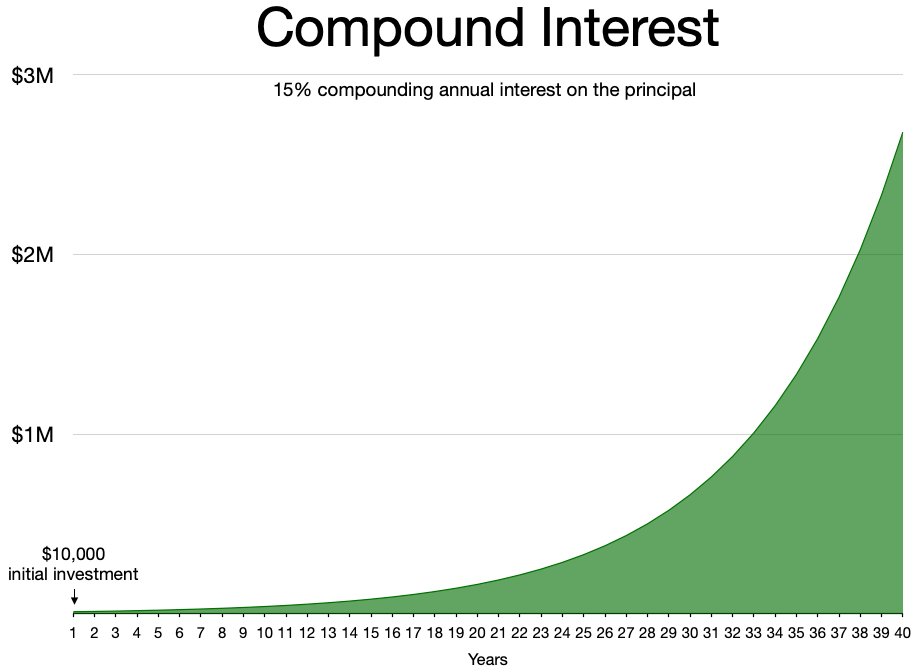
Congress restricts direct access to this powerful tool for the wealthy: eligibility to make direct Roth IRA contributions phases out completely for taxpayers exceeding specific modified adjusted gross income thresholds.
The "Backdoor" Bypass: When high-income clients are phased out of direct Roth contributions, planners utilize a highly specific mechanic. High-income earners can bypass Roth IRA income limits by making a non-deductible contribution to a Traditional IRA and subsequently converting the funds to a Roth IRA.
This works because of two vital structural rules:
- Conversions from a Traditional IRA to a Roth IRA do not count toward the annual Roth IRA contribution limit.
- The modified adjusted gross income calculation used to determine Roth IRA contribution eligibility explicitly excludes income generated from Roth conversions.
Understanding this interaction is precisely what transforms a candidate from someone who merely memorizes tax limits into a practitioner who can engineer a comprehensive, highly efficient lifetime wealth architecture for their clients.