Gift, estate, and GST tax compliance and calculation
Not sure you’re ready?
Take the ~3-minute readiness diagnostic and see where you stand.
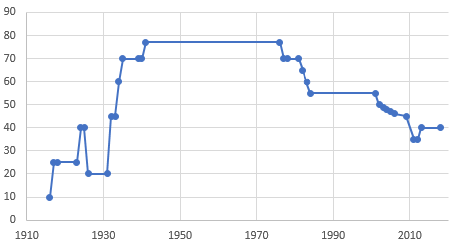
The United States transfer tax system operates as a single, inescapable mechanism designed to measure and tax the movement of wealth from one generation to the next. Prior to 1976, wealth given away during life was taxed under one set of rules, and wealth passed at death was taxed under another. This created an obvious loophole: wealthy individuals could simply gift their fortunes on their deathbeds to avoid the estate tax. Congress solved this by fusing them into the unified transfer tax system, which applies a single progressive tax rate schedule to both cumulative lifetime taxable gifts and the final taxable estate.
To master this for the CFP® certification exam, you cannot simply memorize a list of deductions. You must visualize the transfer tax system as a funnel. Wealth enters the top of the funnel at death. As it flows downward, specific expenses and deductions siphon off value. What emerges at the bottom is combined with the decedent’s lifetime taxable gifts to form the final tax base.
Let us trace the exact path of this wealth, mathematically and conceptually, from the date of death to the final tax liability.
The calculation begins by capturing everything. The federal gross estate includes the fair market value of all property in which a decedent had an interest at the time of death.
Assets included in the federal gross estate are generally valued at their fair market value on the decedent's date of death. However, markets fluctuate. To prevent a scenario where an estate is forced to pay a massive tax based on the date-of-death value of an asset that subsequently crashes in value before the tax bill is due, the tax code offers an alternative.
The alternate valuation date allows an executor to value estate assets exactly six months after the decedent's date of death. But there is a strict mathematical lock on this door:
An executor can only elect the alternate valuation date if the election decreases both the total gross estate value and the final estate tax liability. You cannot use it simply to step up the basis of an asset for income tax purposes if the overall estate pays no tax.
Tricky Inclusions in the Gross Estate
The gross estate does not just capture what the decedent owned outright. It captures assets the decedent tried to give away but retained too much control over, or gave away too close to the finish line.
- The Three-Year Rule: If a decedent transfers property within three years of death but retains a life estate, that property is fully included in the federal gross estate. Similarly, the federal gross estate includes the death benefit of life insurance policies transferred by the decedent to another party within three years of death.
- Income in Respect of a Decedent (IRD): IRD represents income earned by a taxpayer before death that was not received prior to death (such as uncollected unpaid salary or an unwithdrawn traditional IRA balance). Because the decedent had a right to this wealth, the full value of income in respect of a decedent is included in the federal gross estate.
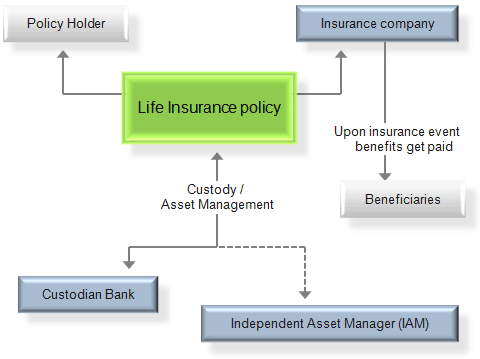
- Life Insurance: The treatment of life insurance depends entirely on control and the named beneficiary. Possessing any incidents of ownership in a life insurance policy at death (the right to change the beneficiary, borrow against the cash value, etc.) causes the full death benefit to be included in the decedent's federal gross estate. Furthermore, the federal gross estate includes life insurance proceeds payable directly to the decedent's estate regardless of who owned the policy.
Joint Tenancy Valuations
When property is owned jointly, the amount pulled into the gross estate depends entirely on who the co-owner is.
| Type of Co-Owner | Inclusion Rule for the Gross Estate |
|---|---|
| Spouse | For property held as joint tenants with right of survivorship between spouses, exactly 50 percent of the fair market value is included in the first dying spouse's gross estate. |
| Non-Spouse | For property held as joint tenants with right of survivorship between non-spouses, the gross estate includes a percentage of the property value equal to the decedent's original capital contribution percentage. |
The calculation of the federal adjusted gross estate begins with the total federal gross estate value. From this total, we subtract the unavoidable costs of dying and administering the transition of wealth.
To determine the adjusted gross estate, the following are subtracted from the gross estate:
- Funeral expenses
- Estate administrative expenses (appraisal fees, executor fees, attorney fees)
- The decedent's unpaid mortgages
- The decedent's outstanding personal debts
- Casualty losses incurred during formal estate administration (e.g., a fire destroys a home while the estate is in probate).
Once you subtract these five elements, you arrive at the Adjusted Gross Estate (AGE).
The calculation of the federal taxable estate begins with the federal adjusted gross estate value. Here, the tax code permits three major subtractions, two of which can theoretically reduce the estate to zero.
- State Death Taxes Paid: State death taxes paid are subtracted from the adjusted gross estate to determine the federal taxable estate.
- The Federal Charitable Deduction: This allows an unlimited deduction from the adjusted gross estate for property transferred to a qualified charity.
- The Federal Marital Deduction: This allows unlimited tax-free transfers of qualifying property to a surviving spouse who is a United States citizen.
The Terminable Interest Trap: To claim the unlimited marital deduction, the surviving spouse must actually take control of the property. Therefore, a terminable interest (an interest that ends upon the occurrence of an event or the passage of time) generally does not qualify for the federal marital deduction.
However, planners often want to control the ultimate destination of wealth (e.g., ensuring assets go to children from a first marriage after the second spouse dies) while still securing the deduction. Qualified Terminable Interest Property (QTIP) elections provide a specific exception allowing a terminable interest to qualify for the marital deduction, provided the surviving spouse receives all income from the property for life.
Once you subtract the marital and charitable deductions, you arrive at the Taxable Estate. But remember, this is a unified system. We must account for wealth the decedent gave away while alive.
Tentative Tax Base = Taxable Estate + Post-1976 Adjusted Taxable Gifts
Adjusted taxable gifts are lifetime taxable gifts made after 1976 that are not already included in the federal gross estate. By adding these back, we push the estate up the progressive tax brackets.
A tentative federal estate tax is calculated by applying the unified tax rate schedule to this tentative tax base. The maximum federal estate and gift tax rate is 40 percent.
Because it would be inherently unfair to tax the lifetime gifts twice, gift taxes previously paid on post-1976 gifts are subtracted from the tentative federal estate tax. Finally, the applicable credit amount (the massive tax credit generated by the lifetime exemption) is subtracted from the tentative federal estate tax to determine the final federal estate tax liability.
In the real world, most clients will never write a check for the federal estate tax. Why? Because the tax code provides robust shields.
The Lifetime Exemption and Portability
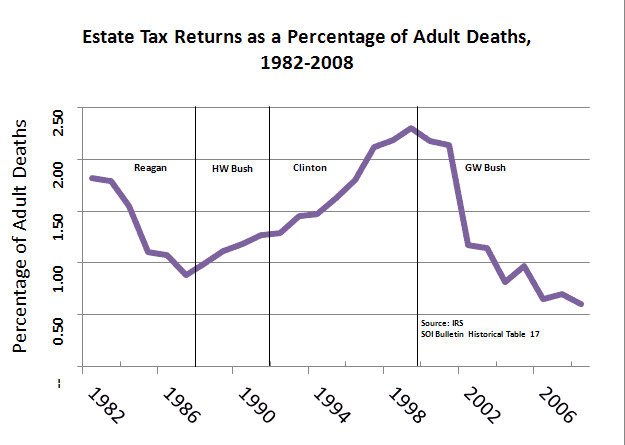
The basic exclusion amount protects a specific dollar value of cumulative lifetime gifts and testamentary transfers from federal taxation. In 2026, the individual federal estate and gift tax basic exclusion amount is $15,000,000.
If a person does not use their entire $15,000,000 exclusion during life or at death, what happens to the remainder? For married couples, it is preserved through portability. Portability allows a surviving spouse to utilize a deceased spouse's unused basic exclusion amount for future transfers. This specific remainder is referred to as the DSUE amount (Deceased Spouse's Unused Exclusion).
Crucial Exam Rule: An estate executor must file a timely federal estate tax return to claim the DSUE amount for the surviving spouse. Furthermore, the executor must file a federal estate tax return to elect portability even if the gross estate value falls entirely below the filing threshold.
By utilizing portability, married couples in 2026 can shelter up to $30,000,000 from federal estate and gift taxes.
Lifetime Gifts: Preserving the Shield
IRS Form 709 is the designated tax return used to report taxable gifts and allocate the lifetime gift tax exemption. Conversely, IRS Form 706 is the designated tax return used to file the United States Estate Tax Return.
Clients routinely want to help family members without consuming their $15,000,000 basic exclusion amount. They can do this in three highly specific ways:
- The Annual Exclusion: In 2026, the federal annual gift tax exclusion is $19,000 per recipient. Gifts qualifying for the annual gift tax exclusion do not reduce the donor's lifetime basic exclusion amount.
- Direct Tuition Payments: Direct payments made to an educational institution for another individual's tuition are entirely exempt from federal gift tax. Direct tuition payments to an educational institution do not consume any portion of the donor's lifetime basic exclusion amount. (Note: Must be for tuition only, not room and board, and must be paid directly to the school).
- Direct Medical Payments: Direct payments made to a medical care provider for another individual's medical expenses are entirely exempt from federal gift tax. Like tuition, direct medical payments to a provider do not consume any portion of the donor's lifetime basic exclusion amount.
If a wealthy individual realizes the unified transfer tax taxes wealth at each generation, they might think: "I'll just bypass my children and leave my $50 million estate directly to my grandchildren! I'll skip a generation of taxation."
The IRS anticipated this. The generation-skipping transfer tax (GST tax) is a secondary transfer tax imposed on asset transfers to individuals two or more generations below the transferor. It is applied in addition to standard gift or estate taxes, effectively punishing the act of skipping a generation. The maximum federal generation-skipping transfer tax rate is 40 percent.
Who is a Skip Person?
The GST tax only triggers when a transfer is made to a skip person.
- A natural person assigned to a generation two or more generations below the transferor is classified as a skip person (e.g., a grandchild or great-grandchild).
- Age matters for non-relatives: A non-family member who is more than 37.5 years younger than the transferor is automatically classified as a skip person.
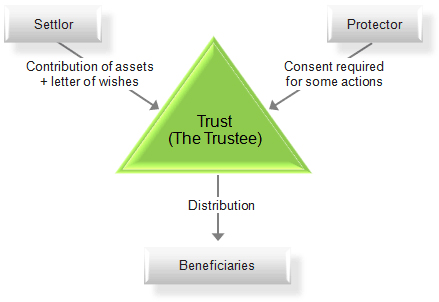
- A trust is classified as a skip person if all current trust beneficiaries are skip persons.
GST Exemptions and Exceptions
Every individual possesses a lifetime generation-skipping transfer tax exemption amount to shelter transfers from the generation-skipping transfer tax. In 2026, the federal generation-skipping transfer tax exemption amount is $15,000,000 per individual.
Critical Exam Distinction: Unlike the standard estate and gift tax basic exclusion, the generation-skipping transfer tax exemption is strictly tied to the individual and is not portable to a surviving spouse. If a spouse dies without using their GST exemption, it vanishes.
What happens if a client's child dies prematurely, and the client wants to leave assets to the orphaned grandchild? The tax code offers mercy via the predeceased ancestor exception. This exception prevents the generation-skipping transfer tax from applying when a transferee's parent is deceased at the time of the transfer. However, the predeceased ancestor exception only applies if the deceased parent was a lineal descendant of the transferor.
The Three Trigger Events
The GST tax is triggered by one of three specific events. You must be able to classify them based on client scenarios:
- Direct Skip: An outright transfer to a skip person subject to both standard transfer tax and generation-skipping transfer tax simultaneously. (Example: Grandfather writes a $20 million check directly to his grandson).
- Taxable Termination: Occurs when an interest in a trust expires and leaves only skip persons as the remaining trust beneficiaries. (Example: A trust pays income to a son for life, remainder to the grandson. When the son dies, his interest terminates, triggering the GST tax before the grandson receives the principal).
- Taxable Distribution: A distribution of income or principal from a trust to a skip person that avoids classification as a direct skip or taxable termination. (Example: A trust has both a daughter and a granddaughter as discretionary beneficiaries. The trustee makes a $50,000 distribution to the granddaughter).
As a financial planner, your role is not simply to fill out Form 706 or Form 709. Your objective is to optimize the physics of this wealth transfer. By carefully allocating the basic exclusion amount, maximizing the annual exclusion, strategically making direct medical and tuition payments, and recognizing GST traps before they snap shut, you ensure that the maximum possible wealth survives the journey down the funnel.