Sources for estate liquidity
Not sure you’re ready?
Take the ~3-minute readiness diagnostic and see where you stand.
Imagine a magnificent, fully loaded cargo ship suddenly running aground on a sandbar. The cargo in the hull is worth hundreds of millions of dollars, yet the ship remains entirely paralyzed because the captain lacks the few thousand dollars in immediate cash required to hire a tugboat. This is precisely the scenario faced by an illiquid estate. Estate liquidity is the availability of cash to satisfy estate obligations without forced sales of assets. When a high-net-worth client passes away, their wealth is often locked in commercial real estate, private business equity, or extensive art collections. Yet, the federal government and creditors demand payment in liquid currency, and the executor is immediately placed on a relentless, unforgiving timer.

The moment a client dies, a rigid sequence of financial obligations is triggered. Estate obligations requiring liquidity include the decedent's outstanding debts, immediate funeral expenses, and ongoing estate administrative costs. However, the most massive burden placed upon the estate is typically taxation: both federal and state estate taxes must be resolved.
The primary stressor for the executor is the calendar. Federal estate taxes are generally due nine months after the date of the decedent's death. This creates a fascinating but dangerous dynamic in financial planning: the nine-month deadline for federal estate taxes creates a strict time constraint for generating estate cash.
If a planner has not engineered a source of liquidity in advance, the consequences are mathematically devastating. Illiquid estates may suffer financial losses by selling assets at distressed prices to cover tax liabilities. Buyers in the private market know when an executor is facing a tax deadline, and they will mercilessly discount their offers for the estate's closely held businesses or real estate.
To protect the economic value of the estate, we must construct reliable pipelines of cash.
The most direct way to solve a predictable, event-driven cash shortage is to engineer an asset that converts to cash exactly when the event occurs. Life insurance provides immediate cash liquidity to an estate upon the death of the insured.
However, life insurance operates under a paradox for estate planning. If the client simply buys a policy on their own life to pay their estate taxes, they may inadvertently worsen the problem. Life insurance proceeds are included in the decedent's gross estate if the decedent possessed incidents of ownership at death (such as the right to change the beneficiary or borrow against the cash value). Including life insurance proceeds in the gross estate increases the total estate tax liability. You are effectively taxing the very money intended to pay the tax.
The Irrevocable Life Insurance Trust (ILIT)
To solve this, we remove the incidents of ownership by utilizing an Irrevocable Life Insurance Trust (ILIT). An ILIT keeps life insurance death benefits out of the insured's gross estate.
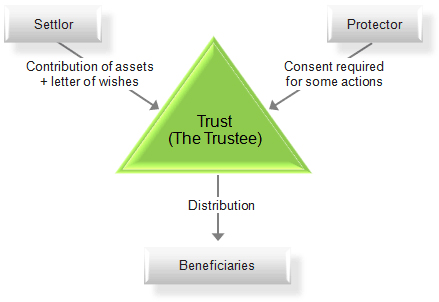
But if the trust owns the money, how does the estate get the cash to pay the IRS? The ILIT cannot simply hand the cash to the estate, as that could pull the funds back into the taxable estate. Instead, an ILIT can provide estate liquidity by:
- Lending cash to the decedent's estate in exchange for a promissory note.
- Purchasing non-liquid assets from the decedent's estate at fair market value.
Through these transactions, the estate receives the cash it needs to pay the IRS, while the illiquid family assets are safely transferred into the protective envelope of the ILIT, entirely free of estate tax.

Survivorship Life Insurance for Married Couples
For married couples utilizing the unlimited marital deduction, estate taxes are generally deferred until the surviving spouse dies. Therefore, the liquidity is not needed at the first death, but at the second.
Survivorship life insurance (also known as second-to-die insurance) pays a death benefit only upon the death of the second insured individual. Because the insurance company has the actuarial advantage of waiting for two lifespans to end before paying the claim, survivorship life insurance premiums are generally lower than the combined premiums for two individual policies with the same death benefit. Consequently, married couples frequently use survivorship life insurance to fund estate taxes due at the death of the second spouse.
If a client dies with their wealth heavily concentrated in a family business, the government recognizes that forcing a distressed sale of that business to pay taxes would destroy jobs and economic value. To prevent this, Internal Revenue Code Section 6166 allows an executor to pay estate taxes in installments over several years.
Crucially, Section 6166 does not apply to the entire tax bill. Section 6166 installment payments apply exclusively to the portion of the estate tax attributable to a closely held business.
The 35% Threshold Rule To open the door to Section 6166, the value of a closely held business must exceed 35 percent of the adjusted gross estate to qualify for Section 6166 installment payments.
What Constitutes a "Closely Held Business"?
The IRS has strict structural definitions for what qualifies under Section 6166:
- Sole Proprietorship: A sole proprietorship qualifies as a closely held business for Section 6166 purposes.
- Partnerships: A partnership qualifies for Section 6166 if the decedent owned at least 20 percent of the partnership capital interest, OR if the partnership has 45 or fewer partners.
- Corporations: A corporation qualifies for Section 6166 if the decedent owned at least 20 percent of the voting stock, OR if the corporation has 45 or fewer shareholders.
The 5-Year Deferral and 10-Year Installment Timeline
Once qualified, Section 6166 provides immense chronological relief. It permits the deferral of estate tax principal payments for up to five years. During this time, the estate is not free from all obligations; an estate must pay interest annually on the unpaid tax during the Section 6166 five-year principal deferral period.
Once the initial deferral period ends, an estate must pay the Section 6166 tax principal in up to ten annual installments. This stretches the total timeline out to a highly manageable 14 years from the original due date.
The 2 Percent Interest Advantage
The IRS further subsidizes the family business by applying a highly favorable borrowing rate. Section 6166 applies a special 2 percent interest rate to a specific portion of the deferred estate tax. Specifically, the 2 percent interest rate under Section 6166 applies to the tax on the first $1,000,000 of closely held business value above the estate tax exemption amount. To protect against economic shifts, the $1,000,000 closely held business value threshold for the Section 6166 2 percent interest rate is adjusted annually for inflation.
The Acceleration Trap
Section 6166 is a privilege contingent on the family keeping the business intact. If the heirs decide to cash out, the IRS removes the favorable financing. Section 6166 installment benefits accelerate and become immediately due if 50 percent or more of the closely held business interest is sold, or if 50 percent or more of the closely held business interest is withdrawn. The tax clock instantly winds down to zero.
Sometimes the closely held business itself is highly liquid, but the estate is not. The executor looks at the corporation's bank account and sees millions in retained earnings. The temptation is to simply have the corporation buy back (redeem) some of the estate's shares to generate cash.
Under normal income tax rules, when a closely held C-corporation redeems stock from an existing shareholder, the IRS frequently classifies the transaction as a dividend, taxing it at ordinary income rates. This would be a disaster for the estate.
Enter Internal Revenue Code Section 303. Internal Revenue Code Section 303 permits an estate to redeem closely held corporate stock without dividend taxation. Instead, Section 303 stock redemptions are treated as capital gains transactions rather than ordinary income dividends.
Why is this capital gains classification so powerful? Because at death, the decedent's assets receive a step-up in basis to fair market value. Therefore, the redemption price is usually identical to the estate's new tax basis. Consequently, Section 303 redemptions typically result in zero capital gains tax liability due to the step-up in basis at the decedent's death. It is a brilliant mechanism to extract cash from a corporation completely tax-free.
Like Section 6166, this maneuver requires heavy business concentration. A stock interest must exceed 35 percent of the adjusted gross estate to qualify for a Section 303 redemption. Furthermore, the IRS limits how much cash you can extract under this favorable shelter: the maximum tax-advantaged stock redemption under Section 303 equals the total sum of the estate's death taxes and allowable administrative expenses.
When life insurance is insufficient and the estate does not qualify for Sections 6166 or 303, the executor must turn to the private capital markets. An executor can borrow funds from commercial lenders to pay estate taxes without triggering a taxable asset sale.
If the estate holds valuable but illiquid commercial real estate, taking out a commercial mortgage against those properties avoids a distressed fire-sale and keeps the assets generating yield for the heirs. Furthermore, the tax code provides a vital subsidy for this strategy: commercial loan interest incurred specifically to pay estate taxes is deductible as an administrative expense on the estate tax return. This effectively lowers the true cost of capital for the estate, making commercial borrowing a viable, mathematically sound bridge to ultimate estate liquidity.
Summary Comparison: Section 6166 vs. Section 303
| Feature | IRC Section 6166 | IRC Section 303 |
|---|---|---|
| Primary Mechanism | Installment payment of estate taxes over 14 years. | Corporate stock redemption treated as capital gains (often zero tax). |
| Qualifying Threshold | Business value > 35% of Adjusted Gross Estate (AGE). | Stock value > 35% of Adjusted Gross Estate (AGE). |
| Applicable Entities | Sole Proprietorships, Partnerships (20%/≤45), Corporations (20%/≤45). | Closely held Corporations only. |
| Limitation | Applies exclusively to the tax attributable to the business. | Capped at the sum of death taxes + allowable administrative expenses. |