Income taxation of trusts and estates
Not sure you’re ready?
Take the ~3-minute readiness diagnostic and see where you stand.
Imagine a reservoir positioned halfway up a mountainside, collecting rainfall before channeling it down to the valley below. In the landscape of taxation, trusts and estates function identically. They capture financial "rainfall"—dividends, interest, rents, and capital gains—and hold it temporarily before distributing it to beneficiaries.
But the IRS does not allow this reservoir to fill indefinitely without a toll. Trusts and estates are separate taxable entities that pay income tax on undistributed income. If the entity traps the income, the entity pays the tax. If the entity releases the income to the valley below, the entity receives a deduction, and the beneficiary assumes the tax burden. This elegant, though mathematically rigorous, mechanism ensures that income is never taxed twice, nor does it escape taxation entirely.
To manage this flow, you must master the hydraulic engineering of the tax code: distinguishing entity types, measuring the physical flow of money versus the taxable flow of money, and calculating precisely where the tax liability lands.

To account for captured income, a trust or estate reports fiduciary income, deductions, and credits on IRS Form 1041.
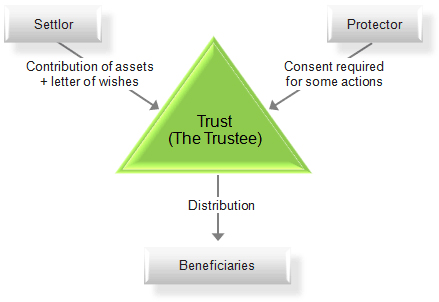
However, before we even look at a Form 1041, we must ask if the trust acts as a separate entity at all. There is one major exception to our reservoir model: the grantor trust. A grantor trust is not treated as a separate taxable entity for income tax purposes. Because the creator of the trust retained too much control or benefit, the IRS views the trust as a phantom. The pipes run straight through; all income generated by a grantor trust is taxed directly to the grantor, usually on their personal Form 1040.
For all other trusts and estates, Form 1041 is required. When filing this return, the entity's calendar dictates the tax deadline:
- All non-charitable trusts are required to use a calendar year for tax reporting purposes.
- Estates are permitted to select either a calendar year or a fiscal year for tax reporting purposes. Because a death can happen on any day of the year, this flexibility allows an executor to cleanly wrap up the decedent's final affairs.
Furthermore, because marshaling an estate’s assets takes time, estates are exempt from paying estimated income taxes during their first two tax years.
The Penalty of Accumulation
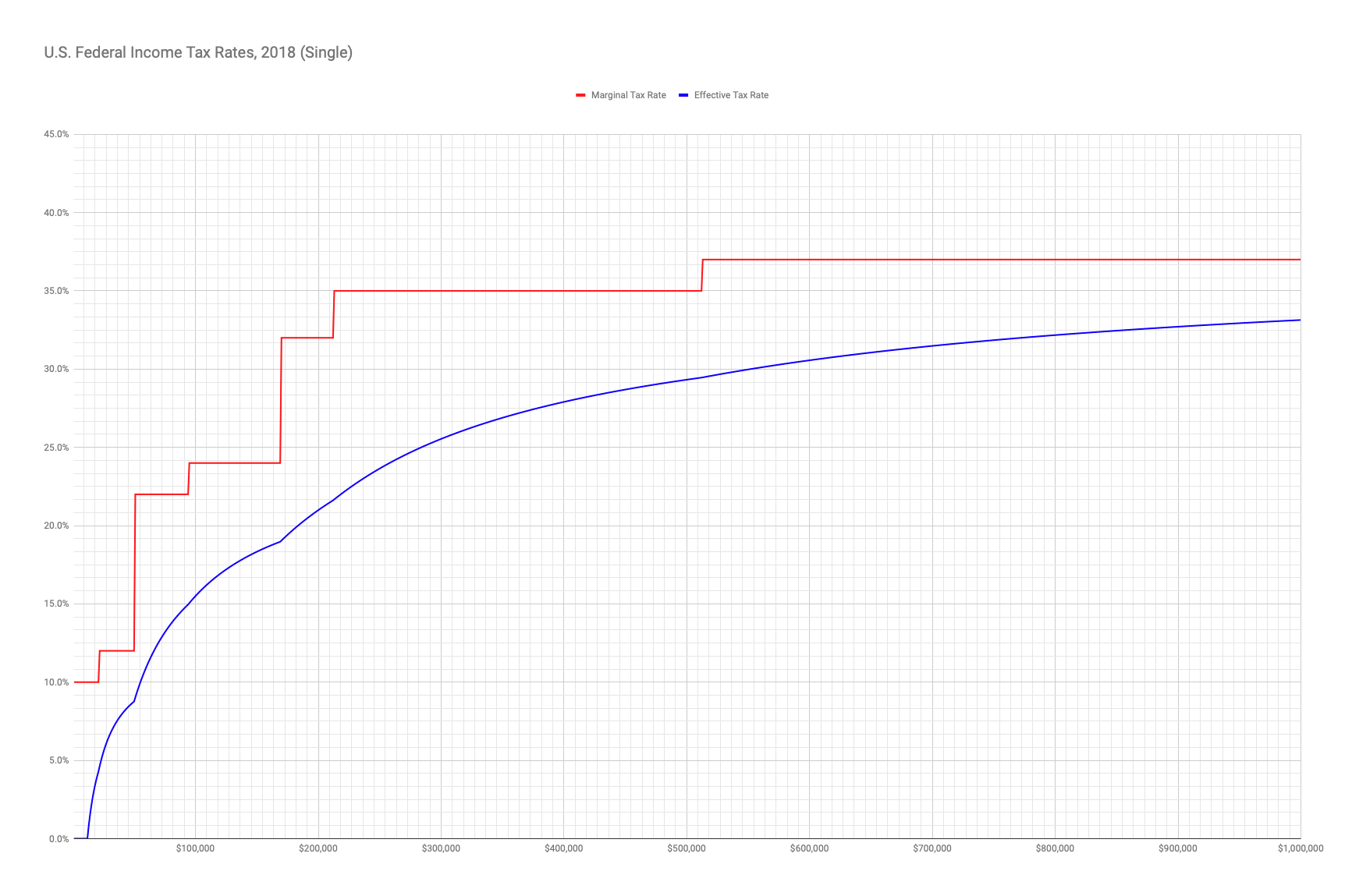
As a financial planner, you will quickly learn why wealth strategies rarely involve hoarding taxable income inside a trust. Fiduciary income tax brackets are highly compressed compared to individual income tax brackets.
While a married couple might enjoy hundreds of thousands of dollars of income before hitting the top marginal tax bracket, trusts and estates reach the highest marginal income tax rate at a much lower income level than individual taxpayers (often just a few thousand dollars). To avoid this punishing tax drag, trustees are heavily incentivized to distribute income out to beneficiaries, pushing the tax burden down into the beneficiaries' structurally more favorable individual tax brackets.
Not all trusts have the same distributional powers. For tax purposes, trusts fall into two distinct operational categories: Simple and Complex. It is vital to understand that this distinction is fluid; a trust can be classified as a simple trust in one tax year and a complex trust in a different tax year, depending on the trustee's actions and the trust document's mandates.
| Feature | Simple Trust | Complex Trust | Estate |
|---|---|---|---|
| Personal Exemption | The personal exemption for a simple trust on Form 1041 is $300. | The personal exemption for a complex trust on Form 1041 is $100. | The personal exemption for a decedent's estate on Form 1041 is $600. |
| Income Distribution | A simple trust must distribute all of its fiduciary accounting income annually. | A complex trust is permitted to accumulate fiduciary accounting income. | Permitted to accumulate. |
| Principal (Corpus) | A simple trust is prohibited from distributing trust corpus during the current tax year. | A complex trust is permitted to distribute trust principal to beneficiaries. | Permitted to distribute. |
| Charity | A simple trust is prohibited from making charitable contributions. | A complex trust is permitted to make distributions to charitable organizations. | Permitted to distribute. |
Pro-Tip for the Exam: If a trust document requires all income to be distributed, but in year four the trustee also distributes a piece of the underlying corpus (like shares of stock) to a beneficiary, the trust instantly morphs into a complex trust for that specific tax year.
To properly tax a trust, we must decouple the physical cash the beneficiary is owed from the taxable income the IRS recognizes. We do this using two distinct metrics: Fiduciary Accounting Income (FAI) and Distributable Net Income (DNI).
Fiduciary Accounting Income (FAI)
Fiduciary accounting income determines the actual amount of cash or property a beneficiary is legally entitled to receive. It is strictly an accounting concept dictated by state law and the trust document. If the trust earns $10,000 in dividends, FAI governs whether those dividends belong to the income beneficiary or whether they are added to the principal for the remainderman.
Distributable Net Income (DNI)
If FAI is the physical water flowing to the beneficiary, DNI is the IRS's metering device measuring the tax consequences of that flow.
Distributable Net Income determines the maximum amount of taxable income that can be passed through and taxed to the beneficiaries. By extension, Distributable Net Income sets the maximum income distribution deduction available to a trust or an estate.
DNI serves a critical function known as the "conduit rule." The trust is merely a conduit; therefore, Distributable Net Income retains the tax character of the income distributed to the beneficiaries. If the trust earns qualified dividends, the beneficiary receives qualified dividends. If the trust earns municipal bond interest, the beneficiary receives tax-free municipal bond interest. Beneficiaries report their proportional share of trust or estate income on Schedule K-1, ensuring the exact character of the income is preserved on their personal tax returns.
Calculating DNI
DNI starts with the trust's taxable income, but requires several critical modifications:
- Tax-Exempt Interest: Because DNI is meant to capture the true economic capacity of the trust to distribute wealth, tax-exempt interest is added to taxable income when calculating Distributable Net Income.
- Capital Gains: Generally, capital gains are considered a growth of the asset itself (the reservoir expanding) rather than flowing water. Therefore, capital gains allocated to trust principal are generally excluded from Distributable Net Income. They remain trapped in the trust and are taxed to the trust.
- The Exception for Capital Gains: Capital gains are included in Distributable Net Income if the trust document specifically requires the distribution of those gains.
Once DNI is established, we can calculate who pays what. The IRS prevents double taxation by allowing the trust to deduct the income it passes on. However, there are rigid limitations.
The Income Distribution Deduction (IDD)
The trust calculates its taxable income, and then subtracts an Income Distribution Deduction.
The IDD Formula: The income distribution deduction is limited to the lesser of the actual distribution or Distributable Net Income.
If the trust distributes $50,000 but the DNI is only $40,000, the deduction is capped at $40,000. Why? Because the extra $10,000 was a distribution of trust principal (corpus), which is a non-taxable return of capital to the beneficiary. Correspondingly, beneficiaries pay income tax on distributed trust income up to the Distributable Net Income limit.
The Tax-Exempt Modification to the IDD
There is one massive trap in the IDD calculation. Remember that we added tax-exempt interest to figure out the total DNI. But the IRS will absolutely not allow a trust to take a tax deduction for distributing income that was never taxable in the first place!
Therefore, tax-exempt income must be subtracted from Distributable Net Income when calculating the final income distribution deduction.
Allocating Fiduciary Fees
This anti-double-dipping logic also applies to the expenses of running the trust. The trustee charges fees for managing the portfolio. But if half the portfolio is in tax-free municipal bonds, half the fee was spent generating tax-free money.
Expenses related to the production of tax-exempt income are not deductible on the fiduciary income tax return. Consequently, fiduciary fees must be allocated between taxable income and tax-exempt income to determine the deductible portion. If 30% of the trust's income is tax-exempt, 30% of the fiduciary fees are permanently non-deductible.
Trust accounting is notoriously complex, and trustees often do not know precisely how much income the trust has earned until the year is already over. Because fiduciary tax brackets are so brutally compressed, accidentally retaining taxable income inside the trust on December 31st could result in a massive, unnecessary tax bill.
To solve this, the IRS provides a 65-day grace period. The 65-day rule allows a trustee to treat distributions made in the first 65 days of a tax year as if made on the last day of the prior tax year.
This look-back provision allows the trustee to close the books in January, calculate the exact DNI, and make a "truing up" distribution in February that retroactively zeros out the trust's taxable income for the previous year.
Because simple trusts are already legally mandated to distribute all their accounting income currently, they have no use for this election. Thus, the 65-day rule applies exclusively to complex trusts and estates.
Summary for the Practitioner: When you sit down with a client who is a beneficiary or a trustee, remember the physical realities of the math. Determine the entity type. Map the FAI (what the client physically gets). Calculate the DNI (the tax ceiling). Apply the distribution deduction (less tax-exempt income). And respect the compressed tax brackets—because in the world of fiduciary taxation, accumulating income is a privilege the IRS will heavily tax you for.