Intra-family and other business transfer techniques
Not sure you’re ready?
Take the ~3-minute readiness diagnostic and see where you stand.
Transferring a closely held business to the next generation is an exercise in controlling financial gravity. When an entrepreneur builds a company, economic value, managerial control, and tax liabilities naturally aggregate into a single, dense singularity. If that entrepreneur holds the entire asset at death, the estate tax impact can be catastrophic. The architect of a brilliant financial plan does not attempt to defy this gravity; instead, they alter the structure of the asset itself. By systematically separating control from economic value, and by freezing current value while shifting future appreciation to heirs, we can orchestrate the seamless, tax-efficient transfer of business wealth.
A Family Limited Partnership (FLP) allows senior family members to transfer business wealth to junior family members without relinquishing control. To understand why this works, you must recognize that ownership is not a single right, but a bundle of distinct powers. The FLP unbundles them.
To withstand Internal Revenue Service scrutiny, a Family Limited Partnership must have a legitimate business purpose beyond estate tax avoidance. Simply using it as a wrapper to dodge taxes will collapse the structure upon audit.
Once properly established, the FLP is divided into two distinct classes of partners:
- General Partners (GPs): The senior family members who maintain complete management control over the partnership assets. Because they steer the ship, general partners hold unlimited personal liability for the debts of a Family Limited Partnership. Furthermore, general partners in a Family Limited Partnership can receive a reasonable salary for managing the partnership business.
- Limited Partners (LPs): The junior family members. Limited partners in a Family Limited Partnership have no authority to manage the partnership assets. In exchange for this lack of control, limited partners hold limited personal liability for the partnership's debts.
The Mechanics of Transfer and Valuation Discounts
The strategy begins when senior family members gift limited partnership interests in a Family Limited Partnership to junior family members. Gifting limited partnership interests in a Family Limited Partnership allows the donor to utilize the annual gift tax exclusion, moving wealth steadily out of their estate over time. Ultimately, transferring Family Limited Partnership interests removes future appreciation of the underlying assets from the grantor's gross estate.
But the true genius of the FLP lies in how those gifted interests are valued. Limited partnership interests in a Family Limited Partnership are eligible for valuation discounts. Why? Because you have fundamentally degraded the economic utility of what you are giving away.
- Minority Interest Discount: A minority interest discount applies to Family Limited Partnership interests because limited partners lack the power to direct business operations. No rational buyer pays full price for an asset they cannot control.
- Lack of Marketability Discount: A lack of marketability discount applies to Family Limited Partnership interests because the interests cannot be easily sold on a public exchange. Unlike a share of Apple stock, an FLP unit is highly illiquid.

Income Shifting and The Kiddie Tax
Because the FLP is a pass-through entity, income generated by a Family Limited Partnership is taxed directly to the individual partners. This income from a Family Limited Partnership is allocated to partners based on the respective partnership ownership percentages.
Therefore, senior family members can use a Family Limited Partnership to shift income to junior family members in lower income tax brackets.
Warning: You cannot endlessly shift income to toddlers to avoid taxes. The kiddie tax rules apply to Family Limited Partnership income shifted to children under age 19. Furthermore, the kiddie tax rules apply to Family Limited Partnership income shifted to full-time students under age 24.
Sometimes, a business owner wants to sell the asset to a family member in exchange for an income stream, while ensuring that if they die, the asset is not dragged back into their estate. Two primary instruments accomplish this: the Self-Canceling Installment Note (SCIN) and the Private Annuity.
While both techniques ensure the remaining payments vanish at the seller's death, their financial architecture and tax implications are wildly different.
The Self-Canceling Installment Note (SCIN)
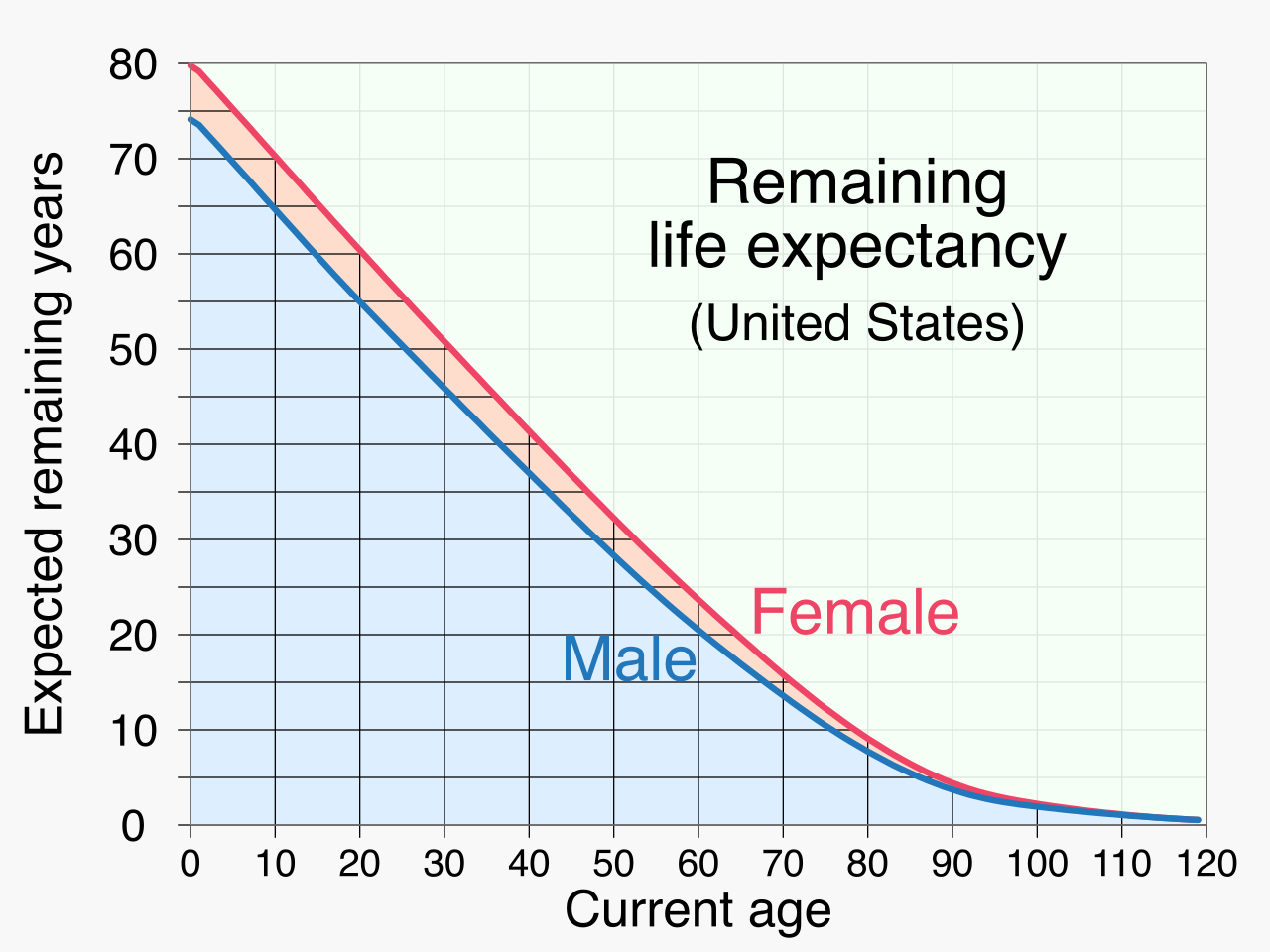
A Self-Canceling Installment Note is a debt instrument used for the installment sale of an asset. It involves an installment sale for a specified maximum term of years. The maximum term of a Self-Canceling Installment Note cannot exceed the seller's actuarial life expectancy.
The defining feature of a SCIN is its cancellation clause: the payment obligation for a Self-Canceling Installment Note terminates prematurely if the seller dies before the term expires. Because of this, the unpaid balance of a Self-Canceling Installment Note is excluded from the seller's gross estate.
However, the IRS does not allow you to simply attach a cancellation clause to a standard loan. To make the transaction economically valid, a Self-Canceling Installment Note requires the buyer to pay a premium to the seller. The premium on a Self-Canceling Installment Note compensates the seller for the risk of premature death.
The premium on a Self-Canceling Installment Note can be structured in one of two ways:
- As an above-market interest rate.
- As an inflated purchase price for the underlying asset.
If a seller dies before the end of a Self-Canceling Installment Note term, the debt disappears, but the tax liability does not. The unrecognized capital gains must be reported on the seller's estate income tax return.
The Private Annuity
A private annuity involves the sale of an asset in exchange for an unsecured promise to make periodic payments to the seller.
Unlike the SCIN's fixed term of years, private annuity payments are guaranteed for the remainder of the annuitant's life. Private annuity payments terminate immediately upon the death of the annuitant, and exactly like the SCIN, the value of the asset sold in a private annuity transaction is immediately removed from the seller's gross estate.
In this arrangement, the buyer in a private annuity transaction bears the financial risk that the seller outlives the seller's actuarial life expectancy. If a private annuity seller outlives the actuarial life expectancy, the buyer pays more than the fair market value of the transferred asset. If the seller dies prematurely, the buyer's final basis in the purchased asset equals the total amount of annuity payments actually made.
Structural Comparisons and CFP Exam Distinctions
The differences between these two tools hinge on collateral, tax deductions, and basis.
| Feature | Self-Canceling Installment Note (SCIN) | Private Annuity |
|---|---|---|
| Duration | Maximum specified term of years. | Remainder of the annuitant's life. |
| Collateral | A Self-Canceling Installment Note can be secured by collateral. | A private annuity cannot be secured by collateral. Securing a private annuity with collateral causes the transaction to be treated as a taxable immediate sale. |
| Premium | Premium required (compensates for death risk). | There is no mortality premium requirement for a private annuity transaction. |
| Buyer's Tax Deduction | The interest payments on a Self-Canceling Installment Note may be tax-deductible for the buyer if the underlying asset qualifies. | The buyer of a private annuity cannot deduct the interest portion of the annuity payments on an income tax return. |
| Buyer's Basis | The buyer's income tax basis in an asset purchased with a SCIN is the original purchase price including the premium. | Depends on death. If premature death: final basis = total amount of annuity payments actually made. |
| Seller's Capital Gains | Unrecognized gains reported on estate income tax return if the seller dies prematurely. | The seller of a private annuity recognizes capital gains proportionally over the seller's actuarial life expectancy. |
Critical Health Exclusions: Neither strategy can be abused by individuals on their deathbeds.
- The seller in a Self-Canceling Installment Note transaction cannot be terminally ill at the time of the sale.
- A seller cannot use standard mortality tables for a private annuity if there is a 50 percent or greater probability of dying within one year.
For businesses with multiple owners, the uncoordinated departure of an owner can destroy the company. A buy-sell agreement establishes the terms for transferring business interests upon a specified triggering event. The standard triggering events for a buy-sell agreement include the death of a business owner, the disability of a business owner, or the retirement of a business owner.
The agreement guarantees a buyer for the departing owner's shares and guarantees the surviving owners won't be forced into business with the departing owner's heirs. To fund this transaction in the event of death, life insurance is utilized in one of two distinct structures: Cross-Purchase or Entity-Purchase.
Cross-Purchase Buy-Sell Agreements
A cross-purchase buy-sell agreement requires the individual business owners to purchase life insurance policies on the other owners. When an owner dies, the surviving owners receive the tax-free death benefit and use it to buy the deceased owner's shares directly from their estate.
Why use a cross-purchase? A cross-purchase buy-sell agreement increases the surviving owners' income tax basis in the business by the exact amount they pay for the deceased owner's shares. This "basis step-up" significantly reduces future capital gains taxes if the surviving owners later sell the business.
The mathematical downside? The sheer number of policies required. A cross-purchase buy-sell agreement with 'n' business owners requires 'n' multiplied by 'n minus one' total life insurance policies. (For example, 5 owners would require 5×4=20 individual life insurance policies).
Entity-Purchase Buy-Sell Agreements
An entity-purchase buy-sell agreement (or stock redemption plan) requires the business entity itself to purchase life insurance policies on the business owners. When an owner dies, the business receives the death benefit and buys back (redeems) the shares from the estate.
This requires only one policy per owner, vastly simplifying administration. The major tradeoff? An entity-purchase buy-sell agreement does not increase the surviving owners' personal income tax basis in the business.
Finally, when dealing with rapidly appreciating business assets, we utilize specialized trust structures to "freeze" the value of the asset for estate tax purposes, while transferring all future growth to the next generation without triggering gift taxes.
The Intentionally Defective Grantor Trust (IDGT)
An Intentionally Defective Grantor Trust allows a business owner to sell a business interest to the trust without recognizing capital gains. It is "defective" only for income tax purposes, meaning the grantor and the trust are treated as the same taxpayer.
Because of this defect, the grantor of an Intentionally Defective Grantor Trust pays the income taxes on the trust's earnings out of their own pocket. While paying taxes might sound detrimental, it is incredibly powerful: paying income taxes for an Intentionally Defective Grantor Trust allows the trust assets to grow tax-free for the trust beneficiaries. In essence, the tax payment acts as an additional, massive, tax-free gift to the heirs.
The Grantor Retained Annuity Trust (GRAT)
A Grantor Retained Annuity Trust transfers the appreciation of a business interest to heirs free of gift tax. The business owner funds the trust and retains an annuity payment for a set term of years. The initial value of the gift to the heirs is calculated as the total asset value minus the present value of the retained annuity.
If the business interest appreciates faster than the IRS assumed interest rate, the excess growth simply passes to the heirs entirely gift-tax free at the end of the term.
In every one of these techniques—from FLPs to SCINs to IDGTs—the objective is identical: we mathematically restructure the transfer of business value so that economic wealth safely reaches the next generation while the crushing weight of taxation is legally engineered out of the system.