Postmortem estate planning techniques
Not sure you’re ready?
Take the ~3-minute readiness diagnostic and see where you stand.
The biological end of a human life is absolute, but in the realm of taxation and property law, death is merely a checkpoint. Estate planners and financial professionals often operate under the illusion that once a client takes their final breath, the planning window slams shut. In reality, the Internal Revenue Code leaves several postmortem doors propped open. These provisions allow executors and beneficiaries to retroactively manipulate the flow of capital, fix glaring architectural errors in the estate plan, or shield assets from sudden market collapses. This toolkit is the financial equivalent of altering the trajectory of a billiard ball after the cue has already struck. Understanding these mechanisms is not just about memorizing tax codes; it is about recognizing how to rescue a family’s wealth when the unexpected collides with the inevitable.
Imagine a wealthy client is handed a highly appreciated asset by a dying relative. If the client accepts the asset, their own taxable estate bloats further. If they accept it and then immediately gift it to their own children, they trigger a massive federal gift tax. How do you move the asset past the wealthy client directly to the children without triggering a tax event?
You do it by ensuring the client never legally touches the property.
A qualified disclaimer is an irrevocable and unqualified refusal to accept an interest in property. By executing this legal maneuver, the intended beneficiary simply steps out of the way. When executed properly, property disclaimed through a qualified disclaimer is treated for federal tax purposes as if the property had never been transferred to the disclaimant.
Because the IRS treats the disclaimant as a ghost who never owned the asset, a qualified disclaimer allows a beneficiary to refuse an inheritance without incurring federal gift tax liability for redirecting the asset. However, the IRS is acutely aware of the potential for abuse, so the rules for what makes a disclaimer "qualified" are extraordinarily rigid.
The Mechanics of a Valid Disclaimer
To be respected by the IRS, the disclaimer must meet a strict sequence of conditions:
- In Writing: A qualified disclaimer must be executed in a written document. Verbal refusals carry zero legal weight.
- Timely Delivery: A qualified disclaimer must be delivered to the transferor of the property interest or the transferor's legal representative (usually the executor).
- The Nine-Month Clock: Crucially, a qualified disclaimer must be delivered within nine months of the date the property transfer was originally made (which, for inheritances, is the date of death).
- The Minor Exception: What if the beneficiary is a child? A minor cannot legally execute this document. Therefore, a disclaimant under age 21 has until nine months after the disclaimant reaches age 21 to make a valid qualified disclaimer.
- The "No Touching" Rule: A person making a qualified disclaimer is strictly prohibited from accepting any benefits of the disclaimed property prior to the disclaimer. If a client receives a dividend check from an inherited stock account and cashes it, they have accepted the benefit. The disclaimer is permanently off the table.
- The "No Strings Attached" Rule: Disclaimed property must pass to a recipient without any direction or influence from the person making the qualified disclaimer. You cannot say, "I refuse this asset, but give it to my sister." You simply refuse it, and the law dictates where it falls.
Because of that final rule, disclaimed property typically passes directly to either the surviving spouse or an alternative beneficiary named in the estate planning document (the contingent beneficiary).
Strategic Application: A surviving spouse can utilize a qualified disclaimer to purposefully redirect estate assets into a credit shelter trust (often called a Bypass Trust). If the deceased spouse left everything to the surviving spouse, the unlimited marital deduction would result in zero estate tax today, but it would waste the deceased spouse's estate tax exemption. By disclaiming a portion of the assets, the surviving spouse allows those assets to fall into the credit shelter trust, utilizing the deceased's exemption and shielding the future growth of those assets from the surviving spouse's future taxable estate.
Under standard rules, an individual's gross estate is valued based on the fair market value of their assets on their exact date of death. But consider the economic reality: what if a client dies holding heavily concentrated equity positions, and three months later, the stock market crashes? The estate owes taxes based on the high date-of-death value, but only has the diminished, post-crash assets to pay the IRS. This scenario would financially obliterate an estate.
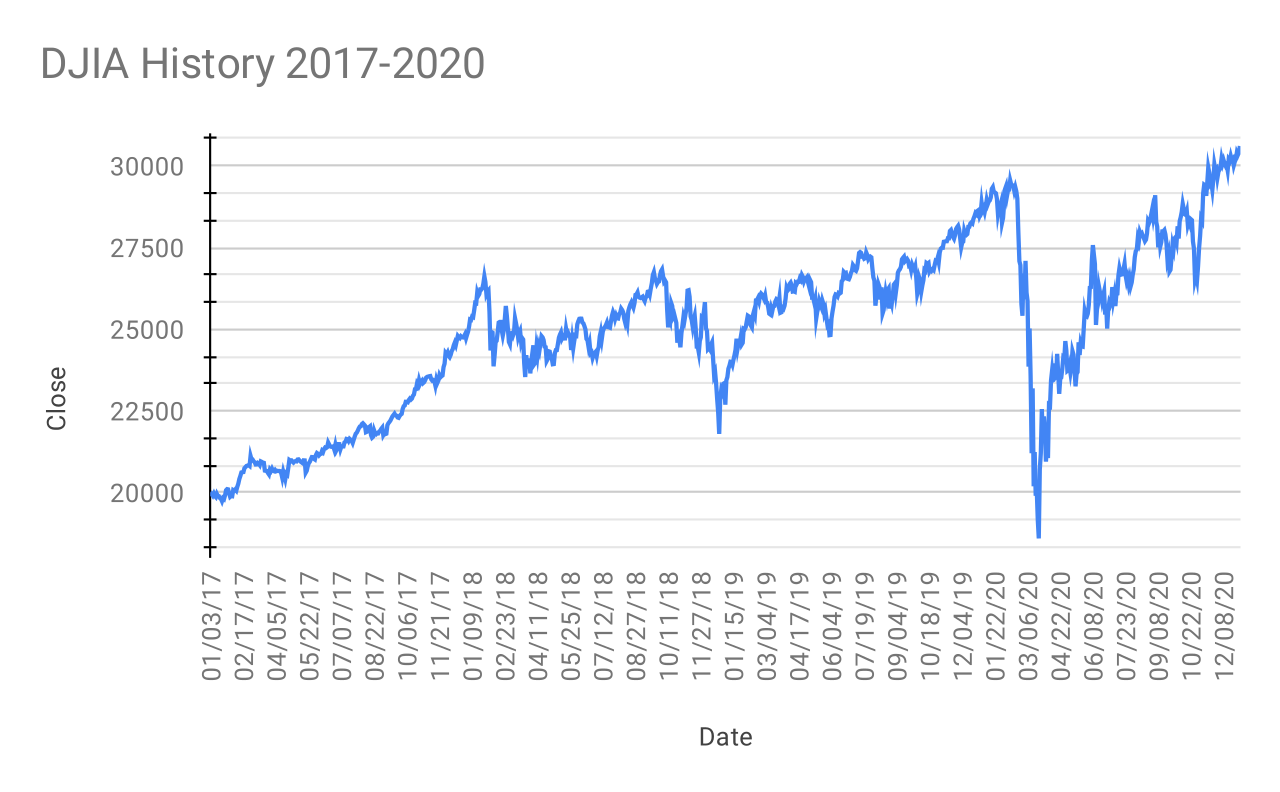
To prevent this, the tax code offers the Alternative Valuation Date (AVD). The Alternative Valuation Date is a postmortem tax election allowing an executor to value estate assets on a date subsequent to the decedent's date of death.
The Mathematics of the AVD
The mechanics of the AVD are precise and heavily tested:
- The Date: The Alternative Valuation Date is exactly six months after the decedent's date of death.
- The Distribution Exception: What if the executor needs to sell a stock or distribute cash to a beneficiary before that six-month mark arrives? Under an Alternative Valuation Date election, assets sold or distributed within six months of death are valued on the exact date of the asset sale or distribution.
The Double-Decrease Requirement
The AVD is a relief provision, not a strategic loophole to selectively step-down asset values for income tax purposes. To prevent abuse, the IRS applies a strict mathematical gatekeeper.
The Alternative Valuation Date can only be elected if the election mathematically decreases the total value of the gross estate. Furthermore, the Alternative Valuation Date can only be elected if the election decreases the sum of the estate tax and generation-skipping transfer tax liabilities.
Think about what this means in practice. If a client leaves their entire $30 million estate to their spouse, the marital deduction reduces the taxable estate to zero. The estate owes zero federal estate taxes. Because the AVD must decrease the actual tax liability, an estate executor is prohibited from electing the Alternative Valuation Date if the estate owes zero federal estate taxes. You cannot use the AVD just to manipulate basis; it must save the estate actual tax dollars.
The "All or Nothing" and "Wasting Asset" Rules
When electing the AVD, the executor must formally commit. The Alternative Valuation Date election must be made directly on the initial or an amended federal estate tax return. Note that the election to use the Alternative Valuation Date becomes irrevocable once the choice is formally made on the estate tax return.
Furthermore, the Alternative Valuation Date election applies universally to all eligible assets within the gross estate of the decedent. An executor is prohibited from selectively applying the Alternative Valuation Date to some estate assets while valuing other assets at the date of death. No cherry-picking is allowed.
However, there is an exception to this universal application based on the nature of the asset itself. The IRS recognizes that some assets lose value not because of market fluctuations, but simply because the clock is ticking. Wasting assets experience a natural decrease in measurable value over time due solely to the mere lapse of time.
The Wasting Asset Rule: Wasting assets must be valued at the exact date-of-death value even when the estate executor elects the Alternative Valuation Date.
If a patent has exactly two years left before it expires, it will be worth less six months from now simply because six months of its legal monopoly have evaporated. This isn't market risk; it's a mechanical decay. For federal estate valuation purposes:
- Annuities are specifically classified as wasting assets.
- Patents and copyrights are specifically classified as wasting assets.
One of the most dangerous scenarios a financial planner encounters is the "asset rich, cash poor" estate. This almost always occurs when the decedent's primary asset is a highly valuable, closely held family business. The business has immense on-paper value, triggering massive federal estate taxes, but the estate lacks the liquid cash to pay the IRS.
Without postmortem relief, the family would be forced into a "fire sale" of the business just to satisfy the tax authorities. Congress created two powerful safety valves to prevent this: Section 303 (which creates cash without income tax penalties) and Section 6166 (which buys time).
Section 303 Stock Redemption
If an estate owns shares in a closely held C-Corporation, taking cash out of the corporation in exchange for stock is usually classified by the IRS as a dividend, which is heavily taxed. But at death, the estate needs that cash.
Section 303 of the Internal Revenue Code permits a closely held corporation to redeem stock from a deceased shareholder's estate without triggering dividend tax treatment. Instead, a Section 303 stock redemption is treated as a capital gains transaction for the redeeming estate.
Why is it so powerful that it is treated as a capital gain instead of a dividend? Because under standard tax law, closely held corporate stock receives a stepped-up cost basis to fair market value upon the death of the shareholder. If the stock's basis steps up to $5 million at death, and the corporation redeems $1 million worth of shares to pay taxes, the estate realizes a capital gain of exactly $0. They extract cash from the company completely tax-free.
To prevent regular tax evasion, there are strict boundaries:
- The 35% Test: A Section 303 stock redemption requires the value of the decedent's closely held stock to exceed 35 percent of the adjusted gross estate.
- The Limit: The maximum tax-advantaged redemption amount under Section 303 is strictly limited to the total of the estate taxes plus funeral and administrative expenses. You cannot pull out extra cash just to enrich the beneficiaries.
Section 6166 Estate Tax Deferral
If the company doesn't have the cash to redeem shares under Section 303, the executor must turn to Section 6166. Section 6166 of the Internal Revenue Code allows an estate executor to defer the payment of federal estate taxes attributable to a closely held business interest.
Like Section 303, eligibility for Section 6166 estate tax deferral requires the closely held business interest value to exceed 35 percent of the adjusted gross estate.
If the estate qualifies, the relief is profound:
- Section 6166 allows the deferral of estate tax principal payments for a maximum statutory period of five years.
- Following the Section 6166 deferral period, the remaining estate tax principal is paid in up to ten equal annual installments.
- Note that it is not a completely free ride: the estate must pay annual interest on the unpaid tax balance during the Section 6166 five-year principal deferral period (though at a highly favorable statutory rate).
| Postmortem Business Relief | Trigger Threshold | Primary Benefit |
|---|---|---|
| Section 303 | Business > 35% of Adjusted Gross Estate | Extracts corporate cash as a capital gain (no dividend tax), utilizing step-up in basis. |
| Section 6166 | Business > 35% of Adjusted Gross Estate | Defers tax principal for 5 years, pays off over subsequent 10 years. |
Another devastating liquidity trap involves family farms and real estate-heavy family businesses. Imagine a family farm operating for generations on the edge of a rapidly expanding metropolitan suburb. As a farm, the land generates $100,000 a year. But a real estate developer would pay $10 million for the land to build a subdivision.
Normally, the IRS taxes assets at their "highest and best use"—in this case, the $10 million subdivision value. Taxing the farm at this value would force the family to sell the farm to the developer just to pay the tax bill.

Enter Section 2032A. Section 2032A special use valuation permits real property used in a farm or business to be valued based on the current business use of the property instead of the highest and best use of the property. This artificially deflates the gross estate, saving the family business.
Because this artificially lowers the taxable estate, the qualification metrics are intense. The estate must clear two separate hurdles regarding its composition:
- The 50% Rule: Section 2032A special use valuation requires at least 50 percent of the gross estate to consist of real or personal property actively used in a qualifying business. (Think tractors, barns, cattle, and the land combined).
- The 25% Rule: Section 2032A special use valuation requires at least 25 percent of the gross estate to consist of real property actively used in a qualifying business. (Think just the dirt and the structures on it).
Finally, postmortem planning is the final backstop for preserving a married couple's lifetime federal estate tax exemptions.
The Magic of Portability
Historically, if a spouse died without a carefully drafted credit shelter trust, their individual lifetime estate tax exemption died with them. Today, the tax code is vastly more forgiving.
Portability is a postmortem election allowing a surviving spouse to utilize the deceased spouse's unused estate tax exemption amount (often referred to as the DSUE). If the husband dies and uses none of his lifetime exemption, the wife can essentially absorb his exemption, doubling her own shielding capacity.
However, portability is not automatic. The portability election must be actively chosen by filing a timely federal estate tax return for the deceased spouse.
This leads to a critical operational reality for financial planners: an executor should file the estate tax return even if the estate is small. A portability election is entirely permitted even if the deceased spouse's estate value falls below the federal estate tax filing threshold. Failing to file this "zero tax" return means permanently forfeiting millions of dollars in future tax shielding for the surviving spouse.
The Precision of the QTIP Election
When property is left outright to a surviving spouse, it qualifies for the unlimited marital deduction. But wealthy clients often want to control the ultimate destination of the money (e.g., ensuring it eventually goes to children from a first marriage). To do this, they use a Qualified Terminable Interest Property (QTIP) trust. The surviving spouse gets the income for life, but the decedent dictates who gets the principal afterward.
Normally, giving someone only a "life interest" in property disqualifies it from the marital deduction. But an executor can file a QTIP election to ensure property passing to a qualifying trust for a surviving spouse qualifies for the unlimited marital deduction. Just like portability, a QTIP election must be explicitly declared on the deceased spouse's federal estate tax return.
The Partial QTIP Maneuver: Sometimes, an executor looks at the math and realizes it makes sense to pay some estate tax now, or they want to fully fund the decedent's exemption without creating a separate Bypass Trust. The tax code allows a brilliant surgical maneuver: a partial QTIP election allows an executor to legally divide a single trust into a marital portion and a non-marital portion to optimize estate taxes. This grants the executor ultimate mathematical flexibility to dial the exact amount of taxable vs. deducted assets down to the very penny.
Postmortem estate planning is the art of looking backward to secure the future. By mastering qualified disclaimers, the AVD, closely held business relief provisions, and crucial tax return elections, you are not merely filing paperwork. You are actively stepping into the financial machinery after the fact to redirect capital, minimize catastrophic tax liabilities, and protect a family's legacy when they are at their most vulnerable.