Marital deduction
Not sure you’re ready?
Take the ~3-minute readiness diagnostic and see where you stand.
Imagine the federal wealth transfer tax system as a sophisticated tollbooth placed on the intergenerational highway of capital. Whenever wealth moves vertically—from parents to children—the toll is exacted, often stripping away a significant percentage of the estate. However, when capital moves horizontally—between spouses—the tax code provides a complete, theoretical insulator: the unlimited marital deduction. This mechanism allows vast fortunes to shift from one spouse to another without triggering a single cent of wealth transfer tax. Yet, in the practice of financial planning, this insulator is not a permanent shield; it is a precisely engineered timing mechanism. It merely defers the inevitable friction of taxation until the wealth attempts to move vertically to the next generation. Understanding precisely when this deduction applies, how it fails, and the sophisticated trust architectures used to manipulate its boundaries is the cornerstone of advanced estate planning.
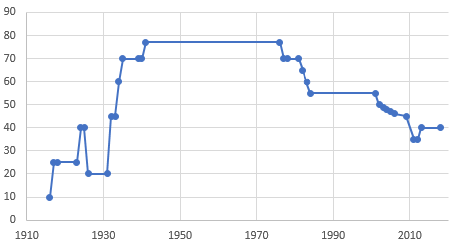
At its core, the tax code acknowledges the marital unit as a single economic entity. Because of this, the unlimited marital deduction allows an individual to transfer an unrestricted amount of assets to a spouse free from federal gift taxes during their lifetime, and similarly, it allows an individual to transfer an unrestricted amount of assets to a spouse free from federal estate taxes at death.
However, the Internal Revenue Service does not grant this extraordinary deduction based on mere sentiment. The transfer must meet rigid, structural prerequisites to qualify for the estate tax marital deduction:
- Gross Estate Inclusion: To claim a deduction against the gross estate, the math dictates that the asset must be there to begin with. Property must be included in the decedent's gross estate to qualify for the estate tax marital deduction.
- The Destination of Capital: A mere intention to benefit the spouse is insufficient. Property must actually pass to the surviving spouse to qualify for the estate tax marital deduction. If an asset is diverted to pay estate administration expenses or state death taxes, the deducted amount is reduced accordingly.
- The Legal Status: The timing of the legal union is absolute. Spouses must be legally married at the time of the decedent's death for a transfer to qualify for the estate tax marital deduction. Marriages that occur after a terminal diagnosis qualify, but couples living together for decades without a legal marriage recognize zero deduction.
- The Jurisdictional Anchor: The IRS permits this deduction because it expects to tax the remaining wealth when the surviving spouse dies. If the surviving spouse could easily move the assets out of the U.S. tax jurisdiction, the IRS would lose its ultimate claim. Therefore, to qualify for the unlimited marital deduction, the recipient spouse must be a United States citizen.

The Non-Citizen Spouse and the QDOT
What happens when a client is married to someone who does not hold U.S. citizenship? By default, property transferred to a non-United States citizen spouse does not qualify for the standard unlimited marital deduction.
To prevent the immediate depletion of the estate via taxes, estate planners employ a highly specialized vehicle. A Qualified Domestic Trust must be used to obtain the marital deduction for property passing at death to a surviving spouse who is not a United States citizen. Commonly referred to by the acronym QDOT, this trust requires at least one U.S. trustee (often a domestic corporation) and ensures that the IRS maintains a jurisdictional grip on the assets, guaranteeing that estate taxes will ultimately be collected before the capital leaves the country.
The Danger of Overutilization
A novice planner might look at the unlimited marital deduction and conclude that leaving 100% of an estate to the surviving spouse is always the optimal move. This is a severe miscalculation.
The First-to-Die Trap: Overutilizing the unlimited marital deduction can waste the first-to-die spouse's federal estate tax exemption amount if portability is not elected or available.
Every individual has a lifetime exemption from estate taxes. If a decedent leaves everything to their spouse via the marital deduction, they effectively reduce their taxable estate to zero. Consequently, their personal estate tax exemption is left unused. While modern tax law allows for "portability" (transferring the unused exemption to the surviving spouse via a timely filed estate tax return), relying blindly on it is risky. Portability does not index the transferred exemption for inflation, nor does it apply to the Generation-Skipping Transfer (GST) tax exemption. Smart planning often requires funding a "B Trust" (Bypass or Credit Shelter Trust) up to the exemption amount, rather than defaulting to the marital deduction for the entire estate.
To understand advanced marital trusts, you must first understand the IRS's greatest fear: a "leaky" wealth transfer. The IRS allows the marital deduction on the strict premise that the wealth will be taxed in the surviving spouse's estate.
If a decedent gifts their spouse an interest in property that evaporates before it can be taxed at the surviving spouse's death, the system fails. This introduces the concept of a terminable interest.
- A terminable interest is a property interest that will end or fail upon the lapse of a specific amount of time (e.g., a 10-year term interest in real estate).
- A terminable interest is a property interest that will end or fail upon the occurrence of a specified event (e.g., "to my wife for her life, or until she remarries").
Because these interests vanish, they cannot be taxed in the surviving spouse's estate. Therefore, the terminable interest rule states that property interests terminating upon a specific event or time generally do not qualify for the marital deduction.
Acceptable Exceptions to the Rule
The tax code recognizes that real life requires slight administrative flexibility. Not all terminable interests are barred from the deduction.
Exception 1: The Survival Clause Estate planners frequently draft wills requiring the surviving spouse to outlive the decedent by a short period to avoid the probate nightmare of two estates passing simultaneously in a common accident. Even though this condition technically creates an interest that could "fail upon a specified event" (dying within the window), a survival clause requiring a surviving spouse to outlive the decedent by a maximum of six months does not disqualify the transfer from the marital deduction. If the spouse survives the six months, the deduction stands.
Exception 2: The Power of Appointment Trust Imagine a husband leaves a trust to his wife, providing her income for life. Normally, a life estate is a classic terminable interest. However, a Power of Appointment trust qualifies for the marital deduction if the surviving spouse has a general power to appoint the trust assets to themselves or their estate. By granting a general power of appointment, the tax code treats the surviving spouse as the absolute owner of the property for tax purposes, guaranteeing its inclusion in their gross estate.
We arrive at the most sophisticated tool in the marital deduction arsenal. Consider a very common modern scenario: the blended family.
Suppose your client, an affluent business owner, is on his second marriage. He has three children from his first marriage. He loves his current wife and wants to ensure she lives comfortably after he dies. But he harbors a distinct fear: if he leaves his wealth outright to his second wife to secure the marital deduction, she might eventually rewrite her own will, leaving the entire fortune to her family or a new spouse, completely disinheriting his three children.
If he uses a traditional life estate ("Income to my wife, remainder to my children"), he triggers the terminable interest rule. He loses the marital deduction and his estate is crushed by immediate taxes.
The tax code provides an elegant solution: Qualified Terminable Interest Property is commonly referred to by the acronym QTIP.
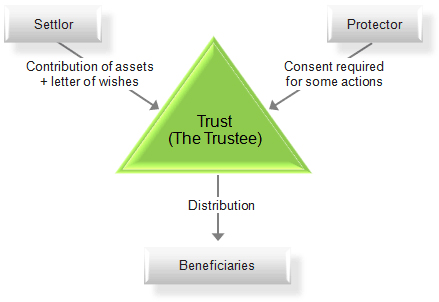
Solving the Blended Family Dilemma
A Qualified Terminable Interest Property trust qualifies for the unlimited marital deduction as an exception to the terminable interest rule. This trust is an absolute game-changer for control-oriented clients.
- A Qualified Terminable Interest Property trust allows the grantor to control the ultimate disposition of the trust assets upon the surviving spouse's death. The husband in our scenario dictates via the trust document that upon his wife's death, the remaining assets must go to his children.
- Because of this architectural control, Qualified Terminable Interest Property trusts are frequently used in blended families to ensure assets eventually pass to the grantor's children from a prior marriage.
- Concurrently, a Qualified Terminable Interest Property trust defers federal estate taxes on the trust assets until the death of the surviving spouse, granting the estate immense, immediate liquidity and tax deferral benefits.
The Rigid Mechanics of a Valid QTIP
To achieve this remarkable dual benefit—control over the ultimate heirs plus immediate tax deferral—the trust must adhere to absolute, non-negotiable mandates regarding the surviving spouse's rights during their lifetime.
| QTIP Requirement | The Practical Meaning |
|---|---|
| Complete Income Entitlement | A Qualified Terminable Interest Property trust requires the surviving spouse to be entitled to all income from the trust property for life. The trustee cannot have the discretion to withhold income or spray it to the children. |
| Strict Frequency of Payment | Income from a Qualified Terminable Interest Property trust must be payable to the surviving spouse annually or at more frequent intervals. Monthly or quarterly distributions are common, but the gap can never exceed one year. |
| Absolute Exclusivity | No person may have the power to appoint any part of a Qualified Terminable Interest Property trust to anyone other than the surviving spouse during the surviving spouse's lifetime. Even the surviving spouse cannot be given the power to direct funds out of the trust to a child or charity while they are alive. The trust must exist solely for their benefit during their life. |
The Election and the Endgame
A QTIP trust is not automatic; it requires affirmative legal action. The IRS must be formally notified that the estate is claiming this exception to the terminable interest rule. Therefore, the decedent's executor must make an irrevocable election on the federal estate tax return to treat trust assets as Qualified Terminable Interest Property. Once that box is checked, the die is cast.
But what happens when the music stops? What happens when the surviving spouse eventually dies?
The fundamental bargain of the unlimited marital deduction is that the IRS gets to tax the wealth at the second death. By electing QTIP status, the executor agreed to this delayed taxation. Consequently, the fair market value of the Qualified Terminable Interest Property trust is included in the surviving spouse's gross estate at the time of the surviving spouse's death.
This introduces a final, practical problem: The surviving spouse's estate is now inflated by the value of a trust they did not legally own, did not control the ultimate disposition of, and which is now passing to their stepchildren. It would be grossly unfair to force the surviving spouse's biological heirs to pay the taxes generated by the QTIP inclusion out of the surviving spouse's personal assets.
The tax code anticipates this friction. By default, estate taxes generated by a Qualified Terminable Interest Property trust at the surviving spouse's death are typically paid from the trust assets rather than the surviving spouse's other estate assets. The tax burden follows the capital. The remainder of the trust pays its own exit toll before passing to the original grantor's children.
Summary for the CFP® Professional
When you sit across the desk from a client outlining their estate plan, recognize the unlimited marital deduction not just as a tax loophole, but as a deferral mechanism that demands immense strategic respect. You must check for citizenship to determine if a QDOT is required. You must calculate the threat of a wasted exemption to determine if portability or a Bypass trust is needed. And when you see a blended family where control and tax deferral are at odds, you must instantly reach for the precise, structured elegance of the QTIP trust.