Investment strategies
Not sure you’re ready?
Take the ~3-minute readiness diagnostic and see where you stand.
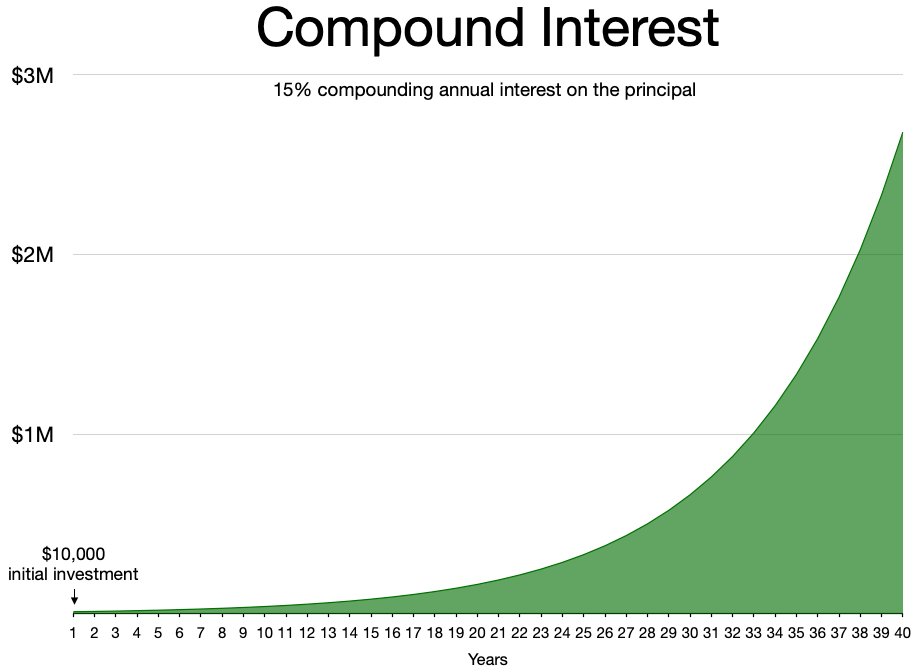
Every investment portfolio operates under a strict set of thermodynamic laws: the gross return generated by the broader market is constantly degraded by the friction of fees, the drag of taxation, and the entropy of human behavior. As a financial planner, your fundamental role is to design a system that maximizes the net energy—the after-tax, risk-adjusted return—that actually reaches the client's goals. This requires mastering the mechanisms of how capital is deployed, how the market prices assets, and how the tax code penalizes inefficiency. We are not merely picking investments; we are engineering an environment where capital can compound with minimal interference.
When constructing a portfolio, you must decide how to navigate the market's currents. Do you build an engine to overpower the current, or do you design a highly efficient sail to capture the prevailing winds?
Active Investment Management
Active investment management attempts to outperform a specific benchmark index. To achieve this alpha, active investment managers rely on analytical research and forecasting to make buy and sell decisions. They are looking for mispricings—cracks in the market's pricing mechanism where human insight can extract superior returns.
However, building and running this "engine" requires fuel and generates exhaust. Active investment management typically incurs higher management fees than passive management because you are compensating teams of analysts and portfolio managers. Furthermore, constantly acting on new research means that active portfolio management generally generates higher portfolio turnover than passive management.
This turnover triggers a cascade of friction:
- Higher portfolio turnover in active management increases transaction costs. Every trade costs money, quietly eroding gross returns.
- Higher portfolio turnover in active management often leads to increased capital gains tax liabilities. By repeatedly selling profitable positions, the manager forces the investor to realize taxable gains today rather than deferring them into the future.
Passive Investment Management
Instead of trying to outsmart the aggregate intelligence of millions of market participants, passive investment management seeks to replicate the performance of a specific market index, such as the S&P 500.
The Philosophical Underpinning: Passive investment management aligns with the Efficient Market Hypothesis (EMH). The Efficient Market Hypothesis posits that current asset prices fully reflect all available market information. If true, attempting to consistently find undervalued stocks through research is effectively impossible, rendering active management a wasted expense.
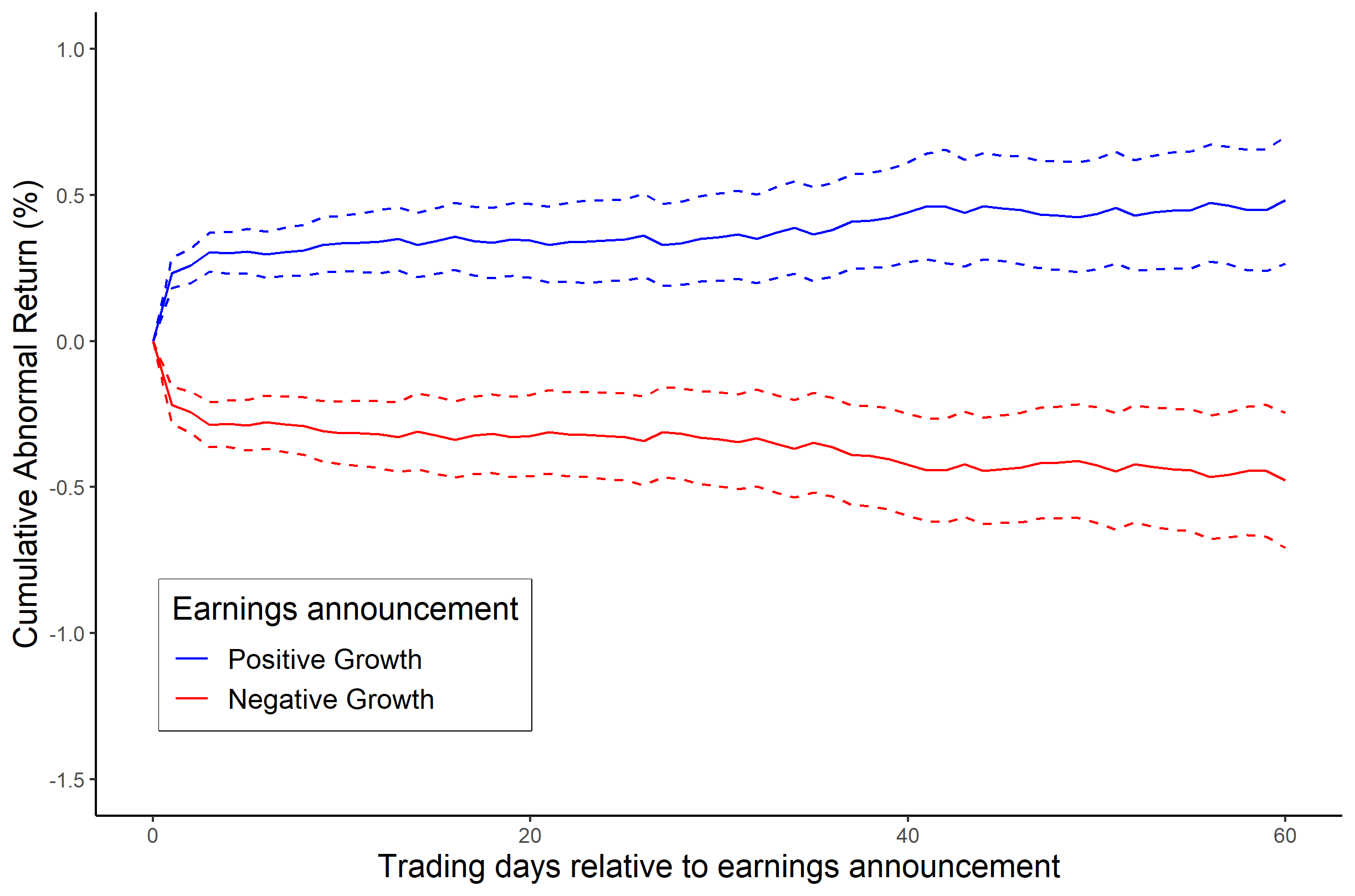
Because passive managers aren't paying armies of analysts to forecast earnings, passive mutual funds and exchange-traded funds typically have lower expense ratios than actively managed funds. Furthermore, because they simply buy and hold the index components, passive investment strategies generate fewer taxable events than active strategies. This low-turnover nature means fewer taxable events make passive investment strategies highly tax-efficient in taxable accounts.
| Feature | Active Management | Passive Management |
|---|---|---|
| Objective | Outperform a benchmark index | Replicate a benchmark index |
| Core Philosophy | Markets have inefficiencies | Efficient Market Hypothesis (EMH) |
| Costs | Higher management fees | Lower expense ratios |
| Turnover | Higher turnover / Higher transaction costs | Lower turnover / Lower transaction costs |
| Tax Impact | Increased capital gains tax liabilities | Highly tax-efficient; fewer taxable events |
When you drill down into the equities comprising a portfolio, you are generally buying one of two distinct corporate life cycles: the mature, unloved cash-generator, or the aggressive, rapidly expanding innovator.
Value Investing
Value investing involves selecting stocks that trade for less than the intrinsic or book value of the issuing company. Value investors are essentially bargain hunters. They look for fundamentally sound companies that the broader market has temporarily mispriced due to bad news, industry cyclicality, or plain boredom.
Because the market price is depressed relative to the company's actual earnings power, value stocks typically feature low price-to-earnings ratios. Furthermore, because these are usually mature companies with limited avenues for explosive expansion, they return their cash to shareholders; thus, value stocks commonly offer higher dividend yields than growth stocks.
The defining characteristic of this approach is risk mitigation. Value investors seek a margin of safety when purchasing undervalued securities. If a company's intrinsic value is $50 a share and you buy it at $35, that $15 gap is your margin of safety against errors in your own analysis or unforeseen economic shocks.
Growth Investing
Conversely, growth investing focuses on companies expected to grow sales and earnings at an above-average market rate. These companies are changing the world, capturing massive new market share, and innovating rapidly. Because investors are willing to pay a premium today for massive expected future profits, growth stocks typically exhibit high price-to-earnings ratios.
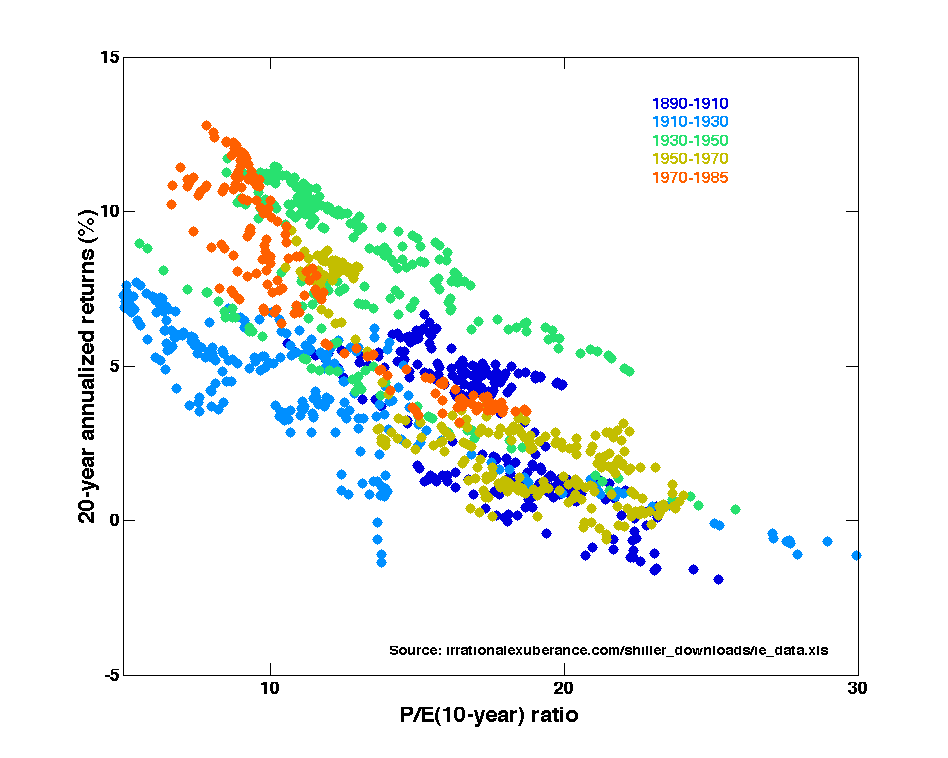
Do not expect a dividend check from a hyper-growth tech firm. Growth companies usually reinvest earnings into business expansion rather than paying dividends. Their internal rate of return on capital is so high that giving cash back to the investor would actually be a poor capital allocation decision.
However, because their valuations are tethered to future expectations rather than current cash flows, growth stocks generally experience higher price volatility than value stocks. When interest rates shift or a single product launch fails, the distant future suddenly looks less certain, and the price swings violently.
As a financial planner, your greatest adversary is not market volatility; it is the behavioral psychology of your own client. Clients fear entering the market at the "wrong time."
Dollar-cost averaging requires investing a fixed dollar amount into a specific asset at regular time intervals, regardless of what the market is doing. If a client has $120,000 to invest, rather than deploying it all at once, you might invest $10,000 on the first of every month for a year.
By keeping the dollar amount fixed, the math works a subtle magic. Dollar-cost averaging dictates purchasing more shares when the asset price is low, and conversely, dollar-cost averaging dictates purchasing fewer shares when the asset price is high.
The Mathematical Proof: Assume you invest $100 a month for two months. Month 1: Price is $10. You buy 10 shares. Month 2: Price drops to $5. You buy 20 shares. Your average purchase price across the two months is ($10 + $5) / 2 = $7.50. Your average cost per share is $200 total invested / 30 shares owned = $6.67.
Because of this mechanism, dollar-cost averaging mathematically ensures the average cost per share will be lower than the average market price over the investing period.
Crucially, dollar-cost averaging mitigates the behavioral risk of poorly timing a lump-sum market entry. It removes the paralysis of analysis and forces the client to accumulate assets systematically.
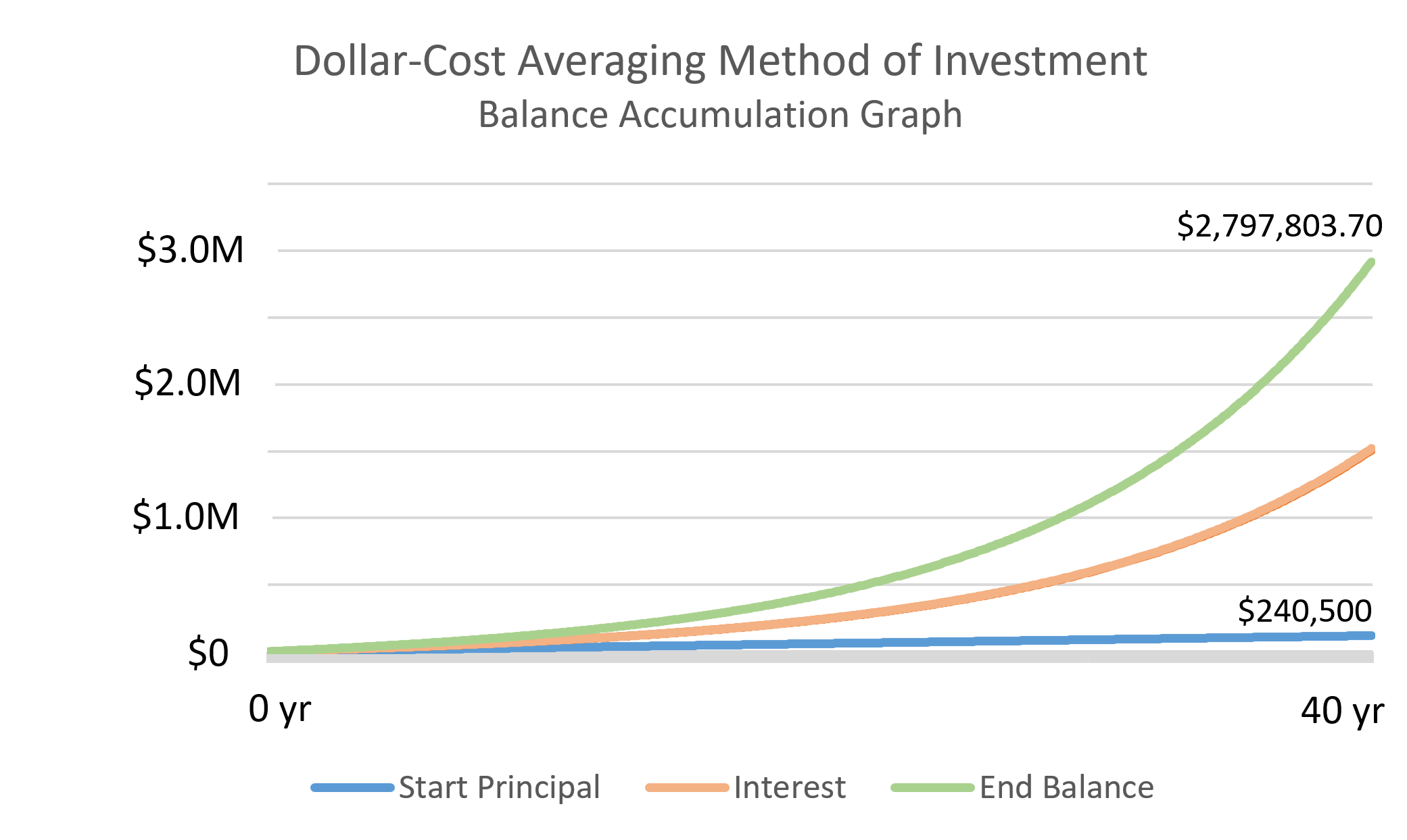
The Limitations: We must be rigorously honest about what this strategy cannot do. Dollar-cost averaging does not guarantee a profit. Furthermore, dollar-cost averaging does not protect against a loss in a continuously declining market. If an asset is marching steadily toward zero, buying more of it at a lower price simply means you are throwing good money after bad.

A 10% return means nothing if the government confiscates 40% of it before the client can spend it. Tax-efficient investing strategies aim to maximize after-tax returns for an investor. As a planner, you have three primary levers to pull: where you put the assets, when you recognize losses, and how long you hold the gains.
Asset Location Strategy
Asset allocation determines what you own; asset location determines where you hold it. The tax code treats different accounts (IRAs, 401(k)s, taxable brokerages) differently.
Asset location strategy involves placing tax-inefficient investments into tax-advantaged retirement accounts (like Traditional or Roth IRAs). Tax-inefficient investments include actively managed mutual funds and taxable bonds. Why? Because active funds generate high short-term capital gains and bonds throw off ordinary income. If held in a taxable account, the client bleeds tax dollars every year. Shielding them inside an IRA defers or eliminates that annual tax drag.
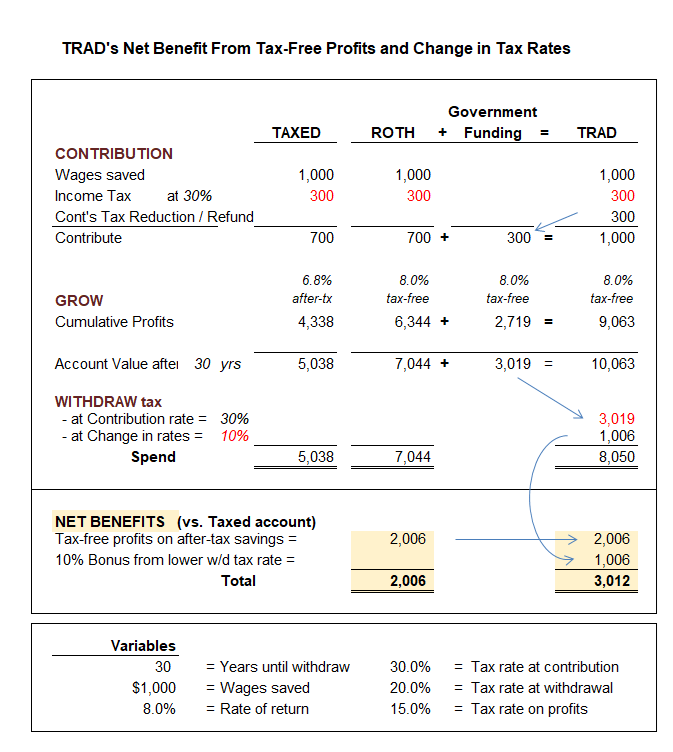
Conversely, asset location strategy involves placing tax-efficient investments into taxable brokerage accounts. Tax-efficient investments include index funds and exchange-traded funds. Because these passive vehicles rarely distribute capital gains, the investor controls when they pay taxes by deciding when to sell the ETF.
Tax-Loss Harvesting and the Wash-Sale Rule
The IRS allows investors to use their investment failures to shield their investment successes. Tax-loss harvesting involves selling securities at a loss to offset realized capital gains.
If you realize $10,000 in capital gains, and you sell a separate losing position for a $10,000 loss, your net capital gain is zero, entirely erasing the tax liability for those gains. If your losses exceed your gains, the code provides an additional benefit: up to three thousand dollars of net capital losses can be used annually to offset ordinary income in the United States. Any losses beyond that $3,000 are carried forward to future tax years.
However, the IRS anticipates the trick of selling a stock just to claim the loss and immediately buying it back. The wash-sale rule disallows a tax loss deduction if a substantially identical security is purchased within thirty days before or after the sale. To harvest a loss legally, you must swap the sold asset for a proxy that maintains the portfolio's allocation without triggering the "substantially identical" threshold (e.g., selling an actively managed large-cap mutual fund and replacing it with an S&P 500 ETF for 31 days).
Capital Gains Management
Finally, the easiest tax-efficient strategy requires nothing more than patience. The tax code heavily penalizes rapid trading. Short-term capital gains (assets held one year or less) are taxed at the investor's highest marginal ordinary income rate. However, holding equity investments for longer than one year qualifies the gains for lower long-term capital gains tax rates, which are significantly lower (typically 0%, 15%, or 20%, depending on income).
By marrying passive management (to minimize forced distributions), intelligent asset location (to shield high-yield assets), and disciplined holding periods (to secure long-term capital gains rates), you construct a portfolio that retains the maximum possible kinetic energy for your client's actual financial goals.