Qualified and Non-Qualified Annuities
Not sure you’re ready?
Take the ~3-minute readiness diagnostic and see where you stand.
Consider a reservoir built to sustain a city through an indefinite drought. The engineers must calculate not only how much water sits behind the dam, but exactly how to regulate the outflow so the city never runs dry, regardless of how long the drought lasts. In financial planning, longevity is the drought, and an annuity is the reservoir. It is the only financial instrument mathematically engineered to liquidate capital over an unknowable lifespan without the risk of depletion. As a practitioner, your job is to architect this reservoir: deciding the tax nature of the water flowing in, the timing of the outflow, and the economic engine generating the yield.

The fundamental physics of annuity taxation depend entirely on how the contract was funded. The Internal Revenue Code bifurcates annuities into two distinct tax wrappers: qualified and non-qualified.
A qualified annuity is funded with pre-tax dollars, typically residing inside a retirement plan like a 401(k) or a traditional IRA. Because the money entering the contract has never been taxed, the IRS demands its cut upon exit. Consequently, the entire distribution from a qualified annuity is taxed as ordinary income. Furthermore, because these contracts are bound by retirement account rules, qualified annuities are subject to Required Minimum Distribution (RMD) rules.
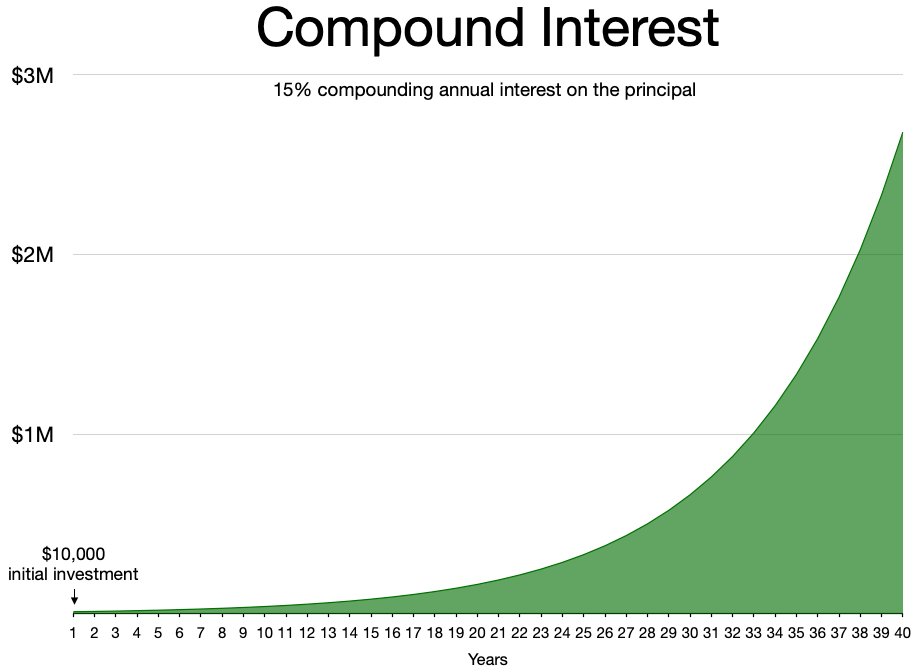
A non-qualified annuity, by contrast, is funded with after-tax dollars. You are using capital that has already been subject to income tax. Therefore, annuity contributions made to a non-qualified contract are not tax-deductible. The primary advantage of this structure is that earnings within a non-qualified annuity grow on a tax-deferred basis. As long as the funds remain inside the contract, the compounding engine operates without the drag of annual capital gains or dividend taxes. Unlike their qualified counterparts, non-qualified annuities are not subject to Required Minimum Distribution rules during the life of the owner.
The Corporate Ownership Trap: Congress designed tax deferral to encourage individual retirement savings. If a corporate entity tries to exploit this, the IRS steps in. Non-qualified annuities owned by a non-natural person like a corporation do not receive tax-deferred growth on earnings. The growth is taxed annually, effectively destroying the primary tax benefit of the wrapper.
When a client wants to extract money from a non-qualified annuity, the tax treatment depends on how they take it. They can take ad-hoc withdrawals, or they can annuitize the contract.
Ad-Hoc Withdrawals and the 1982 Dividing Line
If a client simply reaches into the contract to pull out a lump sum, the IRS dictates the order in which principal and earnings are withdrawn. Historically, Congress allowed owners to withdraw their principal first—tax-free. But investors began treating annuities as glorified short-term savings accounts. Congress closed this loophole in 1982.
- Pre-August 14, 1982: Non-qualified annuities purchased before August 14, 1982 receive First-In First-Out (FIFO) tax treatment for withdrawals. The owner withdraws their tax-free principal first.
- Post-August 13, 1982: Withdrawals from non-qualified annuities purchased after August 13, 1982 are subject to Last-In First-Out (LIFO) tax treatment.
Under Last-In First-Out tax treatment, withdrawals are treated as taxable earnings first until all earnings are exhausted. Only after every dollar of gain has been taxed as ordinary income can the owner touch their tax-free principal.
To further discourage treating these contracts as piggy banks, the IRS imposes a 10 percent early withdrawal penalty on the taxable portion of annuity distributions taken before age 59 and a half. Note the precision here: the penalty applies only to the taxable earnings, not the return of principal.
However, the tax code provides three primary exceptions where the 10 percent early withdrawal penalty does not apply:
- If the annuity owner dies.
- If the annuity owner becomes totally disabled.
- For distributions made as part of a series of substantially equal periodic payments (SEPP).
Additionally, clients must be wary of internal contract fees. Annuity surrender charges are fees levied by the insurance company for withdrawing funds before a specified period has elapsed. These exist to recoup the insurer's upfront commission and acquisition costs, compounding the pain of early withdrawals alongside IRS penalties.
The Physics of Annuitization
If an owner chooses to permanently convert their accumulated capital into a guaranteed stream of income, they have "annuitized" the contract. Annuitized payments from a non-qualified annuity are taxed based on an exclusion ratio.
Think of the exclusion ratio as a filter that separates your original after-tax money from the tax-deferred growth. The exclusion ratio determines the portion of an annuitized payment that represents a tax-free return of principal.
The Formula: The exclusion ratio is calculated by dividing the investment in the annuity contract by the expected return. (Exclusion Ratio = Basis ÷ Total Expected Lifetime Payout)
If your basis is $100,000 and the actuarial tables expect you to receive $200,000 over your lifetime, your exclusion ratio is 50%. Therefore, 50% of every payment is tax-free principal, and 50% is taxable ordinary income.
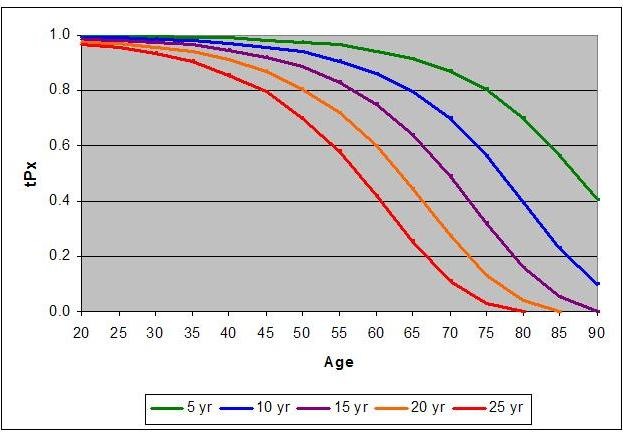
But what happens if you outlive the actuarial tables? The tax code evolved here as well:
- For non-qualified annuities with annuity starting dates after December 31, 1986, the exclusion ratio applies only until the principal is fully recovered.
- Once the principal of a post-1986 non-qualified annuity is fully recovered, all subsequent annuitized payments are fully taxable as ordinary income. (You have used up all your tax-free water; everything left in the reservoir is pure, taxable gain).
The decision of when to turn on the income stream dictates the structural design of the contract.
Immediate Annuities (SPIAs)
A Single Premium Immediate Annuity (SPIA) requires a lump-sum premium payment. By definition, a Single Premium Immediate Annuity begins paying income to the annuitant within one year of purchase.
Immediate annuities are appropriate for retirees seeking a guaranteed lifetime income stream. However, this guarantee comes at a steep opportunity cost. To secure that lifetime promise from the insurer, purchasing an immediate annuity generally requires the surrender of liquidity and requires the surrender of access to the principal. You have handed over the asset in exchange for a cash flow.
Deferred Annuities and QLACs
Conversely, deferred annuities begin income payments at a future date determined by the contract owner. Because the income is delayed, deferred annuities are appropriate for individuals in the accumulation phase seeking tax-deferred growth.
A powerful innovation in the deferred annuity space is the Qualified Longevity Annuity Contract (QLAC). QLACs are deferred annuities purchased within a qualified retirement plan. They are designed to insure against the specific risk of outliving your money deep into old age (e.g., turning on income at age 85).
To incentivize their use, the IRS offers a massive concession: The value of a Qualified Longevity Annuity Contract is excluded from the account balance when calculating Required Minimum Distributions. This lowers the client's current RMD tax burden. The SECURE 2.0 Act increased the maximum premium limit for a Qualified Longevity Annuity Contract to $200,000, simplifying the rules and expanding their utility for wealthy retirees.
If the tax wrapper is the structure of the reservoir, the underlying crediting method is the engine that dictates how fast the water replenishes.
| Annuity Type | Defining Characteristic | Primary Benefit | Primary Risk |
|---|---|---|---|
| Fixed | Fixed annuities guarantee a minimum rate of interest. | Fixed annuities protect the principal investment from market losses. | Fixed annuities expose the annuitant to purchasing power risk due to inflation over time. The nominal dollar is safe, but the real value erodes. |
| Variable | Variable annuity returns depend on the performance of underlying investment subaccounts (mutual-fund-like portfolios). | Variable annuities can provide a potential hedge against inflation during long retirement periods because equities historically outpace inflation. | Variable annuities expose the annuitant to investment risk. If the subaccounts crash, the account value crashes. |
| Indexed | Indexed annuities provide a return based on the performance of a specified stock market index (e.g., S&P 500). | Indexed annuities protect the principal against market declines (a floor of zero). | Indexed annuities limit upside return potential through caps or participation rates. The insurer absorbs the downside risk, but keeps a portion of the upside reward. |
Section 1035 Exchanges
Financial circumstances change, and a client may outgrow their current annuity. Section 1035 of the Internal Revenue Code allows for the tax-free exchange of an existing annuity contract for a new annuity contract. This allows a planner to upgrade a client's contract—perhaps to one with lower fees or better indexing options—without triggering a massive tax bill on the deferred earnings.
However, the physics of tax law only allow you to move laterally or toward more tax friction, not less. Therefore, Section 1035 of the Internal Revenue Code prohibits the tax-free exchange of an annuity contract for a life insurance policy. (You cannot turn a taxable income stream into a tax-free death benefit).
Estate Planning Realities
When an annuity owner dies, the transfer of the asset presents a critical planning scenario.
First, the mechanism of transfer: The owner of a non-qualified annuity can name a beneficiary to bypass probate. The contract passes by operation of law, overriding any instructions in a will.
Second, the tax reality: Unlike stocks or real estate, the death benefit of a non-qualified annuity does not receive a step-up in basis at the death of the owner. The deferred tax liability survives the owner. Consequently, beneficiaries of a non-qualified annuity must pay ordinary income tax on the earnings portion of the death benefit. Understanding this allows you to guide clients toward highly strategic wealth transfer, ensuring that the tax burden of their longevity protection doesn't unintentionally crush their heirs.