Types, features, and taxation of trusts
Not sure you’re ready?
Take the ~3-minute readiness diagnostic and see where you stand.
To understand the architecture of wealth transfer, you must first observe that property ownership is not a solid, indivisible atom. It can be split. At its core, a trust is a fiduciary relationship where one party holds legal title to property for the benefit of another party. By splitting ownership into two distinct particles—legal title and equitable title—we can manipulate how assets are managed, taxed, and transferred across generations.
The cast of characters in this physical reaction is always three-fold. The grantor is the individual who creates and funds a trust. They supply the raw material. The trustee holds legal title to the trust assets, bearing the absolute responsibility to manage trust assets according to the instructions in the trust document. Finally, the beneficiary holds equitable title to the trust assets, meaning the beneficiary is entitled to receive the benefits from a trust without carrying the burden of its legal administration.
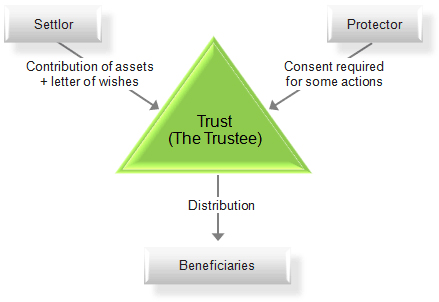
For the financial planner, understanding how these three roles interact with the Internal Revenue Code is the difference between preserving a family's legacy and allowing it to be consumed by taxation and creditors.
Trusts are categorized first by the moment of their inception.
A living trust is created and funded during the lifetime of the grantor (inter vivos). Because the asset transfer happens while the grantor is alive, assets transferred into a revocable trust avoid the public process of probate.
Conversely, a testamentary trust is created by the provisions of a will after the death of the grantor. The trust does not truly exist until the grantor's death breathes life into the will. Consequently, assets held in a testamentary trust must pass through the probate process before they can be placed into the trust itself.
A Note on Banking Shortcuts: Not all "trusts" require heavy legal architecture. A Totten Trust is a payable-on-death bank account designation. Because it is simply a beneficiary designation attached to a bank account, a Totten Trust does not require a formal trust document.
For the CFP® exam, your foundational diagnostic tool is determining whether a trust is revocable or irrevocable. This single variable dictates estate inclusion, gift tax consequences, and asset protection.
A revocable trust allows the grantor to alter or terminate the trust document at any time. The grantor retains absolute control. Because the grantor can easily take the assets back, funding a revocable trust does not constitute a completed gift for gift tax purposes. The IRS simply looks right through the trust structure. Consequently, assets held in a revocable trust are included in the gross estate of the grantor for estate tax purposes, and income generated by a revocable trust is taxed directly to the grantor.
Furthermore, because the grantor retains total access to the capital, a revocable trust does not provide asset protection from the creditors of the grantor. Why do we use them? Beyond avoiding probate, a revocable living trust provides a mechanism for managing the assets of the grantor during periods of incapacity. If the grantor suffers dementia, the successor trustee seamlessly steps in. It is critical to remember that a revocable trust automatically becomes an irrevocable trust upon the death of the grantor, as the only person holding the power to revoke is no longer alive.
An irrevocable trust cannot be altered or revoked by the grantor after creation. By permanently severing control, the grantor changes the tax physics of the asset. Transferring assets to an irrevocable trust constitutes a completed gift for gift tax purposes, meaning the grantor must use their lifetime exemption or pay gift taxes. The reward for this severing of ties is immense: assets transferred to a properly structured irrevocable trust are excluded from the gross estate of the grantor.
Diagnostic Comparison: Revocable vs. Irrevocable
| Feature | Revocable Trust | Irrevocable Trust |
|---|---|---|
| Alteration | Grantor can amend or dissolve. | Cannot be amended or dissolved by Grantor. |
| Gift Tax | Incomplete gift; no gift tax consequence. | Completed gift upon funding. |
| Estate Inclusion | Included in Grantor's gross estate. | Excluded from Grantor's gross estate. |
| Creditor Protection | None for the Grantor. | Assets generally protected. |
| Income Tax | Taxed to Grantor. | Usually taxed to Trust or Beneficiaries. |
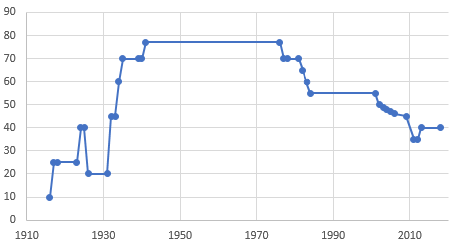
Trusts possess their own tax identity. However, they are treated punitively by the tax code to prevent wealthy individuals from using trusts to hide income. Non-grantor trusts reach the maximum federal income tax bracket at a significantly lower income threshold than individual taxpayers. Because trust income retained by a non-grantor trust is taxed directly at the trust level, retaining income inside a trust is highly inefficient.
To mitigate this, trusts utilize a concept called Distributable Net Income (DNI).
Distributable Net Income determines the maximum amount of taxable income that can be passed from a trust to the trust beneficiaries.
Think of DNI as a valve. When a trust distributes cash to a beneficiary, the IRS must know if that cash is taxable income or a tax-free return of principal. Distributions from a trust up to the Distributable Net Income amount are tax-deductible by the trust, effectively shifting the tax burden to the beneficiary (who is usually in a much lower tax bracket). Conversely, trust distributions in excess of Distributable Net Income are treated as tax-free distributions of principal.
Trusts manage these distributions under two rigid tax classifications:
- Simple Trusts: A simple trust is required to distribute all of its accounting income to beneficiaries annually. To maintain "simple" status, a simple trust is strictly prohibited from distributing trust principal to beneficiaries, and it is strictly prohibited from making charitable contributions.
- Complex Trusts: A complex trust is permitted to accumulate trust income. Furthermore, a complex trust is permitted to distribute trust principal to beneficiaries and is permitted to make charitable contributions.
Intentionally Defective Grantor Trusts (IDGTs)
There is a fascinating mismatch in the tax code: the rules determining estate inclusion are slightly different from the rules determining income tax inclusion. We can exploit this gap using a Grantor Trust.
A grantor trust is a trust where the grantor retains certain administrative powers, such as the power to substitute assets of equivalent value. The retention of administrative powers in a grantor trust causes the trust income to be taxed to the grantor.
Enter the Intentionally Defective Grantor Trust. An IDGT is intentionally "defective" for income tax purposes, but perfectly sound for estate tax purposes. It is structured to remove assets from the gross estate of the grantor, while ensuring the grantor of an Intentionally Defective Grantor Trust is responsible for paying all income taxes generated by the trust assets.
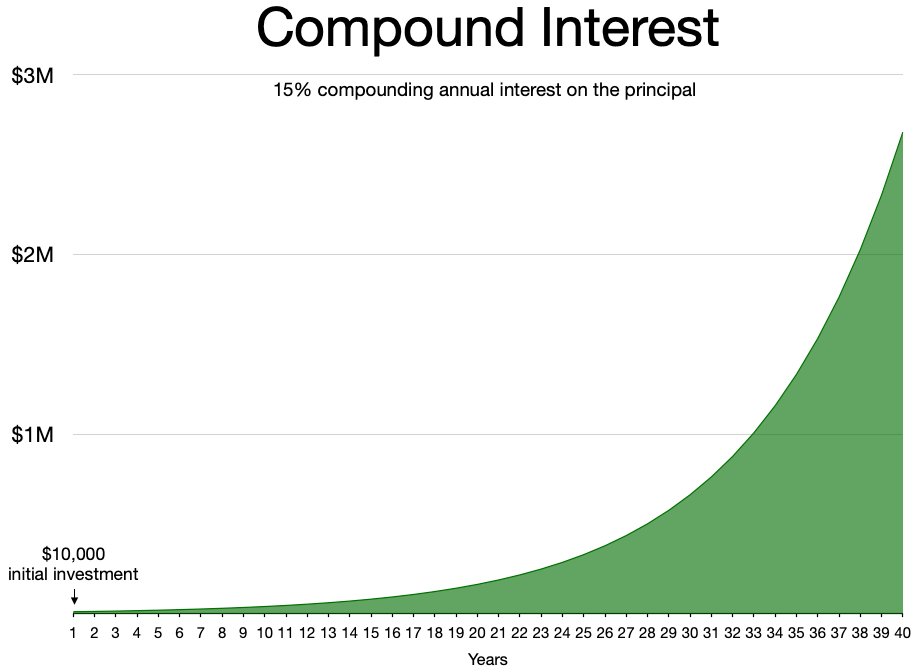
Why is this brilliant? The payment of income taxes by the grantor for an Intentionally Defective Grantor Trust allows the trust assets to grow tax-free for the beneficiaries. Even better, the payment of income taxes by the grantor for an Intentionally Defective Grantor Trust is not considered an additional taxable gift by the IRS. The grantor is legally paying their own tax bill, while the trust assets compound geometrically.
Irrevocable Life Insurance Trusts (ILITs)
Life insurance death benefits are generally income tax-free, but they are included in the insured's gross estate if the insured owns the policy. An Irrevocable Life Insurance Trust is designed to hold life insurance policies outside of the gross estate of the insured.
For an ILIT to succeed, the insured individual must not retain any incidents of ownership over a life insurance policy held in an Irrevocable Life Insurance Trust. What constitutes an incident of ownership? The IRS defines this broadly: incidents of ownership include the right to change beneficiaries on a life insurance policy and incidents of ownership include the right to borrow against the cash value of a life insurance policy. If the grantor retains either, the death benefit gets dragged back into their taxable estate.
Timing is critical when funding an ILIT:
- Transferring an existing life insurance policy to an Irrevocable Life Insurance Trust triggers the three-year lookback rule. If this happens, the death benefit of a transferred life insurance policy is included in the estate of the grantor if the grantor dies within three years of the transfer.
- To avoid this mortality gamble, it is always better to have the trustee buy a new policy from day one: the three-year lookback rule does not apply to a new life insurance policy purchased directly by an Irrevocable Life Insurance Trust.
The Crummey Power and the 5/5 Lapse Rule
When a grantor contributes cash to an ILIT to pay the life insurance premiums, that contribution is a gift. However, because the beneficiaries cannot access the money until the grantor dies, it is considered a gift of a "future interest," which does not qualify for the annual gift tax exclusion.
We solve this using a Crummey power, which gives a trust beneficiary a temporary right to withdraw a contribution made to the trust (usually for 30 days). This legal fiction converts a gift of a future interest into a gift of a present interest, and a gift of a present interest qualifies for the annual gift tax exclusion.
However, planners must watch the lapse of this power closely. If a beneficiary allows their withdrawal right to expire (lapse), a lapse of a Crummey power exceeding the greater of $5,000 or five percent of trust assets constitutes a taxable gift to the other trust beneficiaries. This is known as the "5/5 Rule" and dictates how much can be cleanly contributed per beneficiary without triggering unintended gift taxes.
When a client wants to transfer highly appreciating assets but minimize gift tax, we turn to split-interest trusts. These trusts slice an asset into a "present interest" (retained by the grantor) and a "remainder interest" (given to the heirs).
GRATs and GRUTs
A Grantor Retained Annuity Trust provides a fixed annuity payment to the grantor for a specified term of years, while the remainder interest of a Grantor Retained Annuity Trust passes to designated beneficiaries at the end of the trust term.
The genius of a GRAT lies in its valuation mathematics: the taxable gift value of a transfer to a Grantor Retained Annuity Trust is the fair market value of the assets minus the present value of the retained annuity. The IRS calculates this present value using a standardized interest rate (Section 7520 rate). Therefore, a Grantor Retained Annuity Trust succeeds in transferring wealth tax-free when the underlying assets appreciate faster than the IRS Section 7520 interest rate.
If you prefer a floating payment, you might use a GRUT: A Grantor Retained Unitrust pays the grantor a fixed percentage of the trust assets valued annually.
The Core Risk: These trusts carry a severe mortality risk. The assets of a Grantor Retained Annuity Trust are included in the gross estate of the grantor if the grantor dies before the end of the annuity term. The grantor must outlive the trust term for the wealth transfer to succeed.
Qualified Personal Residence Trusts (QPRTs)
A QPRT applies the same discount arithmetic to real estate. A Qualified Personal Residence Trust holds a primary or secondary residence for a specified term of years, during which the grantor of a Qualified Personal Residence Trust retains the right to live in the residence during the trust term.
Just like a GRAT, the taxable gift value for a Qualified Personal Residence Trust is the fair market value of the residence minus the present value of the retained right to use the home.
The outcomes hinge entirely on the grantor's lifespan:
- The full value of the residence is included in the gross estate of the grantor if the grantor dies during the Qualified Personal Residence Trust term.
- However, the residence passes to the remainder beneficiaries free of additional estate taxes if the grantor outlives the Qualified Personal Residence Trust term.
- If the grantor wishes to stay in the home after the term ends, the transaction must become arm's-length: the grantor must pay fair market rent to the remainder beneficiaries to continue living in the home after the Qualified Personal Residence Trust term expires. (This is actually beneficial, as paying rent further reduces the grantor's taxable estate without consuming their gift tax exemption!)
The Spousal Estate Matrix: Bypass and QTIP Trusts
In high-net-worth marital planning, we aim to ensure both spouses maximize their lifetime estate tax exemptions without leaving the surviving spouse destitute. We use an A/B trust structure for this.
The "B" Trust is the Bypass Trust. A Bypass Trust is designed to utilize the estate tax exemption of the first spouse to die. Because this trust uses the decedent's exemption, assets held in a Bypass Trust are excluded from the gross estate of the surviving spouse. Yet, the surviving spouse is not left empty-handed: the surviving spouse is permitted to receive income distributions from a Bypass Trust, and the surviving spouse can access principal from a Bypass Trust for health, education, maintenance, and support (HEMS).
The "A" Trust is the Qualified Terminable Interest Property (QTIP) Trust. A Qualified Terminable Interest Property Trust qualifies for the unlimited marital deduction in the estate of the first spouse to die, deferring all estate taxes until the death of the second spouse. To qualify for this deduction, the IRS demands strict parameters: a Qualified Terminable Interest Property Trust must distribute all income to the surviving spouse at least annually. Ultimately, the assets of a Qualified Terminable Interest Property Trust are included in the gross estate of the surviving spouse.
Why use a QTIP instead of outright giving the money to the surviving spouse? Control from the grave. The grantor of a Qualified Terminable Interest Property Trust dictates the ultimate remainder beneficiaries of the trust assets, ensuring that after the surviving spouse passes, the assets go to the grantor's chosen heirs (vital in second marriage scenarios).
Protection from Themselves and the System: Spendthrifts and Special Needs
Finally, trust structures are frequently utilized to erect impenetrable legal walls around beneficiaries.
If a beneficiary is reckless with money, the grantor will include a spendthrift clause. A spendthrift provision prevents a beneficiary from voluntarily assigning their interest in a trust to a third party. Because the beneficiary cannot legally pledge the trust assets as collateral, a spendthrift provision protects trust assets from the claims of the creditors of a beneficiary.
If a beneficiary has physical or mental disabilities, outright wealth can be financially catastrophic. A Special Needs Trust provides financial support for supplemental care to a disabled beneficiary (like specialized therapies, travel, or upgraded medical equipment). Most importantly, because the beneficiary has no direct control over the assets, a Special Needs Trust prevents the disqualification of a beneficiary from means-tested government benefit programs like Medicaid or SSI.