Planning for divorce, unmarried couples and other special circumstances
Not sure you’re ready?
Take the ~3-minute readiness diagnostic and see where you stand.
The architecture of traditional estate and financial planning rests heavily on the legal framework of marriage. The Internal Revenue Code, the Employee Retirement Income Security Act (ERISA), and state intestacy laws all provide default mechanisms—spousal protections, unlimited deductions, and automatic survivorship rights—designed for legally married couples. When a planner steps outside this conventional paradigm, whether due to the dissolution of a marriage, clients choosing to remain unmarried, or marriages involving non-US citizens, the default legal safety nets vanish. In these scenarios, the absence of a marriage certificate, or the severing of one, dictates that every property transfer, every beneficiary designation, and every mechanism of control must be engineered proactively.
To navigate these specialized circumstances, we must understand the precise machinery that governs property division, taxation, and asset transfer when the standard marital defaults no longer apply.
Divorce is fundamentally the unwinding of a financial partnership. The central objective for a financial planner during and after a divorce is to ensure that the division of property, the reassignment of retirement assets, and the restructuring of the estate plan occur without triggering unnecessary tax liabilities or leaving catastrophic legal vulnerabilities.
Property Division and Section 1041
When married couples divide their non-retirement assets—such as real estate, taxable brokerage accounts, or business interests—they are shielded by Internal Revenue Code Section 1041. This section dictates that no gain or loss is recognized on property transfers between spouses incident to divorce.
But what exactly does "incident to divorce" mean? The IRS applies a strict chronological test. A property transfer is considered incident to divorce if:
- The transfer occurs within one year after the marriage ceases, OR
- The transfer is related to the cessation of the marriage (typically meaning it is made pursuant to a divorce or separation instrument and occurs within six years).
Crucial Rule: Because there is no taxable event upon the transfer, the recipient of property transferred incident to divorce assumes the transferor's adjusted basis in the property.
If your client is awarded a highly appreciated brokerage account in a settlement, they are also inheriting the embedded capital gains tax liability. Planners must evaluate assets on an after-tax basis when consulting on equitable distribution.
Restructuring Income: Alimony and Child Support
Historically, alimony provided a tax arbitrage opportunity: it was deductible to the higher-earning payer and taxable to the lower-earning recipient. The Tax Cuts and Jobs Act of 2017 fundamentally altered this dynamic. For alimony payments established in divorce agreements finalized after December 31, 2018, the payments are not tax-deductible by the payer and are not taxable income to the recipient.
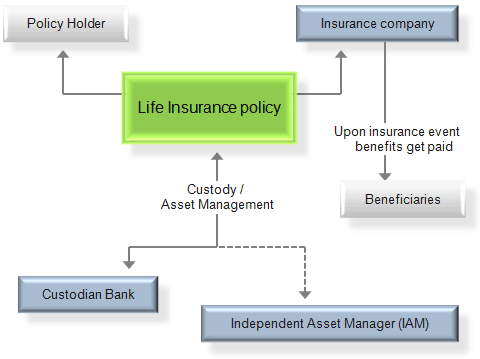
To guarantee these support payments continue even if the paying ex-spouse dies, a divorce decree can mandate that one ex-spouse maintain a life insurance policy naming the other ex-spouse as the primary beneficiary. Life insurance mandated by a divorce decree typically serves to secure ongoing alimony or child support payments upon the death of the payer, ensuring the financial dependency created by the settlement is not disrupted by mortality.
The Division of Retirement Assets: ERISA vs. IRAs
Retirement assets often represent the largest pool of capital in a marriage. Dividing them introduces one of the most critical distinctions in financial planning: the difference between an employer-sponsored plan and an Individual Retirement Account (IRA).
Qualified Plans and the QDRO
The Employee Retirement Income Security Act (ERISA) contains a strict anti-alienation rule which generally prohibits the assignment of retirement plan benefits to a third party. You cannot simply hand over a portion of your 401(k) to an ex-spouse or a creditor.
To bridge this fortress, the law created the Qualified Domestic Relations Order (QDRO). A QDRO is a specialized court order that is explicitly exempt from the anti-alienation provisions of ERISA. It establishes an alternate payee's right to receive benefits from a qualified employer-sponsored retirement plan.
A QDRO provides profound tax flexibility:
- Penalty Exemption: It permits the division of a qualified retirement plan without triggering the ten percent early withdrawal penalty, even if the participant is under age 59½.
- Spousal Taxation: Distributions from a QDRO to an ex-spouse alternate payee are taxable as ordinary income to the ex-spouse. However, the ex-spouse can roll over QDRO distributions into their own Individual Retirement Account to defer income taxes indefinitely.
- Child Payee Taxation: If the distributions from a QDRO go to a child alternate payee (for example, to fund child support), they are taxable as ordinary income to the plan participant (the parent whose account is being divided), not the child.
Dividing the IRA
Individual Retirement Accounts (IRAs) live outside the realm of ERISA. Therefore, IRAs do not require a QDRO for division during a divorce.
However, informal transfers are fatal. The division of an IRA in a divorce must be explicitly specified in the divorce decree to avoid early withdrawal penalties and taxes. When executed properly pursuant to the decree, a transfer of IRA assets incident to divorce is treated as a tax-free transfer (a trustee-to-trustee transfer is highly recommended to avoid any 60-day rollover complications).
| Feature | Qualified Plans (401k, Pension) | IRAs |
|---|---|---|
| Governing Law | ERISA | State/IRC |
| Document Required | QDRO | Divorce Decree/Separation Agreement |
| 10% Penalty Waived? | Yes, if via QDRO | Yes, if specified in decree |
The Danger of Stale Beneficiaries
One of the highest-liability areas for a CFP professional is post-divorce beneficiary cleanup.
Beneficiary designations on financial accounts supersede provisions made in a last will and testament. If a client's will leaves everything to their children, but their life insurance still names their ex-spouse, the ex-spouse gets the money.
To protect inattentive individuals, many states have enacted state revocation-upon-divorce statutes. These statutes automatically remove an ex-spouse as a beneficiary on state-governed contracts like life insurance policies and IRAs upon the finalization of a divorce. Furthermore, failure to update a will after a divorce typically results in state intestacy law treating the ex-spouse as having predeceased the testator, effectively writing them out of the probate estate.
However, state laws cannot touch federal supremacy. The Supreme Court has repeatedly affirmed that ERISA preempts state revocation-upon-divorce statutes. This means state laws cannot automatically revoke an ex-spouse's beneficiary designation on an employer-sponsored retirement plan like a 401(k). An individual must proactively update employer-sponsored retirement plan beneficiary designations after a divorce to prevent the ex-spouse from inheriting the account.
Unmarried couples—whether they are lifelong partners who simply choose not to marry, or couples legally restricted from marrying in certain international jurisdictions—operate in a legal vacuum. State and federal laws prioritize bloodlines and marriage licenses. For unmarried couples, every right must be established by contract.
The Tax Chasm
The most devastating financial penalty for unmarried couples lies in wealth transfer taxes. Unlike married couples, unmarried couples:
- Do not qualify for the unlimited marital deduction for gift taxes.
- Do not qualify for the unlimited marital deduction for estate taxes.
- Cannot utilize gift splitting to double their annual exclusion amount for gifts made to third parties.
- Cannot utilize the Deceased Spousal Unused Exclusion (DSUE); portability of the DSUE amount is exclusively available to legally married couples.
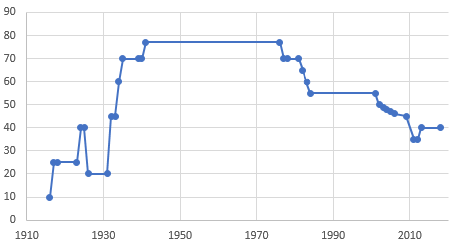
When a married individual dies, they can leave $100 million to their surviving spouse tax-free. When an unmarried partner dies and leaves the same amount to their partner, every dollar above the lifetime estate exemption is taxed, often at 40%.
Strategic Workarounds: Because massive, lump-sum transfers trigger taxes, unmarried clients must transfer wealth systematically. An unmarried individual can utilize the annual gift tax exclusion to transfer wealth tax-free to their unmarried partner each year. Furthermore, they can leverage exemptions that do not require a family relationship: direct payments of medical expenses for an unmarried partner to a healthcare provider qualify for the unlimited gift tax exclusion, as do direct payments of tuition for an unmarried partner to an educational institution.
Asset Titling: The Gift Tax Trap
Because intestate succession laws generally do not provide any default inheritance rights to unmarried surviving partners, how property is titled is a matter of absolute survival. Unmarried partners must execute wills or utilize will substitutes to guarantee that assets pass to the surviving partner.
Joint Tenancy with Right of Survivorship (JTWROS) is a popular will substitute. It enables an asset to pass directly to a surviving unmarried partner outside of the probate process. However, it harbors a severe tax trap for the unwary. Creating a JTWROS with an unmarried partner triggers immediate gift tax consequences if the contributions are unequal. Specifically, a taxable gift occurs in a JTWROS arrangement when one unmarried partner contributes more than fifty percent of the asset's purchase price.
Conversely, Property held as Tenants in Common (TIC) allows for unequal ownership percentages without triggering immediate gift taxes upon purchase (provided each owns precisely what they paid for). However, TIC does not include a legal right of survivorship for the co-owner. The property interest of a deceased Tenant in Common passes through probate according to the decedent's will or state intestacy laws—meaning if there is no will, the surviving partner gets nothing, and the decedent's blood relatives inherit the share of the house.
Contracts, Trusts, and Control
To circumvent the harsh defaults of state law, unmarried couples must build their own legal framework.
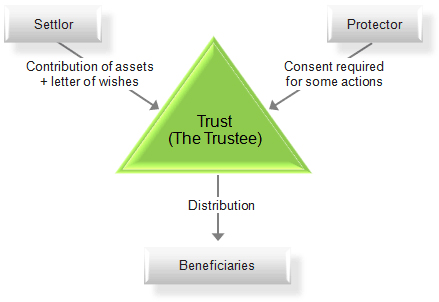
Revocable Living Trusts Revocable living trusts provide a mechanism to transfer assets to an unmarried partner outside of the public probate process. Why is bypassing probate particularly vital for unmarried couples? Because probate is a public forum that invites challenges. Revocable living trusts reduce the likelihood of a successful estate challenge by a decedent's blood relatives compared to a traditional will.
Cohabitation Agreements Without the default rules of family law to dictate the division of property if the relationship ends, unmarried partners should execute a cohabitation agreement. This operates as a legally binding contract defining the property rights and financial obligations of unmarried partners, much like a prenuptial agreement for those not intending to marry.
Incapacity Planning If an individual falls into a coma, the law designates next-of-kin (parents, siblings, adult children) as decision-makers. Unmarried partners lack default legal authority to make medical decisions for an incapacitated partner, nor do they have default legal authority to make financial decisions.
To grant this vital authority, unmarried individuals must execute:
- A healthcare proxy or medical power of attorney to grant medical decision-making authority to their partner.
- A durable power of attorney to grant financial decision-making authority to their partner.

Advanced Strategy: The GRIT Advantage
Sometimes, lacking a legal marital or family status is a tax advantage.
Under the Internal Revenue Code (specifically Section 2702), if a parent transfers an asset into a trust for their child but retains the income from that asset for a term of years, the IRS usually forces the parent to value the gift at 100% of the asset's current value—ignoring the parent's retained interest.
However, Internal Revenue Code Section 2702 rules regarding the valuation of retained interests do not apply to transfers made to non-family members. Because the Internal Revenue Code family member definition excludes unmarried partners, unmarried couples can utilize a Grantor Retained Income Trust (GRIT).
A GRIT is permitted for unmarried partners, allowing the grantor to place an asset in trust for their partner, retain the income stream for a decade, and subsequently transfer wealth at a discounted gift tax value (the present value of the remainder interest, rather than the full value of the asset). This is a highly effective, specialized wealth transfer tool entirely unavailable to married couples or blood relatives.
Finally, planners must recognize that a marriage certificate is not a universal skeleton key for the tax code. The nationality of the spouses dictates the availability of the most powerful estate tax tool: the marital deduction.
Non-citizen spouses do not qualify for the standard unlimited marital deduction for estate tax purposes. The U.S. government fears that a non-citizen surviving spouse could inherit a massive estate tax-free, return to their home country, and permanently remove those assets from the U.S. tax base.
To resolve this while still protecting the surviving spouse, planners utilize a Qualified Domestic Trust (QDOT). A QDOT allows a decedent's estate to claim the marital deduction for assets transferred to a non-citizen surviving spouse. The trust mandates that at least one trustee be a U.S. citizen or domestic corporation, and it ensures that when trust principal is eventually distributed to the non-citizen spouse, the deferred U.S. estate taxes are finally paid.