Planning for special needs and circumstances
Not sure you’re ready?
Take the ~3-minute readiness diagnostic and see where you stand.
Imagine a tightly sealed pressure vessel calibrated to hold exactly two thousand units of pressure. Add just one fractional unit beyond its structural capacity, and the entire system catastrophically fails. In financial planning for dependents with special needs, the federal safety net operates exactly like this unforgiving vessel. We are dealing with systems of strict mathematical thresholds, where a well-meaning financial gift from a relative acts as the fatal overpressure, instantly blowing out the foundational healthcare and income support the dependent relies upon to survive.
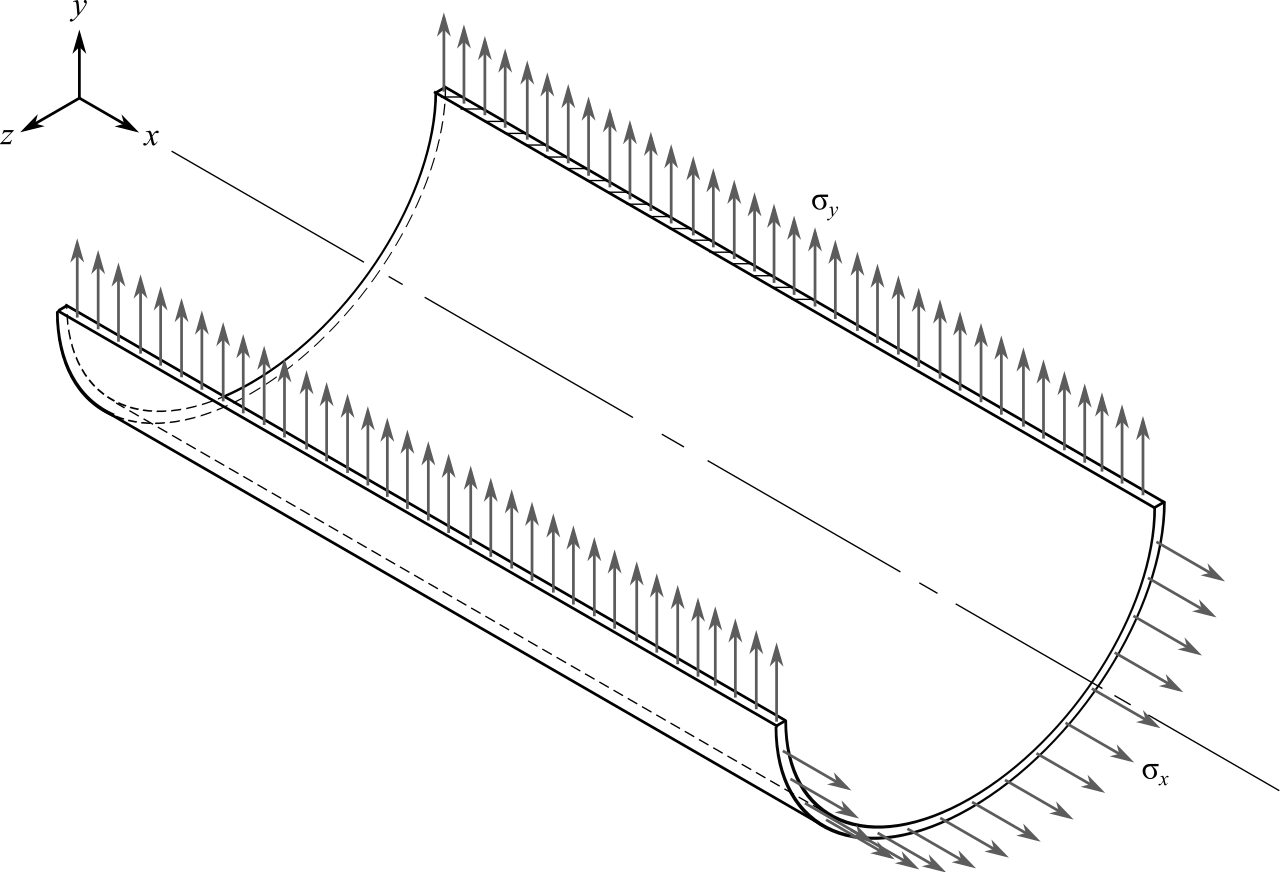
As a financial planner, your task is to architect pressure-relief valves. You must design legal and financial structures that allow capital to flow for the benefit of a disabled dependent without that capital ever registering on the statutory gauges of federal agencies.
To understand the architecture of special needs planning, we must first isolate the two critical pillars of government assistance that dictate our boundaries.
- Supplemental Security Income (SSI) is a means-tested federal program providing cash assistance to individuals with disabilities. It is designed to cover bare-minimum basics: food and shelter.
- Medicaid is a means-tested federal and state program providing healthcare coverage to individuals with disabilities. For many clients with severe disabilities, Medicaid is the sole entity willing to fund catastrophic medical costs, specialized therapies, and long-term institutional care.
Because both programs are strictly means-tested, they impose draconian asset limits. The standard Supplemental Security Income asset limit is $2,000 for an individual. For married couples where both individuals are eligible, the standard Supplemental Security Income asset limit is $3,000 for a married couple.
The Temporal Mechanics of Inheritances
Examine what happens when a well-intentioned relative attempts to leave money to a disabled dependent. We must track the exact chronology of the capital, because the federal government views wealth through two distinct temporal lenses: Income (money arriving) and Resources (money resting).
If a beneficiary receives a check from Grandma’s estate, inherited assets count as unearned income for Supplemental Security Income purposes in the month of receipt. For those first 30 days, the government treats the inheritance as a flowing river of cash. But watch the phase change when the calendar turns: retained inherited assets transition into countable resources for Supplemental Security Income purposes in the month following receipt.
The consequence is binary and immediate. Receiving a direct inheritance exceeding the $2,000 asset limit disqualifies a disabled individual from receiving Supplemental Security Income. If SSI falls, automatic Medicaid eligibility frequently collapses with it. A well-intentioned $10,000 inheritance does not make the dependent $10,000 richer; it forces them to burn through that $10,000 on out-of-pocket medical care they previously received for free, leaving them utterly impoverished mere months later.
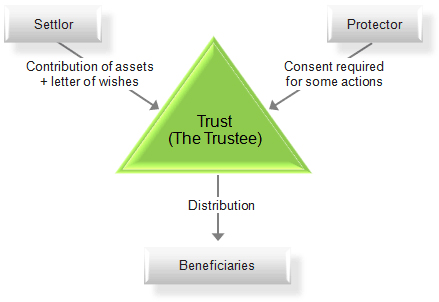
To solve the inheritance trap, we alter the geometry of ownership. A Special Needs Trust holds assets for a disabled individual without categorizing the funds as countable resources for government programs.
By placing legal title of the assets in the hands of a trustee, the trust acts as an invisible shield. The wealth surrounds the beneficiary and improves their life, but because the beneficiary lacks legal ownership, the federal gauges still read exactly $0.00.
Discretion, Control, and the Distribution Firewall
The structural integrity of this shield relies entirely on a lack of beneficiary control. If the disabled individual possesses even a microscopic ounce of legal authority to access the capital, the legal fiction collapses.
Providing a disabled beneficiary with the legal power to demand trust distributions invalidates the asset protection for Medicaid purposes. Therefore, a Special Needs Trust must grant the trustee absolute discretion over distributions to protect the beneficiary's government assistance.
This requires the aggressive purging of standard estate-planning boilerplate:
- The HEMS Trap: Standard trusts often direct trustees to distribute funds for the beneficiary's "Health, Education, Maintenance, and Support." In special needs planning, this is fatal. A trust utilizing a Health, Education, Maintenance, and Support standard makes the trust assets countable resources for Medicaid purposes. Why? Because HEMS creates an enforceable legal right; the beneficiary could theoretically sue the trustee to force a distribution for their "support." To survive agency scrutiny, a Third-Party Special Needs Trust avoids a Health, Education, Maintenance, and Support standard to protect the beneficiary's government benefits.
- The Crummey Trap: To qualify gifts for the annual gift tax exclusion, planners frequently use Crummey powers. A Third-Party Special Needs Trust must exclude Crummey withdrawal powers to prevent the beneficiary from having legal access to the funds. Giving a disabled beneficiary a 30-day window to demand $18,000 shatters the asset test.
The Mathematics of Beneficiary Distributions
Even with an impeccably drafted trust, the execution of distributions dictates benefit preservation.
Direct cash distributions from a Special Needs Trust to the beneficiary reduce Supplemental Security Income benefits. If the trustee hands the beneficiary a $500 bill to buy groceries, SSI views that exactly as if the beneficiary earned $500 at a job. Dollar-for-dollar, their cash lifeline erodes.
To prevent this, Special Needs Trust distributions must be made directly to third-party vendors to preserve the beneficiary's government cash benefits. The trustee must pay the utility company directly. The trustee must buy the wheelchair directly.
However, paying third-party vendors is not a universal panacea. The government heavily scrutinizes what the trust is actually buying.
- Shelter Penalties: Because SSI is explicitly intended to cover food and shelter, Special Needs Trust distributions used to pay for the beneficiary's shelter reduce Supplemental Security Income benefits. If the trustee pays the beneficiary's rent directly to the landlord, SSI penalizes the beneficiary for receiving "In-Kind Support and Maintenance."
- The PMV Cap: Fortunately, this penalty operates with an asymptote. A reduction in Supplemental Security Income benefits due to third-party shelter payments is mathematically capped by the Presumed Maximum Value rule. The government will dock the SSI check, but only up to a fixed maximum fraction (roughly one-third of the federal benefit rate), leaving the remainder of the cash benefit intact.
- Protected Distributions: Conversely, distributions from a Special Needs Trust for educational expenses do not reduce Supplemental Security Income benefits. Furthermore, distributions from a Special Needs Trust for out-of-pocket medical expenses do not reduce Supplemental Security Income benefits. The trustee can pay tuition, buy a specialized computer, or fund out-of-pocket dental surgery with zero impact on the SSI check.
Trusts are categorized entirely by the origin of their funding.
A First-Party Special Needs Trust is funded exclusively with assets legally owned by the disabled beneficiary. Think of this as the salvage operation. The breach has already occurred. The beneficiary is already holding the capital, and we must rapidly construct a vessel around it before the government cuts off their benefits.
Statutory Designation: First-Party Special Needs Trusts are also designated as (d)(4)(A) trusts under federal Medicaid law.
How does a disabled individual end up with their own capital? Most commonly, a First-Party Special Needs Trust can be funded with a personal injury settlement (e.g., a massive payout following an accident that caused the disability). Alternatively, a First-Party Special Needs Trust can be funded with a direct inheritance left improperly outside of a protective trust.

To effectively shield these self-owned assets, the First-Party SNT must obey rigid statutory mandates:
- Age Restriction: A First-Party Special Needs Trust must be established before the disabled beneficiary reaches age 65.
- Sole Benefit: A First-Party Special Needs Trust must be established for the sole benefit of the disabled individual. You cannot sneak secondary beneficiaries into the present enjoyment of the trust.
- Irrevocability: A First-Party Special Needs Trust must be irrevocable to successfully shield assets from Medicaid resource calculations. If the trust could be undone, the assets would remain accessible resources.
- Establishment Authority: Historically, these trusts had to be established by a parent, grandparent, guardian, or court. Modern law respects the autonomy of the individual: A competent disabled individual has the legal authority to establish a First-Party Special Needs Trust for themselves.
- The Ultimate Catch (Medicaid Payback): The federal government allows the individual to hide their own money and stay on the public dole, but the government demands restitution at the end of the line. A First-Party Special Needs Trust legally requires a Medicaid payback provision. What does this mean? A Medicaid payback provision dictates that remaining trust funds must reimburse the state for medical assistance upon the beneficiary's death. Only after the state is made completely whole can any remaining pennies flow to heirs.
If First-Party trusts are salvage operations, Third-Party trusts are masterpieces of proactive architectural planning.
A Third-Party Special Needs Trust is funded strictly with assets belonging to individuals other than the disabled beneficiary. Typically, a Third-Party Special Needs Trust can be funded by parents for the benefit of a disabled dependent.
The timing of this construction is flexible. A Third-Party Special Needs Trust can be established during the grantor's lifetime as an inter vivos trust, ready to receive ad hoc gifts. Alternatively, a Third-Party Special Needs Trust can be established upon the grantor's death as a testamentary trust, springing into existence via a will to catch an inheritance before it ever touches the beneficiary's hands.
The crowning, unparalleled advantage of a Third-Party SNT over a First-Party SNT lies in its terminal distribution. Because the disabled beneficiary never owned the money in the first place, the government has no claim to it. A Third-Party Special Needs Trust does not require a Medicaid payback provision upon the beneficiary's death. Consequently, remaining assets in a Third-Party Special Needs Trust can be directed to secondary beneficiaries chosen by the trust grantor (e.g., siblings of the disabled dependent).
Structural Comparison Matrix
| Feature | First-Party SNT (d)(4)(A) | Third-Party SNT |
|---|---|---|
| Funding Source | The disabled beneficiary's own assets. | Assets of parents, relatives, or third parties. |
| Common Uses | Personal injury settlements; improperly directed direct inheritances. | Parent's estate planning; lifetime gifting. |
| Age Restrictions | Must be funded prior to age 65. | No age restrictions for funding. |
| Medicaid Payback | Mandatory. The state must be reimbursed upon death. | Not Required. |
| Remainder Beneficiaries | Heirs receive only what remains after Medicaid is fully reimbursed. | Permitted. Directed to individuals designated by the Grantor. |
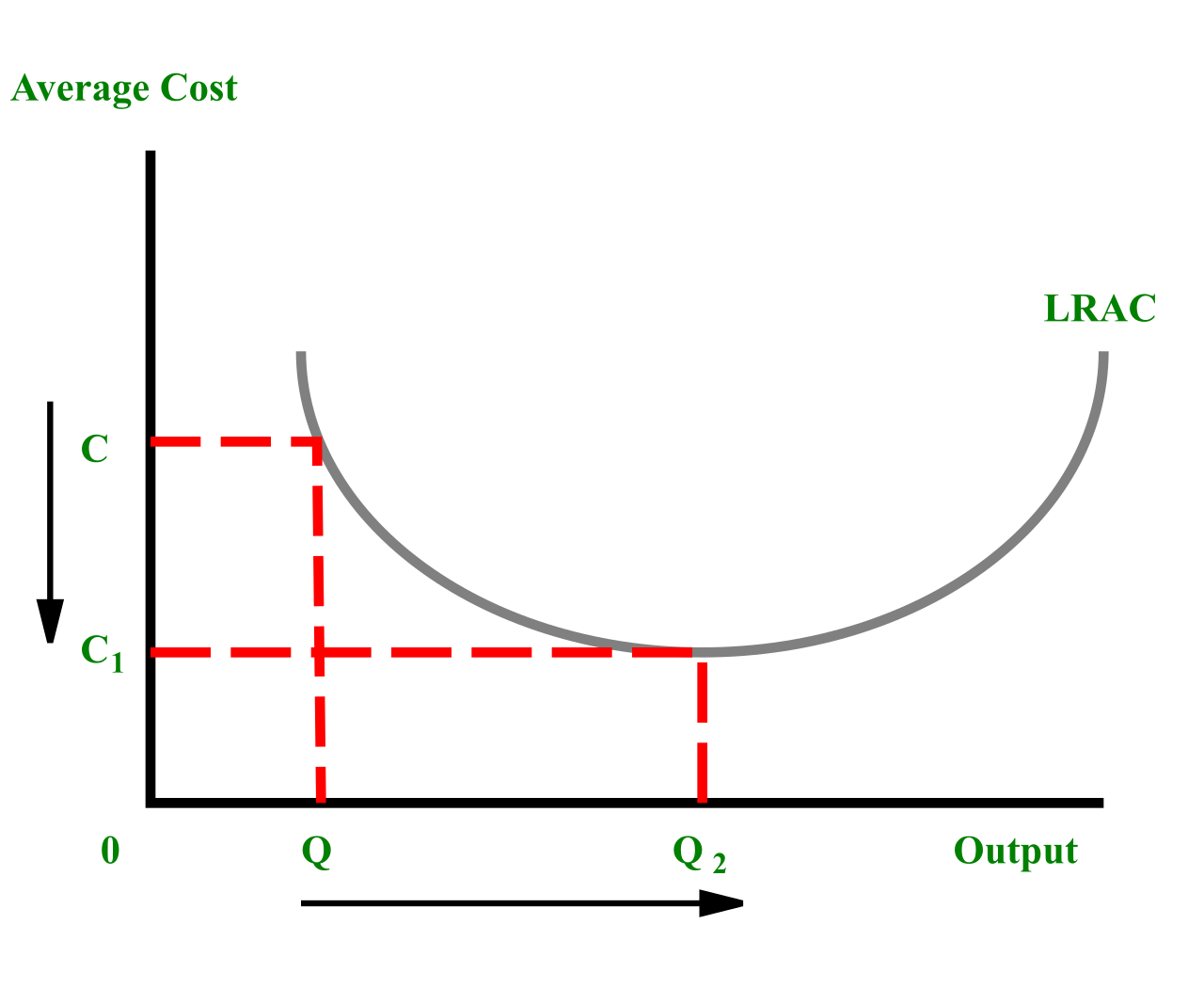
What happens when the capital requiring protection is only $35,000? A bespoke, standalone trust requiring an attorney to draft and a corporate trustee to manage will rapidly devour the corpus in administrative fees. To solve the problem of critical mass, we use the (d)(4)(C) structure.
Statutory Designation: Pooled Special Needs Trusts are also designated as (d)(4)(C) trusts under federal Medicaid law.
A Pooled Special Needs Trust is frequently utilized when the funding amount is too small to justify the administrative costs of a standalone trust.
Instead of a private bank, a Pooled Special Needs Trust is managed by a non-profit organization. The genius of this structure is pooling capital. A Pooled Special Needs Trust consolidates funds from multiple beneficiaries to achieve investment economies of scale.
Do not confuse commingled investments with commingled entitlements. While the master trust aggregates the money for institutional-level asset management, a Pooled Special Needs Trust maintains separate accounting sub-accounts for each individual disabled beneficiary.
For decades, the special needs trust was the only solution. In 2014, Congress authorized a profound modern alternative: the ABLE Account.
Achieving a Better Life Experience accounts are Section 529A tax-advantaged savings vehicles for individuals with disabilities. They operate as a hybrid between a 529 college savings plan and a special needs trust, prioritizing beneficiary autonomy and tax-free growth.
Eligibility and Contribution Limits
Unlike SNTs, the barrier to entry for an ABLE account requires passing a strict chronological test. The onset of a qualifying disability must occur before a specific statutory age to open an Achieving a Better Life Experience account.
You must be intimately familiar with the transitioning legal landscape of this age limit:
- The disability onset age limit for opening an Achieving a Better Life Experience account is age 26 for calendar years prior to 2026.
- Effective January 1, 2026, the SECURE 2.0 Act increases the disability onset age requirement for Achieving a Better Life Experience accounts to age 46.
To prevent systemic abuse, an eligible disabled individual is legally restricted to owning only one Achieving a Better Life Experience account. Furthermore, you cannot dump unlimited capital into the account at once. The annual contribution limit for an Achieving a Better Life Experience account is tied to the annual federal gift tax exclusion amount.
Impact on Means-Tested Benefits
The ABLE account acts as a statutory safe harbor, shielding assets up to a precise threshold. The first $100,000 in an Achieving a Better Life Experience account is completely exempt from the Supplemental Security Income asset limit.
If disciplined saving or market growth pushes the account balance over that line, the rules become highly nuanced:
- Achieving a Better Life Experience account balances exceeding $100,000 trigger a suspension of Supplemental Security Income cash payments. Notice the word suspension, not termination. The cash halts, but the system remembers them.
- Crucially, Achieving a Better Life Experience account balances exceeding $100,000 do not terminate the beneficiary's Medicaid eligibility. The healthcare lifeline remains perfectly intact regardless of the balance.
However, this autonomy comes with a terminal cost mirroring the First-Party SNT: Achieving a Better Life Experience accounts mandate a Medicaid payback provision upon the death of the designated beneficiary.
The Taxation of ABLE Withdrawals
Because Section 529A lives in the tax code, we must account for withdrawal mechanics.
- Qualified Disability Expenses (QDE): If the funds are spent on anything reasonably related to maintaining the beneficiary’s health, independence, or quality of life (housing, transportation, education, assistive technology), withdrawals from an Achieving a Better Life Experience account used for Qualified Disability Expenses are completely free from federal income tax.
- Non-Qualified Withdrawals: If the beneficiary liquidates the account to fund a non-qualifying luxury excursion, the statutory hammer falls. Non-qualified withdrawals from an Achieving a Better Life Experience account subject the earnings portion to ordinary income tax. To ensure compliance, non-qualified withdrawals from an Achieving a Better Life Experience account subject the earnings portion to a 10 percent federal tax penalty. (Note that your original contributions, having already been taxed, are never taxed again upon withdrawal).