Qualified plan rules and options
Not sure you’re ready?
Take the ~3-minute readiness diagnostic and see where you stand.
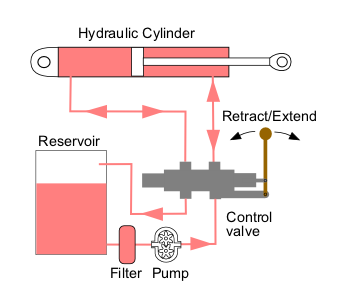
A qualified retirement plan operates much like a pressurized hydraulic system: powerful, efficient, and capable of tremendous financial heavy lifting for a business owner, but only if the internal valves are perfectly balanced. In the realm of tax planning, that balance is dictated by the Employee Retirement Income Security Act (ERISA). ERISA establishes the fundamental axiom of qualified plans: they must be established and maintained for the exclusive benefit of employees and the beneficiaries of those employees. The IRS grants immense tax advantages to these structures, but in exchange, the business owner must ensure the plan does not solely enrich the highest-paid executives.
As a financial planner, your daily reality involves business owners who want to maximize their own tax-deferred savings. Your job is to engineer a plan that achieves their goals without violating the geometric constraints of ERISA.
Before we can test a plan for fairness, we must know who is allowed inside. Statutory age and service eligibility requirements for a qualified retirement plan cannot exceed age 21 and one year of service, which is typically defined as 1,000 hours worked in a 12-month period. An employer can choose to be more generous—say, allowing immediate entry at age 18—but they cannot be more restrictive.
Once an employee is in the plan and contributing their own money, the rule is absolute: Employee elective deferrals to a qualified retirement plan are always 100 percent immediately vested. An employer can never reclaim an employee's own contributions.
However, employer contributions are subject to vesting schedules. If an employee leaves the company before the employer contributions made on their behalf have fully vested, they leave money behind. These abandoned funds are called forfeitures.
To prevent discrimination, the IRS divides employees into specific cohorts. The most common error CFP® candidates make is conflating a Highly Compensated Employee (HCE) with a Key Employee. They are tested for different things, at different times, using different metrics.
Highly Compensated Employees (HCEs)
HCEs are the focal point of the ADP and ACP non-discrimination tests. An HCE is anyone who meets either of the following criteria:
- Ownership: Owned more than 5 percent of the employer business at any time during the current or preceding plan year.
- Compensation: Received compensation from the employer in excess of the IRS threshold in the preceding plan year. For 2026 testing, this threshold is $160,000 (based on compensation earned in the 2025 preceding year).
Crucial Caveat: Family attribution rules apply when determining 5 percent ownership for both HCE and Key Employee status. This means ownership is attributed to a spouse, parent, child, or grandparent. If a 20-year-old college student works at their mother’s company earning $15,000, and the mother owns 100% of the business, that student is an HCE (and a Key Employee) by attribution.
To give employers breathing room, they can utilize the top-paid group election. This limits the compensation-based HCE group to only those who are in the top 20 percent of employees when ranked by pay, ensuring a company with universally high salaries doesn't end up classifying its entire workforce as HCEs.
Key Employees
Key Employees are the focal point of top-heavy testing. A Key Employee is anyone who meets any of the following during the current plan year:
- Officer: An officer of the employer whose annual compensation exceeds a specific IRS threshold ($235,000 for the 2026 tax year).
- >5% Owner: Any individual who owns more than 5 percent of the business.
- >1% Owner: Any individual who owns more than 1 percent of the business and earns more than $150,000 in annual compensation.
Think of non-discrimination testing as a rubber band tethering the HCEs to the Non-Highly Compensated Employees (NHCEs). If the HCEs try to save too much while the rank-and-file save too little, the band snaps, and the plan fails.
- The Actual Deferral Percentage (ADP) test compares the average salary deferral rates of HCEs to the average deferral rates of NHCEs.
- The Actual Contribution Percentage (ACP) test evaluates non-discrimination in employer matching contributions and employee after-tax contributions.
The Mathematics of the ADP Test
To pass the ADP test, a plan must satisfy at least one of two mathematical constraints:
- The 1.25 Test: The average deferral rate of HCEs cannot exceed 1.25 times the average deferral rate of NHCEs.
- The 200 Percent Test: The HCE average deferral rate cannot exceed the lesser of 200 percent of the NHCE rate, OR the NHCE rate plus 2 percentage points.
Example in Practice: If the NHCEs defer an average of 3% of their salary, the HCEs are capped at 5% (3% + 2%), because 5% is less than 200% of 3% (which would be 6%).
Note that catch-up contributions made by employees age 50 or older are excluded from both ADP and ACP non-discrimination testing, allowing older workers to accelerate their retirement savings without skewing the averages.
Correcting a Failed ADP Test
If the band snaps and the plan fails the ADP test, the employer has two primary ways to correct it:
- Level Down (Refund): The employer can refund the excess deferrals and related earnings to the HCEs. This is highly unpopular with business owners because it creates unexpected taxable income for them.
- Level Up (Contribute): The employer can make fully vested Qualified Nonelective Contributions (QNECs) to the accounts of NHCEs to artificially raise their average deferral rate until the plan passes. Alternatively, they can use a Qualified Matching Contribution (QMAC), which is a fully vested employer matching contribution used to help a plan satisfy the ADP or ACP tests.
The Ultimate Bypass: Safe Harbor Plans
Because business owners despise refunds and unpredictable testing failures, Congress created an escape hatch. Safe Harbor 401(k) plans are automatically exempt from ADP and ACP testing requirements. To earn this exemption, the employer must commit to a mandatory, fully vested contribution.
They can choose one of two standard formulas:
- Standard Safe Harbor Matching Formula: The employer matches 100 percent of the first 3 percent of employee deferrals, plus 50 percent of the next 2 percent of deferrals. (Maximum match is 4% if the employee defers 5%).
- Standard Safe Harbor Non-Elective Formula: The employer contributes 3 percent of compensation for all eligible employees, regardless of whether the employees make elective deferrals themselves.
If ADP testing measures the flow of money, top-heavy testing measures the accumulation of wealth. The IRS wants to ensure that a plan isn't operating as a glorified tax shelter primarily holding the assets of the company's Key Employees.
A plan's top-heavy status is determined based on a snapshot: account balances or accrued benefits are measured on the final day of the preceding plan year.
- Defined Contribution (DC) Plans: Considered top-heavy if the aggregate account balances of Key Employees exceed 60 percent of the aggregate account balances of all employees under the plan.
- Defined Benefit (DB) Plans: Considered top-heavy if the present value of accrued benefits for Key Employees exceeds 60 percent of the present value of accrued benefits for all employees.
The Consequences of Being Top-Heavy
When a plan breaches the 60 percent threshold, it triggers two mandatory safeguards.
1. Minimum Employer Contributions
- For DC Plans: The employer must provide a minimum contribution of 3 percent of compensation for all non-key employees. Exception: If the highest contribution percentage made on behalf of any Key Employee is less than 3 percent, the top-heavy minimum for non-key employees is reduced to match that lower percentage.
- Funding the minimum: Employer matching contributions, profit-sharing contributions, and forfeitures all count toward fulfilling this 3 percent requirement. However, employee elective deferrals made by non-key employees cannot be used to satisfy the employer's obligation.
- For DB Plans: The plan must provide non-key employees a minimum accrued benefit equal to 2 percent of average compensation per year of service, up to a maximum of 20 percent.
SECURE 2.0 Innovation: Historically, top-heavy minimum contributions made employers hesitant to let employees into the plan before they met statutory age/service requirements. The SECURE 2.0 Act allows employers to test otherwise excludable employees separately for top-heavy rules. This prevents the employer from having to make mandatory 3% contributions to 19-year-old part-time workers just because the plan happens to be top-heavy.
2. Accelerated Vesting Schedules Top-heavy qualified plans must use an accelerated vesting schedule for all employer contributions. The schedule must be at least as generous as a 3-year cliff (0% vested until year 3, then 100%) or a 6-year graded vesting schedule.
- Mechanics of 6-year graded: An employee becomes 20 percent vested after two years of service, and vesting increases by 20 percent for each subsequent year until reaching 100 percent after six years.
Vesting Outside of Top-Heavy Plans
If a plan is not top-heavy, the vesting rules depend on the type of contribution:
- Employer Matching Contributions in non-top-heavy plans must still vest at least as rapidly as a 3-year cliff schedule or a 6-year graded schedule.
- Employer Non-Elective Profit-Sharing Contributions in non-top-heavy plans are permitted to use a slower 5-year cliff or 7-year graded vesting schedule.
As a planner, your clients will constantly ask, "What is the absolute maximum I can shelter?" The tax code limits this in three distinct ways: how much compensation can be considered, how much the employee can defer, and the total volume of money that can enter the account.
The Compensation Ceiling: Section 401(a)(17)
You cannot base plan contributions on infinite income. Section 401(a)(17) limits the maximum amount of an employee's annual compensation that can be considered when calculating retirement plan contributions and performing non-discrimination testing. For the 2026 tax year, this limit is **360,000∗∗.Ifanexecutiveearns1 million, any matching or profit-sharing math stops at $360,000.
Employee Elective Deferrals
The maximum allowable employee elective deferral to a 401(k), 403(b), or standard 457 plan is $24,500 for the 2026 tax year.
Catch-Up Contributions:
- Standard: The catch-up contribution limit for employees age 50 and older is $8,000 for 2026.
- SECURE 2.0 Super Catch-Up: For employees aged 60 through 63 participating in a 401(k) plan, the limit is elevated to $11,250 for the 2026 tax year.
- The Roth Mandate: Under SECURE 2.0 rules, if an employee earned more than $150,000 from the plan sponsor in the prior year, they must make all catch-up contributions on an after-tax Roth basis. They lose the upfront deduction for the catch-up portion.
Total Annual Additions: Section 415(c)
Section 415(c) is the ultimate governor on defined contribution plans. It limits the total annual additions allowed to a single participant's account.
- What is included: Employee elective deferrals, employer matching contributions, employer non-elective contributions, and allocated forfeitures.
- What is excluded: Age 50 catch-up contributions are explicitly excluded from the 415(c) total annual additions limit.
- The 2026 Limit: The Section 415(c) limit is the lesser of 100 percent of the participant's compensation or $72,000.
Defined Benefit Limits: Section 415(b)
While DC plans limit what goes in, DB plans limit what comes out. Section 415(b) limits the maximum annual benefit payable from a defined benefit pension plan at retirement. For the 2026 tax year, this limit is $290,000.
When a corporation makes an employer contribution (like profit sharing), the maximum deductible amount is limited to 25 percent of the aggregate covered compensation of all participating employees.
However, when you are working with a self-employed individual (like a sole proprietor or a partner), calculating their personal maximum employer contribution requires a mathematical shift. Because self-employed individuals pay both halves of the payroll tax, the IRS requires a specific adjustment:
The employer contribution limit is applied to net earnings from self-employment after deducting one-half of self-employment taxes and the plan contribution itself.
Because the plan contribution must be subtracted from the net earnings before calculating the 25% limit, it creates a circular calculation. To bypass this on the exam, you use the following mathematical shortcut:
The Self-Employed Profit Sharing Shortcut: Multiply the net self-employment income (reduced by one-half of self-employment taxes) by 20 percent.
Formula: (Net SE Income - 1/2 SE Tax) × 0.20 = Maximum Employer Contribution
Understanding this interplay—how ERISA protects the employees while Sections 401, 415, and top-heavy rules constrain the executives—is the blueprint for mastering qualified plans. On the exam, read every scenario carefully to identify who owns the business, what their compensation is, and whether you are testing for ADP compliance (HCEs) or top-heavy status (Key Employees).