Strategies to transfer property
Not sure you’re ready?
Take the ~3-minute readiness diagnostic and see where you stand.
When an individual dies, the legal and financial framework governing their wealth faces an immediate mechanical problem: how to legally transfer the title of property from a deceased entity to a living one. In the architecture of estate planning, there is a fundamental friction in this transfer process. Some assets move through a heavy, highly regulated judicial filtration system, while others tunnel directly to their recipients as if the courts did not exist. For a financial planner, mastering these pathways is not about memorizing legal trivia; it is about protecting your client’s wealth from unnecessary costs, agonizing delays, and public scrutiny. We achieve this by deliberately shifting wealth away from the default judicial machinery and into the realms of contract and property law.
To understand why we spend so much time planning to avoid probate, we first must understand what it is designed to achieve. Probate is a court-supervised legal process that validates a deceased person's will. If a client has taken the time to draft a will, the probate court is the entity that gives that document its legal teeth. More broadly, the probate process oversees the orderly distribution of a deceased person's probate assets.
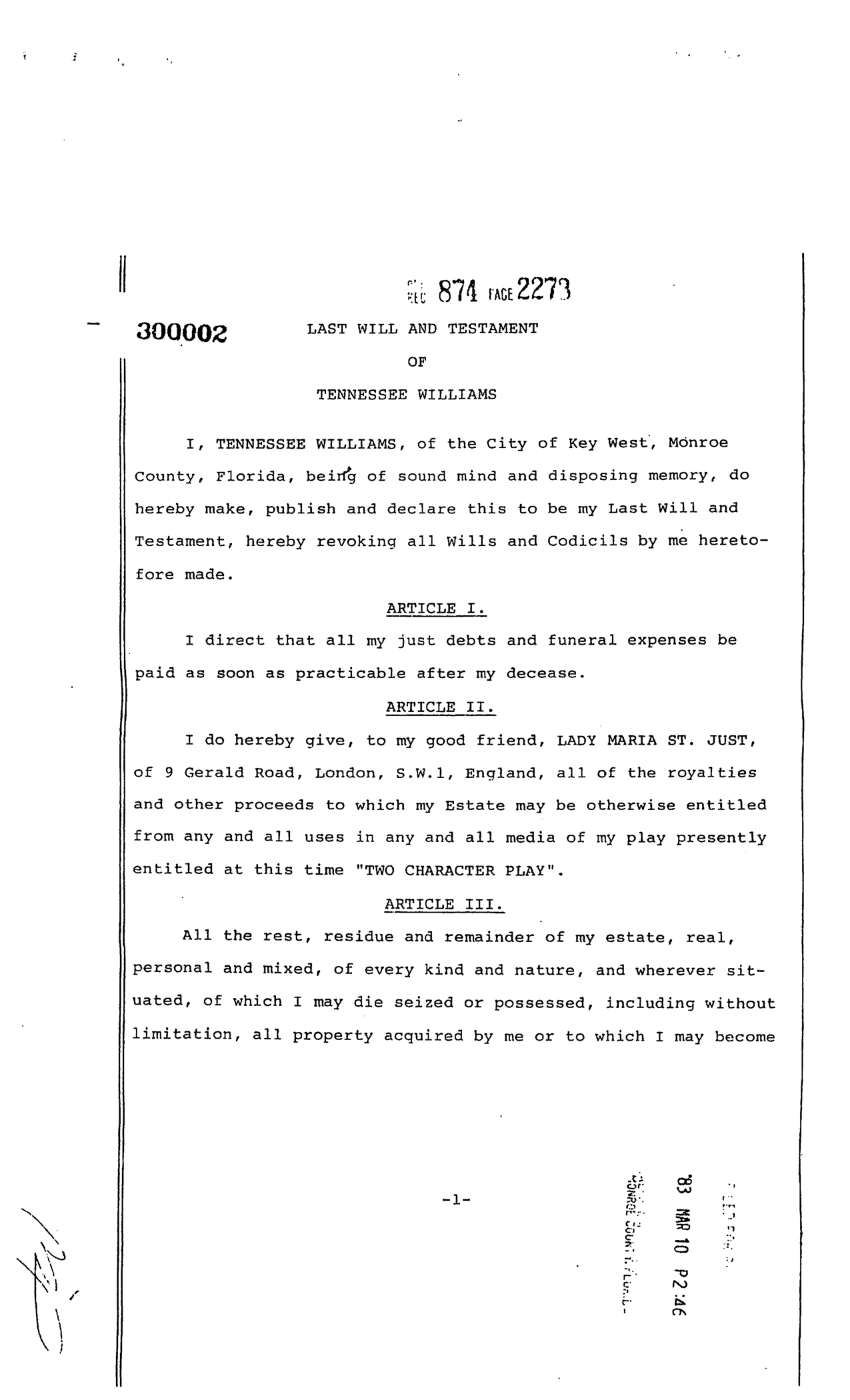
But what happens if a client dies intestate (without a will)? The court still steps in. Intestate succession laws determine the distribution of probate assets when a person dies without a valid will. Critically, assets subject to state intestate succession laws must go through the probate process. The state essentially writes a default will for the decedent, and the court executes it.
Because states historically had wildly different rules for this process, legal scholars introduced standardization. The Uniform Probate Code is a model legal framework designed to standardize the probate process across different states. While not universally adopted, it serves as the blueprint for modernizing and streamlining these court procedures.
The Trade-offs of the Probate Court
Probate exists to create order, but that order comes at a steep price. Let us examine the disadvantages:
- Loss of Privacy: Probate proceedings become part of the public record. Anyone—nosy neighbors, estranged relatives, or opportunistic salespeople—can go to the courthouse and see exactly what the decedent owned, who they owed, and who inherited what.
- Loss of Time: A major disadvantage of probate is the delay in distributing assets to beneficiaries. Courts move at the speed of bureaucracy. An estate might be locked up for months or even years.
- Loss of Wealth: The probate process involves administrative costs such as executor fees and attorney fees. These costs act as a parasitic drag on the estate, shrinking the final inheritance.
However, probate is not entirely without merit. It offers one highly specific advantage: The probate process provides a statutory deadline for creditors to file claims against a decedent's estate. Once this window closes, beneficiaries can receive their assets with absolute certainty that a phantom creditor will not suddenly appear years later demanding payment.
If probate is a congested highway, non-probate transfers are a high-speed rail. Non-probate assets pass directly to beneficiaries by operation of law or by contract.
By changing how an asset is titled or registered, we fundamentally alter the rules governing its transfer upon death. The benefits are the exact inverse of probate's flaws:
- Non-probate transfers avoid the delays associated with the probate court process.
- Non-probate transfers avoid the administrative costs associated with the probate process.
- Non-probate transfers remain private because court filings are not required.
The Rule of Supremacy A common trap for CFP® candidates (and clients) is assuming a recently updated will controls everything. It does not.
- Property passed by contract supersedes contradictory asset distribution instructions written in a will.
- Property passed by operation of law supersedes contradictory asset distribution instructions written in a will.
If a client's will leaves "everything to my current husband," but their life insurance policy still names their ex-husband as the beneficiary, the ex-husband gets the money. The contract governs the asset, rendering the will completely powerless over it.
Let us examine the two primary mechanisms of this bypass: contract and operation of law.
When an asset transfers by contract, the financial institution holding the asset is legally bound to hand it directly to the person named on the beneficiary form.
Life Insurance
Life insurance death benefits pass to designated beneficiaries by contract. Therefore, life insurance death benefits paid to a designated beneficiary bypass the probate process.
However, planners must be vigilant. Life insurance death benefits payable to the decedent's estate must go through the probate process. If a client fails to name a beneficiary, or names their estate deliberately to generate liquidity, they subject that capital to court delays and creditor claims. Furthermore, remembering our Rule of Supremacy, a will cannot change the existing beneficiary designation of a life insurance policy. A formal change of beneficiary form must be executed with the insurer.
Retirement Accounts
Similarly, retirement accounts such as IRAs and 401(k) plans pass to designated beneficiaries by contract. If your client designates their spouse or child on the form, retirement accounts with a living designated beneficiary bypass the probate process.
A catastrophic error occurs when clients try to use their will to control IRA distributions. Naming the decedent's estate as the beneficiary of an IRA subjects the IRA assets to the probate process. Worse, doing so destroys the ability of the heirs to stretch the tax deferral of those retirement assets, triggering massive, accelerated income tax liabilities.
Bank and Brokerage Accounts
Clients do not need complex trusts to protect liquid cash and investments from probate.
- Payable on Death registrations transfer bank assets directly to a named beneficiary upon the account owner's death. Consequently, bank accounts with Payable on Death registrations bypass the probate process.
- For investments, Transfer on Death registrations transfer brokerage accounts directly to a named beneficiary upon the account owner's death. Therefore, brokerage accounts with Transfer on Death registrations bypass the probate process.
Transfer by operation of law focuses on the title of the property itself. The property rights are inherently structured to immediately shift to a survivor upon death.
Joint Tenancy and Tenancy by the Entirety
When two people own property together, the precise wording on the deed matters immensely.
- Property held in Joint Tenancy with Right of Survivorship passes to the surviving owner by operation of law. Consequently, property held in Joint Tenancy with Right of Survivorship avoids probate upon the death of the first joint owner.
- A specialized variation exists for married couples. Tenancy by the Entirety is a form of joint ownership with survivorship rights reserved exclusively for married couples. Just like JTWROS, property held in Tenancy by the Entirety avoids probate upon the death of the first spouse.
Life Estate Deeds
Real estate can be divided across time. A client (the life tenant) can retain the right to live in a home until they die, while pre-assigning the future ownership to someone else (the remainderman). A life estate deed automatically transfers full property rights to a remainderman upon the life tenant's death. Because this transition is baked into the deed itself, property transferred via a life estate deed bypasses the probate process.
For clients requiring more control than simple beneficiary designations or joint titling can offer, we utilize the physics of trust law.
The Revocable Living Trust (RLT)
A Revocable Living Trust acts as a will substitute for the distribution of trust assets. Because a trust is a distinct legal entity that survives the client's death, assets transferred into a Revocable Living Trust before the grantor's death bypass the probate process.
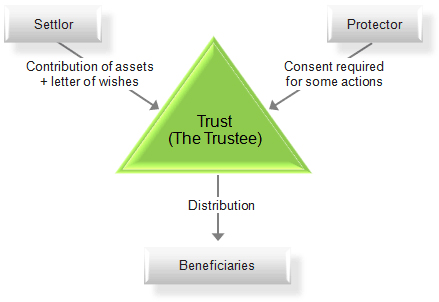
However, a trust only controls what it actually owns. Retitling assets into a trust's name during life is known as funding the trust. This is the most common failure point in estate planning. If a client pays an attorney $5,000 to draft a brilliant trust but never goes to the bank to retitle their accounts, the trust is an empty vessel. Unfunded trust assets remaining in the grantor's individual name are subject to probate.
To catch these mistakes, planners use a specific safety net: A pour-over will directs the transfer of remaining probate assets into an existing trust upon the testator's death. But beware the illusion of this safety net—while the pour-over will eventually gets the rogue assets into the trust, assets transferred via a pour-over will must go through the probate process before entering the trust. The pour-over will fixes the destination, but it does not bypass the tollbooth.
The Threat of Ancillary Probate
A unique nightmare arises when clients own vacation homes or rental properties across state lines. Real estate owned in a state other than the decedent's state of domicile requires an ancillary probate process. This means the family must hire two separate sets of attorneys and navigate two separate court systems in two different states.
The most elegant solution? Change the owner. Placing out-of-state real estate into a Revocable Living Trust avoids the need for ancillary probate. The local property laws no longer care that the human died, because the trust—the legal owner of the property—did not.
Statutory Shortcuts and Lifetime Exits
Finally, there are two beautifully simple, yet distinct, ways to avoid the friction of formal probate:
- Wait for the Threshold: If a client dies with very little in their individual name, state legislatures often decide that full probate is a waste of judicial resources. Small estate affidavits allow beneficiaries to bypass formal probate for estates falling below a specific statutory threshold value.
- Give it Away Now: You cannot probate what the decedent did not own at death. Transferring property by gifting during life removes the gifted assets from the donor's probate estate.
When you evaluate a client's balance sheet, do not just look at the asset values. Look at the plumbing. Every account, deed, and policy is wired either to the slow, public machinery of probate, or to the swift, private channels of contract and property law. By mastering these distinctions, you ensure that the wealth your clients spend a lifetime building survives the boundary of death intact, arriving exactly when and where it is needed most.