New York Automobile Insurance Laws
Not sure you’re ready?
Take the ~3-minute readiness diagnostic and see where you stand.
Imagine a grid of ten million kinetic projectiles, each weighing two tons, hurtling past one another at sixty miles per hour. The mathematical certainty of this system is that some of these projectiles will inevitably collide. To prevent these physical impacts from becoming catastrophic economic failures, New York State engineered a highly regulated financial shock absorber. Every driver entering this grid must tether their vehicle to a pool of capital capable of making victims whole. As a prospective New York Property and Casualty producer, you are not merely selling a piece of paper; you are the architect of this financial tether. Understanding the precise legal mechanics of how this system works is what separates a licensed professional from an order-taker.
To put a vehicle on the road in New York, the law requires all motor vehicles registered in the state to maintain active liability insurance coverage. You cannot bypass this by buying cheaper coverage in Pennsylvania or New Jersey; out-of-state auto insurance policies are not accepted as valid proof of coverage for New York vehicle registration. A New York auto insurance policy must be issued by a company explicitly licensed by the New York State Department of Financial Services.

The state dictates the exact floor of this financial responsibility. We often abbreviate New York state auto liability minimum limits as 25/50/10.
Here is how those numbers translate into real dollars when a client causes an accident:
- Bodily Injury (One Person): The minimum liability coverage required in New York for bodily injury is $25,000 for one person in a single accident.
- Bodily Injury (Multiple People): The minimum liability coverage required for bodily injury is $50,000 for two or more people in a single accident.
- Property Damage: The minimum liability coverage required for property damage is $10,000 per accident.
However, the "25/50" shorthand obscures a critical New York-specific quirk regarding fatalities. If an accident results in a death, the state demands higher minimum limits. The minimum liability coverage required in New York for death is $50,000 for one person in a single accident, and $100,000 for two or more people in a single accident.
Insurance in New York is not a "set it and forget it" mechanism; it is continuously monitored. A New York auto insurance policy must remain in effect the entire time the vehicle registration is valid.
Many clients assume that if they park their convertible for the winter, they can drop their coverage. This is false. A vehicle owner must maintain active New York State auto insurance coverage even while a vehicle is placed in storage. If your client wants to stop paying insurance, they cannot simply cancel the policy. A vehicle owner must surrender their vehicle license plates to the Department of Motor Vehicles before terminating auto insurance coverage.
The Motorcycle Exception: Motorcycles operate under slightly different physical and legal rules. Motorcycles registered in New York are subject to mandatory auto liability insurance requirements, and they are registered for one year. However, a motorcycle owner is not required to surrender their license plate to terminate motorcycle liability insurance.
New York is ruthlessly exact about identity. The exact name on a vehicle registration must match the exact name on the corresponding auto insurance policy. If your client registers a car as "William Smith" but insures it as "Bill Smith," the state's computers will flag it. A mismatch between the name on an insurance policy and the name on a vehicle registration can lead to the suspension of driving privileges.
How does the state know? The New York Department of Motor Vehicles tracks auto insurance coverage electronically through the Insurance Information and Enforcement System (IIES). This real-time database monitors every policy cancellation. A lapse in auto insurance coverage can result in the immediate suspension of a vehicle registration. If the client ignores this and allows a lapse in auto insurance coverage exceeding 90 days, it can result in the suspension of their New York driver's license.
When pulled over by law enforcement, a driver must maintain proof of insurance inside their vehicle. This can be in the form of a traditional paper New York State Insurance ID Card, or a driver may use an electronic Insurance ID card on their smartphone as valid proof of insurance inside their vehicle.
Before the 1970s, if you broke your arm in a car accident, you had to prove the other driver was negligent before their insurance would pay your hospital bill. This clogged the courts and delayed medical care. New York solved this by operating under a no-fault auto insurance system.
To facilitate this, New York requires all auto insurance policies to include Personal Injury Protection (PIP) coverage, which is commonly known as No-Fault insurance in New York.
PIP operates like a closed-loop healthcare system embedded in the auto policy. Personal Injury Protection covers medical expenses and covers lost wages regardless of who was at fault in an accident. If your client rear-ends someone because they were distracted, their own PIP policy still pays to stitch up their cuts.

What PIP Covers
The mandatory minimum Personal Injury Protection coverage in New York is $50,000. This bucket of money pays for basic economic loss, which is strictly defined to keep victims afloat, not to make them wealthy:
- Medical & Rehab: Basic economic loss includes reasonable medical costs and reasonable rehabilitation costs.
- Income: Basic economic loss covers 80 percent of a victim's lost wages. This lost wage benefit is capped at $2,000 per month, and can be collected for a maximum of three years.
- Daily Expenses: It includes up to $25 per day for other reasonable and necessary expenses (like hiring someone to mow the lawn or clean the house while recovering).
- Death: Basic economic loss under PIP also includes a $2,000 death benefit.
Who PIP Covers
PIP protects the human bodies interacting with the insured vehicle. It provides medical coverage for the driver and passengers of the insured vehicle. Furthermore, it casts a protective net outside the car: PIP provides medical coverage for pedestrians struck by the insured vehicle, as well as bicyclists struck by the insured vehicle.
Because PIP guarantees quick payment of medical bills and lost wages, the state took something away in return: the right to sue for minor injuries.
Under New York law, a car accident victim is restricted from recovering non-economic damages unless the victim suffers a serious injury. Non-economic damages include compensation for pain and suffering.
To pierce this legal veil and sue the at-fault driver for pain and suffering, the victim must suffer an injury that meets the strict statutory definition of "serious." Under New York Insurance Law, the following are explicitly defined as a serious injury:
- Death
- Dismemberment
- Significant disfigurement
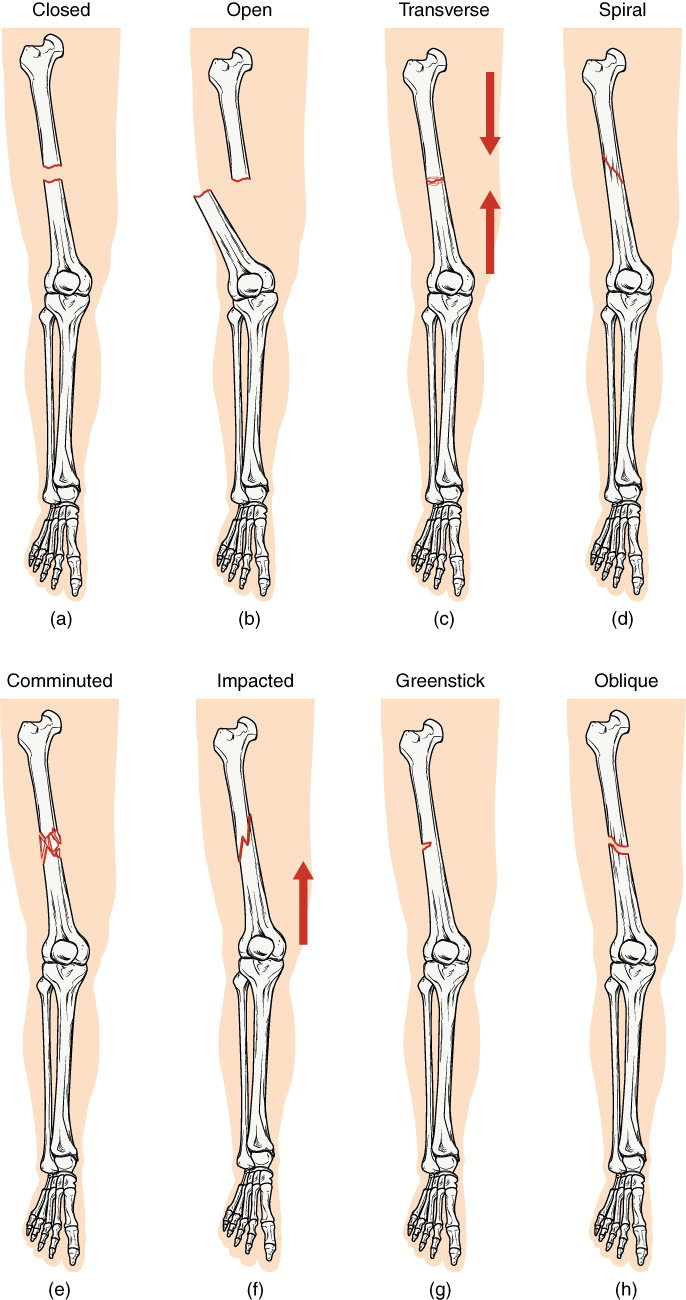
- A fracture (a broken bone automatically opens the door to a lawsuit)
- The loss of a fetus
- Permanent loss of use of a body organ
- Permanent consequential limitation of use of a body member
Alternatively, there is an economic loophole. A car accident victim can pursue a tort lawsuit against an at-fault driver for economic losses if those losses exceed the $50,000 basic economic loss limit provided by PIP.
Motorcycle Caveat: Because motorcycles lack the protective steel cage of a car, the serious injury threshold does not apply to victims of motorcycle accidents in New York. Motorcyclists can sue for pain and suffering without having to prove their injury meets the statutory "serious" definition.
What happens when your client is hit by someone who broke the rules and carries no insurance, or carries only the meager $25,000 minimum?
Uninsured Motorist (UM) coverage is mandatory for all auto insurance policies in New York. The mandatory minimum Uninsured Motorist limit in New York exactly mirrors the state liability minimums: $25,000 per person for bodily injury, and $50,000 per accident for bodily injury.
But $25,000 is rarely enough for a severe accident. This brings us to Supplementary Uninsured/Underinsured Motorist (SUM) coverage. SUM protects a policyholder when an at-fault driver has insufficient insurance limits to cover damages.
Because consumers often failed to request this vital protection, the law mandates that insurance companies must automatically provide SUM coverage equal to the bodily injury liability limits of the auto policy. If your client buys $100,000 in liability, they automatically get $100,000 in SUM.
A named insured can explicitly decline SUM coverage through a written waiver, or they can explicitly reduce SUM coverage limits through a written waiver (though this is universally considered poor advice by insurance professionals). However, you cannot buy more SUM than liability; SUM coverage limits cannot exceed the bodily injury liability limits of the auto policy.
Historically, the law barred a husband from suing his wife for negligence in a car crash, fearing insurance fraud. That has changed via Supplemental Spousal Liability insurance.
This endorsement provides financial coverage if a spouse is injured in an accident caused by the negligence of the other spouse. It also provides financial coverage if a spouse is killed in an accident caused by the negligence of the other spouse.
To ensure families are protected, insurance companies must automatically include Supplemental Spousal Liability insurance on all new and renewed New York auto policies issued to married persons. The coverage limit for Supplemental Spousal Liability matches the regular bodily injury liability coverage limit of the auto policy.
If a client does not want to pay the premium for this, a married policyholder can explicitly opt out of Supplemental Spousal Liability insurance by submitting a written declination form. Conversely, New York auto policies issued to unmarried persons require the insured to explicitly opt in to receive Supplemental Spousal Liability coverage.
Insurance law is living machinery, and in 2026, New York enacted two major legal reforms that fundamentally shifted liability claims.
First, New York shifted its negligence framework. In 2026, New York enacted a modified comparative negligence standard for auto liability claims. Under this New York modified comparative negligence standard, a claimant is barred from recovery if their share of fault is greater than the combined fault of the tortfeasors. If a jury finds your client is 51% responsible for the accident, they collect absolutely nothing from the other drivers.

Second, the state heavily penalized those who drive without a safety net. In 2026, New York enacted a $100,000 cap on non-economic damages for an at-fault claimant operating an uninsured vehicle. If a driver decides to game the system by driving uninsured, causes an accident, and sustains injuries themselves, their ability to sue the other party for pain and suffering is strictly capped, reinforcing the state's ultimate mandate: participate in the financial system, or face the consequences.