Ohio Life & Health Insurance Guaranty Association
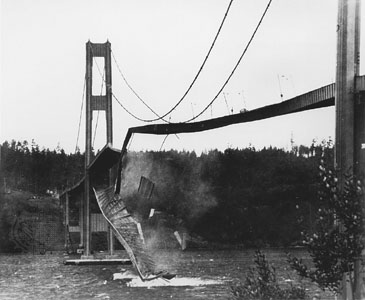
Imagine a suspension bridge engineered to hold thousands of tons, but the concrete anchors suddenly crumble. In the financial world, an insurance policy is that bridge, spanning the chasm between a family’s current stability and a catastrophic future loss. But what happens if the insurance company itself collapses into insolvency? If the guarantor fails, the bridge falls. To prevent this secondary catastrophe, the state mandates a fail-safe mechanism: the Ohio Life & Health Insurance Guaranty Association.
As a future Ohio insurance producer, you are not just selling policies; you are selling promises. You need to intimately understand the structural integrity of those promises. The Guaranty Association acts as the ultimate backstop, but it is not infinite. It has strict boundaries, rigid exclusions, and paradoxical rules regarding how you are allowed to speak about it.
Here is the definitive guide to how Ohio protects its policyholders when insurers fail.
The primary purpose of the Ohio Life & Health Insurance Guaranty Association is simple but profound: it protects policyholders, beneficiaries, and assignees of life, health, and annuity policies against financial loss due to the insolvency or financial failure of an insurance company.
When an insurer is forced into liquidation by the state, the Guaranty Association steps in to ensure claims are paid and coverage is maintained, up to specific limits.
Who is Protected?
The Association's protection is fundamentally tied to geography. It primarily protects individuals who are residents of Ohio at the exact time an insurance company is liquidated.
However, there is a crucial exception regarding beneficiaries. If an Ohio resident policyholder passes away, the Association covers the beneficiaries of that deceased Ohio resident regardless of where the beneficiaries currently reside. The protection flows from the residency of the policyholder, not the address of the beneficiary.
Where Does the Money Come From?
You might wonder if this is taxpayer-funded. It is not.
To operate in the state, all insurers authorized to write life and health insurance in Ohio must maintain membership in the Ohio Life & Health Insurance Guaranty Association. The Association is funded through financial assessments levied on its member insurance companies. If Company A goes bankrupt, Companies B, C, and D are assessed a fee based on their market share to cover Company A's outstanding promises. It is a mandatory system of industry self-insurance.
To prevent infinite liability, the Guaranty Association strictly limits its payouts. As a producer, you must know these numbers cold for your exam. They reflect a philosophical balance: providing enough money to prevent individual ruin, but not enough to bail out every massive financial position unconditionally.
The General Rule of Aggregate Limits The maximum aggregate payout by the Ohio Life & Health Insurance Guaranty Association for any one insured individual is $300,000 across all policies with a single insurer.
The Exception: The Association can pay up to an aggregate maximum of $500,000 per individual if the coverage involves major medical insurance.
Beyond the aggregate limits, specific product lines have their own internal caps per individual:
| Policy Type | Maximum Guaranty Protection |
|---|---|
| Life Insurance Death Benefits | $300,000 per insured life |
| Life Insurance Net Cash Surrender Values | $100,000 per insured life |
| Annuity Benefits (Present Value) | $250,000 per participating individual |
| Disability Income Insurance | $300,000 per individual |
| Long-Term Care (LTC) Insurance | $300,000 per individual |
| Basic Health Insurance (excluding Major Medical, DI, LTC) | $100,000 per individual |
Unallocated Annuities
Unallocated annuities (often used to fund institutional or retirement plans) have unique rules that frequently appear on exams. The limits depend entirely on the type of plan they fund:
- Governmental Retirement Plans: The Association covers unallocated annuities funding governmental retirement plans up to a maximum of $250,000 per participating individual.
- Non-Governmental Plans: For private, non-governmental plans, the Association limits coverage to $1,000,000 per contract holder (the employer or trust), not per individual participant.
A Worked Example
Imagine your client, David, has three policies with "Acme Life & Health," which just went insolvent. He has:
- A life insurance policy with a $400,000 death benefit.
- A disability income policy.
- An annuity with a present value of $150,000.
Even though his individual limits for life insurance ($300k) and annuities ($250k) seem spacious, David is still capped by the $300,000 absolute aggregate limit for all policies combined with that single insolvent insurer (assuming no major medical is involved). The state will protect him up to $300,000 total, and the rest becomes an unsecured claim against the failed insurer's estate.
The Guaranty Association is designed to protect guaranteed promises, not investment risks or unregulated entities. It explicitly excludes several types of policies and funds.
The Association does not provide coverage for:
- Unlicensed Insurers: It does not protect policies sold by insurers lacking a license to do business in Ohio. If a client buys a shady policy from an unauthorized offshore company, they are on their own.
- Self-Funded Employer Plans: It does not provide coverage for self-funded employer health plans (where the employer assumes the risk, not an insurance company).
- Fraternal Benefit Societies: It does not cover insurance certificates issued by fraternal benefit societies, as these organizations operate under different regulatory frameworks.
- Dividends: The Association explicitly refuses protection for policy dividends. Dividends are a return of overcharged premium based on insurer profitability; they are not guaranteed benefits.

The Investment Risk Principle
A core tenet of insurance law is that state safety nets do not subsidize market speculation. Therefore, the Association denies protection for policy benefits where the individual policyholder has assumed the investment risk.
This means it entirely excludes coverage for the nonguaranteed portion of variable life insurance or variable annuity contracts. Furthermore, if a fixed policy has guaranteed interest rate yields that exceed a specified average market rate (often seen when failing insurers offer artificially high rates to attract desperate capital), the Association does not protect that excessive interest.
Here is where the law becomes intensely practical for your daily life as an agent. The Guaranty Association is a massive selling point—it is a literal state-mandated safety net. Yet, Ohio law prohibits insurance agents from using the existence of the Ohio Life & Health Insurance Guaranty Association to sell or solicit insurance.
Why? Because allowing agents to advertise the Association creates a "moral hazard." It would allow financially reckless, poorly rated insurance companies to say, "Buy from us! Even if we go bankrupt, the state will bail you out!" This unfairly disadvantages financially responsible insurers.

Therefore, mentioning the Ohio Life & Health Insurance Guaranty Association to induce the purchase of an insurance policy constitutes an unfair trade practice. Doing so can cost you your license.
The Mandatory Disclosure Document
While you cannot use the Association as a marketing tool, the state ensures consumers are not kept in the dark. Insurers must provide a written disclosure document summarizing the limitations and exclusions of the Ohio Life & Health Insurance Guaranty Association to all insurance applicants.
This document acts as a sober warning rather than a sales pitch. By law, the mandated Guaranty Association disclosure document must:
- Warn applicants that a purchased policy might not be fully covered in the event of insurer insolvency (due to the limits and exclusions discussed above).
- Explicitly state that coverage is conditioned on the policyholder's continued residency in Ohio.
As a professional, your job is to guide clients toward financially sound, highly rated insurers—using the Guaranty Association not as a crutch to close a sale, but understanding it as the silent, structural bedrock beneath the Ohio insurance market.