Pennsylvania Producer Licensing, Appointment & Continuing Education
Not sure you’re ready?
Take the ~3-minute readiness diagnostic and see where you stand.
A Pennsylvania insurance producer license is not merely a certificate of passage; it is a legal instrument that grants you the authority to bind contracts, manage profound financial risk, and safeguard the livelihoods of families across the Commonwealth. When a client purchases a life insurance policy to protect their children, or a health plan to shield against catastrophic illness, they are placing blind trust in your competence and integrity. The Pennsylvania Insurance Department meticulously regulates this profession to ensure that every individual wielding this authority is qualified, accountable, and held to strict fiduciary standards. Understanding the mechanics of producer licensing, appointment, and continuing education is not just about passing an examination—it is about mastering the legal framework in which your entire professional life will operate.
Before you can advise a client, you must prove to the Commonwealth that you possess the baseline competence and character required of an insurance professional. The barriers to entry are designed to filter out those who cannot navigate complex contracts or who pose a risk to the public.
To qualify for a Pennsylvania resident insurance producer license, an applicant must be at least 18 years old and demonstrate the fundamental ability to read and write in English. Because an insurance policy is a dense legal contract, functional literacy is non-negotiable.
Unlike a university degree program, Pennsylvania operates on a system of demonstrated competency rather than mandatory seat-time. Under Pennsylvania law, completing pre-licensing education courses is not a prerequisite for taking the producer licensing exam. If you possess the knowledge to pass the rigorous state examination, the state allows you to sit for it. However, passing the exam is only one part of the equation.
Integrity at the Threshold The state demands strict honesty from the outset. Cheating on the Pennsylvania insurance producer licensing examination is a severe violation and serves as absolute grounds for license denial or revocation. Furthermore, your fundamental intent for acquiring a license is scrutinized. Obtaining an insurance license primarily for the purpose of writing controlled business—meaning you intend to sell policies exclusively to yourself, your immediate family, or your employees just to harvest the commissions—is strictly prohibited in Pennsylvania.
To verify your character, all applicants for a Pennsylvania resident producer license must submit fingerprints for a state and federal criminal history background check. The Insurance Commissioner uses this data to ensure the public is protected from individuals with a history of financial or criminal misconduct.

Once licensed, a Pennsylvania resident producer cannot operate as a ghost in the machine. You must maintain a primary place of business with public access within the Commonwealth. This ensures that the Department of Insurance, law enforcement, and your clients can physically locate you during standard business operations.
If you choose to brand your agency—perhaps naming it "Keystone Premier Wealth & Health"—you cannot simply hang a sign and start selling. A producer must obtain approval from the Pennsylvania Insurance Department before conducting business under an assumed or fictitious name.
The Regulatory Heartbeat: 30 Days
If there is one number that governs the rhythm of Pennsylvania insurance compliance, it is 30. The state demands immediate transparency regarding any changes to your professional or legal status. You must notify the Pennsylvania Insurance Department within 30 days for any of the following events:
- Change in residential address.
- Change in business address.
- Change in the producer's legal name (e.g., due to marriage or divorce).
- Receipt of an inquiry from the Insurance Department (you must provide a written response within 30 days).
- Administrative action taken against you in another jurisdiction (must be reported within 30 days of the final disposition).
- Criminal charges (must be reported within 30 days of being charged, not convicted—the mere charging triggers the reporting requirement).
Failure to adhere to these 30-day windows fractures the chain of communication with the regulator and invites disciplinary action.
A producer license allows you to sell insurance, but it does not give you products to sell. To represent a specific insurance company, you must be officially appointed by them.
When you enter into an agreement with an insurer, the insurer bears the regulatory burden of formalizing that relationship. The insurer must submit a notice of appointment to the Pennsylvania Insurance Department within 30 days of executing an agency contract with you. To process this, the insurer must pay a statutory appointment fee for each producer they appoint in Pennsylvania.
If the relationship sours, or if you simply move on to a different carrier, the termination must be documented just as precisely. The insurer must notify the Department within 30 days following the effective date of terminating a producer's appointment.
Knowledge in the insurance industry decays rapidly. Tax laws change, new medical treatments alter health insurance underwriting, and novel financial products enter the market. To combat this decay, Pennsylvania mandates continuing education (CE).
Pennsylvania resident producer licenses are issued for a two-year compliance period. Specifically, your license expires on the last day of your birth month every two years.
The Continuing Education Curriculum
During each two-year licensing cycle, Pennsylvania requires resident insurance producers to complete 24 credit hours of continuing education. Within this requirement, specific mandates apply:
- Ethics: At least 3 credit hours must be in state-approved Ethics continuing education.
- Specialty Products (Life/Health): Before you can engage in the sale of annuity products, you must complete a one-time, 4-hour training course.
- Long-Term Care (LTC): The rules for LTC are stringent due to the vulnerability of the demographic purchasing it. Producers wishing to sell long-term care insurance must complete an initial 8-hour training course prior to selling. Thereafter, you must complete a 4-hour ongoing long-term care course every two years.
- Property and Casualty Context: Although your immediate focus is Life & Health, the state licensing exam requires you to understand the broader framework. For example, Pennsylvania producers holding Property and Casualty authority are required to complete 2 credit hours of Flood insurance continuing education per renewal period.

Strategic CE Management: You cannot simply find one easy course and take it repeatedly to harvest credits; a producer cannot receive continuing education credit for repeating the same approved course within a single two-year compliance period. However, if you are diligent and accumulate more than 24 hours, Pennsylvania allows a producer to carry forward a maximum of 24 excess continuing education credit hours into the next licensing period.
Crossing State Lines: Non-Resident Producers
Insurance often transcends state borders. To obtain a Pennsylvania non-resident producer license, an applicant must hold an active resident license in a state that offers equal reciprocity to Pennsylvania producers. If you are a non-resident producer who meets the continuing education requirements of your home state, you are generally exempt from Pennsylvania continuing education requirements, provided the reciprocity agreement stands.
If you allow your license to expire, the state provides a grace period, but it comes at a cost.
- Within 60 days: Reinstating a lapsed license within 60 days of expiration allows you to avoid a gap in active licensure, though it requires the payment of a statutory late fee (e.g., an administrative penalty of say, $100 or more depending on current fee schedules).
- Within 1 Year: A lapsed license may be reinstated within one year of expiration without the producer having to retake the state licensing exam, provided you pay the late fees and catch up on any CE requirements.
- Beyond 1 Year: If your license remains expired for more than one year, the grace period vanishes. The individual must submit a new application and pass the licensing exam again, starting entirely from scratch.
What happens to an insurance agency if the primary producer suddenly dies, becomes disabled, or is deployed to war? An agency represents a massive book of business, and policyholders still need their claims serviced and policies renewed.
To prevent the sudden collapse of an existing business, the Pennsylvania Insurance Commissioner may issue a temporary producer license for a maximum period of 180 days.
Because this is an emergency measure, an applicant for a temporary license is not required to pass a written insurance examination. However, they must have a sponsoring insurance company willing to take responsibility for their actions.
This temporary license may only be issued to specific individuals:
- The surviving spouse of a deceased licensed producer.
- The court-appointed representative of a physically disabled producer.
- The designee of a licensed producer who enters active service in the armed forces of the United States.
Crucially, a temporary license is a life raft, not a speedboat. It must be used solely to operate the existing insurance business owned by the licensee until the business is sold, transferred, or the producer returns. A temporary licensee cannot use this status to aggressively solicit new, unrelated business.
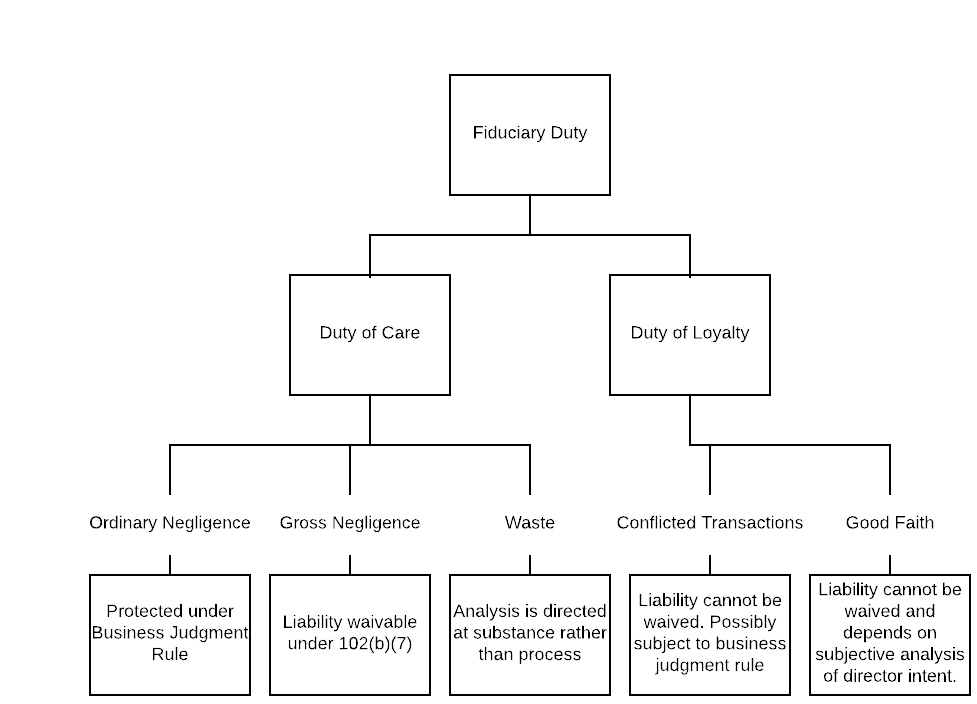
When a client hands you a premium check, they are trusting you to send it to the insurer, not to use it to pay your personal mortgage. You are a fiduciary. When producers violate this trust, the Pennsylvania Insurance Commissioner acts swiftly. The Commissioner possesses the authority to issue a cease and desist order to any producer found to be violating state insurance laws, legally forcing them to halt illicit activities immediately.
Beyond cease and desist orders, the state outlines specific triggers for severe disciplinary action:
| Offense | Potential Regulatory Action | Rationale |
|---|---|---|
| Felony Conviction | Denial of license application | Demonstrates a historical lack of the judgment or ethical character required to handle sensitive financial and personal data. |
| Child Support Arrears | Suspension of license | The Commissioner may suspend a license for failing to comply with court-ordered child support obligations, using the license as leverage to enforce familial duties. |
| Unpaid State Income Tax | Revocation of license | Failing to pay state income tax demonstrates a fundamental disregard for state financial laws, justifying the revocation of state-granted financial privileges. |
| Misappropriation of Funds | Revocation | Misappropriating or improperly withholding money received in the course of doing insurance business is outright theft from clients or insurers. |
| Commingling of Funds | Suspension or Revocation | Commingling client funds with personal funds is a severe violation of fiduciary duty. A producer's personal bank account and a client's premium dollars must never mix. |
By mastering these rules, you are not simply preparing for a multiple-choice exam. You are internalizing the exact boundaries, duties, and maintenance requirements that will define your career as a professional insurance producer in Pennsylvania. Treat these regulations not as arbitrary hurdles, but as the structural engineering that keeps the insurance industry stable, trustworthy, and capable of protecting the public.