Alterations, Revocation and Interpretation
A will is not a photograph of the testator's wishes taken once and frozen forever — it is a document that people cross out, scribble on, tear up, and then die leaving behind, and the law has to decide, after the fact, which marks on the page actually count. That is the entire puzzle of this topic: alterations, revocation, marriage and divorce, interpretation, and the various ways a gift can simply fail to land. Get the framework right and a client-facing scenario question collapses into a short checklist; get it wrong and you will confidently apply the wrong section to the wrong fact pattern.
The starting position is deceptively simple: an alteration made to a will before execution is valid and forms part of the will as executed, provided the testator intended it to be part of the will when they signed. Nothing special needs to happen — the testator simply signs the document with the alteration already in it, and the alteration is baked into the will like any other clause.
Alterations made after execution are a different animal entirely. Section 21 of the Wills Act 1837 provides that a post-execution alteration has no effect unless the alteration is itself executed in the same manner required for executing a will — meaning the testator and two witnesses must sign or initial in the margin next to the alteration, or the testator can sign a memorandum referring to the alteration (written at the end of the will or elsewhere on it) and have that memorandum witnessed by two people. Either route satisfies section 21; there is no requirement to use one over the other.
Because a will can sit in a drawer for years before the testator dies, and because alterations rarely carry a date, the law needs a default rule for when nobody can prove exactly when a change was made.
Presumption: An alteration is presumed to have been made after execution unless the person propounding the will proves otherwise.
This presumption puts the burden squarely on whoever wants the alteration to count as part of the original will. How do you rebut it? With extrinsic evidence — most commonly a solicitor's attendance note recording that the alteration was discussed and made before the client signed. Without such evidence, the alteration is treated as post-execution and therefore invalid unless it was separately witnessed.

The "not apparent" exception
Section 21 contains a crucial escape hatch: an unattested alteration does take effect if the original wording underneath it is no longer apparent. The logic is that if you cannot recover the original words, striking a line through them or pasting over them is the only wording left, so it must stand (subject to the doctrine of dependent relative revocation in some cases, but the apparency test itself is what you need for SQE1).
What counts as "apparent" is narrower than you might expect. The leading illustration is In the Goods of Itter, where a testatrix pasted slips of paper over certain legacy amounts and wrote new figures on top. The original wording underneath was technically recoverable — infra-red photography could reveal it — but the court held it was not apparent within the meaning of section 21. The test is whether the wording can be deciphered by natural means, such as holding the paper up to a strong light, without resorting to mechanical or scientific aids like infra-red imaging, chemical treatment, or forensic document examination. If you need a lab to read it, it is not apparent, and the obliteration is effective.

This produces a slightly counterintuitive but examinable consequence: where the original wording is rendered "not apparent" by an obliteration (crossing out, covering, or defacing existing text until it is illegible), the obliteration is treated as effective — not because the testator complied with any formality, but because the very fact that the words are no longer recoverable demonstrates the testator's intention to revoke that specific wording. The formalities exist to protect against fraud; where the original is genuinely gone, there is nothing left to protect.
Contrast obliteration with interlineation — the insertion of additional words between existing lines of text. Interlineation does not erase anything; the original wording remains fully apparent, sitting right there on the page. So an unattested interlineation gets no benefit from the "not apparent" exception — it simply fails under section 21, and the will is read as if the interlineation were never made.
Blanks and substitutions
Two further wrinkles complete the alterations picture:
- If a testator leaves a blank space in the will — say, a gap where a legacy figure should go — nobody else can validly fill it in later without complying with section 21's execution formalities. A blank is not "apparent" wording that has been obscured; it is simply unfinished business, and finishing it requires the same signing-and-witnessing as any other post-execution alteration.
- Where a testator crosses out an original figure and writes in a substituted figure, but the substitution itself is not validly executed, you ask: is the original wording still apparent? If yes, the original wording continues to take effect — the substitution is ignored and the will reads as though the crossing-out never happened. If the original has been rendered not apparent (e.g., thoroughly scored out or pasted over), then per the Itter principle the obliteration succeeds and that gift is lost, even though the substituted figure also fails for want of attestation.
| Alteration type | Original wording apparent? | Unattested — effect? |
|---|---|---|
| Interlineation (added words) | Yes — nothing obscured | Fails; original will stands unchanged |
| Obliteration (crossed out/covered) | No | Succeeds — treated as valid revocation of that wording |
| Obliteration | Yes (e.g. faint pencil line, still readable) | Fails; original wording stands |
| Blank left unfilled by testator | N/A | Cannot be completed without full execution |
Move from altering part of a will to killing the whole thing. Section 20 of the Wills Act 1837 gives two principal routes to revocation.
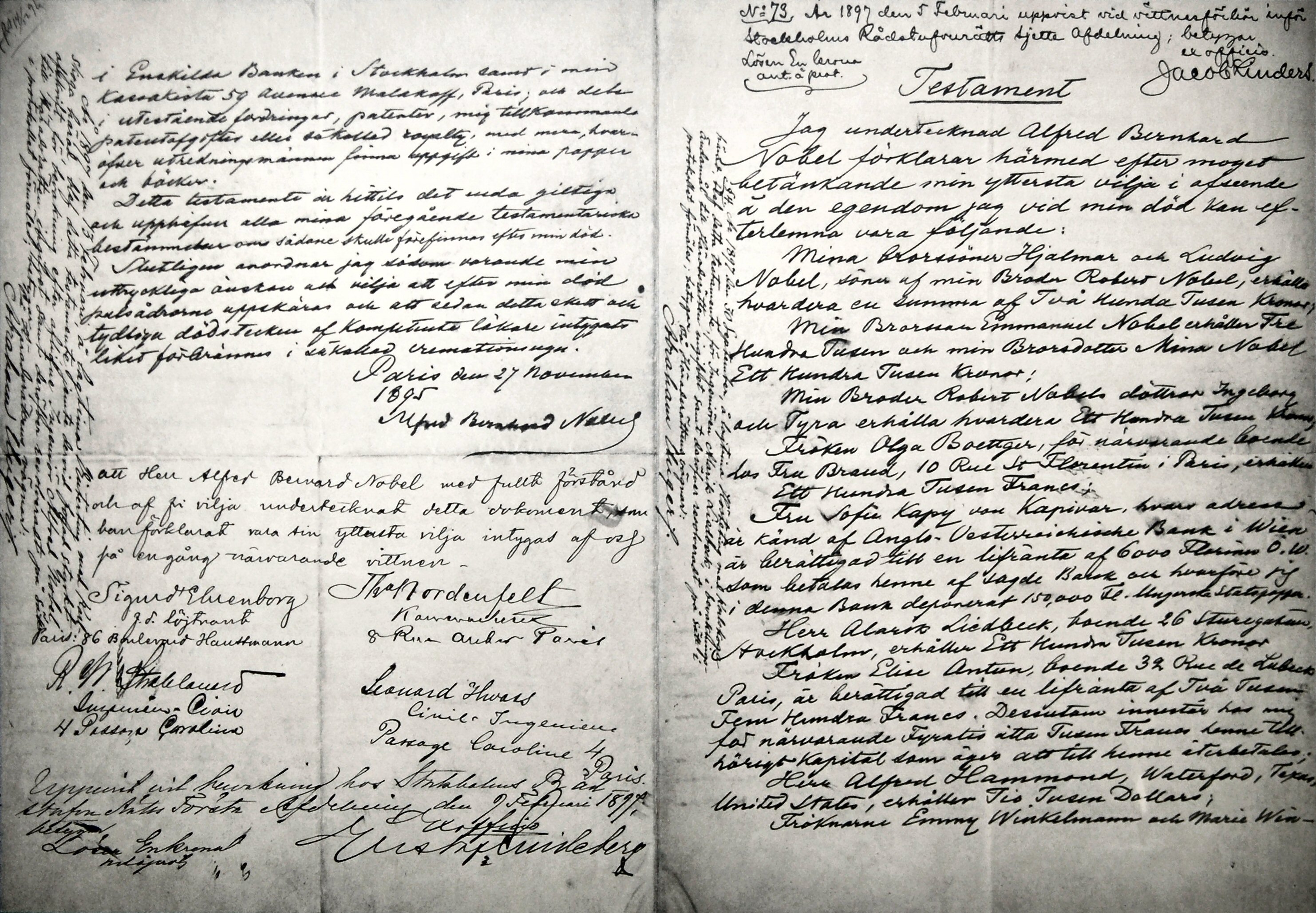
Revocation by a later will or codicil. A later, duly executed will or codicil revokes an earlier will automatically to the extent the two are inconsistent — you do not need an express revocation clause for this partial, implied revocation to bite. Most professionally drafted wills, however, include an express revocation clause ("I revoke all former wills and testamentary dispositions"), which sweeps away everything that came before regardless of whether the two documents are actually inconsistent in content. That is why a solicitor drafting a new will for a client who already has an old one will almost always insert this clause deliberately, rather than relying on the courts to work out inconsistency clause by clause.
Revocation by destruction. The testator can revoke a will by burning, tearing, or otherwise destroying it with the intention of revoking it. Two elements must coincide:
- A physical act of destruction, and
- A concurrent intention to revoke.
Neither alone will do. Writing the word "revoked" in large letters across the face of the will, with no physical destruction, is insufficient — section 20 requires an actual destructive act, not merely words of cancellation. Symmetrically, accidentally destroying a will (a house fire, a shredding mix-up) without the intention to revoke does not revoke it — a copy or reconstructed version may still be admitted to probate.
Destruction need not be performed by the testator's own hand: a will can validly be destroyed by another person, provided it is done in the testator's presence and at the testator's direction. A solicitor tearing up an old will in front of the client, on the client's instruction, satisfies section 20 just as well as the client doing it personally.
Destruction does not have to be total, either. Partial destruction — for example, tearing off just the signature — can revoke the whole will if done with the intention to revoke the whole document, even though most of the physical pages remain perfectly intact. The signature is where the testamentary intention is formally expressed, so destroying it can carry outsized legal weight relative to the amount of paper actually torn.
A will's survival is also tied to the testator's relationship status, and this is one of the most heavily tested corners of the topic because the rules for marrying and divorcing pull in opposite directions.

Marriage/civil partnership revokes. Under section 18 of the Wills Act 1837, a testator's will is automatically revoked by their subsequent marriage or civil partnership. The theory is that marriage fundamentally changes a person's family obligations, so any earlier will should be scrapped and reconsidered — hence the frequent advice to make a new will as soon as a wedding is booked, not after.
There are two important carve-outs to this automatic revocation:
- A will made in contemplation of a specific, forthcoming marriage or civil partnership is not revoked when that marriage or civil partnership actually happens. The will has to show it was made with that particular marriage in mind — a general "if I ever marry" statement is not enough; the will needs to identify the marriage or partner.
- A disposition in a will exercising a power of appointment is not revoked by the testator's subsequent marriage, unless, in default of the appointment, the property would pass to the testator's own personal representatives. This is a narrower, more technical exception, but it appears in mixed-topic problem questions involving trusts and powers.
Divorce/dissolution does not revoke — but it does prune. This is where students most often get the two limbs of section 18 and section 18A backwards. Section 18A of the Wills Act 1837 provides that the dissolution or annulment of the testator's marriage or civil partnership does not revoke the will as a whole. Instead, it operates surgically:
Any gift to the former spouse or civil partner takes effect as though that person had died on the date the marriage or civil partnership was dissolved or annulled. Any appointment of the former spouse or civil partner as executor or trustee likewise fails, as if they had predeceased the testator.
So a divorced testator's will remains valid and operative — it just reads as though the ex had died on the decree absolute date, opening the door to substitute beneficiaries, default gifts, or intestacy rules for that share, exactly as they would if the ex-spouse really had predeceased. A testator can override this default by expressing a contrary intention in the will (for example, explicitly stating the gift to the spouse should stand even after divorce).
One more boundary worth nailing down: judicial separation is not divorce. It does not trigger either the section 18 automatic-revocation-on-marriage logic (obviously — nobody has remarried) or the section 18A deemed-predecease treatment on dissolution, because the marriage has not actually been dissolved or annulled. A judicially separated testator's will, including any gift to the still-legally-married spouse, is untouched by these provisions.
| Life event | Effect on the will |
|---|---|
| Subsequent marriage/civil partnership | Revokes the whole will (s.18) — unless made in contemplation of that marriage, or a power-of-appointment exception applies |
| Dissolution/annulment of marriage or civil partnership | Will survives; gift/appointment to ex-spouse treated as if they predeceased (s.18A) — unless contrary intention shown |
| Judicial separation | No automatic effect either way |
Once you know a will (or part of it) survives, the next question is what it actually means. English courts approach construction through the armchair principle — figuratively sitting in the testator's armchair, construing the language used in light of the surrounding circumstances known to the testator at the time of execution. This is not a licence to rewrite the will according to what a court thinks would be fairer; it is a tool for understanding the testator's own words through their own eyes.
The default reading gives words their ordinary and natural meaning, unless the will read as a whole shows the testator intended something different. Courts will not casually override plain English, but a testator's own idiosyncratic usage, evident from the rest of the document, can displace the dictionary meaning.
Where language genuinely cannot be understood on its own, the Administration of Justice Act 1982, section 21 allows extrinsic evidence — including evidence of the testator's actual intention — to be admitted in three overlapping situations: where the will's language is meaningless; where it is ambiguous on its face; or where it is ambiguous in light of surrounding circumstances. This is a deliberately generous gateway, because the alternative — refusing to look beyond a garbled or ambiguous clause — risks defeating a testator's clear overall intention over a drafting slip.
Rectification goes a step further than interpretation: instead of just choosing between competing readings of the existing words, the court actually changes the wording of the will. Under section 20 of the Administration of Justice Act 1982, a court may rectify a will where it fails to carry out the testator's intentions because of either (a) a clerical error, or (b) a failure to understand the testator's instructions — think a solicitor transposing figures or omitting a clause the client actually asked for. Applications must generally be made within six months of the date representation to the estate was first taken out (i.e., six months from the grant of probate or letters of administration), though the court retains discretion to permit a late application where justice requires it — useful where an error only comes to light well after distribution has begun.
Finally, section 24 of the Wills Act 1837 fixes the "as-of" date for construing a will, and it splits the question in two:
- As to the property disposed of, the will speaks from the date of the testator's death — so "all my shares in X plc" catches shares bought after the will was signed, right up to death.
- As to the persons or objects described, the will speaks from the date of execution — so "my car" generally refers to the car the testator had in mind when signing, not a replacement bought later, unless the will's wording or context shows a contrary intention.

Both limbs yield to a contrary intention appearing in the will itself; section 24 is a default, not an inflexible rule.
Even a perfectly valid, perfectly interpreted will can still deliver nothing to a named beneficiary, because the gift itself fails for reasons unrelated to drafting.
Lapse. The general rule is blunt: a gift lapses and fails if the beneficiary predeceases the testator — it does not pass to the beneficiary's estate or their children by default. Section 33 of the Wills Act 1837 creates the major statutory exception, but it is narrowly drawn: it applies only where the gift is to the testator's own child or remoter descendant, and that beneficiary predeceases the testator leaving issue who survive the testator. Where section 33 bites, the gift does not lapse; instead it takes effect as a gift to the beneficiary's surviving issue in equal shares, subject to any contrary intention shown in the will. Crucially, section 33 does not rescue gifts to a predeceasing sibling, spouse, friend, or charity — only to the testator's own descending line — and a testator can expressly exclude section 33's operation if they want a strict lapse instead.
Lapse also interacts with how a gift is structured. A gift to two or more people as joint tenants does not lapse if one dies first — the survivor(s) simply take the whole gift by survivorship, which is exactly how joint tenancy works outside wills too. A gift to two or more people as tenants in common, by contrast, does lapse as to the predeceasing beneficiary's share, unless section 33 rescues that share or the gift qualifies as a class gift — where the class (e.g., "my grandchildren") is assessed at the relevant date and surviving class members simply divide the whole gift, with no share reserved for, or lost because of, a member who predeceased.
Ademption. This applies specifically to specific gifts — a particular, identified item ("my Rolex," "my house at 12 Elm Street") rather than money or a share of residue. Ademption occurs where that specific property is no longer part of the estate at death: the testator sold it, gave it away, or otherwise disposed of it before dying, or it was destroyed or lost with no equivalent substitute remaining. If the watch is gone, the gift of the watch simply fails — the beneficiary gets nothing in its place, and no cash substitute is owed, because the gift was of the thing itself, not its value. General gifts (a sum of money) and demonstrative gifts (a sum payable from a specified fund, falling back on general assets if that fund is insufficient) are not vulnerable to ademption in the same way, because they can always be satisfied out of the general estate rather than depending on one specific asset surviving to the date of death.
Abatement. Where the estate's assets are simply insufficient to pay every gift and liability in full, gifts are reduced according to a set statutory order rather than paid in full to some beneficiaries and nothing to others arbitrarily. This is the estate's equivalent of insolvency-style pro-rating, ensuring debts and gifts are scaled back predictably rather than on a first-come basis.
Disclaimer. A beneficiary is never compelled to accept a gift. They may validly disclaim it, and a disclaimed gift fails and falls back into residue — treated broadly like a lapsed gift for these purposes — unless section 33 happens to apply and redirects it to the disclaiming beneficiary's own surviving issue instead.
Forfeiture. Public policy imposes one further, absolute bar: the forfeiture rule prevents a person who has unlawfully killed the testator from benefiting under that testator's will, regardless of what the will says. And a narrower formalities-driven failure sits alongside it: a gift fails if the beneficiary (or their spouse or civil partner) acted as an attesting witness to the will — the witness rule exists precisely to stop witnesses profiting from the document they helped validate — unless there are enough other, non-beneficiary witnesses to satisfy the execution requirements independently, in which case the tainted witness's own gift can still be saved.
Every fact pattern in this area resolves through the same sequence: was the alteration made before or after execution, and if after, was it properly witnessed or does the "not apparent" exception rescue it? Was the will revoked by a later document, by destruction, or automatically by marriage — and, if the testator later divorced, does section 18A prune just the ex-spouse's gift rather than destroying the whole will? Once you know the will (and the relevant gift) survives, construction tells you what the words mean, and only then do you ask whether the gift nonetheless fails through lapse, ademption, abatement, disclaimer, or forfeiture. Keep those four questions in that order, and even a dense, multi-issue SQE1 scenario becomes a sequence of small, answerable steps rather than a single overwhelming puzzle.