Validity of Wills and Codicils
A will is a document that speaks from the grave, and the law surrounding its validity exists to answer one question with absolute confidence: did this document actually represent the free, capable, informed intention of the person who is no longer here to confirm it? Every rule examined below — the formalities of execution, the test for mental capacity, the doctrines of knowledge and approval, undue influence, and duress — is a different tool for answering that single question, because once the testator is dead, the will is the only witness that cannot testify.
The starting point for any question on execution is section 9 of the Wills Act 1837, as substituted by section 17 of the Administration of Justice Act 1982. This provision is the entire statutory recipe for a valid will, and SQE1 scenarios are built to test whether you can spot which ingredient is missing.
Section 9 requires that a will:
- be in writing, and signed by the testator, or by someone else in the testator's presence and at the testator's direction;
- show that the testator intended by the signature to give effect to the will;
- be signed or the signature acknowledged by the testator in the presence of two or more witnesses present at the same time; and
- be attested by each witness, who must either sign or acknowledge an earlier signature in the presence of the testator.
Notice the deliberate asymmetry buried in that structure: the testator's signing moment requires both witnesses present together, but the witnesses' own signing does not need to happen simultaneously with each other. A testator can sign in front of two witnesses on Monday morning, and one witness can countersign at 9am while the other countersigns at lunchtime — each merely acknowledging that they saw the testator sign. What the statute will never tolerate is the witnesses being absent from each other at the moment the testator signs or acknowledges.
No prescribed wording. No particular form of attestation clause is required by statute for valid execution. A will with no attestation clause at all can still be perfectly valid — it is simply harder to prove.
That last point matters enormously in practice. A properly worded attestation clause (reciting that the testator signed in the presence of both witnesses, who then signed in the testator's presence) raises a rebuttable presumption of due execution. This is the ancient maxim omnia praesumuntur rite esse acta — "all things are presumed to have been done correctly." Where the clause is absent or defective, a court will still often find due execution on the surrounding evidence, but the burden of persuasion is heavier, and a solicitor who omits the clause has handed a future litigant a free argument.
What "Presence" Actually Means
Presence is not a legal abstraction; it is a physical fact about lines of sight. A witness must be capable of seeing the testator sign for the presence requirement to be satisfied — the classic illustration is Casson v Dade (1781), where a witness sitting in a carriage outside a solicitor's office was held to have validly witnessed the will because she could see the testator sign through the office window. If the geometry works, the formality is satisfied, however unconventional the arrangement.
The Pandemic-Era Exception
Between 31 January 2020 and 31 January 2024, temporary legislation relaxed the presence requirement in section 9 so that witnessing could occur by videoconference. This was a narrow, time-limited departure from centuries of settled law, and it has now lapsed — any will made after 31 January 2024 must revert to full physical presence. On the SQE1, a fact pattern dated within that four-year window is the signal to apply the relaxed rule; outside it, physical presence is non-negotiable.

Section 7 of the Wills Act 1837 fixes the minimum age for making a valid will at 18, subject to one narrow carve-out: privileged wills under section 11. A soldier in actual military service, or a mariner or seaman at sea, may make a will informally — without any of the section 9 formalities, and even while under 18. The Wills (Soldiers and Sailors) Act 1918 later clarified the scope of who counts within this privileged category, extending its practical reach beyond the battlefield to those in active service more broadly. The policy logic is intuitive: a person facing the imminent risk of death in service should not be denied testamentary freedom merely because a solicitor and two witnesses are not readily available in a trench or on a ship.
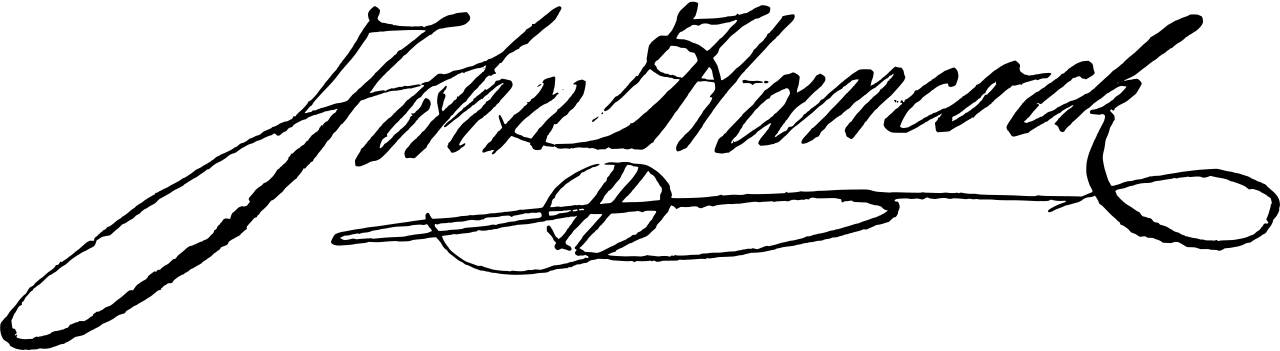
A signature need not be a conventional name written in ink. Any mark the testator intends to represent their signature will do — initials, a thumbprint, or an incomplete scrawl interrupted by death, provided the intention to authenticate the document is present. The formality is about intention to sign, not calligraphic completeness.

Here the statute protects the integrity of the gift-giving process, not merely the paperwork. Section 15 of the Wills Act 1837 provides that if a witness — or the spouse or civil partner of a witness — is also a beneficiary under the will, the gift to that person is void, even though the will itself remains perfectly valid. The rationale is obvious: a witness who stands to inherit has an incentive to attest to something other than the truth, so the law simply removes the incentive by voiding the gift rather than the whole document.
Section 1 of the Wills Act 1968 softens this only in one circumstance: if the will is duly executed by at least two other, independent witnesses, the attestation of the beneficiary-witness (or their spouse) is disregarded for section 15 purposes, and the gift survives. In other words, a beneficiary can safely act as a third witness once the two independent signatures already satisfy section 9 — but a beneficiary cannot be one of the essential two.
| Scenario | Effect on the will | Effect on the gift |
|---|---|---|
| Beneficiary is one of only two witnesses | Valid | Void (s.15) |
| Beneficiary's spouse is one of only two witnesses | Valid | Void (s.15) |
| Beneficiary attests as a third witness, alongside two other independent witnesses | Valid | Saved (s.1, Wills Act 1968) |
Formal execution answers the question "was this signed correctly?" Capacity answers a deeper question: "was the mind behind the signature sound enough to make this decision?" The governing authority, still unmoved after more than 150 years, is Banks v Goodfellow (1870). It sets out four cumulative limbs, and all four must be satisfied — failure on any single limb is fatal to capacity.
A testator must:
- understand the nature of making a will and its broad effects;
- understand the extent of the property being disposed of;
- be able to comprehend and appreciate the claims of those who might expect to benefit; and
- have no disorder of the mind that perverts their sense of right or distorts their judgment in disposing of their property.
This is the exam's favourite trap: candidates often reach for the Mental Capacity Act 2005 because it governs virtually every other capacity question a solicitor will encounter — contracts, lifetime gifts, litigation, medical decisions. Wills are the deliberate exception. Banks v Goodfellow applies instead of the MCA 2005 test, precisely because testamentary decisions are backward-looking and irrevocable-until-death in a way lifetime decisions are not. The High Court reaffirmed this decisively in Leonard v Leonard (2024), confirming that Banks v Goodfellow remains the operative test notwithstanding decades of statutory capacity reform elsewhere in the law — and, notably, broadening how the fourth limb is understood, treating it as reaching any disorder that poisons the testator's affections or judgment, not merely a delusion in the narrowest sense.
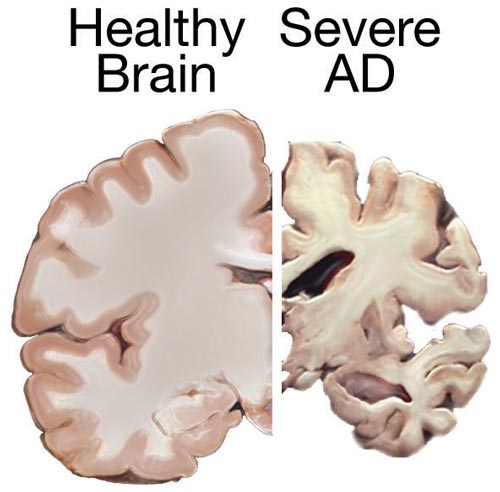
Two evidential presumptions operate around this test. A rational will that appears to be validly executed raises a rebuttable presumption that the testator had capacity — the law starts by assuming sanity, not the reverse. But once the evidence raises a genuine doubt about capacity (advanced dementia, a bizarre or irrational disposition, medical evidence of cognitive decline), the burden shifts to whoever is trying to prove the will, who must then affirmatively establish capacity.
The Golden Rule
Because capacity disputes are so evidentially fraught, practice has developed a safeguard known as the golden rule: when preparing a will for an elderly or seriously ill client, a solicitor should arrange for a medical practitioner to assess and contemporaneously record the testator's capacity. Failing to follow the golden rule does not itself invalidate the will — it is a best-practice guideline, not a statutory requirement — but skipping it leaves the solicitor and the estate far more exposed if capacity is later challenged, since the best evidence (a doctor's assessment made at the time) will simply not exist.
Parker v Felgate: Capacity at Instructions, Not Just at Signing
A further wrinkle addresses a common real-world sequence: a testator with full capacity gives clear instructions for a will, but by the time the drafted document is ready for execution, their capacity has deteriorated. The rule in Parker v Felgate rescues such wills, provided that:
- the will as executed was prepared in accordance with the testator's earlier instructions; and
- at the moment of execution, the testator understood they were signing a will made on instructions they had previously given — even if they could no longer independently satisfy the full Banks v Goodfellow test at that exact moment.
The Court of Appeal confirmed this rule remains good law in Perrins v Holland [2010] EWCA Civ 840, holding that a diminished capacity at execution does not doom a will so long as the testator retained a basic, contemporaneous understanding that they were carrying out a previously-instructed testamentary act.
Capacity and knowledge and approval are related but distinct requirements — a testator can have full mental capacity yet still not know and approve the specific contents of the document placed in front of them (think of a will drafted with an unexplained clause slipped in by an interested party). The requirement that a testator know and approve the contents of their will at the time of execution traces back to Barry v Butlin (1838).
Ordinarily, due execution by a capable testator is enough to presume knowledge and approval. But where the circumstances surrounding preparation excite the suspicion of the court — an unexpected beneficiary heavily involved in instructing the will, a dramatic and unexplained departure from prior wills, or an isolated and dependent testator — the person propounding the will must actively remove that suspicion by proving knowledge and approval affirmatively. Similarly, a blind or illiterate testator cannot simply be assumed to know and approve the contents merely because they signed; additional evidence, such as confirmation that the will was read over to them before execution, is required.
Even a capable testator who genuinely knows and approves the contents of a document may still have been manipulated into producing it. English law addresses this through three overlapping but distinct doctrines.
Undue influence in the testamentary context means coercion that overpowers the testator's free volition — it is not enough to show mere persuasion, however forceful or repeated. Wingrove v Wingrove (1885) drew this line sharply: legitimate persuasion, including an emotional appeal to ties of affection or kinship, is not undue influence, however effective it turns out to be. The testator is entitled to be moved by love, guilt, or gratitude — the law only intervenes when their will has been genuinely overborne.
This is where testamentary undue influence diverges sharply from its lifetime-gift cousin. In the inter vivos context, English law recognises presumed undue influence in certain relationships (solicitor and client, doctor and patient). No such presumption exists for wills, regardless of how close or dependent the relationship between testator and beneficiary was. The burden of proving undue influence always rests on the person alleging it, and — critically — that influence cannot be inferred merely from opportunity or motive. A live-in carer who stood to gain and had every opportunity to pressure a vulnerable testator is not automatically presumed to have done so; actual coercion must be proved by evidence.
A related but conceptually distinct wrong is fraudulent calumny: this occurs where someone makes false representations to the testator about another person's character — poisoning the testator's mind against a natural beneficiary — in order to induce a change to the will in the fraudster's own favour, or that of a third party. Christodoulides v Marcou [2017] is the leading modern illustration, confirming that a will (or a specific gift within it) procured by fraudulent calumny can be set aside just as one procured by classic coercive undue influence can.
Finally, a will procured by duress — actual or threatened force against the testator — is simply invalid, on the same logic as undue influence but at its most extreme and physical end of the spectrum.
The bottom line: testamentary capacity, knowledge and approval, and freedom from undue influence (including duress and fraudulent calumny) are each independent requirements. A will can satisfy one and still fail another — a perfectly capable, well-informed testator can still be coerced, and a testator free from any coercion can still lack the mental capacity to make a valid will. On the SQE1, a strong answer tests each requirement separately rather than assuming that clearing one hurdle clears them all.