Constitutional Institutions
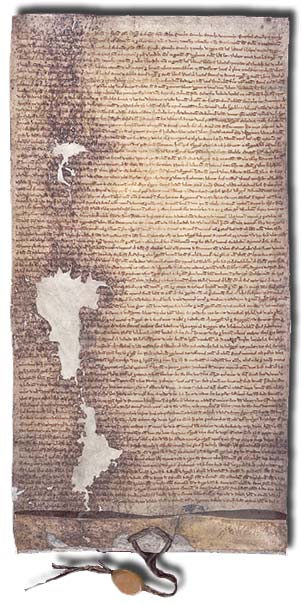
The United Kingdom has no single written constitution you could pull off a shelf and hand to a client. Instead it has Parliament, the Crown, a scattering of statutes stretching back to Magna Carta, and a set of unwritten rules that everyone treats as binding even though no court will enforce them. For a solicitor advising a client on the legality of government action, a devolved policy dispute, or a challenge to ministerial conduct, this uncodified architecture is not an academic curiosity — it is the framework that determines whether an act is lawful, reviewable, or simply beyond judicial reach.

Everything in the UK constitution ultimately rests on one doctrine: parliamentary sovereignty, the principle that Parliament is the supreme law-making body. The classic formulation comes from the Victorian jurist A.V. Dicey, who put it with characteristic bluntness: Parliament has the right to make or unmake any law whatever.
Dicey unpacked this into three connected propositions, and a solicitor should be able to recite all three without hesitation:
Dicey's doctrine of parliamentary sovereignty
- No person or body — including a court — may override or set aside an Act of Parliament.
- No Parliament may bind its successors as to the content of future legislation.
- No Parliament may be bound by its predecessors; any earlier statute can be expressly or impliedly repealed.
That third limb produces the doctrine of implied repeal: where a later statute conflicts with an earlier one, the later statute prevails to the extent of the inconsistency, even if it never mentions the earlier Act by name. Courts simply read the most recent expression of Parliament's will as the governing law.
But implied repeal has a limit, and it is a limit every SQE1 candidate must know precisely. In Thoburn v Sunderland City Council (2002) — the "Metric Martyrs" case — the Divisional Court recognised a category of constitutional statutes: measures so fundamental to the citizen-state relationship (the Human Rights Act 1998, the Scotland Act 1998, the European Communities Act 1972, and similar landmark Acts) that they cannot be impliedly repealed. They can only be repealed expressly, by a later Parliament that says, unambiguously, that it intends to do so. This carve-out matters practically: if a client argues that a later, unrelated statute has silently swept away rights under, say, the Human Rights Act, the answer under Thoburn is almost always no — Parliament would have had to say so in terms.
A related procedural safeguard is the enrolled bill rule: once a Bill has received Royal Assent, the courts will not investigate the parliamentary procedure by which it was passed to question the Act's validity. The courts look at the enrolled Act, not the legislative process behind it.
How an Act of Parliament Is Made
Parliament itself is a composite institution: the House of Commons, the House of Lords, and the Crown (the "Monarch in Parliament"). For a Bill to become an Act, it must normally pass through both Houses and receive Royal Assent.
The word "normally" carries weight, because the House of Lords' power to obstruct legislation has been progressively cut back by statute — and the mechanics of that cutback are examinable in detail.
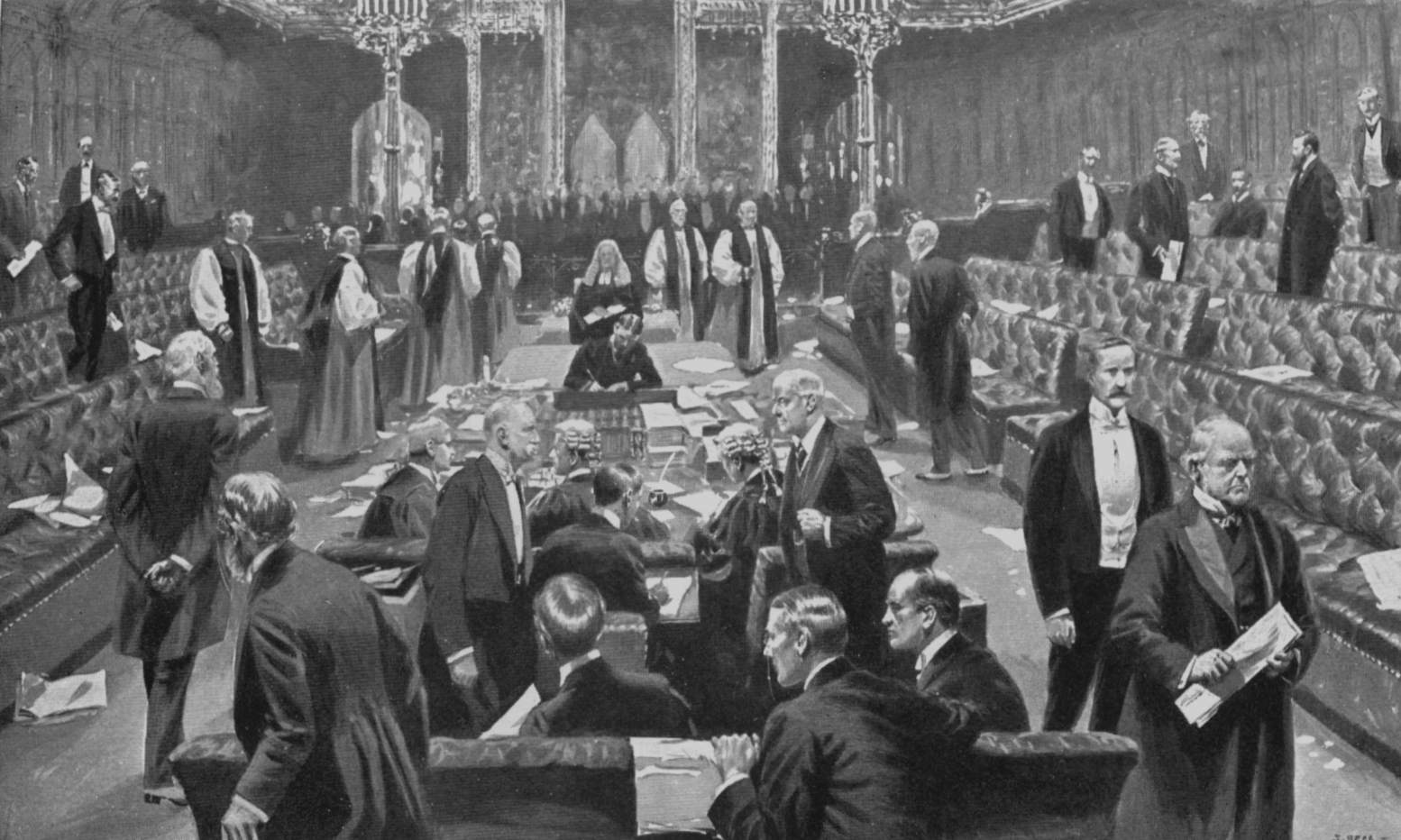
The Parliament Acts 1911 and 1949
- The Parliament Act 1911 removed the Lords' power to veto or even delay money bills altogether.
- The 1911 Act also limited the Lords to merely delaying non-money public bills, subject to conditions.
- The Parliament Act 1949 amended those conditions, cutting the Lords' maximum delaying power over public bills from two years down to one.
- Together, the Acts allow certain bills to become law without the House of Lords' consent at all, provided the Commons has passed the bill in successive sessions.
The composition of the Lords has also been reshaped by statute rather than convention. The Life Peerages Act 1958 created life peers — appointees who sit without a hereditary title — diversifying a chamber that had been dominated by inherited seats. Then the House of Lords Act 1999 removed the automatic right of most hereditary peers to sit and vote, leaving only a small, elected residue of hereditary peers alongside life peers and bishops. A solicitor explaining the modern Lords to a client should frame it as a chamber built almost entirely from appointment and residual hereditary election, not inheritance as of right.
Statute and case law are only half the picture. The rest of the constitution runs on constitutional conventions — non-legal rules of political practice that political actors regard as binding, even though no court will enforce them. The Supreme Court confirmed this directly in R (Miller) v Secretary of State for Exiting the European Union: conventions may carry real political force, but courts do not police compliance with them.

How do you tell a genuine convention from mere habit? The classic test comes from Sir Ivor Jennings, who asked three questions:
Jennings' test for identifying a convention
- Are there precedents for the practice?
- Did the actors involved believe themselves bound by a rule?
- Is there a good reason for the rule?
Applying that test to government reveals two related conventions of ministerial accountability. Individual ministerial responsibility holds each minister accountable to Parliament for their own conduct and their department's actions. Collective ministerial responsibility goes further: Cabinet decisions bind every minister, who must publicly support the decision or resign. These conventions are why a minister who privately disagrees with government policy either stays silent in public or leaves office — there is no legal compulsion, only the reputational and political cost of breaching a rule everyone accepts as binding.
The Crown, too, operates almost entirely by convention rather than personal discretion: the Monarch acts on the advice of ministers, meaning that in practice the Monarch does not exercise independent political judgment.
Two further conventions govern the relationship between institutions, and both are examinable in real depth.
The Salisbury Convention provides that the House of Lords will not vote down, at second reading, a government bill that implements a manifesto commitment — recognising that the elected chamber's mandate should not be blocked by the unelected one on matters the electorate has already endorsed.
The Sewel Convention provides that the UK Parliament will not normally legislate on matters devolved to Scotland, Wales, or Northern Ireland without the consent of the relevant devolved legislature. The name derives from Lord Sewel, who described the principle during the passage of the Scotland Bill in 1998. Consent is expressed formally through a Legislative Consent Motion — debated and voted on in the devolved legislature itself. Crucially, the Scotland Act 2016 and Wales Act 2017 placed the Sewel Convention on a statutory footing, but doing so did not make it legally enforceable. The Supreme Court confirmed exactly that in R (Miller) v Secretary of State for Exiting the European Union, holding that the Sewel Convention operates as a political constraint binding "in honour only," not a legal rule a court can enforce. If a client asks whether a devolved legislature could sue Westminster for legislating on a devolved matter without consent, the answer is no — the convention gives political leverage, not a legal cause of action.
Turn from Parliament to the executive, and the same blend of law and convention appears. Central government is headed by the Prime Minister, who is normally the leader of the party commanding a majority in the Commons. Below the PM sits the Cabinet — senior ministers who collectively decide government policy — and beneath that, government departments staffed by a politically neutral civil service that implements ministerial policy regardless of which party is in power.
The Victorian commentator Walter Bagehot offered a lasting way to think about this architecture, distinguishing the dignified parts of the constitution (the Monarchy — ceremonial, symbolic) from the efficient parts (the Cabinet — where power is actually exercised). It is a useful shorthand for explaining to a client why the Monarch's public role and the government's actual decision-making power can look, on the surface, so mismatched.
This structure sits inside the broader theory of the separation of powers: the legislature makes law, the executive implements it, and the judiciary interprets and applies it. But the UK version is famously partial, not pure — because government ministers sit in and are drawn from Parliament, fusing the legislative and executive branches rather than keeping them apart. A Cabinet minister is simultaneously a member of the body that scrutinises government and the government being scrutinised.
The Crown is a legal abstraction — the institution of the state and executive authority — distinct from the personal identity of whoever happens to be reigning Monarch. In practice, the Monarch performs largely ceremonial and formal functions: granting Royal Assent, opening Parliament, and similar constitutional set-pieces.
Behind those ceremonial functions sits a genuinely important body of law: the royal prerogative — residual discretionary powers recognised by the common law as belonging to the Crown, but in practice exercised by ministers on the Monarch's behalf. Prerogative powers cover an unusually wide range of state activity:
- The conduct of foreign affairs and the making and ratification of treaties
- The deployment of the armed forces
- The granting of honours
- The prerogative of mercy
- The appointment and dismissal of ministers
A structural rule worth memorising: prerogative powers can be abolished or restricted by statute, and once a prerogative power has been replaced by statute, it cannot be revived by the Crown acting alone — Parliament's occupation of the field is treated as permanent unless Parliament itself legislates otherwise.
Are Prerogative Powers Reviewable?
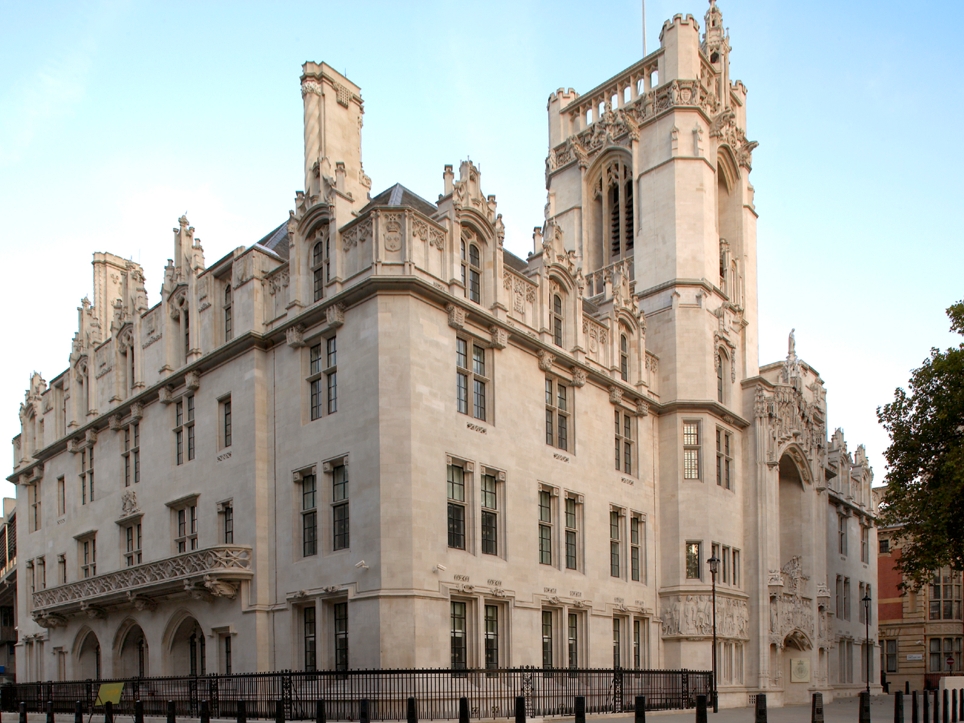
For a long stretch of legal history, the answer was simply no — the prerogative was thought to be beyond the reach of judicial review because of its royal origin. That changed in Council of Civil Service Unions v Minister for the Civil Service (the GCHQ case, 1985), in which the House of Lords held that the exercise of prerogative power is, in principle, subject to judicial review just like any other exercise of executive power. The label "prerogative" no longer immunises a decision from scrutiny.
"In principle," though, is doing real work in that sentence. Some prerogative powers remain non-justiciable — national security decisions and treaty-making among them — because their subject matter is simply unsuited to judicial resolution; courts lack the institutional competence (and legitimacy) to second-guess them.
Two decisions from the Brexit era show both sides of that line vividly, and both are core SQE1 material.

The Miller cases: prerogative power meets its limits
Miller I — R (Miller) v Secretary of State for Exiting the European Union (Supreme Court, 2017): triggering Article 50 to begin the UK's withdrawal from the EU required an Act of Parliament; the government could not rely on prerogative power alone, because doing so would remove statutory rights without Parliament's involvement.
Miller II — R (Miller) v The Prime Minister (Supreme Court, 2019), the prorogation case: the advice to prorogue Parliament for an extended period was justiciable, and the prorogation was unlawful, because it prevented Parliament from carrying out its constitutional functions of scrutiny and legislation without reasonable justification.
Read together, the two Miller cases show a court willing to police the boundary of prerogative power precisely where it threatens Parliament's own constitutional role — even while leaving genuinely political, non-justiciable prerogative decisions (like the conduct of foreign policy itself) largely alone.
Dissolution: Prerogative, Statute, and Back Again
The prerogative power to dissolve Parliament and call a general election has had an unusually turbulent recent history, and the sequence is a favourite for testing careful reading.
The Fixed-term Parliaments Act 2011 removed the prerogative power to dissolve Parliament entirely, replacing it with fixed five-year election cycles set by statute. A decade later, the Dissolution and Calling of Parliament Act 2022 — which received Royal Assent on 24 March 2022 — repealed the 2011 Act and revived the prerogative power to dissolve Parliament, restoring the pre-2011 position. The 2022 Act also provides that Parliament automatically dissolves five years after its first meeting following an election, and it contains an ouster clause attempting to prevent the courts from reviewing the exercise of the dissolution power at all — a direct legislative response to the reviewability concerns that Miller II had just raised.
Devolution is the statutory transfer of defined powers from the UK Parliament to subordinate legislatures in Scotland, Wales, and Northern Ireland. Crucially, devolution does not touch parliamentary sovereignty: Westminster retains the legal power to legislate for — or even abolish — a devolved legislature, because that legislature's authority is itself a creature of an Act of the UK Parliament that could in theory be repealed.
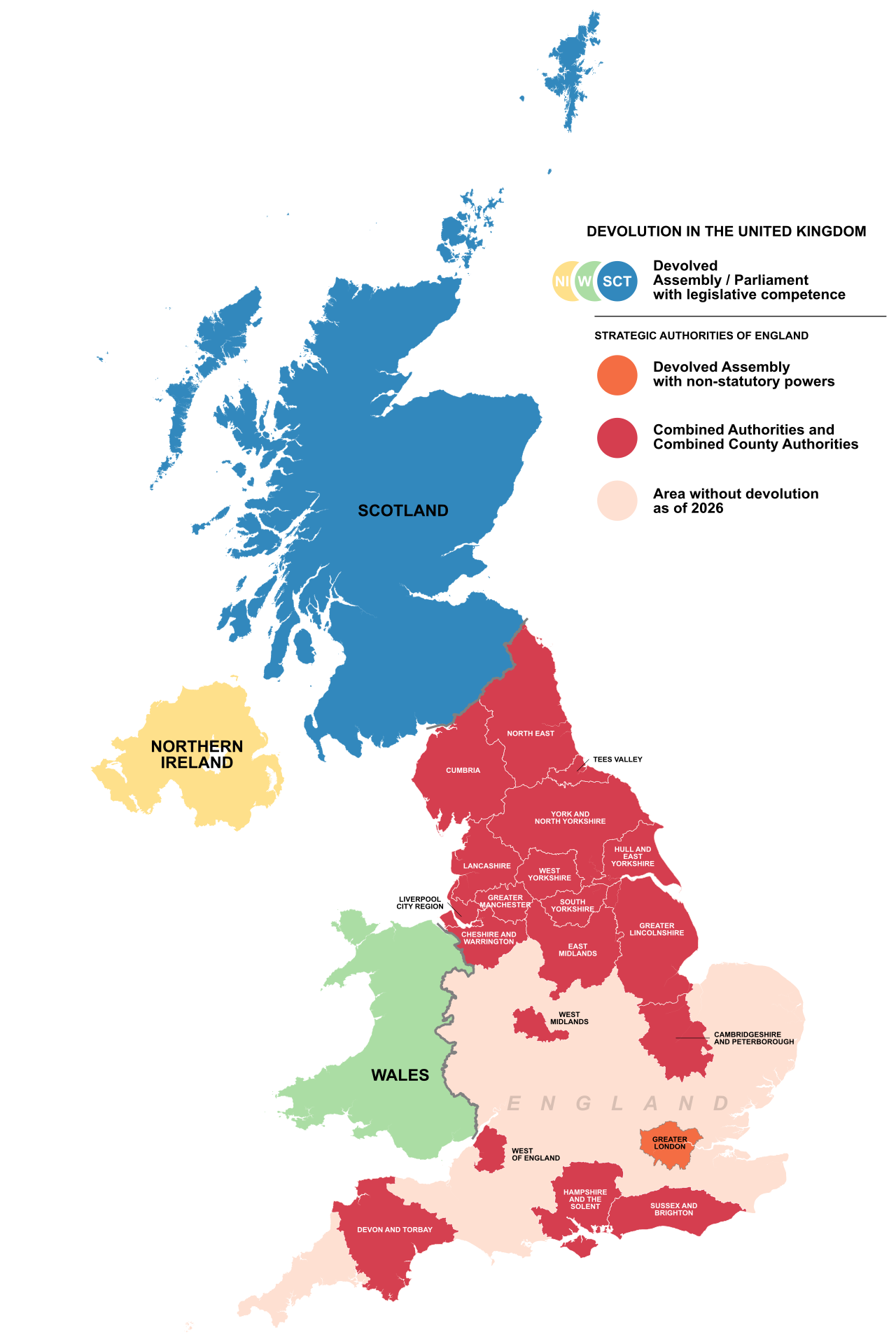
The three devolution settlements are genuinely different from one another — UK devolution is deliberately asymmetric, reflecting each nation's distinct constitutional history — and a table is the fastest way to keep them straight.
| Nation | Founding statute | Later reform | Model |
|---|---|---|---|
| Scotland | Scotland Act 1998 (in force 1 July 1999) | Scotland Act 2016 | Reserved powers — legislate on anything not reserved to Westminster |
| Wales | Government of Wales Act 1998 (executive powers only) | Government of Wales Act 2006 (primary law-making + separated executive); Wales Act 2017 (reserved powers model) | Reserved powers (since 2017), mirroring Scotland |
| Northern Ireland | Northern Ireland Act 1998 (following the Belfast/Good Friday Agreement, 1998) | — | Power-sharing, cross-community consent |

Scotland. The Scotland Act 1998 established the Scottish Parliament and Scottish Government with legislative competence over matters not reserved to Westminster, with powers transferred on 1 July 1999. The Scotland Act 2016 moved the settlement toward a full reserved powers model: the Scottish Parliament can legislate on anything not expressly reserved, rather than only on matters expressly granted. Reserved matters — the ones Holyrood cannot touch — include defence, foreign affairs, immigration, and the constitution itself.

Wales. Welsh devolution started from a much narrower base. The Government of Wales Act 1998 created the National Assembly for Wales with only limited executive powers, not primary legislative competence. The Government of Wales Act 2006 was the real turning point: it enhanced the Assembly's law-making competence and, importantly, separated the executive Welsh Government from the legislature — mirroring the UK's own executive/legislature distinction at a devolved level. The Wales Act 2017 then moved Wales onto the same reserved powers model already used for Scotland. Finally, the Senedd and Elections (Wales) Act 2020 renamed the institution Senedd Cymru, the Welsh Parliament — the name it carries today.
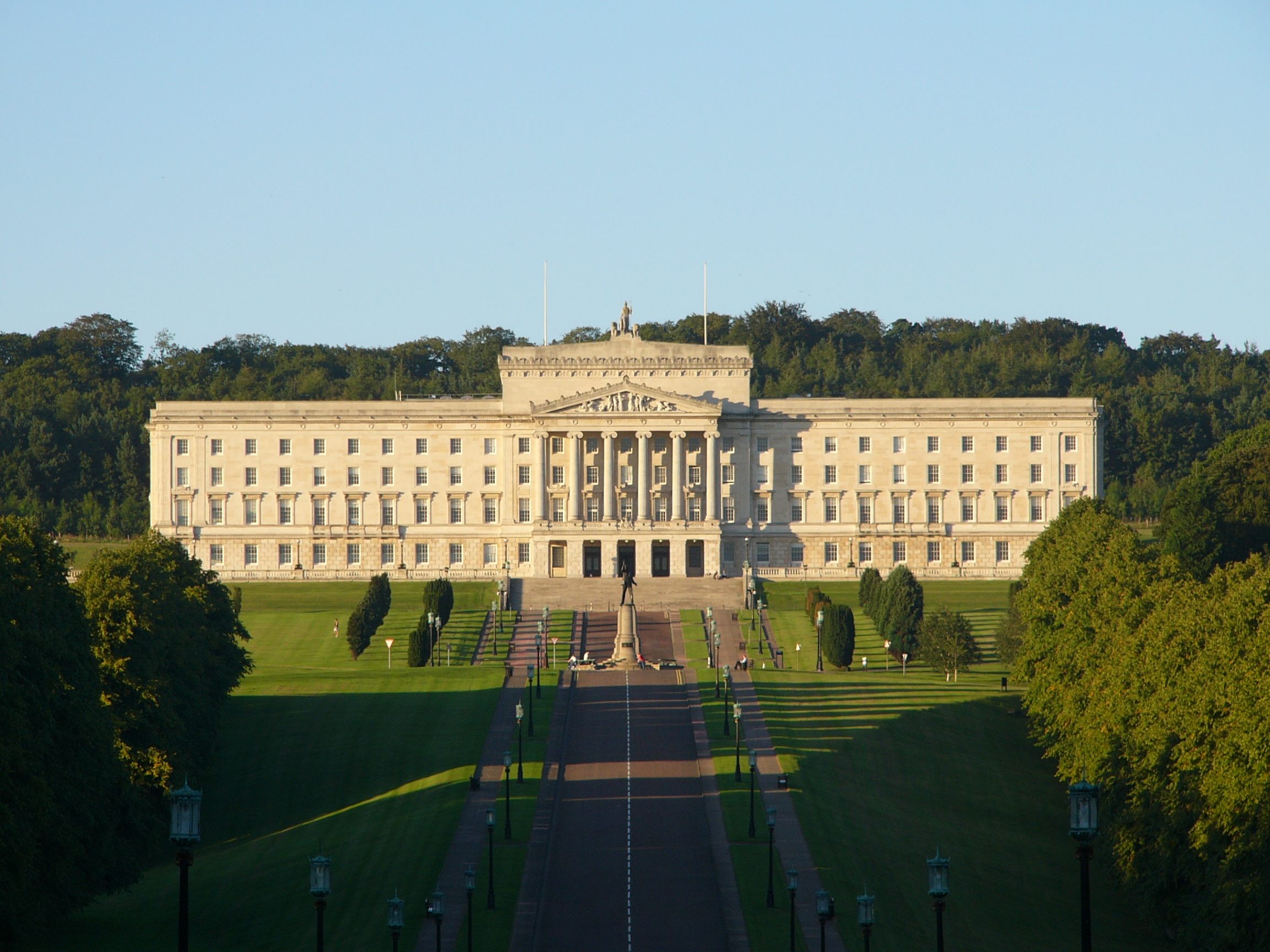
Northern Ireland. The Northern Ireland Act 1998 established the Northern Ireland Assembly and Executive, implementing the Belfast (Good Friday) Agreement, signed in 1998. Unlike Scotland or Wales, Northern Irish devolution is built on power-sharing: the Executive requires cross-community consent between unionist and nationalist parties, and when that consent breaks down, the Assembly has on multiple occasions been suspended — devolution here is structurally more fragile than in Scotland or Wales precisely because it depends on sustained political cooperation between historically opposed communities, not just a legislative formula.

Across all three nations, one accountability point stays constant: devolved executives — the Scottish Government, the Welsh Government — answer to their own devolved legislatures, not to Westminster. A client asking who can be held to account for a decision made in Cardiff or Edinburgh should be pointed to the Senedd or Holyrood, not to the UK Parliament.
Alongside parliamentary sovereignty, Dicey identified a second foundational principle of the UK constitution: the rule of law. Two strands of Dicey's conception matter most for SQE1 purposes:
Dicey's rule of law
- No one may be punished except for a distinct breach of law established before the ordinary courts — not on the say-so of executive discretion.
- Everyone — including government officials — is subject to the ordinary law administered by the ordinary courts; there is no separate, more forgiving legal regime for the state.
That second strand is the constitutional bedrock underneath everything covered above: it is precisely why prerogative power, however broad its historical pedigree, was never destined to stay beyond judicial review forever. A constitution that holds the executive to the ordinary law was always going to eventually hold prerogative power to that same standard — which is exactly what the House of Lords delivered in GCHQ, and what the Supreme Court reaffirmed in both Miller cases.