Remedies for Breach of Contract
A client rings you the day a supplier fails to deliver. Their first question is never "was that a breach?" — it almost always is, on the facts they give you — their first question is "so what do I get?" Remedies for breach of contract is the part of the syllabus that turns a finding of liability into a number, an order, or a piece of paper the client can actually use, and SQE1 tests it precisely because so much of solicitor practice happens at that translation point.
The starting point is that the primary remedy for breach of contract is an award of damages. Unlike some legal systems that reach first for compulsion — make the defendant actually do the thing — English law's default instinct is compensatory: put a figure on the loss and pay it.
But compensate for what, exactly? The touchstone is the expectation interest: damages exist to put the claimant, so far as money can do it, in the position they would have occupied had the contract been properly performed. This was fixed as the guiding principle in Robinson v Harman (1848), and everything else in this topic is really commentary on that one idea. If you build a house and the builder uses cheaper pipework than specified, you are entitled — in principle — to the value of the house you were promised, not merely your money back.
That "not merely your money back" distinction matters, because a claimant does have an alternative measure available: reliance damages, which recover wasted expenditure incurred in reliance on the contract rather than the benefit of the bargain itself. Anglia Television Ltd v Reed is the classic illustration — an actor pulled out of a film at the last moment, and the production company, unable to prove what profit the (never-made) film would have earned, recovered its wasted pre-contract production costs instead. Reliance damages are useful precisely when expectation loss is speculative or unprovable.
There is a crucial limit on reliance damages, though: a claimant cannot use them to escape a bad bargain. If the contract was always going to lose money — regardless of the breach — the claimant cannot use reliance damages to shift that loss onto the defendant. C & P Haulage v Middleton confirms this: reliance damages can never put the claimant in a better position than performance would have. The defendant can always point to the expectation measure as a ceiling.
Expectation vs reliance, side by side
| Expectation damages | Reliance damages | |
|---|---|---|
| Puts claimant in position as if... | contract had been performed | contract had never been made |
| Measures | loss of bargain | wasted expenditure |
| Use case | standard measure, provable profit | expectation loss too speculative to prove |
| Ceiling | — | capped by expectation measure (C & P Haulage) |
When the Cure Costs More Than the Benefit: Ruxley
Sometimes the "cost of cure" — what it would take to put things right — is wildly disproportionate to what the claimant actually lost. Ruxley Electronics & Construction Ltd v Forsyth [1996] AC 344 is the leading case: a swimming pool was built shallower than the contract specified, but rebuilding it to the correct depth would have cost far more than the shortfall was actually worth to the owner, who had suffered no diminution in the pool's usability for diving or otherwise. The House of Lords awarded damages for loss of amenity — a modest sum reflecting the loss of the specified feature — rather than the full, disproportionate rebuilding cost. Ruxley is a useful shorthand for a wider principle you will see reappear across the syllabus: damages track the claimant's actual loss, not an abstract entitlement to literal performance at any cost.
And where a breach is proved but the claimant genuinely suffered no loss at all, the court will still mark the wrong with nominal damages — a small, symbolic sum recognising that a legal right was breached, even though nothing of value was lost.
What Damages Will Not Compensate: Distress, and Its Exceptions
Contract damages are also notably narrow in one respect that surprises many new solicitors: damages for mental distress or disappointment are generally not recoverable. The general rule, from Addis v Gramophone Co Ltd, is that a claimant cannot recover for injured feelings caused by the manner of the breach — even a harsh or humiliating dismissal, in that case, generated no distress damages.
The rule against distress damages exists because contract is (in the ordinary case) about commercial bargains, not emotional wellbeing — the law draws a sharper line here than it does in tort.
There is, however, a well-established exception: where the very object of the contract was to provide pleasure, relaxation, or peace of mind, distress damages become recoverable, because disappointing that specific purpose is the loss. Jarvis v Swan Tours Ltd (a disastrously mismanaged holiday) and Farley v Skinner (a surveyor's negligent failure to check for aircraft noise before a peaceful retirement purchase) both recognise this exception. When you spot a contract whose whole point was enjoyment or tranquillity, flag the possibility of distress damages immediately.
A further, distinct head of recovery is loss of a chance: where the breach deprived the claimant of a real and substantial opportunity, the court can award damages for that lost opportunity itself, even though the ultimate outcome (would they have won the prize? got the job?) was never certain. Chaplin v Hicks is the founding case — a woman wrongfully excluded from the final round of a beauty competition recovered damages for her lost chance of winning, assessed by estimating the statistical probability of success.
Timing: The Date-of-Breach Rule and Its Flexibility
Damages are conventionally assessed as at the date of breach — you value the loss as things stood when the contract was broken, not with the benefit of hindsight about what happened afterward. But this is a starting presumption, not an iron rule: the court retains discretion to select a different date where justice requires it. Golden Strait Corporation v Nippon Yusen Kubishika Kaisha (The Golden Victory) shows this discretion at its most dramatic — in assessing damages for wrongful repudiation of a long-term charterparty, the House of Lords allowed the court to take into account a subsequent event (the outbreak of the Second Gulf War, which would independently have terminated the charter) even though it occurred after the breach, because ignoring known, actual events in favour of a fictional date-of-breach valuation would have overcompensated the claimant.
Establishing loss is not enough on its own — the claimant must also show the loss was legally attributable to the breach. This runs through two separate gates: causation and remoteness.
Causation
First, factual causation: the claimant must prove the breach caused the loss on a "but for" test — but for the defendant's breach, would this loss have occurred? This chain of causation can be broken by an intervening act (novus actus interveniens) — some new, independent event that supersedes the breach as the operative cause of the loss. Equally, unreasonable conduct by the claimant occurring after the breach can itself sever the chain, preventing recovery for losses that flow from the claimant's own unreasonable response rather than from the original breach.
Remoteness: The Two Limbs of Hadley v Baxendale
Even where causation is established, the loss must not be too remote. The foundational case is Hadley v Baxendale (1854) 9 Exch 341, which sets out a now-canonical two-limb test:

First limb: losses arising naturally, according to the usual course of things, from the breach are recoverable.
Second limb: losses arising from special circumstances are recoverable only if those circumstances were within the reasonable contemplation of both parties at the time of contracting.
Victoria Laundry (Windsor) Ltd v Newman Industries Ltd applies this beautifully: a boiler was delivered late to a laundry business. Lost ordinary profits from the delay were recoverable under the first limb — any reasonable supplier of an industrial boiler would expect a delay to cost the buyer ordinary trading profit. But an exceptionally lucrative dyeing contract that the laundry lost as a result was not recoverable, because that unusual, highly profitable opportunity had never been communicated to the seller — it fell outside the second limb because the special circumstance wasn't within both parties' contemplation.
The remoteness test itself was sharpened in The Heron II (Koufos v C Czarnikow Ltd): the loss must be of a type the parties, at the time of contracting, could reasonably have contemplated as a serious possibility — "not unlikely" — resulting from the breach. This is a deliberately stricter standard than the tort test of reasonable foreseeability; contract remoteness demands more than a mere possibility, because the parties had the opportunity, at the point of contracting, to allocate unusual risks explicitly and didn't.
More recently, Transfield Shipping Inc v Mercator Shipping Inc (The Achilleas) added a further gloss for certain commercial contexts: remoteness may also be assessed by asking whether the defendant assumed responsibility for the type of loss in question — not simply whether the loss was foreseeable in the orthodox Hadley v Baxendale sense. In The Achilleas itself, a ship was returned late from charter, causing the owners to lose an exceptionally lucrative follow-on fixture; the House of Lords held that although this loss may have been technically foreseeable, the charterer had never assumed responsibility for a loss of that scale arising from a short delay, and so it was not recoverable. Treat this as a supplementary lens available in unusual commercial cases, layered on top of — not replacing — the orthodox two-limb test.
A claimant cannot simply let losses accumulate and then present the bill. There is a duty to take all reasonable steps to mitigate the loss flowing from the defendant's breach, and correspondingly, a claimant cannot recover damages for any part of the loss that could have been avoided by reasonable mitigation.
Three points of detail matter here, and SQE1 loves testing precisely these:
- The burden of proof lies on the defendant to show that the claimant failed to mitigate — the claimant does not have to affirmatively prove they mitigated perfectly.
- The standard is reasonableness, not perfection: a claimant is not required to take unreasonable, risky, or extraordinary steps. Payzu Ltd v Saunders shows the line being drawn against the claimant — a buyer who unreasonably refused a seller's offer to continue supply on revised (cash) terms after a breach had its damages reduced, because a reasonable buyer would have accepted the revised offer and minimised the loss.
- A claimant may recover the reasonable costs of attempting to mitigate even where the attempt fails — the law does not punish a good-faith, reasonable mitigation effort simply because it didn't work out.
Where mitigation actually produces a benefit, that benefit must be set off against the damages claimed — British Westinghouse Electric v Underground Electric Railways is the authority: a railway company that replaced defective turbines with more efficient ones had to give credit for the resulting efficiency savings against its damages claim, because those savings arose directly from its (successful) mitigation.
Client-facing translation: when a client's supplier fails to deliver, tell them to look for a reasonable substitute promptly — don't let them sit on their hands "on principle," and don't let them assume the defendant will simply cover every consequential cost that follows from inaction.
The White & Carter Exception: Affirming Instead of Mitigating
There is a notable exception to the mitigation regime. Ordinarily, once a contract is repudiated, the innocent party is expected to accept the repudiation and claim damages (subject to mitigation) rather than let losses run. But White and Carter (Councils) Ltd v McGregor held that where the innocent party has a legitimate interest in performing the contract rather than claiming damages, it may — in limited circumstances — affirm the contract after repudiation and continue performance, claiming the full contract price rather than damages, and without needing the repudiating party's cooperation. This is a narrow doctrine (later cases have confined it where damages would be an adequate remedy or where affirmation is wholly unreasonable), but it is a genuine alternative route: instead of asking "how do I mitigate my loss," the claimant asks "can I simply perform and be paid?"
Parties frequently try to fix the consequences of breach in advance, through a liquidated damages clause — a term specifying, in advance, the sum payable on a defined breach. These are attractive because they give commercial certainty and avoid expensive litigation over quantum.
The risk is that such a clause becomes an unenforceable penalty — one that punishes the contract-breaker rather than compensating the innocent party. For decades, the test asked whether the clause was a "genuine pre-estimate of loss." That test was decisively replaced by Cavendish Square Holding BV v Talal El Makdessi (with the conjoined ParkingEye Ltd v Beavis) [2015] UKSC 67, which substituted a new legitimate interest / proportionality test: a clause is a penalty only if it imposes a detriment on the contract-breaker that is out of all proportion to any legitimate interest of the innocent party in enforcing the primary obligation.
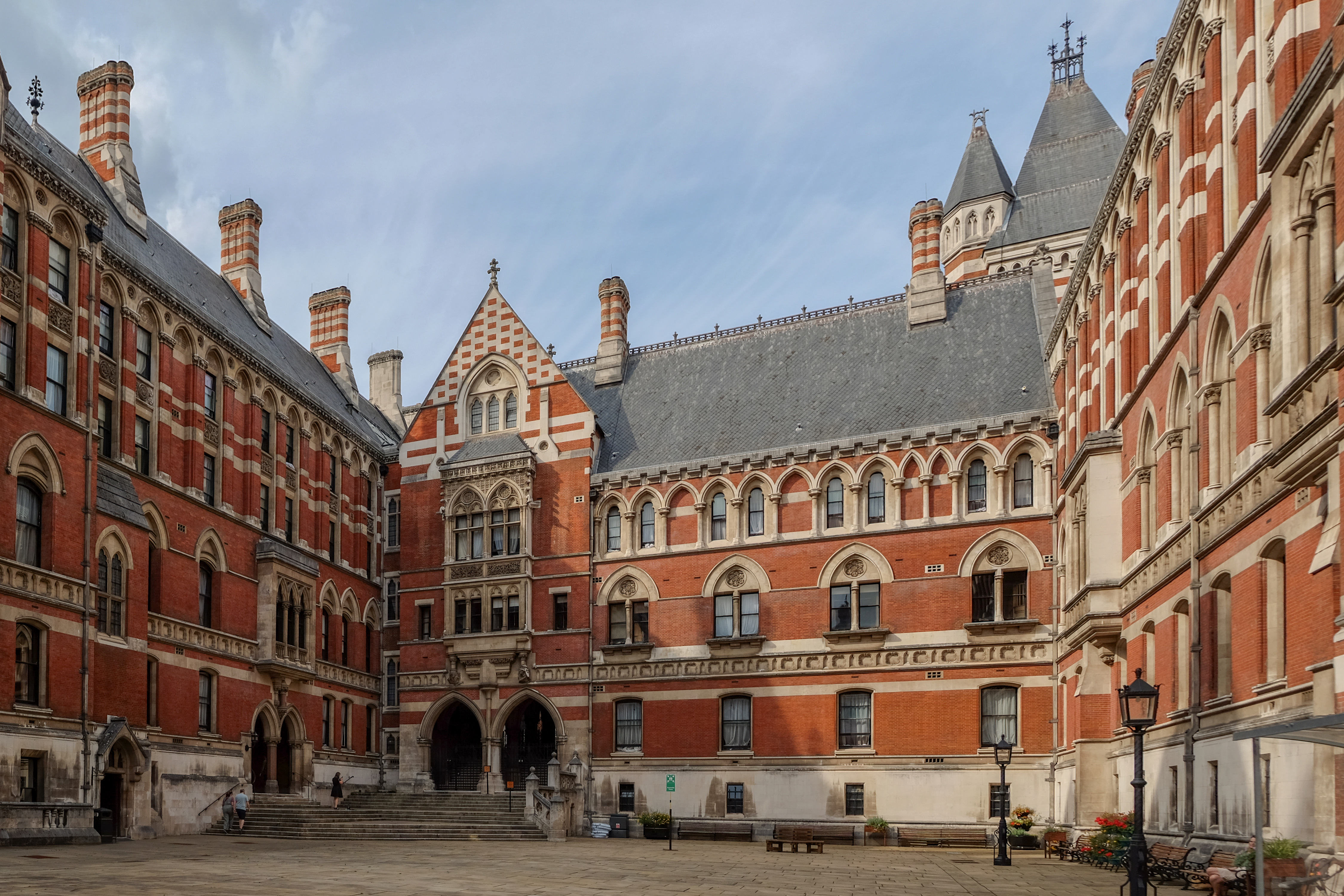
![The former Middlesex Guildhall, now home to the UK Supreme Court, which decided Cavendish Square Holding v Makdessi [2015] UKSC 67, replacing the old penalty test with the legitimate-interest/proportionality test.](https://cdn.theonlyever.com/lectures/topic-images/b59d256b9c7f61a384c933990305f44edf862f55c1e174716f9bfaf494c78577.jpg)
The significance of Cavendish is that it widened what counts as a legitimate interest: a party can have a legitimate interest in enforcing a clause that extends beyond mere compensation for financial loss — commercial interests such as protecting goodwill, market structure, or deterring specific conduct can count, provided the response is proportionate. In ParkingEye, an £85 parking charge, wildly disproportionate to any provable financial loss from an overstay, was nonetheless upheld because the car park operator had a legitimate interest in managing turnover and deterring overstaying that the charge served proportionately.
Old test: was the sum a genuine pre-estimate of loss? New test (Cavendish): is the detriment out of all proportion to a legitimate interest in enforcement? A clause can now survive scrutiny even where it plainly isn't a pre-estimate of loss, provided it protects a legitimate commercial interest proportionately.
Damages, being the primary common law remedy, are available as of right once loss is proved. Specific performance and injunctions are different in kind: they are discretionary equitable remedies, granted only where damages will not do justice, and always subject to the court's broader equitable conscience.
Specific Performance
Specific performance is a discretionary equitable remedy compelling a defendant to perform its contractual obligations. The single most important filter is the adequacy of damages: specific performance will not be ordered where an award of damages would provide an adequate remedy. This is why specific performance is commonly available for contracts for the sale of land — land is treated as unique, so no substitute purchase in the market can put the buyer in an equivalent position, and money alone cannot adequately compensate for the loss of that particular parcel.
Several further limits recur constantly in practice and in the exam:
- Personal service and employment contracts: specific performance is not ordered — the law will not force people to work together, or an employee to work for an employer, against their will.
- Constant supervision: courts will refuse specific performance where the order would require constant supervision by the court. Co-operative Insurance Society Ltd v Argyll Stores (Holdings) Ltd is the leading illustration: a covenant to keep a supermarket open for trade was not specifically enforced, partly because policing ongoing compliance (is the store really trading, in what manner, for how long) would tie up the court in an unworkable, continuing supervisory role.
- Hardship: specific performance may be refused where it would cause the defendant severe or disproportionate hardship.
- Equitable defences: because specific performance is an equitable remedy, it is barred by the classic equitable defences — delay (laches) or unclean hands — even where the legal requirements for the order are otherwise satisfied. A claimant who has sat on their rights, or who has behaved improperly themselves, may find the court simply declines to assist them, regardless of the underlying merits.
Injunctions
An injunction is a discretionary equitable remedy restraining a party from breaching a negative (restrictive) contractual obligation — think non-compete clauses, exclusivity terms, or covenants not to disclose. There are two flavours:
- A prohibitory injunction orders a party not to do a specified act that would breach the contract — the more common and more readily granted form.
- A mandatory injunction orders a party to take positive steps to undo the effects of an existing breach, and is granted more sparingly, because compelling positive action edges closer to the kind of ongoing court involvement equity is wary of.
A particularly elegant point, and a favourite exam trap, is that courts may grant an injunction restraining breach of a negative covenant even where the related positive obligation in the same contract could not itself be specifically enforced. Warner Bros Pictures Inc v Nelson is the classic case: an actress (Bette Davis, working under the pseudonym in the reports) had agreed to work exclusively for one studio and not to work for any rival during the contract term. The court could not order her to perform (that would be specific performance of a personal service contract), but it could — and did — grant an injunction restraining her from working for a competitor, indirectly encouraging performance of the underlying personal service contract without ever compelling it directly.
Like specific performance, an injunction is subject to equitable maxims and may be refused on grounds such as delay or unclean hands — equity's discretionary character runs through both remedies identically.
Interim Injunctions and American Cyanamid
Often a client needs protection before trial — waiting months for a full hearing while the other side breaches a restrictive covenant defeats the purpose of the remedy entirely. An interim injunction may be granted before trial where there is a serious question to be tried and the balance of convenience favours granting relief. The governing framework comes from American Cyanamid Co v Ethicon Ltd, which established the balance-of-convenience guidelines English courts apply at the interim stage: the court does not try to resolve the merits definitively at this early point, but asks instead which party is likely to suffer the greater, less remediable harm if the interim order is (or is not) granted, pending full trial.
A useful way to hold this whole topic in your head for the exam: start with damages as the default (expectation, subject to the reliance-damages alternative and Ruxley-style proportionality limits); check the loss survives causation and remoteness; check the claimant has mitigated; check whether the parties have pre-fixed the remedy by a liquidated damages clause (and whether Cavendish saves it from being a penalty); and only then ask whether this is one of the exceptional cases where equity should step in with specific performance or an injunction, because damages alone would leave the claimant without a real remedy. Client scenarios on SQE1 are built to walk you through exactly this sequence — work it in order, and the right remedy falls out naturally.