Duress, Undue Influence, and Illegality
A contract signed at gunpoint and a contract signed under a slick manager's relentless pressure feel like they belong to different moral universes — yet English law places both, along with contracts poisoned by illegality, in the same conceptual box: forces that undermine an otherwise validly formed agreement without ever touching the rules of offer, acceptance, or consideration. That is the puzzle this topic solves. A contract can tick every box for formation and still be unenforceable, because how it was procured, or what it does, offends the law's sense of a freely and lawfully made bargain.

Duress, undue influence, and illegality are the trio of common law and equitable vitiating factors covered here. Duress and undue influence share a crucial procedural feature: a contract affected by either is voidable, not void. It remains valid and binding on both parties unless and until the innocent party takes the affirmative step of electing to rescind it. This matters enormously in practice — until rescission happens, the contract is enforceable, third parties can acquire rights under it, and the clock is running on the innocent party's opportunity to act. The primary remedy for both duress and undue influence is rescission: unwinding the transaction and restoring the parties, as far as possible, to their pre-contractual positions.
Illegality operates differently — it is not about defective consent but about the law refusing, for its own policy reasons, to lend its machinery to certain bargains. We will come to that after mapping duress and undue influence in full.
Duress captures situations where a party's "consent" was extracted by illegitimate pressure. English law recognises three flavours.
Duress to the Person
This is the paradigm case: a party enters a contract because of an actual or threatened act of violence against them or their family. The causation threshold here is deliberately low. A claimant need only show the illegitimate threat was a reason for entering the contract — not the sole reason, and not even the predominant one.
Case in point: In Barton v Armstrong [1976] AC 104, the Privy Council went further still on causation. Armstrong had threatened to have Barton killed unless Barton bought him out of their company on favourable terms. The Privy Council held that once a threat of violence is shown to have influenced the victim's decision at all, the burden shifts to the maker of the threat to prove it contributed nothing to that decision — a burden that is, unsurprisingly, very hard to discharge. It did not even matter that Barton might have signed the deal anyway for commercial reasons; the mere presence of the threat as an operative factor was enough.

Duress to Goods
A cousin of duress to the person: here the threats concern the claimant's property rather than their body. A party makes illegitimate threats about a claimant's goods — seizing them, damaging them, withholding them — in order to induce the claimant to enter into or vary a contract. Think of a warehouse operator refusing to release goods unless the owner pays an inflated, contractually unjustified storage fee.

Economic Duress
This is the doctrine that does the heavy lifting in commercial practice, because most real-world coercion in business is financial, not physical. Economic duress arises where one party exerts illegitimate commercial pressure that leaves the other party with no practical alternative but to agree to the terms demanded.
The test has two limbs, and both must be satisfied:
- Illegitimate pressure, and
- A resulting lack of any practical or realistic alternative for the victim.
Illegitimate pressure often takes the shape of an unlawful act — the classic example being a threat to breach an existing contract unless the other party agrees to pay more or accept worse terms. Picture a contractor who, midway through a fixed-price build, tells the client "pay 20% more or the crew walks tomorrow," knowing the client has no time to find a replacement before a hard deadline. That threatened breach, combined with the client's practical inability to go elsewhere, is the textbook fact pattern.
Two House of Lords / Privy Council authorities anchor this area:
In Pao On v Lau Yiu Long [1980] AC 614, Lord Scarman set out the factors relevant to identifying illegitimate pressure, including whether the victim protested at the time and whether an alternative course, such as pursuing a legal remedy, was realistically available to them.
In Universe Tankships Inc of Monrovia v International Transport Workers Federation [1983] 1 AC 366, the House of Lords held that economic duress requires both a compulsion of the will of the victim and the illegitimacy of the pressure applied to produce that compulsion.
Crucially, the doctrine has guardrails against swallowing ordinary commerce whole: ordinary hard commercial bargaining and the mere exploitation of a stronger bargaining position do not, without more, amount to illegitimate pressure. A supplier who simply refuses to lower its price, knowing the buyer is desperate, is not committing duress — hard-nosed negotiation is the water in which contract law swims, not a poison in it.
Lawful Act Economic Duress — A Narrow Frontier
If economic duress usually needs an unlawful threat (like breach of contract), what happens when the pressure applied is, technically, entirely lawful, yet still feels coercive? This is lawful act economic duress, and it is a genuinely narrow doctrine reserved for exceptional circumstances.
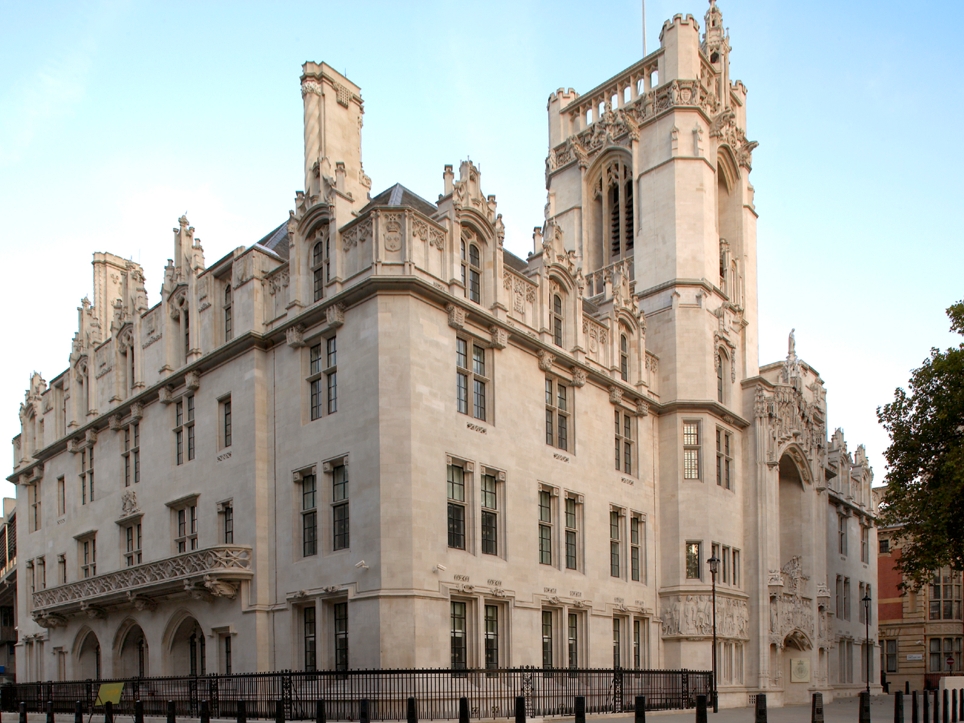
In Pakistan International Airline Corp v Times Travel (UK) Ltd [2021] UKSC 40, the Supreme Court confirmed the doctrine exists but was emphatic about confining it to narrow, recognised categories, cautious about extending it further, especially between commercial parties negotiating at arm's length.
The Supreme Court identified essentially two recognised categories:
- Where a defendant threatens to report a claimant's known criminal conduct unless the claimant confers a personal benefit on the defendant.
- Where a defendant deliberately manoeuvres a claimant into a position of vulnerability in order to force the claimant to waive an existing civil claim.
On the facts of Times Travel itself, the airline's conduct — cutting a travel agent's ticket allocation and imposing new terms while genuinely believing (rightly or wrongly) that it owed no further commission — did not cross into either category, so the claim failed. The case is best remembered for confirming the doctrine's existence while keeping its scope tightly leashed.
Causation and Losing the Right to Rescind
Whatever form the duress takes, causation for economic duress requires that the illegitimate pressure was a significant cause of the claimant entering into or varying the contract — echoing the low threshold from Barton v Armstrong, though phrased in economic-duress cases as "significant" rather than merely "a" reason. Evidence that the party protested at the time, or acted promptly to challenge the agreement once the pressure lifted, supports a finding of duress; silence and delay cut the other way.
That last point connects to a broader principle governing the remedy: a right to rescind for duress can be lost through affirmation. If the innocent party, aware that duress occurred, nonetheless delays unreasonably or otherwise acts as though the contract is valid — continuing to perform it, accepting its benefits — a court will treat them as having affirmed the bargain, closing off rescission.
Where duress is about external force overbearing the will, undue influence is an equitable doctrine targeting something subtler: a transaction procured through illegitimate influence over a party's free and independent judgment, typically arising from the dynamics of a relationship rather than a discrete threat. A court sitting in equity can set the transaction aside on this basis. There are two routes to establishing it.
Actual Undue Influence
Here the claimant must prove specific overt acts of illegitimate pressure, manipulation, or domination that were used to procure the transaction — persistent badgering, isolation from advice, exploitation of dependency. It requires affirmative evidence of what was actually done, much like proving a specific wrong.
Presumed Undue Influence
This route is evidentially far more powerful, because it shifts the burden. It arises where two elements combine: (1) a relationship of trust and confidence exists between the parties, and (2) the transaction is not readily explicable by ordinary motives.
The leading modern authority is Royal Bank of Scotland plc v Etridge (No 2) [2001] UKHL 44 — the House of Lords decision that reshaped this entire area and remains the reference point for every SQE1 question on undue influence.

Before Etridge, claimants also had to show the transaction was to their manifest disadvantage. Etridge abolished that requirement for presumed undue influence. In its place, the claimant must instead show the transaction calls for an explanation.
This phrase traces back to Allcard v Skinner (1887) 36 Ch D 145, which described a transaction calling for an explanation as one not reasonably accounted for by friendship, relationship, charity, or other ordinary motives — a young woman's entire inheritance donated to the religious order she had joined being the case's own vivid illustration.
Which relationships trigger the presumption? English law splits relationships into two camps:
| Relationship category | How trust and confidence is established |
|---|---|
| Automatically presumed (e.g. solicitor–client, doctor–patient, religious adviser–follower) | Presumption arises automatically from the category of relationship itself |
| Not automatically presumed (e.g. husband and wife) | Claimant must prove as a fact that a relationship of trust and confidence existed on these particular facts |

Once presumed undue influence is established — by category or by proof — the evidential burden shifts to the defendant to rebut it. The classic, and most reliable, way to do so is evidence that the weaker party received adequate independent legal advice before entering the transaction, since independent advice is precisely what restores the free exercise of judgment that the presumption assumes was missing.
Third-Party Undue Influence and the Surety Cases
Undue influence is not always exercised by the party enforcing the contract. It can be exercised by a third party — most commonly a spouse or relative — while a different party (typically a bank) seeks to enforce the transaction. This is the fact pattern that dominates the case law and the exam: a wife agrees to stand as surety for her husband's business debts, later argues the husband unduly influenced her into signing, and seeks to have the guarantee or charge set aside as against the lender.
The doctrinal machinery here is what makes Etridge so central:
- A bank or lender is put on inquiry wherever a wife, or other non-commercial party, offers to stand as surety for a spouse's or relative's business debts — the relationship and the nature of the transaction together put the bank on notice of the risk.
- Once put on inquiry, the lender must take reasonable steps — in practice, insisting that the surety receives independent legal advice — to avoid being fixed with constructive notice of any undue influence exercised by the principal debtor.
- If the lender fails to take those reasonable steps, the surety's guarantee or charge may be set aside as against the lender for undue influence, even though the lender itself did nothing wrong to the surety directly.
The Etridge guidelines then specify what "reasonable steps" require of the advising solicitor:
- The solicitor should meet with the surety separately from the principal debtor, so the advice is genuinely independent and not filtered through or overheard by the person applying the pressure.
- The solicitor must explain the practical risks and implications of the transaction clearly enough that the surety gives truly informed consent — not a polite nod through a wall of jargon.
For a solicitor in practice, this is not academic: getting the Etridge meeting wrong (rushing it, doing it jointly, failing to cover the real financial exposure) is precisely how a bank's security ends up unenforceable years later.
Losing the Right to Rescind for Undue Influence
Mirroring the position in duress, the right to rescind for undue influence can be barred by:
- Affirmation of the transaction once the influence has ceased and the claimant is aware of their rights;
- Excessive delay in seeking relief; or
- The intervention of third-party rights — for example, a bona fide purchaser acquiring an interest in the property before rescission is sought.
A Related but Distinct Doctrine: Unconscionable Bargains
Sitting near undue influence, but conceptually separate, is the doctrine of the unconscionable bargain. This protects a poor, ignorant, or otherwise disadvantaged party from an overreaching transaction entered into without independent advice. Unlike undue influence, it does not turn on a relationship of trust and confidence at all — it turns on one party's weakness and the other's exploitation of it, irrespective of any prior relationship.
Duress and Undue Influence Compared
It is worth pausing to fix the conceptual boundary, because SQE1 scenario questions love to test whether candidates can correctly classify a fact pattern:
Duress typically involves illegitimate pressure or threats — often between strangers or arm's-length commercial parties — and a successful claim does not depend on any prior relationship of trust and confidence.
Undue influence typically arises from an imbalance within an existing relationship of trust and confidence, where influence has been built up over time rather than applied as a discrete threat.
The remedy converges (rescission), but the route to establishing the vitiating factor diverges sharply — get the label right before reaching for the rule.
Illegality is a different kind of problem. It is not about whether consent was genuine — it is about whether the content or performance of the contract is one the courts are willing to enforce at all.
Formation, Performance, and the Sources of Illegality
A contract may be illegal as formed, where the parties' purpose was unlawful from the very outset (a contract to commit a crime), or illegal as performed, where an otherwise perfectly lawful contract is carried out in an unlawful way (a lawful delivery contract performed using an unlicensed, uninsured driver). This distinction matters practically: illegality in performance sometimes leaves the innocent party's rights intact if they were unaware of and uninvolved in the unlawful manner of performance, whereas illegality in formation is a more fundamental poison.
Illegality can arise from two sources:
- Common law public policy — contracts to commit a crime, tort, or fraud are illegal on this ground, as are contracts that oust the jurisdiction of the courts or seek to prejudice the administration of justice.
- Statute — a statute may expressly or impliedly prohibit the formation or performance of a particular class of contract. Where the statute is silent on the civil consequences of breach, a court must construe whether Parliament intended the resulting contract to be unenforceable, rather than assuming automatic unenforceability.

The Latin maxim that underlies all of this is ex turpi causa non oritur actio — no cause of action arises from a base or illegal cause. It is the law's blunt refusal to let a court become an instrument for enforcing wrongdoing.
From Rigid Reliance to Flexible Policy: The Modern Test
For decades, English courts applied a mechanical reliance principle: a claimant could not succeed if their claim required them to rely on their own illegal conduct to establish it — regardless of how proportionate or disproportionate that result was on the facts. This approach is associated with the House of Lords decision in Tinsley v Milligan [1994] 1 AC 340, which asked only whether the claimant needed to plead their own illegality, producing outcomes that often turned on arbitrary procedural technicalities rather than substantive justice.
Patel v Mirza [2016] UKSC 42 swept this rigid approach away. Decided by the UK Supreme Court in a case concerning the recovery of money paid under a contract intended to facilitate insider dealing, the Court replaced the reliance test with a flexible range-of-factors test.

The Patel v Mirza test asks the court to weigh:
- The underlying purpose of the prohibition that has been breached, and whether denying the claim would enhance that purpose;
- Any other relevant public policy that might be affected by either denying or permitting enforcement of the claim; and
- Whether denying the claim would be a proportionate response to the illegality — since punishing wrongdoing is properly the business of the criminal courts, not a side-effect of private law.
On the facts, Mr Patel — who had paid money to Mr Mirza for a bet on RBS shares based on inside information that was never in fact used — was allowed to recover his money, because denying recovery would have handed Mr Mirza a windfall without serving any of the policies behind the insider-dealing prohibition.
Escaping the Trap: Locus Poenitentiae and Innocent Parties
Two important safety valves soften illegality's harshness:
- Locus poenitentiae ("room for repentance"): a party may sometimes recover money or property transferred under an illegal contract by withdrawing from the illegal purpose before it is substantially carried into effect — genuine early withdrawal is rewarded, not punished.
- The innocent party's position: where only one party is aware of, or intends, the illegal purpose behind a contract, the other, genuinely innocent party is generally still able to enforce the contract. Illegality is meant to police wrongdoers, not to strip protection from those who had no idea anything was amiss.
Conversely, a party who knowingly participates in the illegal purpose or illegal performance of a contract is generally unable to enforce it — the ex turpi causa maxim biting on the knowing participant specifically.
Severance: Cutting Out the Rot
Sometimes the illegal element of a contract is a minor clause rather than its core. Severance allows a court to remove and disregard that illegal or unenforceable part while enforcing the remainder — but only where the illegal part is not central to the contract's core purpose. A restrictive covenant clause drafted too widely might be severed from an otherwise valid employment contract; a contract whose entire object is unlawful cannot be rescued this way.
Restraint of Trade
A distinct but related public-policy doctrine: a contract in restraint of trade is void unless the party relying on it can show the restraint is reasonable and protects a legitimate business interest — a non-compete clause protecting genuine trade secrets and client connections may survive; one drafted merely to suppress competition will not.

The Solicitor's Practical Task
When advising a client on a potentially illegal contract, the first analytical move is always to identify whether the illegality goes to formation or to performance, because this threshold question governs whether the contract can be enforced at all, by whom, and subject to which of the doctrines above. Get this classification wrong, and every subsequent piece of advice about recovery, severance, or enforceability will be built on sand.
Duress, undue influence, and illegality all answer the same underlying question from different angles: was this bargain one the law should stand behind? Duress asks whether external pressure crushed a party's free choice at the moment of contracting. Undue influence asks whether a relationship's internal dynamics quietly corrupted that choice over time. Illegality asks a different question entirely — not whether choice was free, but whether the bargain's content or conduct is one the courts will dignify with enforcement. For the SQE1 candidate facing a client-based scenario, the discipline is the same across all three: identify precisely which doctrine the facts engage, locate the correct test, and follow it to the remedy — rescission for the first two, and a case-specific mix of unenforceability, severance, or recovery for the third.