Preliminary Considerations and Pre-Action Conduct
A claim that is factually perfect and legally unanswerable still dies if it is issued a day too late. That is the entire logic of limitation law: courts do not ask only "is the claimant right?" but also "did the claimant come to court in time?" Before a solicitor drafts a single pleading, they must answer two prior questions — what is the cause of action, and has the clock already run out on it? Get either wrong and the strongest case in the world becomes unenforceable.
Limitation periods are statutory time limits within which a claimant must issue court proceedings to enforce a cause of action — the underlying set of facts that entitles someone to sue. Miss the deadline and the claim is not merely weakened; it is barred outright, however good the evidence.

The governing statute for civil claims in England and Wales is the Limitation Act 1980, and almost every limitation question on the SQE1 syllabus traces back to one of its sections.
Crucial distinction: expiry of a limitation period bars the claimant's remedy — their ability to get a court to enforce the claim — without extinguishing the underlying substantive right. The right still exists in principle; it simply becomes unenforceable through litigation. (The land and trust property provisions below are the exception, because they go further and extinguish title itself.)
This also explains a trap that catches unwary students: limitation is a procedural defence. A court will never dismiss a claim for being out of time on its own initiative. The defendant must specifically plead limitation in their statement of case. If they forget to raise it, the claim proceeds regardless of how late it was issued.
When Does the Clock Start? Contract vs Tort
The trigger date for limitation differs fundamentally between the two core causes of action:
- Contract: the cause of action accrues on the date the contract is breached — regardless of when the claimant actually suffers loss. A breach in year one still starts the clock in year one, even if the financial damage only crystallises in year three.
- Tort: the cause of action generally accrues on the date the claimant suffers damage, not the date of the defendant's wrongful act. A negligent act in year one that causes no harm until year three means the clock starts in year three.
This asymmetry is precisely why the SQE1 tests limitation through fact patterns rather than abstract rules — the same underlying conduct can produce two very different accrual dates depending on how the claim is framed.
The Statutory Time Limits at a Glance
| Limitation Act 1980 section | Type of claim | Period |
|---|---|---|
| s.5 | Simple contract | 6 years |
| s.2 | Tort (general) | 6 years |
| s.8 | Specialty (e.g. a deed) | 12 years |
| s.9 | Sum recoverable by virtue of an enactment | 6 years |
| s.11 | Personal injury or death (negligence, nuisance, breach of duty) | 3 years |
| s.12 | Fatal Accidents Act 1976 claim | 3 years |
| s.15 | Action to recover land | 12 years |
| s.21 | Breach of trust (ordinary) | 6 years |
| s.21 | Beneficiary's claim against a trustee involved in fraud | No limitation period (disapplied) |
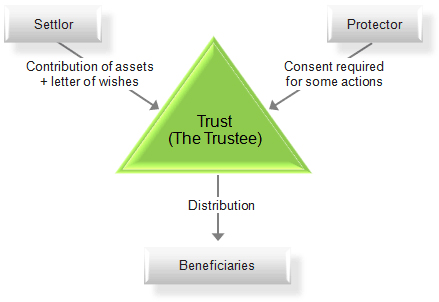
Watch the land and trust exceptions. Section 17 goes further than a mere procedural bar: once the twelve-year period to recover land expires, the claimant's title to that land is extinguished entirely. And under section 21, a trustee who has been party to a fraud can never rely on limitation at all — the six-year period only protects trustees facing an ordinary breach-of-trust claim.
Personal Injury: The "Date of Knowledge" Refinement

Personal injury and fatal accident claims do not simply run from the date of the injury. Section 11 provides that the three-year period runs from the later of (a) the date the cause of action accrued, or (b) the claimant's date of knowledge. Section 12 applies the identical "later of" logic to Fatal Accidents Act 1976 claims, running from the later of the date of death or the dependant's date of knowledge.
Section 14 defines date of knowledge precisely, and the SQE1 loves testing each limb separately. A claimant's date of knowledge is the date they first knew:
- that the injury was significant;
- that the injury was attributable to the act or omission alleged to constitute negligence, nuisance, or breach of duty; and
- the identity of the defendant.
Section 14 also attributes to the claimant any knowledge they could reasonably have acquired from facts observable by them, or through appropriate expert advice — you cannot stop the clock by declining to ask an obvious question. But there is one deliberate gap in this framework:
Knowledge that particular acts or omissions amounted in law to negligence is irrelevant to the date-of-knowledge test. A claimant does not need to know that what happened to them was legally actionable — only that it happened, that it mattered, and who caused it.
The Section 33 Discretion: A Judicial Safety Valve
Even where the three-year personal injury period has expired, section 33 gives the court a discretion to disapply it if it would be equitable to allow the claim to proceed. This is not automatic relief — the court weighs the case specifically, and section 33(3) directs it to consider (among other things):
- the length of, and reasons for, the claimant's delay;
- the effect of that delay on the cogency of the evidence available to each side; and
- the promptness and reasonableness of the claimant's conduct once they became aware of a possible claim.
Scope matters: the section 33 discretion is confined to personal injury and fatal accident claims. It does not extend to ordinary contract claims — a claimant who misses the six-year contract deadline under section 5 has no equivalent judicial rescue.
Latent Damage in Non-Personal-Injury Negligence: Sections 14A and 14B
Personal injury is not the only context where damage can surface long after the wrongdoing. For negligence claims not involving personal injury — think defective building surveys or negligent professional advice — section 14A provides an alternative three-year period running from the claimant's date of knowledge, available whenever that date falls later than the standard six-year period running from accrual of the damage. In effect, the claimant gets whichever expiry date is later: six years from damage, or three years from discovering it.
But this alternative route is not open-ended. Section 14B imposes a fifteen-year longstop, running from the date of the negligent act or omission itself, which bars the claim outright regardless of when — or whether — the claimant ever discovers the damage. No amount of "I only just found out" can revive a claim once fifteen years have passed since the negligent act.
Claimants Under a Disability
Section 28 addresses claimants who are under a disability — classically a minor or a person lacking mental capacity — at the moment their cause of action accrues. For such a claimant, time simply does not run while the disability continues. Once the disability ends (or the claimant dies, if earlier), the claimant has six years from that point to bring the claim.
Applied to a minor's personal injury claim, this produces a well-known practical rule:
Because the personal injury clock does not start until a minor turns eighteen, and the standard personal injury period is three years, a minor's personal injury claim can normally still be brought up to their twenty-first birthday.
Fraud, Concealment, and Mistake: Section 32
Section 32 postpones the start of the limitation period in three situations: where the claim is based on the defendant's fraud; where a fact relevant to the claimant's right of action has been deliberately concealed by the defendant; or where the claim seeks relief from the consequences of a mistake.

Deliberately committing a breach of duty in a way unlikely to be discovered for some time itself counts as deliberate concealment — a defendant cannot escape section 32 by concealing the breach passively rather than actively.
Where section 32 applies, the clock starts not from accrual but from when the claimant discovered the fraud, concealment, or mistake — or could have discovered it with reasonable diligence.
Standstill Agreements
Parties are not locked into a rigid litigation timetable. They may agree a standstill agreement, contractually suspending the running of a limitation period for a fixed interval while they negotiate a settlement. This is a purely consensual device — it has no basis in the Limitation Act itself, but courts and practice widely respect it as a way of buying time to talk without forcing a protective claim.
Before any of the limitation analysis above can be applied, a solicitor must first pin down the cause of action correctly — because it determines the applicable limitation period, the correct procedure, and the remedies actually available. Get the cause of action wrong and every downstream calculation is wrong too.
Breach of contract arises where one party fails to perform an obligation it owes another under a contract — straightforward in concept, but the accrual-on-breach rule above means the limitation clock can start ticking long before any loss is felt.
Negligence requires the claimant to establish four distinct elements, each a potential fault line in an exam scenario:
- the defendant owed the claimant a duty of care;
- the defendant breached that duty;
- the breach caused the claimant's loss; and
- the loss was a reasonably foreseeable, not too remote, consequence of the breach.
One refinement worth holding onto: the eggshell skull rule. A negligent defendant must take their claimant as they find them — if the claimant had a pre-existing vulnerability that made an otherwise modest injury catastrophic, the defendant is still liable for the full extent of that injury. Foreseeability of some injury is enough; the defendant does not escape liability merely because the extent of the harm was unforeseeable.
Once a solicitor has confirmed the cause of action and checked it is still within time, the next question is procedural: what must happen before proceedings are even issued? This is governed by the Practice Direction on Pre-Action Conduct and Protocols, which sets out the steps the court expects parties to take before turning to litigation.
Specific pre-action protocols — approved by the Master of the Rolls and annexed to the Civil Procedure Rules — exist for particular categories of dispute, including:
- personal injury claims;
- clinical negligence disputes;
- professional negligence claims;
- construction and engineering disputes;
- defamation claims;
- judicial review claims;
- disease and illness claims;
- housing disrepair claims;
- debt claims;
- possession claims based on rent or mortgage arrears; and
- low-value road traffic accident, employer's liability, and public liability personal injury claims within defined value bands.
The general Practice Direction is a residual instrument: it applies only where no specific protocol covers the type of claim in question. Spotting whether a fact pattern falls under a specific protocol or defaults to the general PD is a recurring SQE1 discrimination.
What Pre-Action Conduct Is Trying to Achieve
The objectives running through the PD and every specific protocol are consistent:
- enabling the parties to understand each other's respective positions;
- enabling appropriate attempts to resolve the matter without commencing proceedings;
- encouraging the parties to consider alternative dispute resolution (ADR);
- supporting efficient case management where litigation cannot be avoided; and
- reducing the overall cost of resolving the dispute.
Proportionality is not optional. Steps taken under the PD should be reasonable and proportionate to the value and complexity of the claim. Costs incurred taking disproportionate pre-action steps are not automatically recoverable from the other side — gold-plating pre-action correspondence on a small claim can leave a party out of pocket even if they ultimately win.
The Letter Before Claim and the Response
Under the PD, a claimant should send the defendant a letter before claim that sets out:
- a concise summary of the relevant facts;
- the basis on which the claim is made; and
- what the claimant wants from the defendant, including how any sum claimed has been calculated.
The defendant is expected to respond, and the PD builds in a sliding scale for how quickly:
Normally 14 days in a straightforward case, extending up to three months in a very complex one.
The response should state whether the claim is accepted and, if not, give reasons and identify which facts are disputed. Both sides are also expected to disclose key documents relevant to the issues in dispute at this pre-action stage, so that neither party is negotiating in the dark.
When Compliance Is Not Required
Pre-action conduct is not designed to obstruct genuinely urgent justice. The PD does not require compliance before a claimant applies to the court urgently — for example, for an interim injunction. Separately, where a limitation period is about to expire, a claimant may issue protective proceedings to preserve their position without first complying with the PD or a specific protocol. The court retains a safety net here too: it may stay proceedings issued purely to protect limitation until the parties have actually complied with the relevant protocol or Practice Direction.
Sanctions for Non-Compliance
Failing to engage properly with pre-action conduct has teeth, all delivered through the court's costs powers rather than through striking out the claim itself. A party's unreasonable refusal to engage in ADR may itself attract a costs sanction. More broadly, the court may take non-compliance with a relevant protocol or the PD into account when making costs orders after judgment, and specifically may:
- order the non-compliant party to pay some or all of the other party's costs;
- deprive a non-compliant claimant of interest otherwise recoverable on damages; or
- award a higher rate of interest against a non-compliant defendant.
Final caution, and a favourite examiner's twist: pre-action protocols and the PD are not intended to be used as a tactical device to gain an unfair advantage over the other party. A solicitor who exploits the pre-action machinery to delay, ambush, or pressure an opponent — rather than genuinely to narrow the dispute — is working against the purpose of the regime, and a court asked to sanction non-compliance will look at conduct through exactly that lens.