Product Liability and Nuisance
A defective toaster catches fire, a contaminated blood transfusion transmits Hepatitis C, a factory's smell drifts across the road, a reservoir bursts and floods a mine: four very different fact patterns, and English tort law has built four distinct legal machines to handle them. Product liability and nuisance sit together in the SQE1 syllabus because they share a structural feature that negligence alone cannot always deliver — liability that does not depend on proving the defendant was careless. Understanding when strict liability displaces fault-based liability, and why, is the key that unlocks this entire topic.

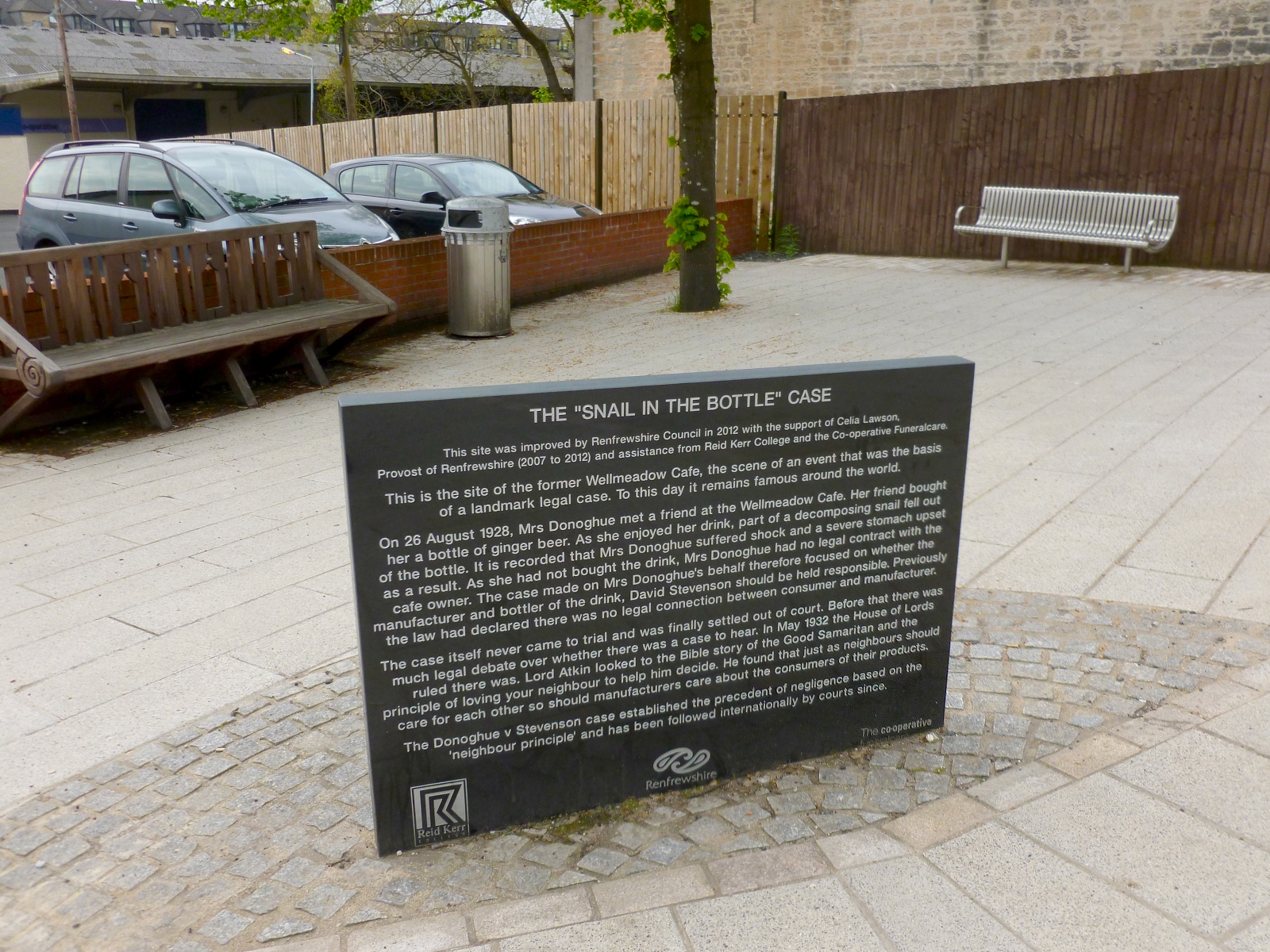
Before Parliament intervened, a claimant injured by a defective product had only the common law tort of negligence to rely on. Donoghue v Stevenson (1932) is the case every solicitor learns before they learn anything else in tort, and here it earns its keep in a narrower, more technical form: the narrow rule. That rule holds that a manufacturer owes a duty of care to the ultimate consumer of its product, but only where the manufacturer intends the product to reach that consumer in the form in which it left the manufacturer's hands, with no reasonable possibility of intermediate examination. The snail in the ginger beer bottle worked because the bottle was opaque and sealed — nobody between factory and Mrs Donoghue's glass could have checked it.
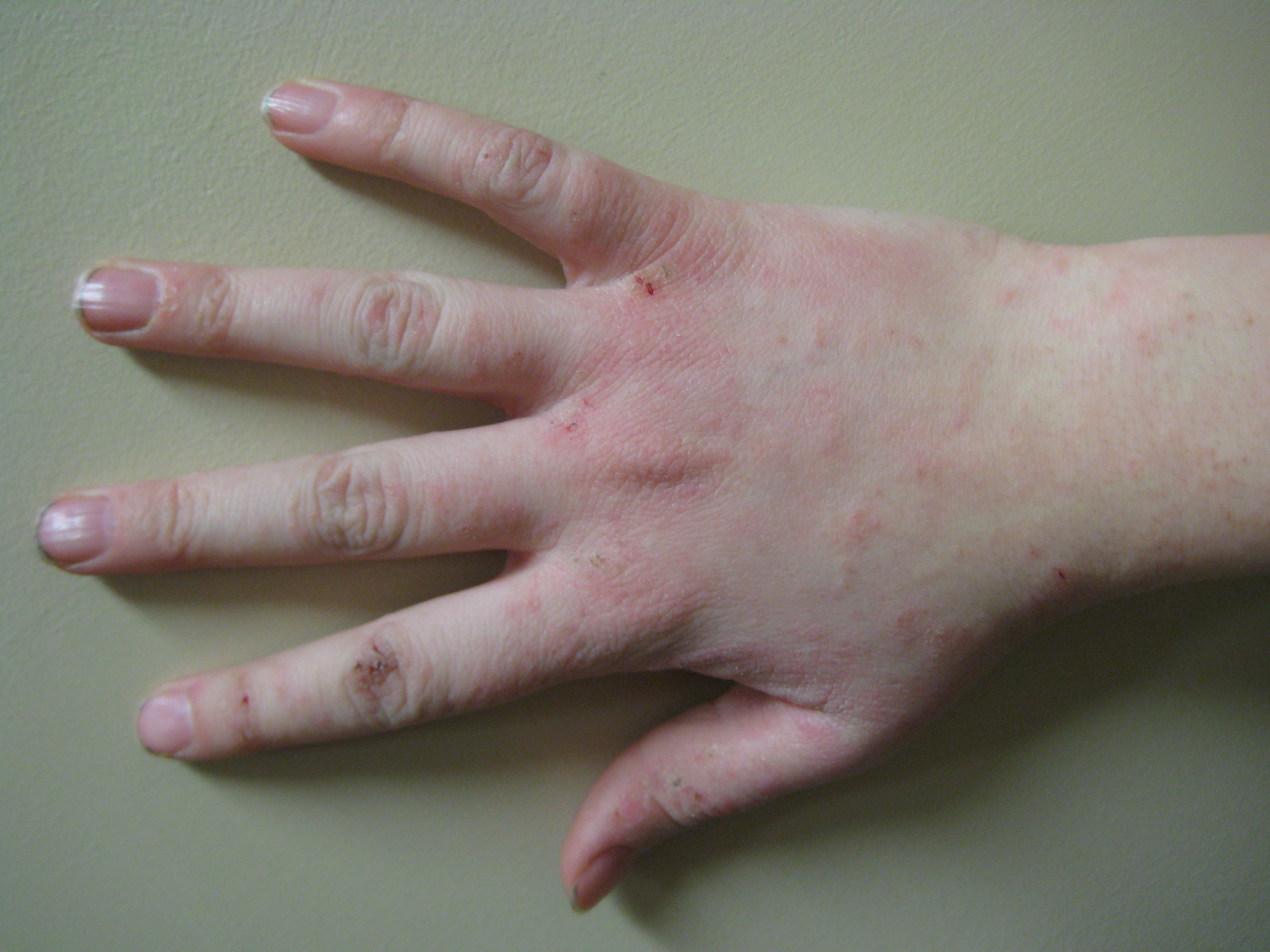
Grant v Australian Knitting Mills (1936) shows the rule migrating from foodstuffs to manufactured goods generally: a claimant developed dermatitis from chemical residue left in woollen underwear during manufacture, and the Privy Council held the manufacturer liable in negligence on the same Donoghue reasoning. The lesson for a client-facing solicitor: this duty is not confined to food and drink, and it is not confined to the original manufacturer either. Duty of care in product liability negligence extends to repairers, assemblers, and installers — anyone in the supply chain whose careless act or omission creates the defect. Even a mere supplier can owe a duty in negligence, though only where the supplier has reason to suspect a defect and fails to warn the consumer or to check the product before passing it on — a supplier who simply passes on a sealed box is in a different position from one who has been told the goods are suspect.
To succeed in negligence, the claimant must still run the full four-part structure: duty of care, breach of that duty, causation, and damage. The genuinely hard evidential step in product cases is proving breach — pinning down why the product was dangerous, and proving that specific defect existed when it left the defendant's control, not that it developed later through wear, misuse, or someone else's handling. Because manufacturing processes are opaque to outsiders, the doctrine of res ipsa loquitur ("the thing speaks for itself") can assist a claimant who cannot point to the precise manufacturing error, where the type of defect would not ordinarily occur without carelessness somewhere in the process — a rusty scalpel found sealed inside sterile packaging, for instance, licenses an inference of negligence even without a named culprit.
Practical bite: negligence remains available even after the statutory regime below exists. A claimant is not forced to choose.
The gap that negligence could never fully close is the claimant who cannot identify who was careless or how. Parliament's answer, implementing the EU Product Liability Directive 85/374/EEC, was the Consumer Protection Act 1987 (CPA 1987), Part I. Its central innovation is to remove fault from the equation entirely: it imposes strict liability on producers for defective products. The claimant need not prove negligence — only that the product was defective and caused the damage.
Who counts as a "product," a "producer," and who else is caught?
Section 1(2) defines a product broadly as any goods or electricity, including a component part or raw material comprised in a larger product — a defective battery inside a laptop is itself a "product" capable of triggering liability, quite apart from the laptop. The same subsection defines a producer to include not just the obvious manufacturer, but also the person who won or abstracted a raw substance (think of a mining company extracting ore) and the person who carried out an industrial process that gave the product its essential characteristics.
Liability, however, is not confined to producers. Section 2(2) casts a wider net:
| Provision | Who is caught | Condition |
|---|---|---|
| s.2(2)(a) | The producer | Automatic — liable for damage the product causes |
| s.2(2)(b) | The own-brander | Held itself out as producer by putting its name/trademark on the product |
| s.2(2)(c) | The importer | Imported the product into the UK from outside, in the course of business, to supply to another |
| s.2(3) | The mere supplier | Only liable if it fails, within a reasonable time of being asked, to identify the producer, own-brander, or importer |
That last row matters enormously in practice: a supermarket that cannot say who supplied it exposes itself to liability by default, which is precisely why retailers keep meticulous supply-chain records — the statute is deliberately designed to push the claimant up the chain until someone answers.
What makes a product "defective"?
Section 3(1) supplies the test: a product is defective when its safety is not such as persons generally are entitled to expect. This is a consumer expectation test, not a "reasonable manufacturer" test — it asks what an ordinary member of the public would be entitled to expect of the product's safety, not whether the manufacturer behaved reasonably in producing it.
Section 3(2) lists relevant factors informing that expectation, including: the manner and purpose of marketing, any instructions and warnings given, and the use the product might reasonably be expected to be put to. Section 3(2)(c) adds a temporal factor — the time the product was supplied by its producer — which matters because safety standards evolve. Crucially, a product is not automatically defective merely because a later, safer version is subsequently supplied; you assess safety by the expectations current when this product entered circulation, not with hindsight from later engineering improvements.
A defect is judged against what people were entitled to expect at the time, not against what technology later made possible.
The six statutory defences
Section 4(1) gives the defendant six possible escape routes, and a good solicitor runs through all six systematically for any client facing (or bringing) a CPA claim:
- (a) Compliance with a legal requirement — the defect is attributable to compliance with mandatory law or EU obligation.
- (b) No supply — the defendant did not at any time supply the product to another person (theft from the factory, for instance).
- (c) Non-commercial supply — the supply was not in the course of business and was not made with a view to profit (a private individual selling a home-made item).
- (d) No defect at time of supply — the defect did not exist in the product when it was supplied by the producer (it developed later, e.g., through the retailer's own mishandling).
- (e) Development risks defence — the state of scientific and technical knowledge at the relevant time was not such that a producer of similar products might have been expected to discover the defect. This is the most litigated and most controversial defence, because it lets a producer escape liability for a risk nobody could have known about.
- (f) Component producer defence — where a defect in a finished product is attributable to the design of that finished product, or to compliance with instructions from the finished product's producer, the component producer is not liable — the fault lies downstream, not in the component itself.
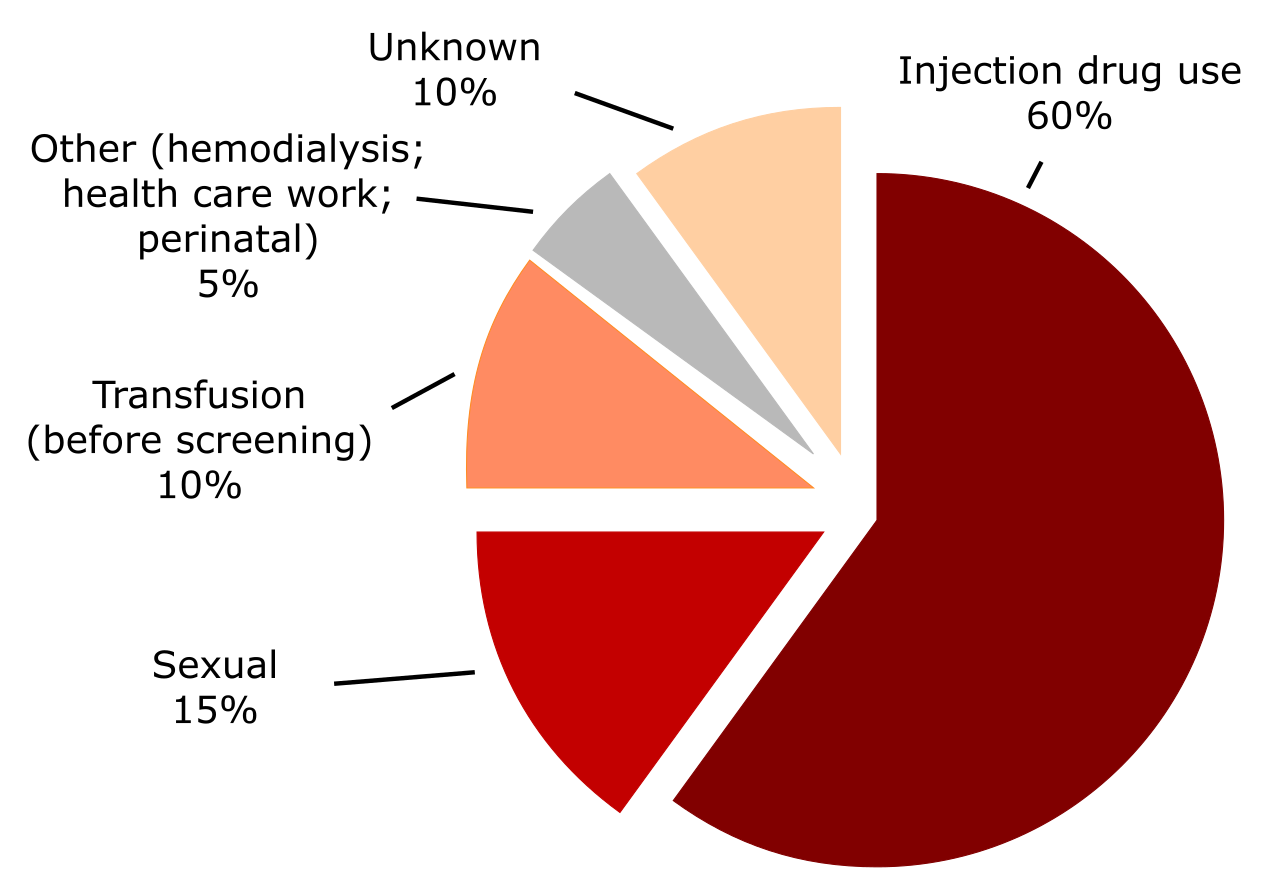
The development risks defence was tested severely in A v National Blood Authority (2001), where claimants contracted Hepatitis C from contaminated blood transfusions. The Blood Authority argued the defence applied because it could not screen out individual infected donations using the science of the time. The court disagreed: the risk itself — that blood products could transmit Hepatitis C — was a known risk at the relevant time, even though identifying which specific donations carried it was scientifically impossible. The defence protects against risks nobody knew existed, not against known risks that happen to be hard to detect or eliminate in individual cases. This is the single most important CPA case for exam purposes precisely because it draws that line so sharply.
Recoverable damage — and its limits
Section 5(1) makes recoverable damage include death, personal injury, and loss of or damage to property. But the statute deliberately narrows the property head in three ways:
- Section 5(2) excludes recovery for loss of or damage to the defective product itself — the CPA compensates consequential harm, not a refund for the faulty item (that is a contract law question).
- Section 5(3) excludes property loss/damage claims where the property was not of a description ordinarily intended for private use and occupation, and was not intended by the claimant mainly for private use — business equipment generally falls outside the CPA's property head.
- Section 5(4) bars recovery entirely where the property damage award would not exceed £275 — a de minimis threshold designed to keep small claims out of a statutory strict-liability regime built for serious harm.
Limitation: the three-year clock and the ten-year guillotine
A CPA claim for personal injury or property damage is subject to the ordinary three-year limitation period under section 11A of the Limitation Act 1980, running from the date of damage or the claimant's date of knowledge (whichever is later) — the same structure as a personal injury claim in negligence. But layered on top of that is something negligence claims do not have: an absolute ten-year longstop, running from the date the product was put into circulation by the producer. This longstop is not merely a limitation defence a defendant can plead — it extinguishes the claimant's right of action entirely, regardless of when the damage or the defect was actually discovered. A claimant who discovers, in year eleven, that a product injured them in year nine simply has no cause of action left under the CPA. That is a genuinely harsh rule, and exam scenarios love to test whether candidates spot that the ten-year clock is not just procedural but substantive.
Finally, contributory negligence operates in a CPA claim exactly as it would in an ordinary negligence claim — a claimant's own carelessness (ignoring a warning label, using the product for a purpose plainly not intended) can reduce the damages awarded, even though the underlying liability is strict.
Shift now from defective goods to disputes between neighbours. Private nuisance is an unlawful, indirect interference with a person's use or enjoyment of land, or of some right over or in connection with land. The tort protects land, not people as such — which explains its most important standing rule.
Who can sue?
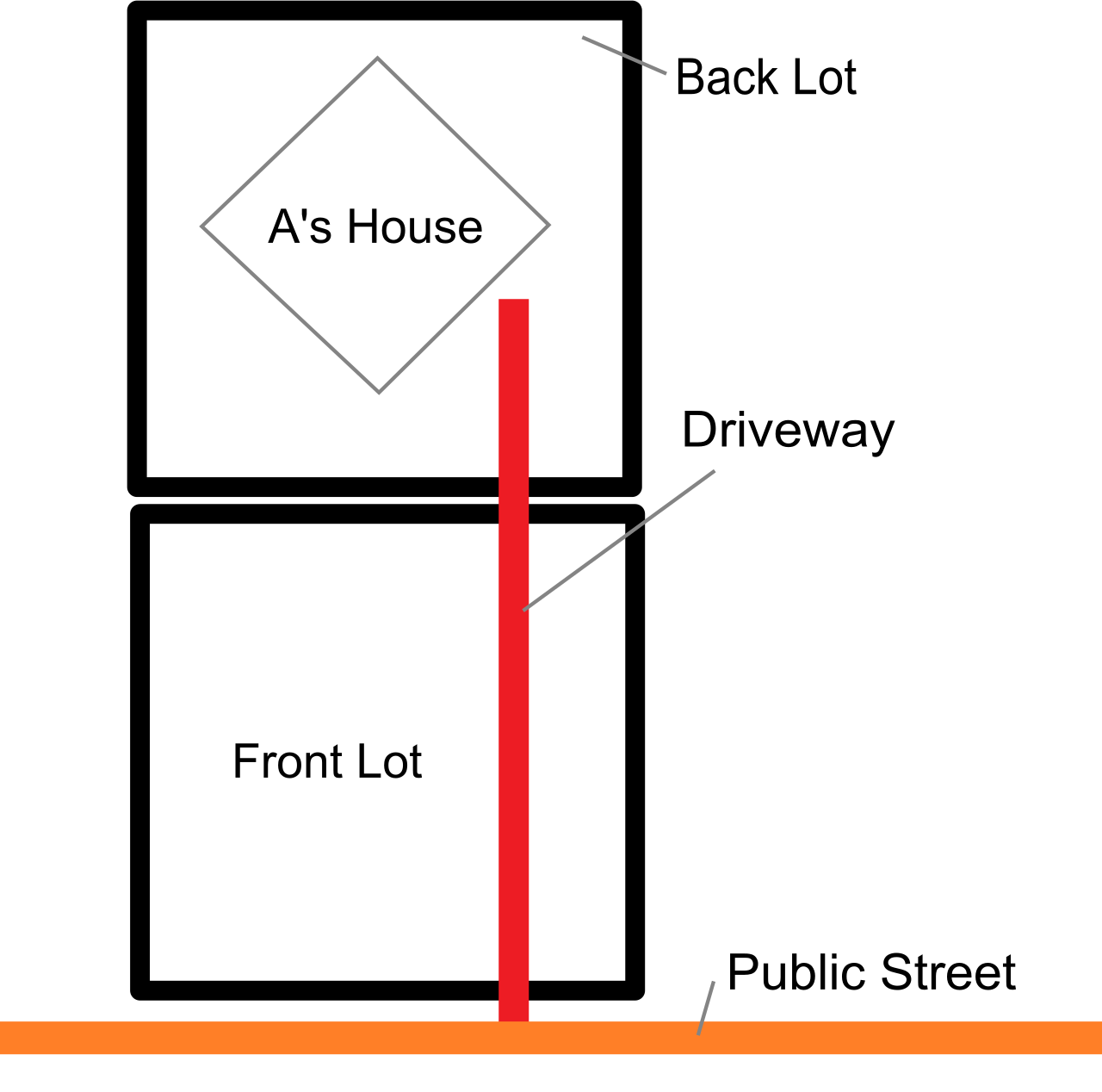
Hunter v Canary Wharf (1997) held that only a person with a proprietary or exclusive possessory interest in land can sue in private nuisance — an owner, a tenant with exclusive possession, someone with an easement. A mere licensee, family member, lodger, or visitor without exclusive possession generally cannot sue, however genuinely their enjoyment of the property is disrupted; the House of Lords was deliberately protecting the tort's proprietary character against a drift toward compensating personal discomfort as such. In the same case, Lord Lloyd usefully organised private nuisance into three categories: (1) encroachment onto a neighbour's land, (2) direct physical injury to a neighbour's land, and (3) interference with a neighbour's quiet enjoyment of land — a taxonomy worth memorising because most exam facts slot neatly into one of the three.
Who can be sued?
The creator of a nuisance remains liable even after they cease to occupy the land where it originated — moving out does not wash your hands of a nuisance you set in motion. An occupier can also be liable for adopting or continuing a nuisance that a trespasser created, or that arose from a natural event, if the occupier knew or ought to have known of it and failed to act reasonably. And a landlord can be liable where the landlord authorised the nuisance, or knew or ought to have known of it before letting the property — a landlord who lets a property already emitting a known industrial smell cannot simply point at the tenant.
Assessing reasonableness
Private nuisance liability turns on whether the interference is unreasonable, and several factors recur:
- Physical damage vs amenity interference. St Helens Smelting Co v Tipping established that where a nuisance causes actual physical damage to property, the locality of the defendant's activity is irrelevant to reasonableness — you cannot poison your neighbour's shrubs and defend yourself by pointing out you live in an industrial town. But where the complaint is about amenity — noise, smell, and the like, rather than physical damage — locality is a relevant factor: what is reasonable next to a factory may be unreasonable in a quiet residential street.
- Duration and frequency of the interference matter — an isolated one-off incident is treated very differently from a persistent daily disturbance.
- Malice. Deliberate spite can convert an otherwise lawful activity into an actionable nuisance — banging pans against a shared wall purely to annoy a neighbouring music teacher has been actionable precisely because of the improper motive.
- Sensitivity of the claimant. Robinson v Kilvert established that the claimant's own abnormal sensitivity is not generally protected — if your unusually delicate paper stock is damaged by heat that would not trouble ordinary goods, you cannot recover for that special vulnerability. But the flip side matters equally: a defendant remains liable for damage that would have affected an ordinarily sensitive claimant, even where the actual claimant happens to be abnormally sensitive — the abnormal sensitivity only strips out the extra harm attributable to the sensitivity itself.
- Utility to the community. The social usefulness of the defendant's conduct is a relevant factor but never determinative — a genuinely useful activity (a hospital, a factory providing local jobs) does not get a free pass if it unreasonably interferes with a neighbour's land.
Defences
Three defences recur in SQE1 scenarios: prescription, where the nuisance has continued openly and without interruption for twenty years and the claimant was aware of it throughout that period; statutory authority, where a statute expressly or by necessary implication authorises the very activity causing the interference; and note carefully what is not a defence — coming to the nuisance. A claimant who moves into a house next to an already-existing nuisance can still sue; arriving after the interference began does not forfeit the claim.
Remedies
Remedies for private nuisance include an injunction to restrain the interference, damages to compensate the claimant, and abatement — self-help removal of the nuisance by the claimant. Abatement generally requires the claimant to give notice to the defendant before entering the defendant's land to abate it, except in genuine emergencies — a solicitor advising a client tempted to march onto a neighbour's land and cut back an overhanging branch needs to flag this notice requirement immediately, since skipping it converts self-help into trespass.
Attorney General v PYA Quarries (1957) defined public nuisance as an act or omission that materially affects the reasonable comfort or convenience of a class of Her Majesty's subjects. Public nuisance is unusual among torts in being both a crime and a tort simultaneously — the same quarry blasting dust over a village could face criminal prosecution and civil claims arising from the identical facts.
Establishing the "class" does not require every single person in a locality to be affected; it is enough that a representative cross-section of the locality is affected — a busy road partially blocked need not have inconvenienced literally every resident to qualify. But an individual claimant bringing a civil claim must go further than merely being part of that affected class: they must show special damage over and above that suffered by the rest of the class — a shopkeeper whose specific trade is disrupted by a blocked road, for instance, beyond the general inconvenience everyone nearby experiences.
The most important structural difference from private nuisance: a public nuisance claimant does not need a proprietary interest in land to sue, because public nuisance protects the public generally rather than interests in land specifically. This opens the door to a wider range of claimants and a wider range of recoverable harm — personal injury is recoverable as special damage in public nuisance, in sharp contrast to private nuisance, which primarily protects interests in land rather than personal injury as such. The classic fact pattern is obstruction of the public highway — a fallen tree, a collapsed wall, an unlit excavation — a recurring SQE1 scenario precisely because it lets examiners test whether candidates can distinguish "class" harm from the claimant's own special damage.
Rylands v Fletcher (1868) is the fourth pillar, and it began life as an entirely separate rule of strict liability for the escape of a dangerous thing accumulated on land — reservoir water burst through disused mineshafts into the claimant's neighbouring mine. Liability requires the defendant to have satisfied several cumulative elements:
- The defendant brought onto land and accumulated a thing likely to do mischief if it escapes.
- That accumulation amounts to a non-natural use of the land.
- The thing actually escapes from the defendant's land to land outside the defendant's control.
Cambridge Water Co v Eastern Counties Leather (1994) refined the rule in two ways. First, it added a requirement that damage of the relevant type must be reasonably foreseeable — Rylands liability is strict as to the escape, but not strict as to unforeseeable kinds of harm. Second, on the facts, the House of Lords held that storing industrial chemicals on an industrial estate was not a non-natural use of land in that context — an important reminder that "non-natural use" is assessed against the backdrop of the surrounding land use, not in the abstract. That reasoning crystallised into a broader principle: non-natural use requires a special use bringing increased danger to others, rather than an ordinary use of land for the general benefit of the community — storing water in ordinary domestic pipes, for instance, is not "non-natural" merely because water can cause damage if it escapes.
Transco plc v Stockport MBC (2003) then did something structurally decisive: it confirmed that the rule in Rylands v Fletcher is best understood as a sub-species of private nuisance rather than a freestanding, independent tort. The consequence follows directly: a Rylands claimant must, just as in private nuisance, have a proprietary interest in the land affected — the strict-liability escape tort was folded back into nuisance's ownership-based standing rules rather than left as an open door for anyone injured by an escape.
Rylands v Fletcher carries its own family of defences, several of which echo nuisance and negligence:
- Act of a stranger — an unforeseeable third party independently caused the escape.
- Act of God — an extraordinary natural event that could not reasonably have been anticipated caused the escape.
- Statutory authority — a statute authorises the activity that led to the escape.
- Consent of the claimant to the accumulation of the dangerous thing.
- Contributory negligence by the claimant, which reduces damages rather than defeating the claim outright.

The practical, exam-tested payoff of learning all four routes side by side is this: a claimant may plead negligence, the Consumer Protection Act 1987, private nuisance, public nuisance, and Rylands v Fletcher concurrently on the same facts, provided the facts genuinely support each cause of action. A leaking industrial chemical escape that damages a neighbour's land, injures a passer-by on the adjoining public road, and causes a fire traceable to a manufacturing defect in stored containers could, in principle, generate claims under all five headings at once — each with its own claimant class, its own defences, and its own limitation rules. For a trainee solicitor advising a client walking through the door with a real-world mess of facts, the skill this topic tests is not reciting each tort in isolation, but triaging: which cause of action fits this claimant's standing, which defences the other side will raise, and which limitation clock is already running. </content>