Property Taxation
Every property transaction a solicitor handles carries a hidden second client: the Exchequer. Before completion money moves, before the register is updated, tax has already attached itself to the deal — and getting it wrong is one of the fastest ways to generate a negligence claim, because unlike a defective title clause, a tax miscalculation surfaces immediately, with a penalty clock already running.

England and Northern Ireland charge Stamp Duty Land Tax (SDLT) on land transactions. Wales charges Land Transaction Tax (LTT), which replaced SDLT there from April 2018. The critical exam trap is this: which tax applies turns entirely on where the land is, never on where the buyer or seller lives or is resident. A non-resident buying a flat in Cardiff pays LTT; a Welsh resident buying a house in Bristol pays SDLT.
Both taxes share the same computational architecture: they are charged on a slice basis (also called a marginal or banded basis). This is the single idea that unlocks every rate table below. You do not apply one rate to the whole price — you apply each band's rate only to the portion of the price that falls within that band, exactly like income tax bands. A £600,000 purchase is not taxed at "the 5% rate"; the first slice is taxed at 0%, the next slice at 2%, and only the final slice at 5%.
Standard residential SDLT bands (England and Northern Ireland)
Portion of price Rate £0 – £125,000 0% £125,001 – £250,000 2% £250,001 – £925,000 5% £925,001 – £1,500,000 10% Above £1,500,000 12%
Apply this slice by slice. A £400,000 purchase generates: £0 on the first £125,000, £2,500 (2% of £125,000) on the next slice, and £7,500 (5% of £150,000) on the remainder — a total of £10,000, not £20,000 (which is what a naive flat-5% calculation would wrongly produce).
First-Time Buyer Relief
First-time buyer relief is a targeted reduction for a buyer purchasing their only or main residence for the first time. It replaces the standard bands with a more generous structure:
- 0% on the price up to £300,000
- 5% on the portion from £300,001 to £500,000
The relief has a hard cliff edge: if the purchase price exceeds £500,000, the relief is unavailable in full — the buyer falls back onto the standard rates for the entire price, not just the excess. This is a classic exam sting: a first-time buyer paying £510,000 gets no relief at all, not partial relief on the first £500,000.
The Surcharges — and How They Stack
Two separate surcharges load onto the standard residential rates, and both can apply to the same transaction simultaneously.
First, a surcharge for purchasing an additional dwelling (a second home or buy-to-let) applies on top of every standard band. For transactions with an effective date on or after 31 October 2024, that surcharge is 5%.
Second, a non-UK resident surcharge applies to purchases of residential property in England or Northern Ireland by buyers who are not UK resident for SDLT purposes. This surcharge is a further 2% on top of whatever rate would otherwise apply.
Because these are independent policy levers addressing different mischiefs (discouraging additional-property accumulation versus taxing non-resident capital), they stack: a non-UK resident buying a second home pays the standard rate plus 5% plus 2% — a combined 7 percentage points on top of the base band rate.
Non-Residential and Mixed-Use Property
Commercial and mixed-use land sits under an entirely separate rate table, and — this matters for exam scenarios involving buy-to-let portfolios — the residential surcharges (additional-dwelling and non-UK resident) do not apply to it at all.
Non-residential and mixed-use SDLT bands
Portion of price Rate £0 – £150,000 0% £150,001 – £250,000 2% Above £250,000 5%
Two classification rules feed into this table that examiners love to test. First, a property with both residential and non-residential elements (a flat above a shop, bought as one transaction) is taxed as non-residential property in its entirety — the mixed character doesn't produce a blended rate; it pushes the whole transaction into the lower, surcharge-free table. Second, a single transaction acquiring six or more separate dwellings is treated as non-residential property for rate purposes, even though every unit is, in substance, a home.
That second rule used to interact with Multiple Dwellings Relief (MDR), which let a bulk buyer of several dwellings calculate SDLT on the average price per dwelling rather than the aggregate price. MDR was abolished for transactions with an effective date on or after 1 June 2024, subject to transitional rules for contracts already exchanged. A student advising on a bulk residential purchase today must default to full aggregate pricing (or the six-or-more non-residential route) rather than reaching for MDR.
New Non-Residential Leases: Two Charges in One Transaction
Granting a new commercial lease can trigger SDLT twice over, and missing the second charge is a common error. SDLT is charged on:

- Any lease premium, using the freehold/premium rate table above (the £150,000/£250,000 non-residential bands), and
- The net present value (NPV) of the rent payable over the term of the lease, under its own separate table:
SDLT on rental NPV of a new non-residential lease
Portion of NPV Rate £0 – £150,000 0% £150,001 – £5,000,000 1% Above £5,000,000 2%
A solicitor completing a lease grant must run both calculations and add them together — the premium tax and the rent tax are not alternatives.
Effective Date and Filing
The effective date of a land transaction — the trigger point for the whole SDLT clock — is usually completion, but it can be earlier if the contract is substantially performed before then (for example, where the buyer takes possession or pays most of the price ahead of legal completion). Once the effective date is fixed, the SDLT return must be filed and the tax paid within 14 days. Miss that window and penalties and interest accrue automatically — this is one of the tightest statutory deadlines a conveyancing solicitor manages, and it runs regardless of whether registration at HM Land Registry has happened yet.

LTT applies its own main residential rates to an ordinary purchase of a single dwelling in Wales:
Main residential LTT bands
Portion of price Rate £0 – £225,000 0% £225,001 – £400,000 6% £400,001 – £750,000 7.5% £750,001 – £1,500,000 10% Above £1,500,000 12%
Two structural differences from the English system are worth memorising precisely because they are differences, and examiners test contrast. First, higher residential LTT rates apply where the buyer — or any joint buyer — already owns another dwelling worth £40,000 or more, functioning like England's additional-dwelling surcharge but built into the LTT rate structure itself. Second, and this trips up students who assume the systems mirror each other: Wales offers no first-time buyer relief from LTT. A first-time buyer in Cardiff gets no help; the same buyer in Bristol could save thousands under SDLT's £300,000 nil-rate band.
Non-residential LTT has its own table too:
Non-residential LTT bands
Portion of price Rate £0 – £225,000 0% £225,001 – £250,000 1% £250,001 – £1,000,000 5% Above £1,000,000 6%
Filing works on a more generous timetable than SDLT: an LTT return must be filed and the tax paid within 30 days of the day after the effective date — more than double the English deadline, which matters when you're advising a client on cash-flow timing across the border.
The VAT treatment of property turns on a default rule and one powerful override.

The default position is that a sale or lease of an interest in land or a building is an exempt supply. Exempt means no VAT is charged — but the price of that silence is that a seller making only exempt supplies of land cannot recover the input VAT they incurred on costs relating to that supply (VAT on professional fees, building costs, and so on just becomes a sunk cost).

There is one automatic exception: a supply of a commercial building (or civil engineering works) is automatically standard-rated, not exempt, if the building is new — meaning less than three years old from the date of practical completion. The logic is straightforward anti-avoidance: without this rule, developers could strip all VAT recovery out of new commercial construction by treating the first sale as exempt.

The Option to Tax
For everything else — non-new commercial land and buildings that would otherwise be silently exempt — the owner can exercise an option to tax. This converts what would be an exempt supply into a taxable supply, charged at the standard rate of 20%.
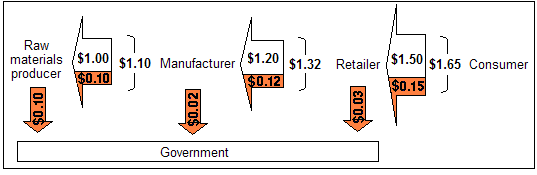
Why would anyone volunteer to charge VAT? Because the entire point of opting is to recover input VAT on the costs of acquiring, developing, or refurbishing the property. A landlord who has just spent heavily refurbishing an office block wants that input VAT back, and the only route is to make their supplies of the building taxable.
A few structural rules govern how the option behaves:
- It is exercised by a taxable person in relation to specific land — it attaches to the person's dealings with that land, not automatically to the bricks and mortar themselves.
- Once made, it binds that person in relation to future supplies of that land, normally for 20 years.
- It can be revoked without HMRC's permission within an initial 6-month cooling-off period, but only if no input tax has yet been reclaimed and no supplies have yet been made under the option — a narrow window that closes the moment either of those things happens.
- Outside that window, opting to tax land that has been the subject of exempt supplies within the preceding 10 years generally requires HMRC's prior written permission — a safeguard against opportunistic switching.
- The option is automatically disapplied where the building is, or is intended to be used as, a dwelling, or where it is intended solely for a relevant residential or relevant charitable purpose. Housing and charities cannot be dragged into standard-rated VAT by a landlord's election.
- Notification to HMRC is mandatory, usually on form VAT1614A.
- There is also an anti-avoidance backstop: a buyer's option to tax can itself be disapplied where the buyer intends an exempt use and is connected with the seller — closing off a scheme where a connected buyer opts purely to help the seller recover VAT, then quietly reverts the building to exempt use.

Once a seller has opted to tax, they must charge VAT on the sale price — it is no longer discretionary at the point of sale. And here is a fact that connects VAT directly back to SDLT/LTT arithmetic: where VAT is chargeable on a land transaction, SDLT and LTT are calculated on the VAT-inclusive price. A solicitor who forgets this and calculates stamp duty on the net (VAT-exclusive) figure will under-advise the client on their true SDLT/LTT liability.
Transfers of a Going Concern (TOGC)
Selling a let commercial property with the tenant in occupation can qualify as a transfer of a going concern (TOGC) — a sale of an ongoing rental business rather than a bare asset — which falls outside the scope of VAT altogether. For this to work, the buyer must normally also opt to tax the property and notify HMRC before completion. If the parties miss this step, VAT that both sides assumed would never arise can suddenly become chargeable, with cash-flow and SDLT/LTT knock-on effects (since the VAT-inclusive price rule above would then bite).
VAT Registration and the Capital Goods Scheme
Separately from any property-specific election, a business must register for VAT once its taxable turnover exceeds the VAT registration threshold of £90,000 in a rolling 12-month period — relevant where a property owner's rental or development activity itself constitutes a taxable business.
The Capital Goods Scheme is a long-tail adjustment mechanism aimed at high-value property. It requires an owner of qualifying commercial property to adjust the input VAT recovered over a number of years if the extent of the property's taxable use later changes (for example, a building let partly to exempt tenants and partly to taxable tenants, where that mix shifts over time). It currently applies to capital expenditure on land, buildings, and civil engineering works of £250,000 or more, excluding VAT — a threshold worth double-checking against HMRC's current guidance at the time of advice, as recent government proposals would raise it substantially.
Capital Gains Tax (CGT) is charged on the gain an individual makes on disposing of a chargeable asset — and a residential property is squarely a chargeable asset unless full relief applies.

For 2026/27, gains on residential property that do not qualify for full private residence relief are taxed at 18% to the extent they fall within the taxpayer's unused basic rate band, and at 24% on the portion above it. Every individual also has a CGT annual exempt amount of £3,000 for 2026/27, sheltering the first slice of gains from tax entirely.
Private Residence Relief (PRR)
Private Residence Relief can exempt some or all of the gain on the disposal of a dwelling house that has been the owner's only or main residence. Critically for client-facing advice, PRR applies automatically — there is no claim to file — where its conditions are met, which means a solicitor's job is to check eligibility, not to remind the client to elect for it.
Full PRR is available where the house has been the owner's only or main residence throughout the entire period of ownership. The relief is not confined to the building itself: it extends to the garden or grounds, subject to a permitted area of up to 0.5 hectares — though that cap can be exceeded where a larger area is genuinely required for the reasonable enjoyment of the dwelling given its size and character (a country house with substantial grounds may justify more than half a hectare).

Where someone owns two or more residences, they may nominate which one counts as their main residence for PRR purposes. That nomination must normally be made within two years of the change in the individual's combination of residences — miss the window, and the question of "main residence" reverts to a question of fact, decided by looking at where the person actually lived.
Deemed Occupation: When Absence Doesn't Cost You Relief
Not every period away from the property destroys PRR. Certain periods of absence are treated as deemed occupation, provided the dwelling was the person's main residence both before and after the absence — bracketing the gap in actual residence with genuine occupation on both sides.
One deemed-occupation rule applies unconditionally: the final period of ownership of a property that has, at some point, been the owner's main residence is always treated as deemed occupation, regardless of actual use during that window. This final-period exemption is 9 months, extending to 36 months for a disabled person or someone moving into a care home — a compassionate carve-out recognising that such owners often cannot control the timing of a sale.

A further nuance: occupying a dwelling under a job-related occupancy requirement (think of a caretaker or member of the armed forces required to live in tied accommodation) can still count as deemed occupation of the individual's own home for PRR purposes, even though they are not physically living there.
Letting Relief
Letting relief can reduce a chargeable gain where part of the main residence has been let out while the owner remains in shared occupation with the tenant — the post-2020 rule confines this relief to lodger-style arrangements, not full buy-to-let periods. It is capped at the lowest of:

- £40,000,
- the amount of PRR already given, and
- the gain attributable to the letting.
Restrictions on PRR
PRR is restricted for any period during ownership when the property was not used as the main residence, unless a period-of-absence relief covers the gap. It is also generally unavailable, or restricted, where the property was acquired wholly or partly to realise a gain on disposal — an anti-avoidance backstop aimed at those who buy, briefly occupy, and flip a property purely for profit rather than genuine residence.
Reporting and the Solicitor's Role
A UK resident individual must report and pay any CGT due on the disposal of UK residential property within 60 days of completion — a tight statutory window that runs independently of the taxpayer's ordinary Self Assessment cycle.
This is where the tax rules loop back to professional duty: a solicitor advising on a property sale should check whether all or part of the gain is exempt under PRR before advising on any CGT reporting obligation. Getting this wrong in either direction is a live risk — telling a client no report is needed when a taxable gain in fact exists exposes them to penalties, while wrongly assuming a reporting obligation exists when full PRR applies creates needless client anxiety and cost.