Atomic Structure and Matter
Not sure you’re ready?
Take the ~3-minute readiness diagnostic and see where you stand.
When a nurse administers a standard intravenous bag of normal saline, they are not merely hanging a bag of salty fluid. They are introducing a highly specific concentration of ions into the patient's bloodstream to restore a delicate electrochemical balance necessary for cardiac muscle contraction and nerve transmission. To understand human physiology, pharmacology, or even the basic equipment in a clinical setting, one must first understand the fundamental rules governing matter. Every drug interaction, every breath of supplemental oxygen, and every metabolic process traces directly back to the architecture of the atom and the behavior of its constituent particles.

Matter is fundamentally composed of atoms, but an atom is not a solid sphere. It is a dynamic, mostly empty structure containing three primary subatomic particles. Think of the atom as having two distinct geographical territories: the ultra-dense center and the vast, buzzing exterior.
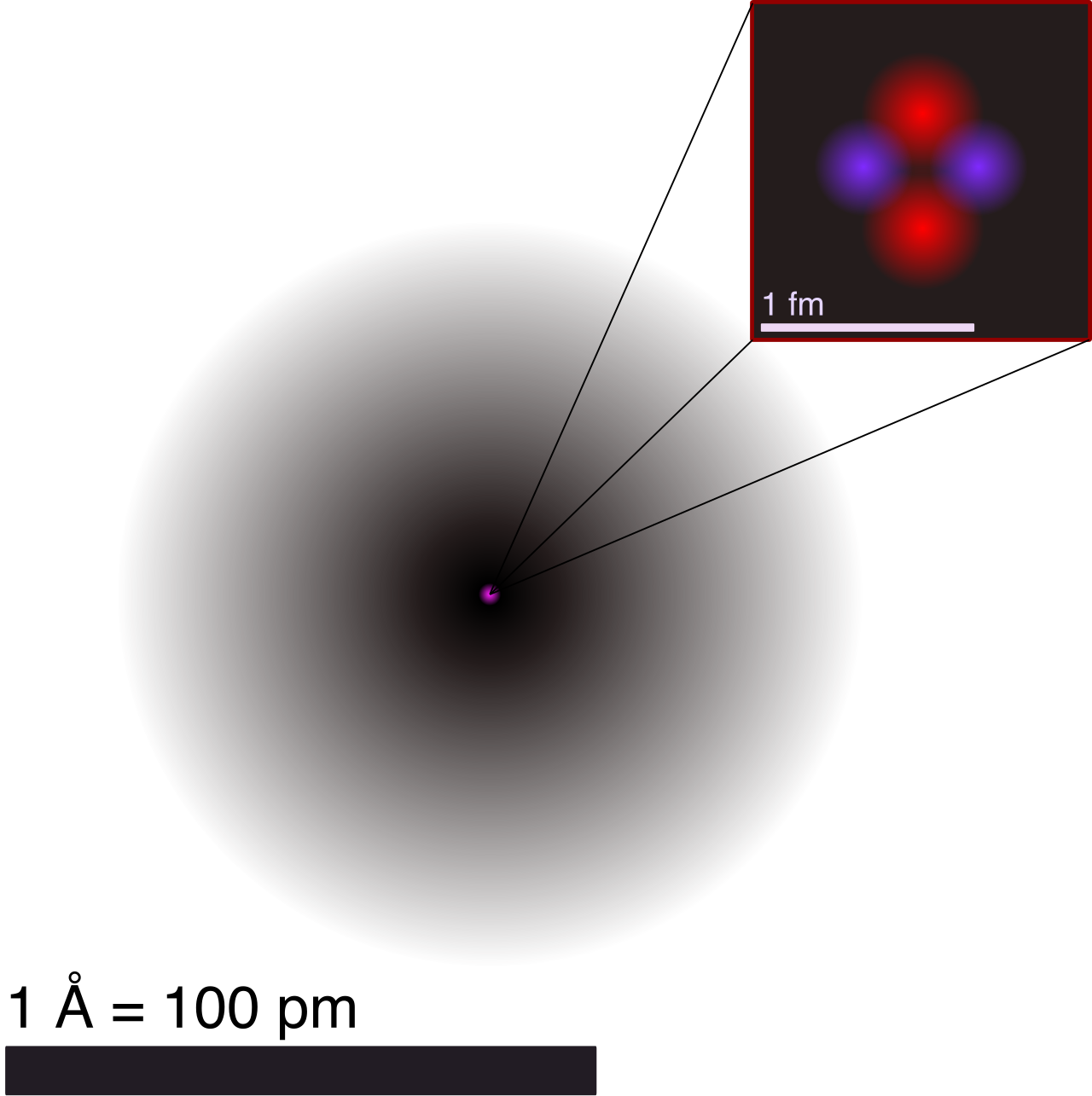
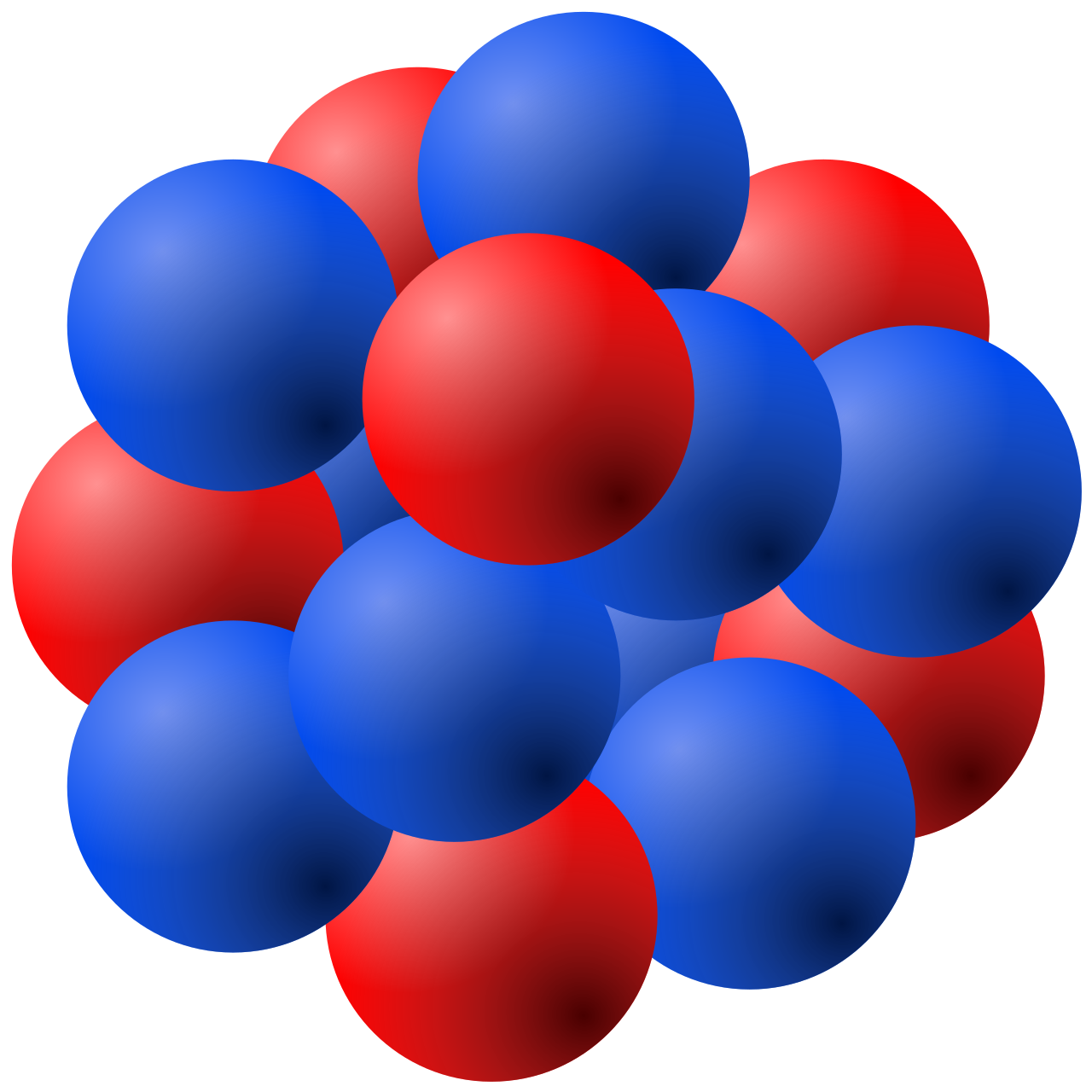
At the very center of the atom sits the nucleus. Protons and neutrons are located together in the dense central region of an atom called the nucleus.
- A proton is a subatomic particle with a positive electrical charge.
- A neutron is a subatomic particle with no electrical charge.
The mass of a single proton is approximately one atomic mass unit (amu). Similarly, the mass of a single neutron is approximately one atomic mass unit. Because they share this dense central space and hold virtually all the atom's weight, the nucleus accounts for nearly the entire mass of an atom.
Outside this dense core lies the territory of the electron. An electron is a subatomic particle with a negative electrical charge. Electrons constantly move around the atomic nucleus in designated regions called electron clouds or orbitals. In stark contrast to the heavy protons and neutrons, the mass of an electron is negligible compared to the mass of a proton or the mass of a neutron. It would take roughly 1,836 electrons to equal the mass of a single proton.
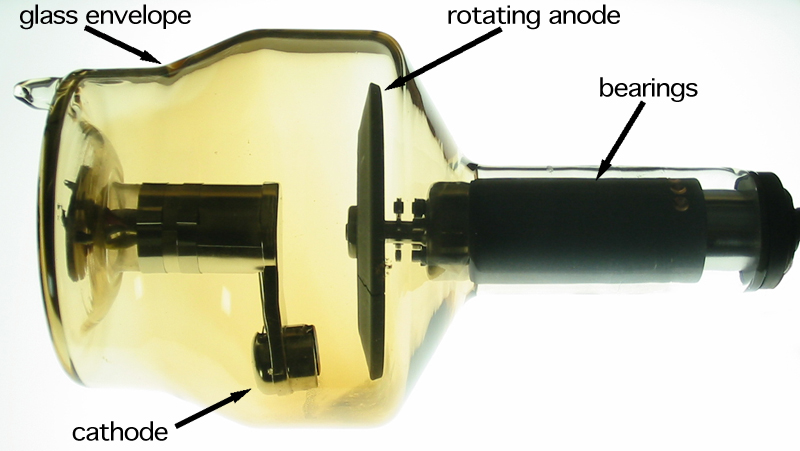
Clinical Connection: When X-ray machines generate radiation, they do so by accelerating electrons at incredibly high speeds and colliding them into a heavy metal target. The negligible mass of the electron allows it to be accelerated to near light-speed, converting kinetic energy into the diagnostic X-ray photons that image a patient's bones.
How does the universe distinguish a breathable oxygen atom from a toxic heavy metal like lead? The secret lies entirely in the protons.
Atomic Number and Mass Number
The atomic number of a chemical element is equal to the number of protons found in the nucleus of an atom of that element. If you change the number of protons, you physically change the element. The identity of a chemical element is determined solely by the atomic number of the element. Carbon will always have 6 protons; if an atom has 7 protons, it is no longer carbon, it is nitrogen.
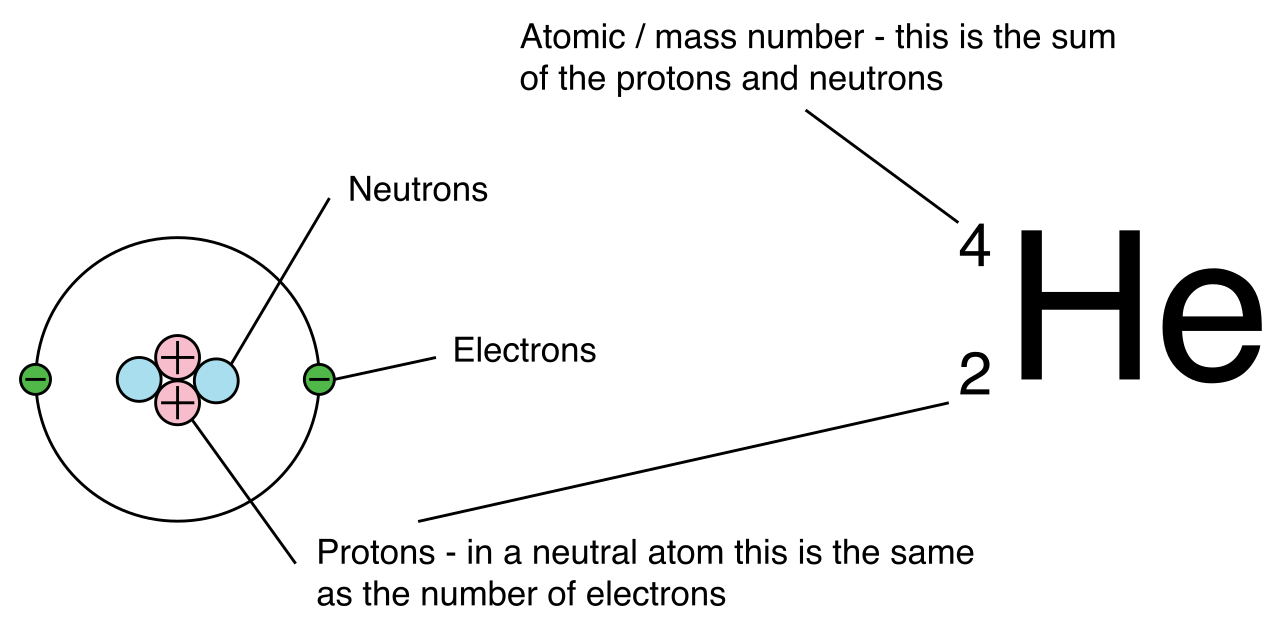
While the atomic number just counts protons, the mass number of a specific atom is the sum of the total number of protons and the total number of neutrons in the atomic nucleus.
The Balance of Charge: Neutral Atoms vs. Ions
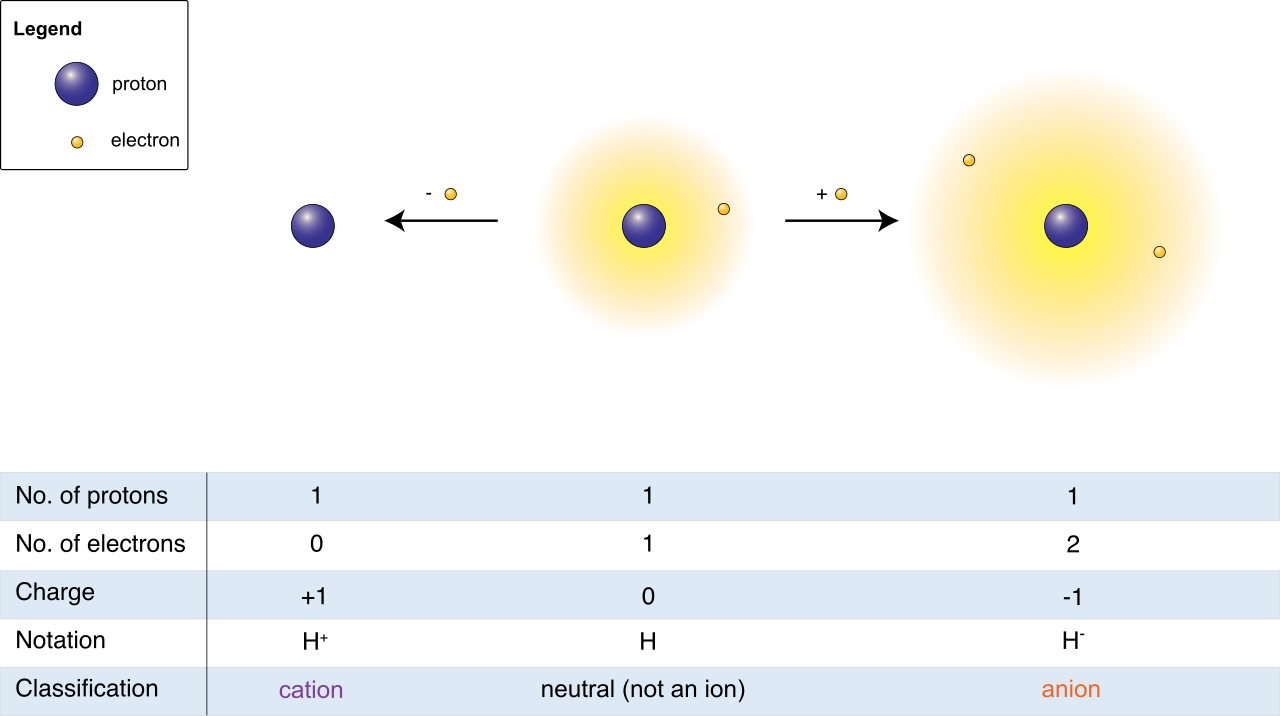
In a neutral atom, the total number of electrons is exactly equal to the total number of protons. The positive and negative charges cancel each other out perfectly.
However, in biological systems, atoms frequently gain or lose electrons. An ion is an atom or molecule that has gained or lost one or more electrons to acquire a net electrical charge.
- A cation is a positively charged ion formed when a neutral atom loses one or more electrons. (Because electrons are negative, losing them leaves a net positive charge).
- An anion is a negatively charged ion formed when a neutral atom gains one or more electrons.
Electrolytes, a crucial concept in healthcare, are simply ions dissolved in bodily fluids. Sodium (Na+) and Potassium (K+) are vital cations, while Chloride (Cl−) is a vital anion.
Isotopes: Same Identity, Different Weight
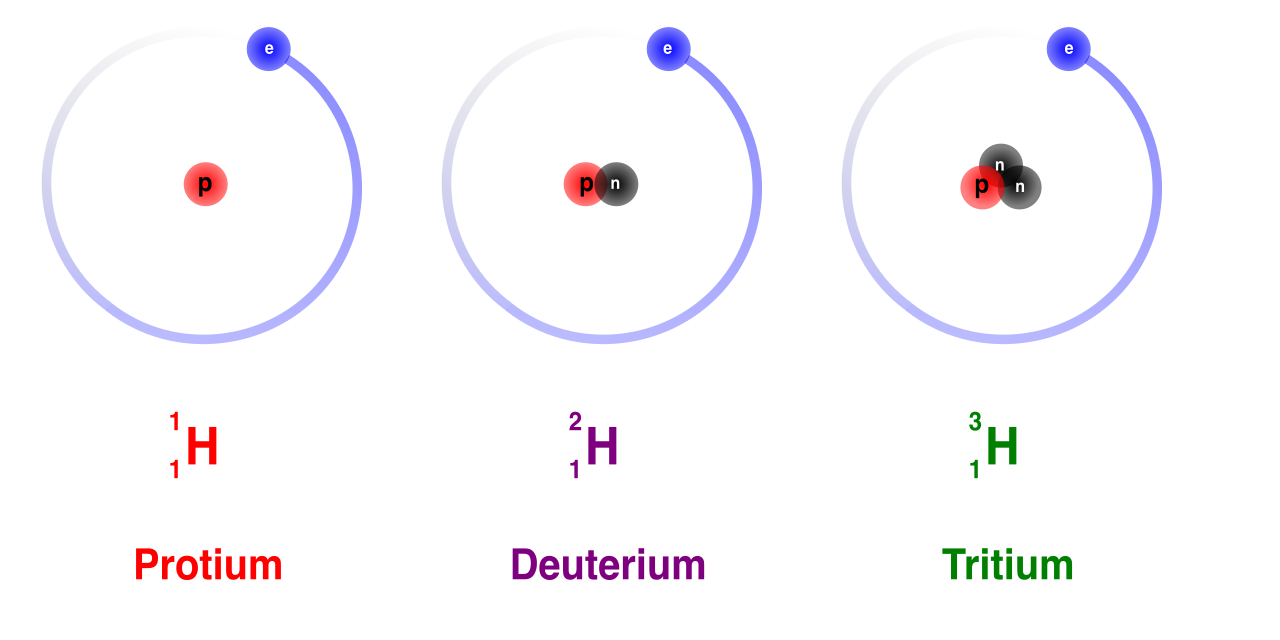
While every atom of a specific element must have the exact same number of protons, nature allows some flexibility with neutrons. Isotopes are atoms belonging to the same chemical element that possess identical numbers of protons but different numbers of neutrons. Consequently, different isotopes of the exact same chemical element will possess different mass numbers.
When you look at the periodic table, the decimal number listed at the bottom of an element's box is the atomic mass. The atomic mass listed on the periodic table represents a weighted average of the masses of all naturally occurring isotopes of a given element.
Clinical Connection: Radioactive isotopes (radioisotopes) are unstable variations of elements. Iodine-131, for example, is an isotope of iodine with extra neutrons. Because the human thyroid naturally absorbs iodine, administering Iodine-131 allows oncologists to specifically target and destroy thyroid cancer cells.
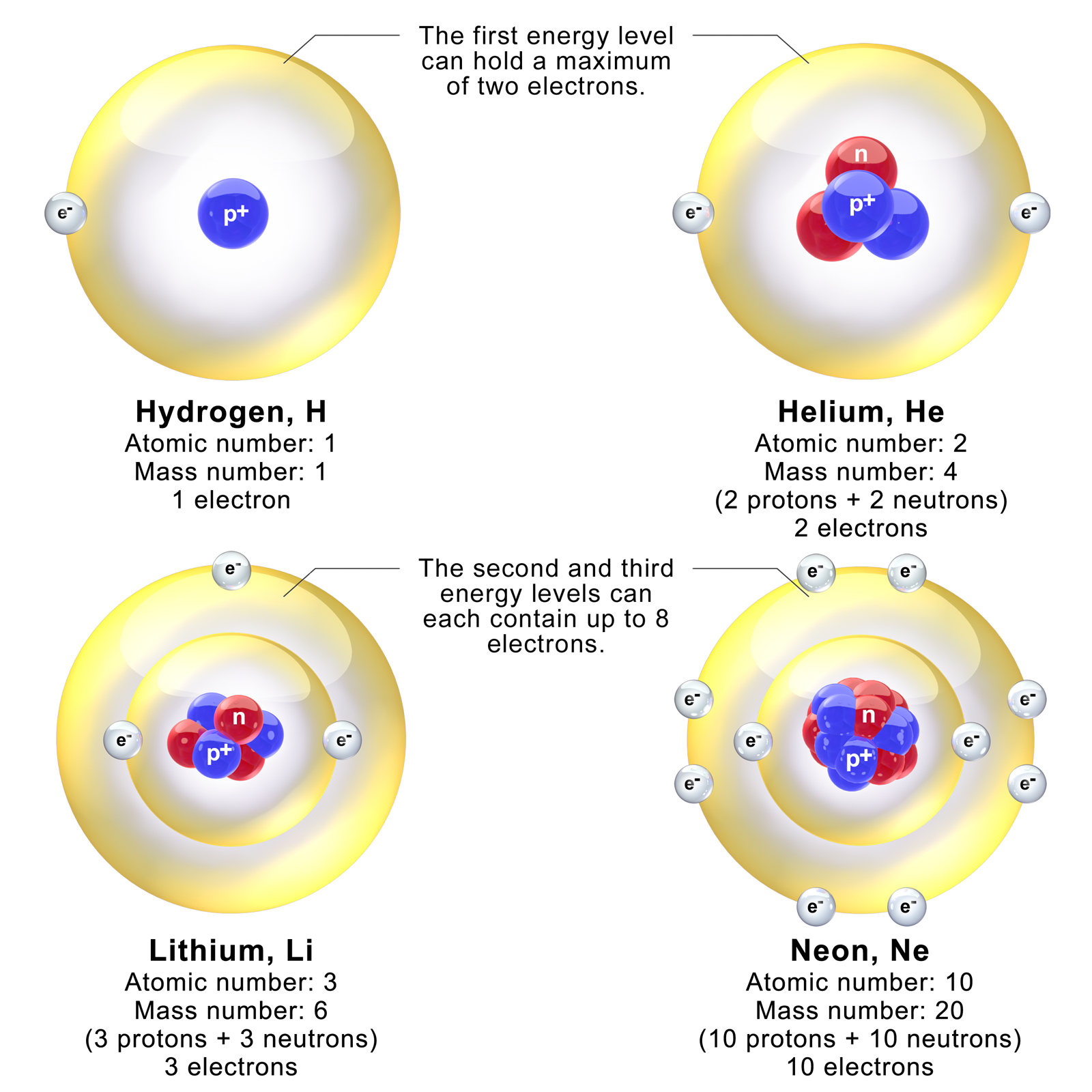
Electrons do not swarm the nucleus randomly; they are highly organized. Electrons are arranged around the atomic nucleus in distinct energy levels known as electron shells.
The electrons closest to the nucleus are tightly bound, but the outermost electrons interact with the rest of the universe. Valence electrons are the electrons located in the outermost electron shell of an atom. These specific electrons are tremendously important because valence electrons dictate the chemical reactivity and bonding behavior of a specific element.
The periodic table is engineered precisely around this electron arrangement:
| Periodic Table Feature | Definition | Chemical Significance |
|---|---|---|
| Group (or Family) | Elements located in the same vertical column of the periodic table constitute a group or family. | Elements situated in the same group on the periodic table typically possess the exact same number of valence electrons, meaning they react to things in very similar ways. |
| Period | Elements located in the same horizontal row of the periodic table constitute a period. | Elements situated in the same period on the periodic table possess the same number of occupied electron shells. |
Matter exists in different physical states based on the kinetic energy of its particles and the attractive forces pulling those particles together. Adding thermal energy to a physical substance causes an increase in the kinetic energy of the individual particles making up the substance.
- Solid: A solid is a physical state of matter characterized by a definite structural shape and a definite volume. Particles within a solid are tightly packed together and strictly vibrate in fixed spatial positions.
- Liquid: A liquid is a physical state of matter characterized by a definite volume and an indefinite shape that conforms to a container. Particles within a liquid are positioned close together while retaining the ability to move and flow freely past one another. Blood plasma, water, and IV fluids rely on this property to travel through the human vascular system.
- Gas: A gas is a physical state of matter characterized by an indefinite shape and an indefinite volume. Particles within a gas are widely separated and travel rapidly in random directions. When a patient uses an inhaler or receives anesthesia, the medicine relies on rapid diffusion through the lungs.
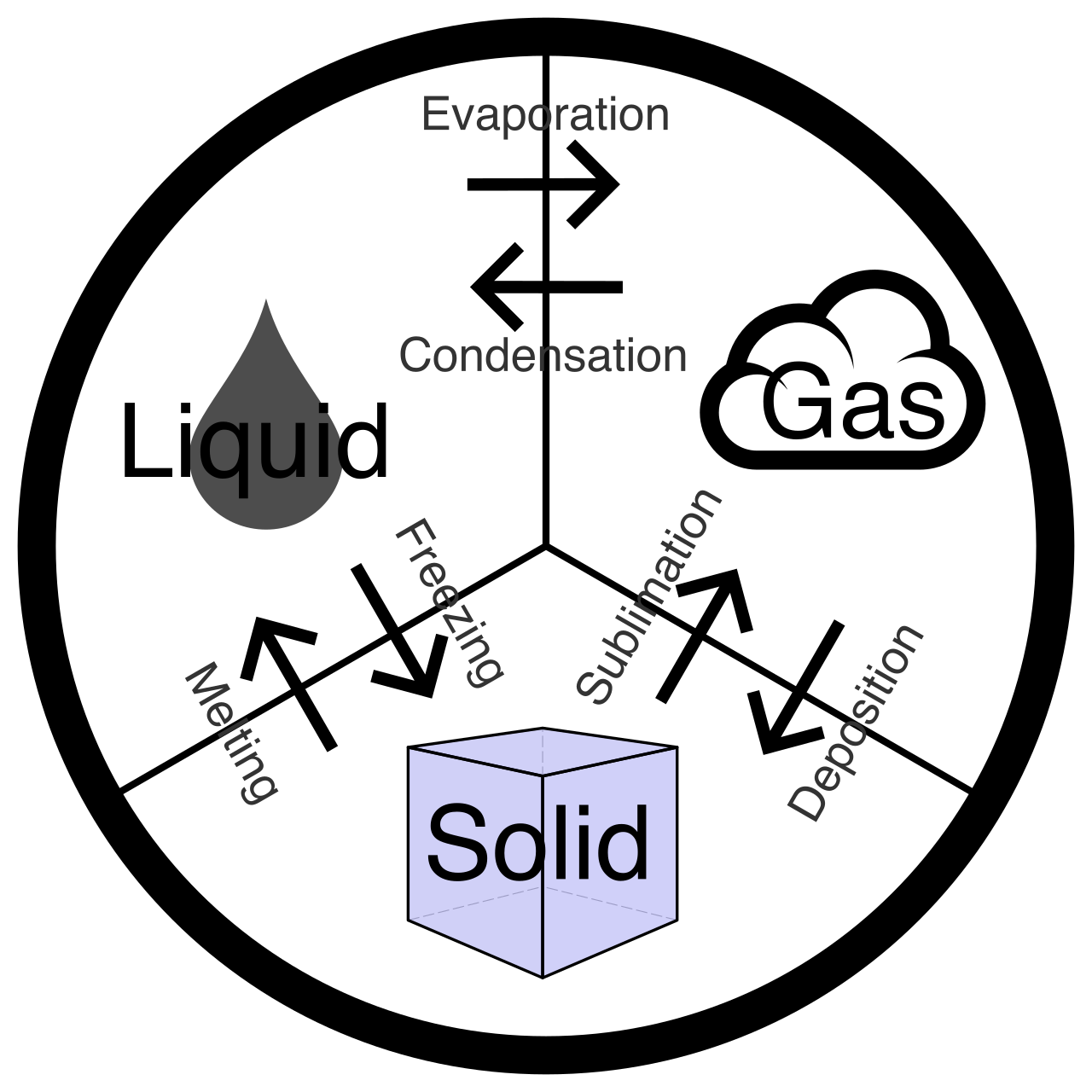
The Pathways of Phase Transitions
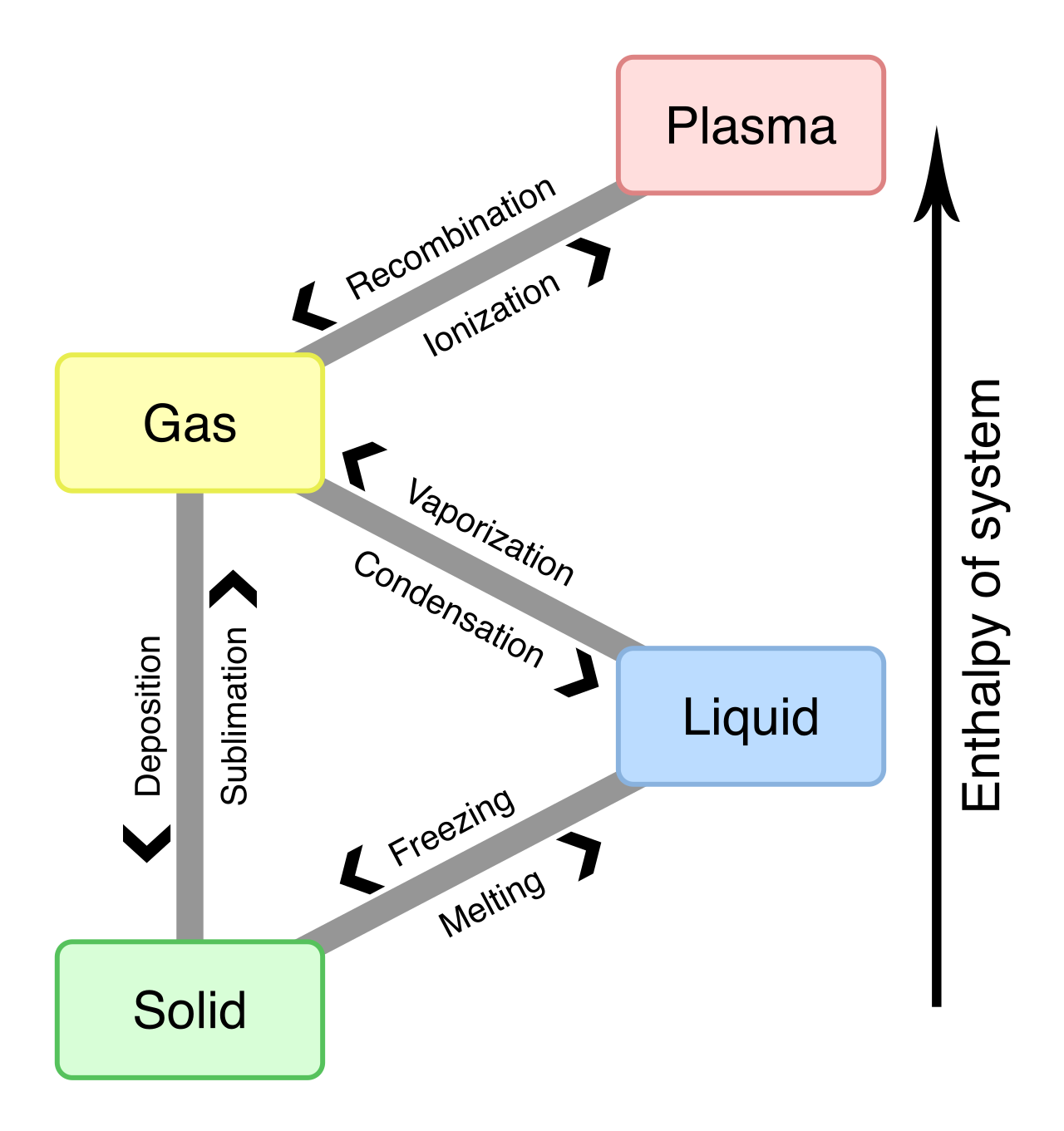
As you manipulate thermal energy, matter shifts states. You must know the specific terminology for these transitions:
- Melting: The specific phase transition from a solid state of matter to a liquid state of matter.
- Freezing: The specific phase transition from a liquid state of matter to a solid state of matter.
- Vaporization: The specific phase transition from a liquid state of matter to a gaseous state of matter.
- Condensation: The specific phase transition from a gaseous state of matter to a liquid state of matter.
- Sublimation: The direct phase transition from a solid state of matter to a gaseous state of matter without ever becoming a liquid. (Example: Dry ice turning directly into carbon dioxide gas, often used to ship biological specimens).
- Deposition: The direct phase transition from a gaseous state of matter to a solid state of matter without ever becoming a liquid.
In clinical settings, you must be able to observe matter and understand how it will behave. We divide these observations into physical and chemical classifications.
Properties of Matter
A physical property is a characteristic of a material that can be safely observed or measured without altering the internal chemical identity of the material. Color, structural density, melting point, and boiling point are all classifications of physical properties. You can measure the boiling point of water without turning water into something else.
A chemical property describes the inherent ability of a specific substance to undergo a chemical change to form an entirely new substance. Flammability, chemical toxicity, and chemical reactivity with acids are all classifications of chemical properties. To observe that alcohol is flammable, you actually have to burn it, which destroys the alcohol molecules and creates carbon dioxide and water.
Changes in Matter
Similarly, we classify the changes that matter undergoes:
A physical change successfully alters the visual form or physical state of a substance without producing a brand new chemical substance. All changes in physical state such as melting solid ice into liquid water represent purely physical changes. Crushing a pill into a fine powder so it can be dissolved in a liquid is a physical change—the medicine is still fundamentally the exact same chemical.
A chemical change permanently alters the atomic bonds of a substance to form one or more entirely new chemical substances with distinct properties. Rusting iron, burning natural wood, and digesting food inside the stomach all represent chemical changes. When a patient eats a meal, the stomach acid and enzymes break down the molecular bonds of the food, turning complex proteins into new, usable amino acids.

When analyzing matter, density is a highly useful metric. Density is a measurable physical property defined mathematically as the mass of a substance divided by the volume of the substance (Density=Mass÷Volume).
Crucially, density operates as an intensive property of matter. An intensive property of matter remains completely independent of the total amount of matter present within a given sample.
Consider pure liquid water: the density of pure liquid water at standard atmospheric conditions is approximately one gram per cubic centimeter (1 g/cm³). It does not matter if you have a single tiny teardrop of pure water or a massive Olympic swimming pool filled with it—the density remains exactly 1 g/cm³.
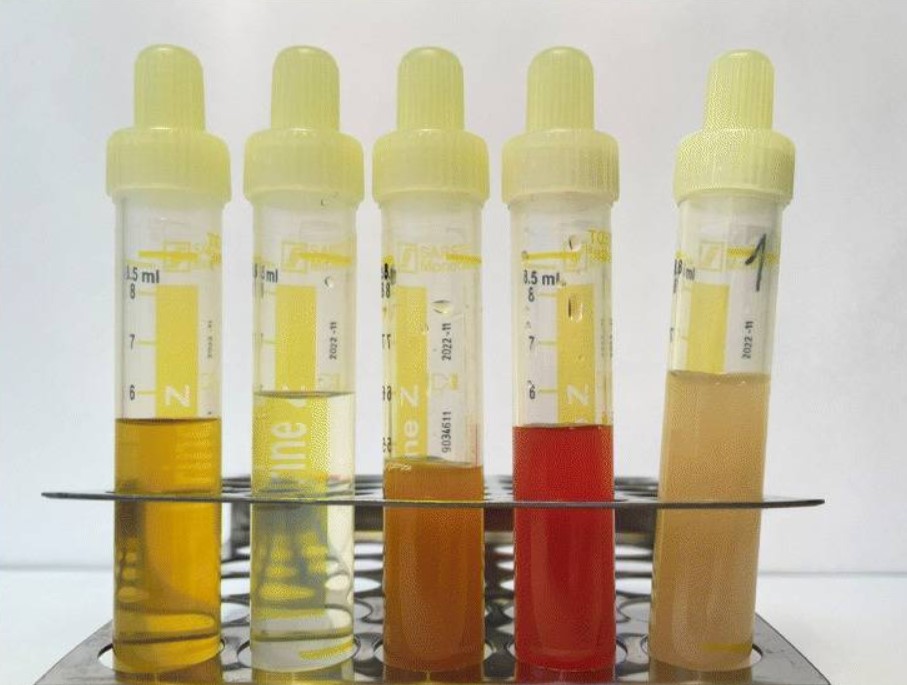
Clinical Connection: In urinalysis, a key metric is Specific Gravity, which is essentially the density of a patient's urine compared to the density of pure water. Because density is an intensive property, a lab only needs a tiny specimen cup of urine to determine the density of the fluid in the patient's entire bladder. A high specific gravity indicates the kidneys are excreting highly concentrated urine, a hallmark sign of severe dehydration.