Comparing, Ordering, and Order of Operations
Not sure you’re ready?
Take the ~3-minute readiness diagnostic and see where you stand.
In the clinical environment, a mathematical error is not merely a deduction of points on an exam; it is a potential threat to patient safety. A physician orders a medication sequence: calculate the weight, adjust for a fractional dosage, and administer the drug. The logic required to interpret this sequence relies on a fundamental mathematical grammar known as the order of operations, combined with the ability to accurately compare distinct numerical formats. Whether analyzing a patient's fluid balance across terminating decimals or prioritizing negative integers representing a physiological deficit, the structure of mathematics mirrors the structure of safe, effective healthcare. The ability to seamlessly translate between fractions, percentages, and decimals, sequence them correctly on a continuous scale, and systematically evaluate multi-step expressions forms the cognitive foundation of clinical pharmacology and quantitative reasoning.
To understand value, we must first map it. Rational numbers include integers, fractions, and terminating or repeating decimals, all of which correspond to specific points on a continuous number line. A standard number line acts as a universal scale of magnitude.

The cardinal rule of the number line is spatial: values situated further to the right on a standard number line are always greater than values situated to the left. This simple spatial relationship dictates how we rank numbers.
When you review patient charts, you will often need to organize data in specific directions:
- Ascending order means arranging numbers from the lowest value to the highest value (moving left to right on the number line).
- Descending order means arranging numbers from the highest value to the lowest value (moving right to left on the number line).
Positive, Negative, and Absolute Values
Consider a patient's fluid balance. A net balance of 0 mL means output perfectly matches intake. A balance of +150 mL is a surplus, while −400 mL represents a deficit.
By the laws of the number line:
- Any positive number is always greater than any negative number.
- Zero is always greater than any negative number.
But what happens when we compare two negative states? If Patient A has a balance of −500 mL and Patient B has a balance of −100 mL, Patient A's balance is further to the left. To formalize this, we use the concept of absolute value.
Absolute Value represents the distance of a number from zero on a number line. Because it measures distance, the absolute value of any non-zero real number is always positive.
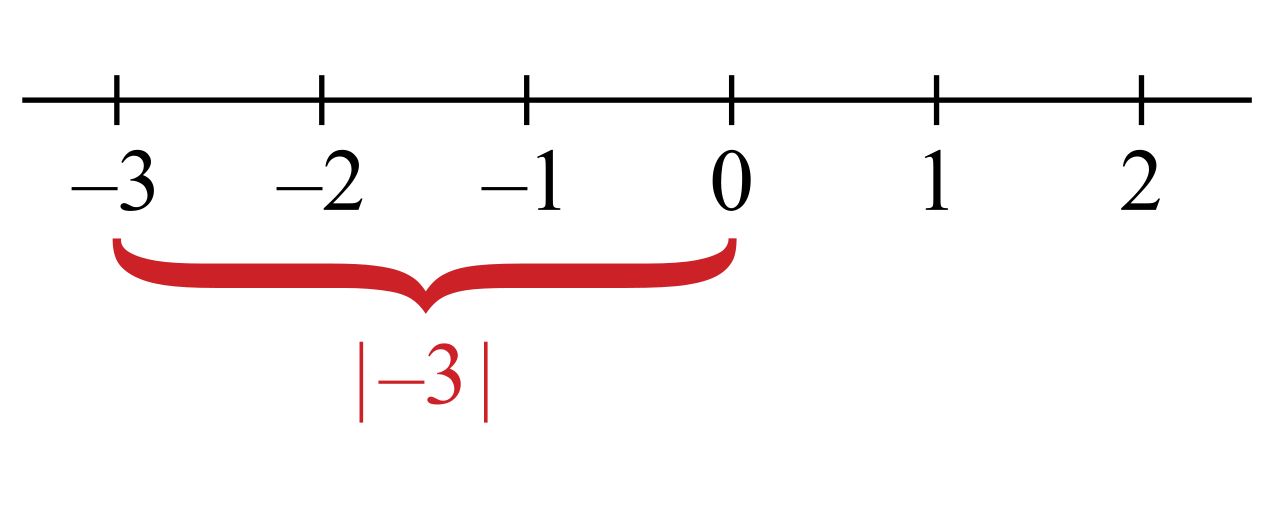
The absolute value of −500 is 500. The absolute value of −100 is 100. This leads to a counterintuitive but vital rule: negative numbers with larger absolute values are mathematically smaller than negative numbers with smaller absolute values. Because 500 is larger than 100, −500 is mathematically smaller (further left) than −100.
To express these relationships formally, we use inequality symbols.
- The mathematical symbol < specifically represents the phrase is less than in numerical inequalities. (e.g., −500<−100)
- The mathematical symbol > specifically represents the phrase is greater than in numerical inequalities. (e.g., 0>−100)
In a hospital, a single concentration of normal saline might be written as 0.9%, its active component represented as a decimal 0.009, or its dilution mixed as a fraction 10009. These are not different values; they are distinct mathematical dialects.
To compare fractions, decimals, and percentages accurately, all values should be converted to a single common format such as decimals. Decimals serve as the universal translator of mathematics because they map perfectly onto our base-10 number system.
Converting to Decimals
- From a Percentage: A percentage can be converted to a decimal by dividing the percentage value by one hundred (which moves the decimal point two places to the left). For example, 45% becomes 0.45.
- From a Fraction: A fraction can be converted to a decimal by dividing the numerator by the denominator. For example, the fraction 43 becomes 3÷4=0.75.
The Mechanics of Comparing Decimals
When a nurse accidentally administers 0.5 mg of digoxin instead of 0.05 mg, the error is ten-fold and potentially lethal. This underscores the necessity of precise decimal comparison.
When comparing decimals, the decimal points must be aligned to compare the digits in each corresponding place value from left to right.
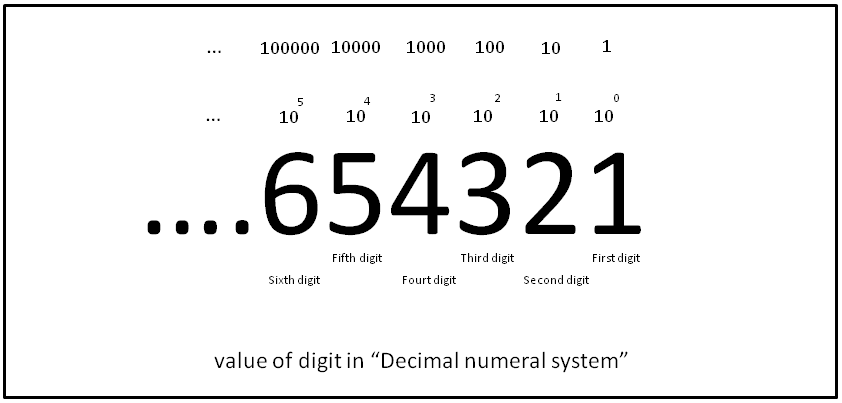
Let us compare 0.5 and 0.05:
- Align the decimals: 0.5 0.05
- Move left to right. The ones place is 0 for both.
- Move to the tenths place. The top number has a 5; the bottom has a 0.
In decimal numbers, a digit in the tenths place represents a larger value than the same digit in the hundredths place. Therefore, 0.5 is definitively larger than 0.05.
If the differing lengths of the decimals cause confusion, you can pad them. Adding trailing zeros to the right of the final non-zero digit in a decimal does not change the mathematical value of the decimal. Thus, 0.5 is identical to 0.50, making the comparison to 0.05 visibly obvious (50 hundredths vs. 5 hundredths).
Comparing Fractions Directly
While converting to decimals is foolproof, you can also compare fractions natively.
Two fractions can be directly compared by converting both fractions to equivalent fractions with a common denominator. If you want to compare 32 and 43, finding a common denominator of 12 translates them to 128 and 129.
When evaluating these translated fractions, two fundamental rules apply:
- When two fractions share the same positive denominator, the fraction with the larger numerator represents the greater overall value. (Since 9>8, 129 is greater than 128).
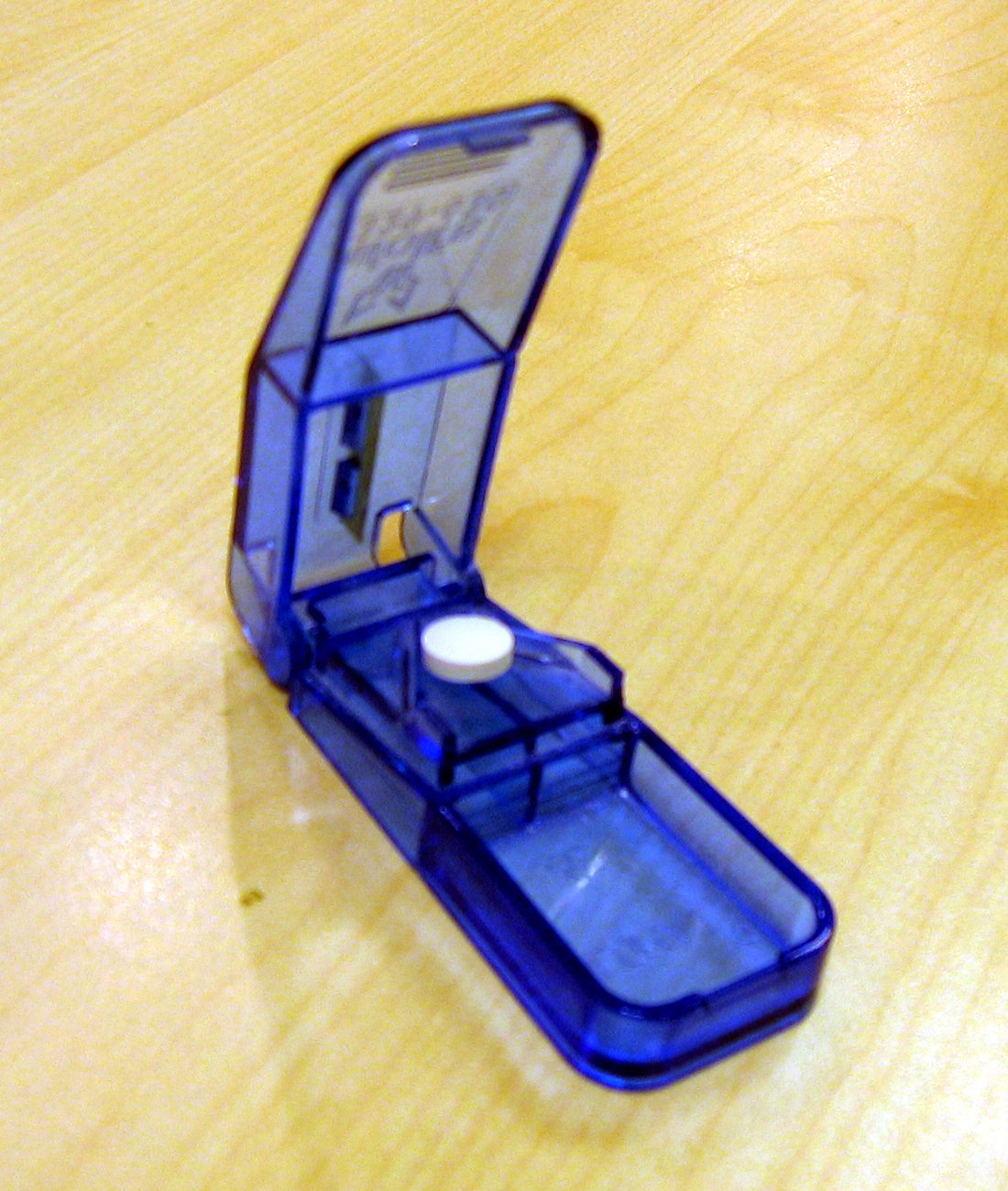
- When two fractions share the same positive numerator, the fraction with the larger positive denominator represents the smaller overall value. Think of cutting a pill. If you have 1 pill divided into 2 pieces (21) versus 1 pill divided into 4 pieces (41), the pieces from the denominator of 4 are physically smaller.
Consider the expression: 8+2×5. If you simply read left to right, you might add 8+2 to get 10, then multiply by 5 to get 50. However, if you multiply 2×5 first to get 10, then add 8, you get 18.
Mathematics cannot tolerate ambiguity. The order of operations dictates the sequence in which multiple mathematical operations must be solved within a single expression.
The acronym PEMDAS stands for Parentheses, Exponents, Multiplication, Division, Addition, and Subtraction. This is not merely a list to memorize; it is a strict hierarchy of authority.
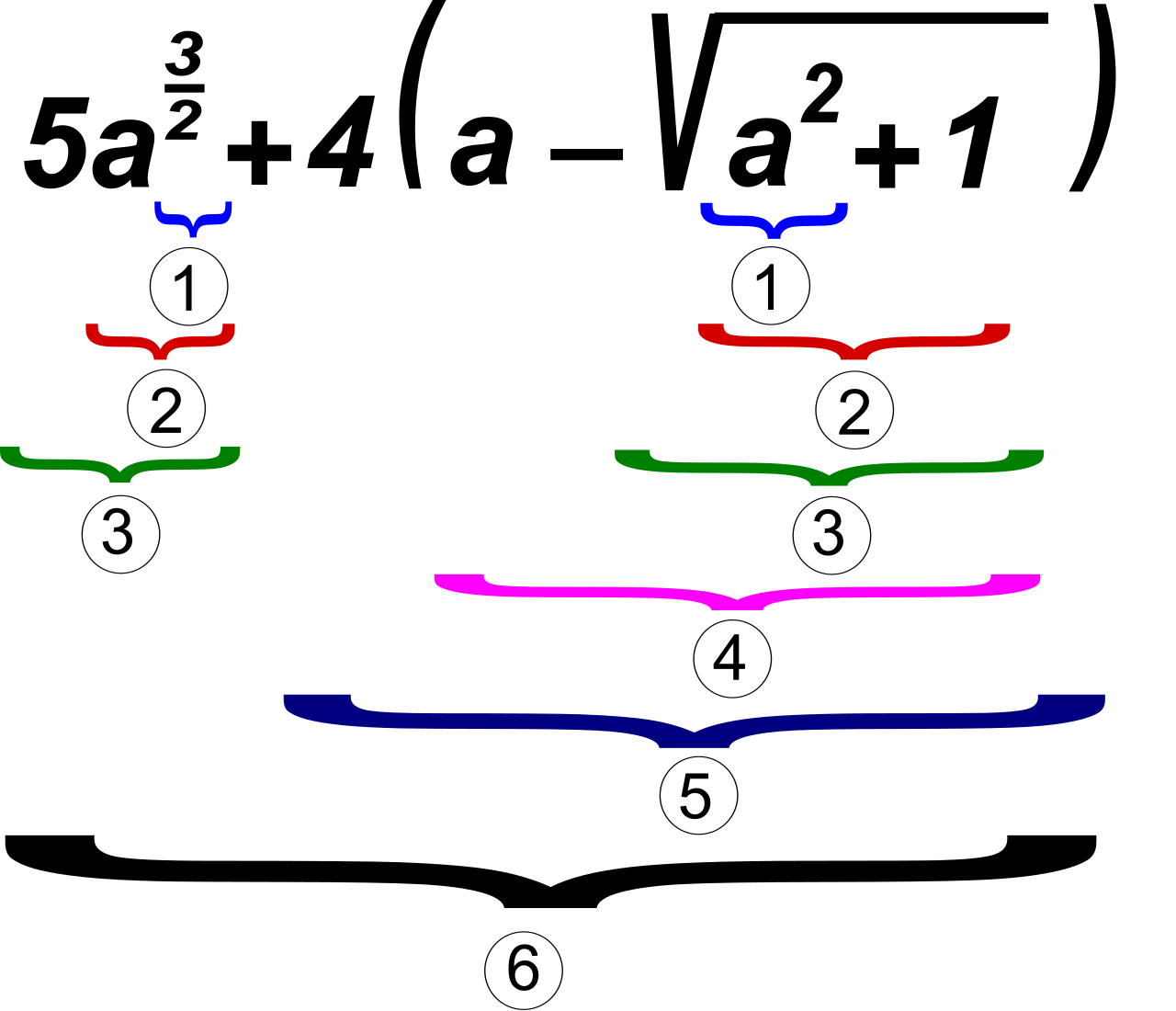
1. Grouping Symbols (The "P" in PEMDAS)
The highest authority in mathematical syntax is the grouping symbol. In the order of operations, expressions inside parentheses and other grouping symbols must be evaluated first. Grouping symbols explicitly tell the mathematician, “Resolve this isolated universe before interacting with the rest of the equation.”
Parentheses () are the most common, but they are not the only ones. Brackets [] and braces function as grouping symbols exactly like parentheses in the order of operations. When dealing with nested grouping symbols, always solve from the innermost group outward.
Crucially in medical math, a fraction bar acts as a grouping symbol in the order of operations. When dealing with a complex fraction, the numerator and denominator of a fraction must be evaluated separately before dividing the numerator by the denominator.
Example: 225+3 You must resolve the numerator (5+3=8) and the denominator (22=4) independently before calculating 8÷4=2.
2. Exponents and Roots (The "E" in PEMDAS)
Once all grouping symbols have been resolved to single values, the next step in the hierarchy applies to powers. In the order of operations, exponents and roots must be evaluated immediately after grouping symbols. This includes squaring a number, taking the square root, or dealing with powers of ten in scientific notation.
3. Multiplication and Division (The "MD" in PEMDAS)
A common misconception is that Multiplication always comes before Division. This is false. Multiplication and division operations have equal priority in the order of operations.
Because they share the exact same level of mathematical authority, we need a tiebreaker. Multiplication and division must be performed from left to right as they appear in a mathematical expression.
Example: 12÷2×3 Since division and multiplication have equal priority, we read left to right. First 12÷2=6. Then 6×3=18. (If you mistakenly forced multiplication first, you would calculate 2×3=6, and 12÷6=2, which is entirely incorrect).
4. Addition and Subtraction (The "AS" in PEMDAS)
The foundational operations of arithmetic sit at the bottom of the hierarchy. Just like their counterparts above, addition and subtraction operations have equal priority in the order of operations.
Therefore, the identical tie-breaker rule applies: Addition and subtraction must be performed from left to right as they appear in a mathematical expression.
Example: 10−4+2 Reading left to right: 10−4=6, and then 6+2=8.
Synthesizing the Rules: A Complex Application
Let us observe PEMDAS at work in a comprehensive, multi-step expression similar to what you will encounter on the ATI TEAS 7:
242−(3+5)×3−1
- Grouping Symbols (Parentheses & Fraction Bar): We look at the numerator of the fraction. It contains parentheses: (3+5). We resolve this first. Expression becomes: 242−8×3−1
- Exponents: Still inside the numerator's grouping, we evaluate 42. Expression becomes: 216−8×3−1
- Resolve the Numerator (Addition/Subtraction): We subtract 16−8 to finish resolving the numerator. Expression becomes: 28×3−1
- Division (Resolving the Fraction): We divide the numerator by the denominator. Expression becomes: 4×3−1
- Multiplication: We multiply before subtracting. Expression becomes: 12−1
- Subtraction: We execute the final operation. Final Answer: 11
By internalizing how numerical values correlate on a number line, standardizing diverse numerical forms into universal decimals, and rigidly applying the grammar of PEMDAS, you transition from passively calculating numbers to actively commanding them. This exact rigor ensures correct dosages, accurate charting, and flawless clinical reasoning.