Operations with Rational Numbers
Not sure you’re ready?
Take the ~3-minute readiness diagnostic and see where you stand.
An IV pump does not understand "about half." A patient's 24-hour intake and output chart does not forgive a misplaced negative sign. When calculating a weight-based pediatric dose, the difference between 0.5 and 0.05 is the difference between a therapeutic intervention and a critical medical error. Mathematics in healthcare is an exact science of proportions, changes, and measurements, all fundamentally built upon a system of numbers that behave predictably under strict rules. This comprehensive system is the domain of rational numbers.
To master the ATI TEAS 7, you must stop viewing math as a series of arbitrary hurdles and start seeing it as a language that describes reality. We are going to deconstruct how rational numbers interact—how they combine, scale, and divide—so that when you sit for your exam, the mechanics of these operations are second nature.
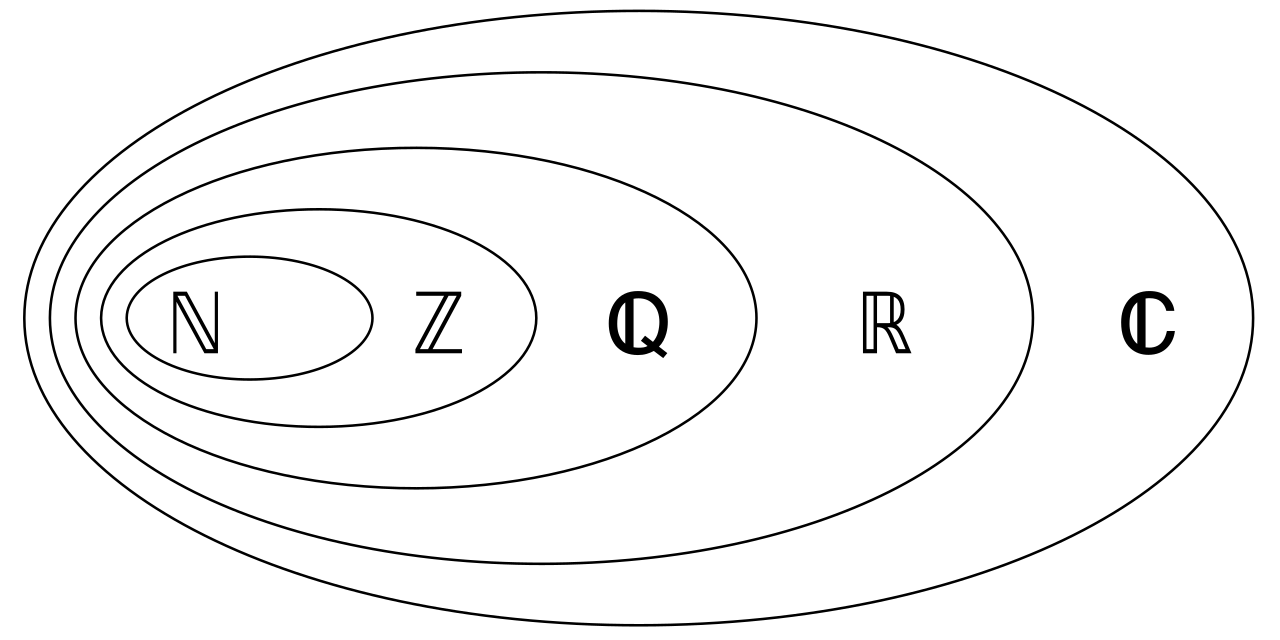
Before we manipulate numbers, we must define our terms. A rational number is any number that can be expressed as a fraction with an integer numerator and a non-zero integer denominator.
If you can write it as a clean fraction ba (where b is not zero), it is rational. Because of this elegant definition, rational numbers include integers, fractions, terminating decimals, and repeating decimals.
- Integers: −4 is rational because it can be written as 1−4.
- Terminating decimals: 0.75 is rational because it is exactly 43.
- Repeating decimals: 0.333... is rational because it is exactly 31.
The Rules of Zero
Zero plays a unique, foundational role in the mechanics of rational numbers. It acts as both an absolute void and a mirror, depending on the operation.
- Multiplication: Any rational number multiplied by zero always results in zero. Whether you are multiplying an astronomical figure or a microscopic decimal by zero, the result collapses to nothing.
- Division (Zero as the Dividend): Zero divided by any non-zero rational number always results in zero. If you have zero milligrams of a medication and divide it among three patients, each patient receives zero milligrams.
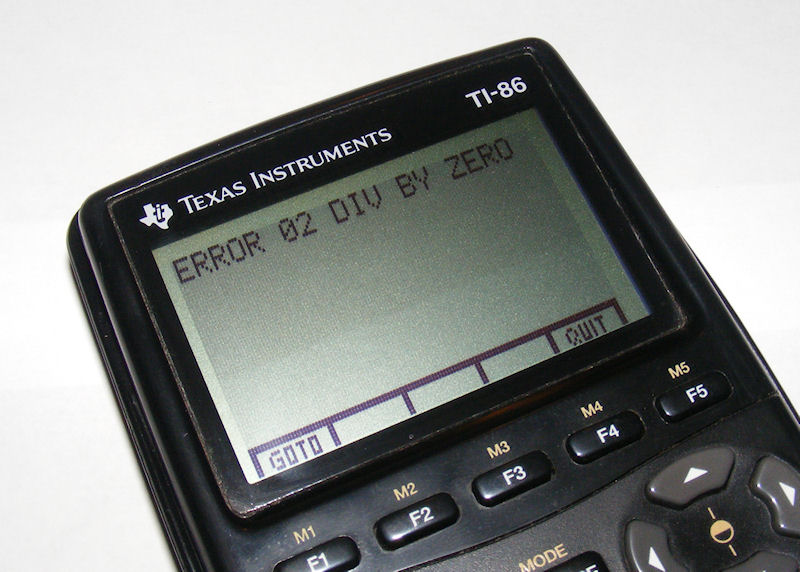
- Division (Zero as the Divisor): Dividing any rational number by zero is a mathematically undefined operation. You cannot divide a 500 mL IV bag into "zero" groups. The logic of mathematics breaks down here, which is why the denominator of a rational number can never be zero.
In clinical practice, you deal with integers constantly. A patient’s temperature rises and falls; their fluid balance shifts between intake (positive) and output (negative). Understanding how integers interact is essential for tracking these changes.

Addition and Subtraction
Think of positive and negative integers as opposing forces.
- Adding two positive integers always results in a positive sum. (e.g., 4+3=7).
- Adding two negative integers always results in a negative sum. If a patient loses 400 mL of fluid (−400) and then loses another 200 mL (−200), they are down 600 mL. The deficit simply grows.
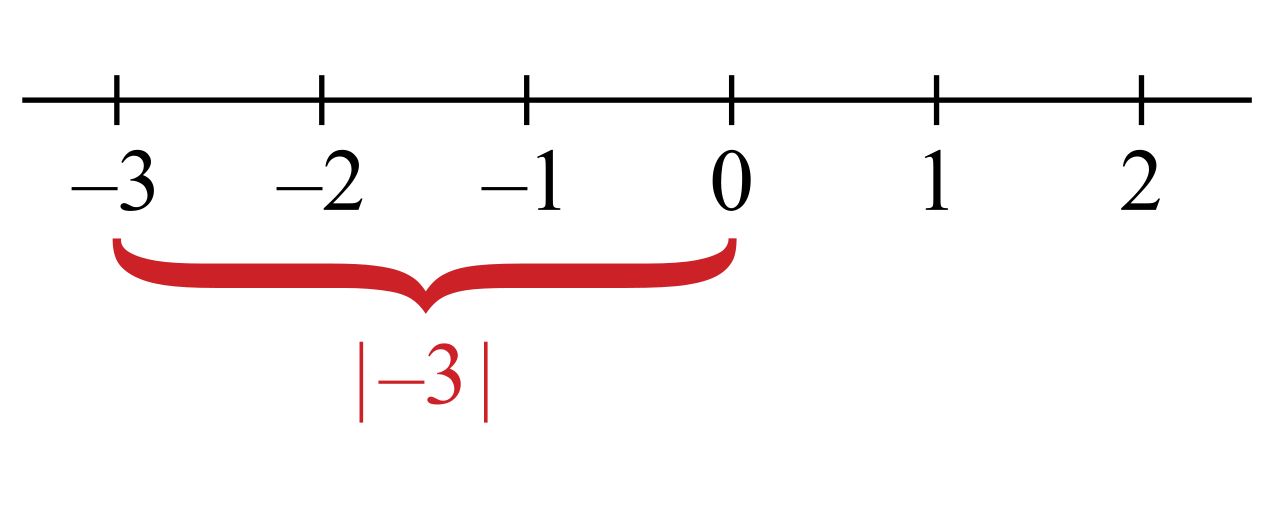
The complexity arises when the signs oppose each other. To add two integers with different signs, subtract the smaller absolute value from the larger absolute value. After finding the difference, the sum of two integers with different signs takes the sign of the integer with the larger absolute value.
Example: Let's evaluate −15+8. The absolute values are 15 and 8. Subtracting the smaller from the larger yields 15−8=7. Because the original −15 has the larger absolute value, the final sum is −7. The negative force "won" the tug-of-war.
What about subtraction? The most intuitive way to handle subtraction is to eliminate it entirely. Subtracting an integer is mathematically equivalent to adding the opposite of that integer.
Example: 10−(−5) becomes 10+(+5)=15. If you remove a penalty of 5 points, you have effectively gained 5 points.
Multiplication and Division
When multiplying or dividing integers, the rules governing signs are absolute and uniform. The operations themselves function normally, but the sign of the outcome depends entirely on the pairing of the input signs.
| Operation | Signs of the Numbers | Resulting Sign | Example |
|---|---|---|---|
| Multiplication | Same signs | Positive | 3×4=12<br>(−3)×(−4)=12 |
| Multiplication | Different signs | Negative | 3×(−4)=−12 |
| Division | Same signs | Positive | 20÷5=4<br>(−20)÷(−5)=4 |
| Division | Different signs | Negative | (−20)÷5=−4 |
To formalize this:
- Multiplying two integers with the same sign always results in a positive product.
- Multiplying two integers with different signs always results in a negative product.
- Dividing two integers with the same sign always results in a positive quotient.
- Dividing two integers with different signs always results in a negative quotient.
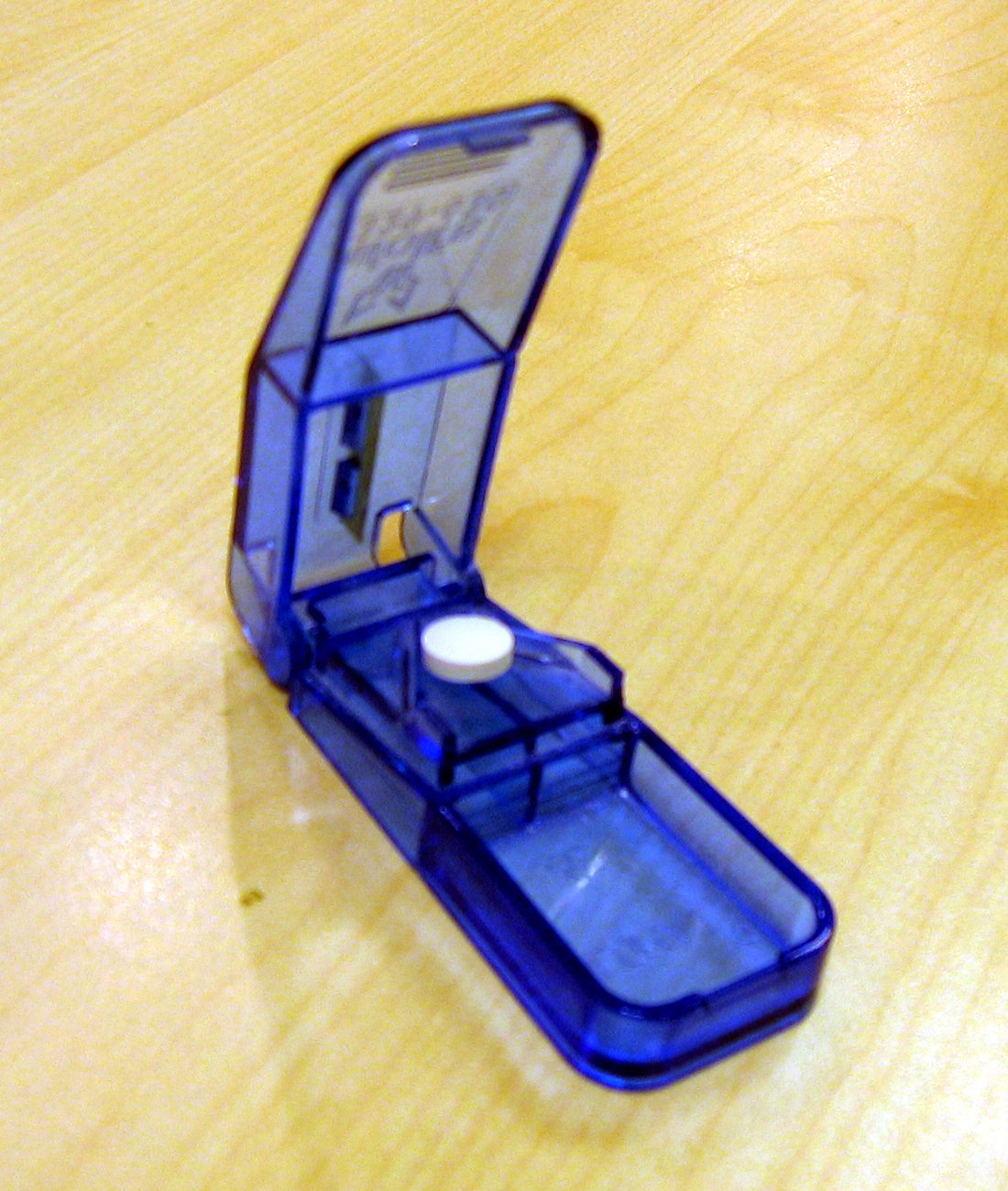
Fractions are the rawest expression of rational numbers. We use them to split pills, calculate concentrations, and adjust weight-based formulas.
First, let's address the placement of negative signs in fractions. A negative fraction can be written with the negative sign in the numerator (2−1), in the denominator (−21), or entirely in front of the fraction (−21). Mathematically, these are identical. However, if both terms are negative, the rules of division apply: Writing a fraction with a negative numerator and a negative denominator is mathematically equivalent to writing a positive fraction (i.e., −4−3=43).
Adding and Subtracting Fractions
You cannot add halves and thirds directly any more than you can add dollars and pesos without converting the currency. Adding or subtracting fractions requires converting all terms to have a common denominator.
To do this efficiently, we seek the lowest common denominator (LCD). The lowest common denominator used for adding fractions is the least common multiple of the original denominators.
Example: To calculate 41+61, find the least common multiple of 4 and 6, which is 12. Convert the fractions: 123+122=125. Once the denominators match, you simply add or subtract the numerators while keeping the denominator identical.
Multiplying and Dividing Fractions
Multiplication and division of fractions do not require common denominators. The mechanics here are beautifully straightforward.
Multiplying fractions requires multiplying the original numerators together to calculate the new numerator, and multiplying the original denominators together to calculate the new denominator.
Example: 32×54=3×52×4=158.
For division, we rely on a clever geometric truth: dividing by a number is the same as multiplying by its inverse. Therefore, dividing by a fraction is mathematically equivalent to multiplying by the reciprocal of that fraction.
What is a reciprocal? The reciprocal of a fraction is created by exchanging the positions of the numerator and the denominator.
Example: To calculate 43÷52, exchange the numerator and denominator of the second fraction to find its reciprocal (25). Then, multiply: 43×25=815.
Improper Fractions and Mixed Numbers
When dealing with real-world measurements, we frequently encounter quantities larger than one whole unit. We express these in two ways:
- An improper fraction is a fraction where the numerator is greater than or equal to the denominator (e.g., 411).
- A mixed number consists of a whole number combined with a proper fraction (e.g., 243).
You must be fluid in converting between these two forms.
Converting a mixed number to an improper fraction:
- Converting a mixed number to an improper fraction begins by multiplying the whole number portion by the fraction's denominator. (For 243, multiply 2×4=8).
- Next, when converting a mixed number to an improper fraction, the product of the whole number and the denominator is added to the original numerator to calculate the new numerator. (8+3=11).
- Finally, an improper fraction derived from a mixed number retains the exact same denominator as the original mixed number. (The denominator remains 4, resulting in 411).
Converting an improper fraction to a mixed number:
- Converting an improper fraction to a mixed number requires dividing the numerator by the denominator to determine the whole number portion. (For 411, 11÷4 goes in 2 whole times).
- When converting an improper fraction to a mixed number, the remainder from the division operation becomes the numerator of the new proper fraction. (The remainder of 11÷4 is 3. This 3 goes over the original denominator, resulting in 243).
A Critical Rule for Operations: While you can easily add or subtract mixed numbers by handling the whole numbers and fractions separately, multiplication and division are fiercely unforgiving. Performing multiplication or division with mixed numbers requires converting all mixed numbers into improper fractions before evaluating the expression. If you try to multiply mixed numbers without converting them first, you will miss the cross-multiplication of the fractional parts, resulting in a dangerously incorrect answer.
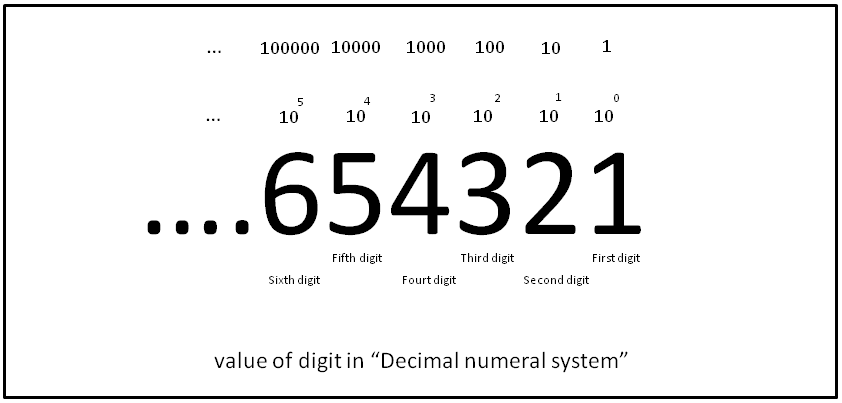
Decimals are simply fractions whose denominators are powers of 10. Because our entire number system is base-10, decimals behave very much like whole numbers, provided you respect the placement of the decimal point.
Adding and Subtracting Decimals
When measuring a patient's fluid intake (e.g., 125.5 mL plus 45.25 mL), precision is paramount. Adding or subtracting decimal numbers requires aligning the numbers vertically according to their decimal points. By aligning the decimals, you guarantee that you are adding tenths to tenths, and hundredths to hundredths. Fill in any empty visual spaces with trailing zeros to prevent alignment errors during subtraction.
Multiplying Decimals
Multiplication changes the spatial rules. Multiplying decimal numbers does not require aligning the decimal points vertically. You align the numbers to the right as if they were whole numbers, temporarily ignoring the decimals, and perform standard multiplication.
The critical step occurs at the end. How do you know where to place the decimal point in your final answer? The number of decimal places in a multiplication product equals the sum of the decimal places in all multiplied factors.
Example: Multiply 0.12 (two decimal places) by 0.3 (one decimal place). Treat it as 12×3=36. Because the factors have a total of three decimal places (2+1), you must move the decimal point in the product three places to the left. The result is 0.036.
Dividing Decimals
Dividing by a decimal feels conceptually awkward. How do you divide a pill into 0.25 groups? We solve this by scaling both numbers up until the divisor becomes a comfortable integer.
Dividing by a decimal requires moving the decimal point in the divisor to the right until the divisor becomes a whole number.
However, mathematical equality demands balance. You cannot alter the divisor without proportionately altering the dividend. When moving the decimal point in a divisor to create a whole number, the decimal point in the dividend must be moved to the right by the exact same number of places.
Example: Calculate 14.4÷1.2. Move the decimal in the divisor (1.2) one place right to make it 12. You must then move the decimal in the dividend (14.4) one place right to make it 144. The problem simplifies to 144÷12=12.
By scaling both values simultaneously, the ratio between the two numbers remains pristine, yielding the exact same quotient without the struggle of decimal division.
Final Thoughts for the TEAS 7
Every topic we have covered here—from determining the sign of an integer operation, to finding the lowest common denominator, to perfectly placing a decimal point—is a tool. In your allied health coursework, you will use these tools to interpret laboratory results, calculate drip rates, and ensure patient safety. Remember the governing principles, execute the steps systematically, and respect the arithmetic of the rational numbers.