Estimation, Proportions, and Rates
Not sure you’re ready?
Take the ~3-minute readiness diagnostic and see where you stand.
A medical professional preparing an intravenous infusion operates at the intersection of absolute precision and practical approximation. When calculating the concentration of a high-alert medication, a misplaced decimal point is not merely a mathematical error; it is a profound clinical hazard. Yet, when quickly evaluating the total intake of fluids from a patient's dietary tray, calculating an exact milliliter count down to the hundredth place wastes crucial time. Mathematics in healthcare is an exercise in understanding exactly when a rough estimate provides the necessary situational awareness, and when only strict proportional logic will safely deliver a dose. To master the quantitative portion of your admissions exam—and more importantly, to function safely on the clinical floor—you must understand how to manipulate numbers fluidly. You must know how to strip away unnecessary precision to quickly estimate a sum, how to set up an ironclad proportion to find an unknown dosage, and how to track the rate at which a patient's vital signs are shifting over time.
Numbers carry a level of precision that is sometimes completely unnecessary for the task at hand. If a hospital’s annual budget is $14,582,311.45, communicating that exact figure in a brief meeting is cumbersome. Rounding is a process used to reduce the digits in a number while keeping the approximate value similar. It allows us to manage cognitive load and communicate magnitudes clearly.
Rounding a number to a specific place value requires evaluating the digit immediately to the right of that target place value. This rightward neighbor holds the sole power to dictate what happens to your target.
The Rules of Rounding
- A target digit increases by one during rounding when the digit immediately to the right is five or greater.
- A target digit remains unchanged during rounding when the digit immediately to the right is four or less.
What happens to the remaining digits depends entirely on which side of the decimal point your target resides. In whole numbers, magnitude matters. Therefore, all digits to the right of a rounded whole number place value are replaced with zeros to maintain the number’s size. However, decimals merely represent fractional precision. All digits to the right of a rounded decimal place value are completely dropped from the final number.
To round decimals effectively, you must be intimately familiar with fractional place values:
- The tenths place represents the first digit to the right of a decimal point.
- The hundredths place represents the second digit to the right of a decimal point.
- The thousandths place represents the third digit to the right of a decimal point.
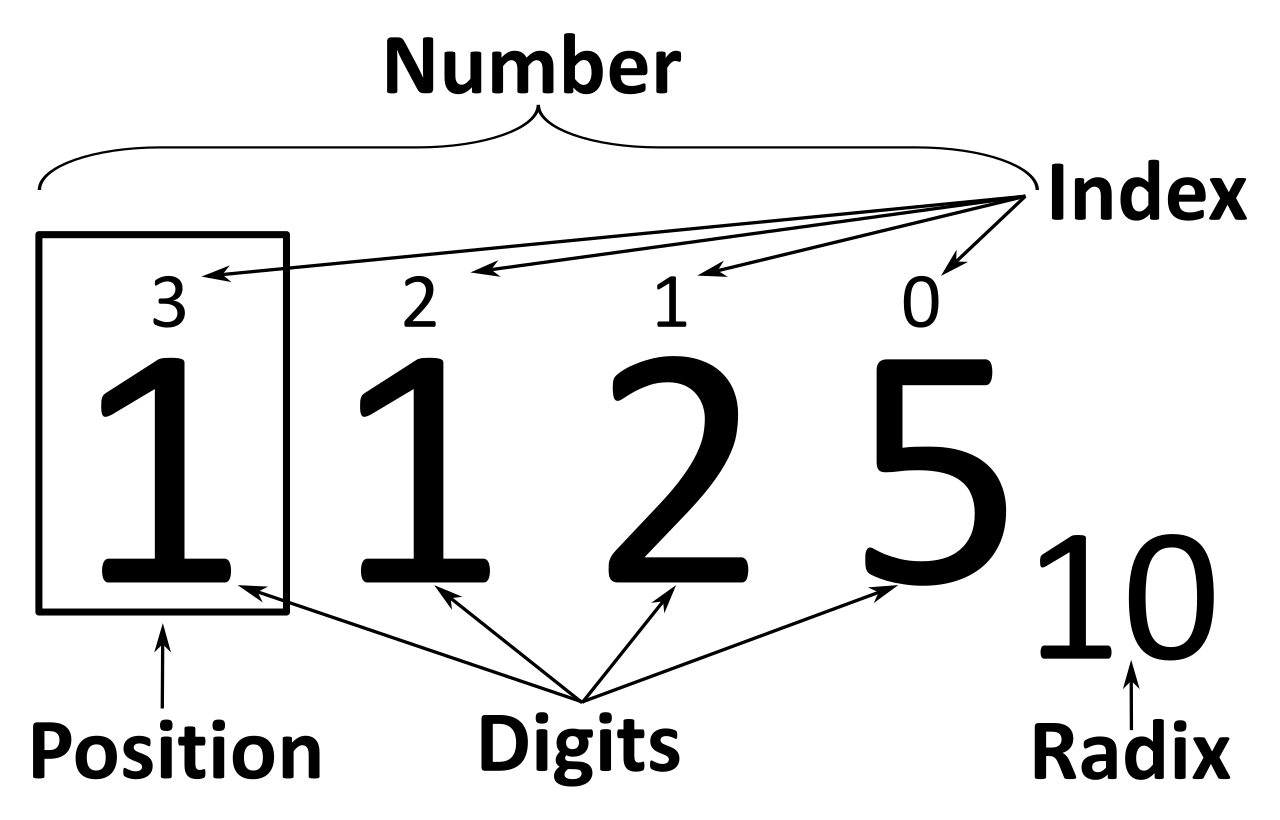
Consider rounding the patient weight 74.839 kilograms to the hundredths place. The target is 3. The neighbor to the right is 9. Because 9 is five or greater, the 3 becomes a 4, and we drop everything to the right: 74.84 kg.
Estimation in Practice
While rounding is an operation performed on a single number, estimation involves calculating an approximate answer by rounding the original numbers prior to performing the mathematical operation. If you are rapidly adding up the volumes of three IV bags (480 mL, 245 mL, and 1,015 mL), adding them exactly in your head takes time. Estimating lets you quickly add 500+250+1,000 to recognize the patient has received roughly 1,750 mL.

When maximum speed is required, we use front-end estimation. Front-end estimation involves rounding numbers to their largest place value before performing an operation. If you multiply 387 by 42, front-end estimation simplifies this to 400×40. You immediately know the product will be near 16,000. In an exam setting, front-end estimation acts as a powerful reality check to instantly eliminate multiple-choice answers that are mathematically absurd.
To understand medicine is to understand relationships: the ratio of a solute to a solvent, the ratio of a medication to a patient's body mass, or the ratio of chest compressions to rescue breaths.
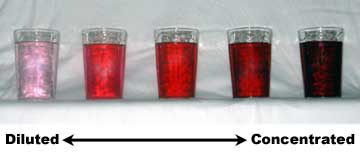
A ratio is a mathematical comparison of two specific quantities using division. It tells you how much of one thing exists in relation to another.
There are multiple ways to express this relationship. A ratio comparing quantity A to quantity B can be written using a colon as A:B. Alternatively, and more usefully for algebraic calculation, a ratio comparing quantity A to quantity B can be written as the fraction A/B.
When you place two ratios side by side and declare them equivalent, you create a proportion. A proportion is a mathematical equation stating that two separate ratios are exactly equal.
BA=DC
Proportions are the foundational mechanism for calculating medication dosages. If you know that 50 mg of medication is dissolved in 10 mL of fluid, and the doctor orders 15 mg of the medication, you set up a proportion to find the unknown volume.
To solve this, we rely on a mathematical mechanism called cross-multiplication, which is a method used to solve proportions involving an unknown variable. In the proportion A/B equals C/D, the cross product A multiplied by D equals the cross product B multiplied by C.
A×D=B×C
Using our medication example: 10 mL50 mg=X mL15 mg
Cross-multiply: 50×X=10×15. 50X=150. Divide both sides by 50, and you discover X=3 mL. You have logically proven the exact volume required.
Proportional logic extends beyond fluid volumes into physical space. We capture the massive scale of the real world by compressing it into maps and diagrams. A scale factor is a ratio comparing the measurements of a model or drawing to the measurements of the actual object.
If an anatomy chart of a human heart uses a scale factor of 1:4 (meaning 1 inch on the chart represents 4 inches in reality), you are simply looking at a visual proportion. Therefore, real-world distances can be calculated by multiplying map distances by the given map scale factor. If a vessel on the chart is 0.5 inches long, the actual vessel is 0.5×4=2 inches long.
This same geometric proportionality applies to similar figures, which are geometric shapes possessing identical corresponding angles. Because their angles are locked in place, similar figures possess corresponding side lengths forming equal geometric ratios. One shape is simply a magnified or shrunken version of the other.

Consequently, unknown side lengths in similar figures are calculated by setting up a proportion between the corresponding sides. If Triangle A has sides of 3, 4, and 5, and a larger, similar Triangle B has a corresponding side of 6 (matching the 3), we know the scale factor is 2. Every other side in Triangle B must maintain that proportion.
While a standard ratio compares quantities of the same kind (like 2 nurses to 10 patients), a rate is a specific ratio comparing two quantities with entirely different units of measurement. Distance and time. Fluid volume and time. Mass and volume.
The most powerful form of a rate is the unit rate. A unit rate is a rate simplified to have a denominator of exactly one unit. It provides a universal baseline, making it incredibly easy to scale calculations up or down. A unit rate is calculated by dividing the numerator quantity by the denominator quantity.
In daily life, miles per gallon is a common unit rate expressing distance traveled per one unit of fuel. If you drive 300 miles on 12 gallons of gas, dividing 300 by 12 yields the unit rate: 25 miles per 1 gallon (25 mpg).
In clinical practice, the unit rates dictate patient survival. Drops per minute (gtts/min) is a healthcare unit rate used for calculating intravenous fluid drip rates. If 1,000 mL of saline must be infused over 8 hours using a standard drip set, the nurse must convert and calculate this down to a unit rate of drops per one single minute so they can physically calibrate the IV line by counting the drops falling in the drip chamber.
Understanding Rate of Change
When dealing with dynamic systems—like a patient's dropping blood pressure or a fluctuating heart rate—we analyze the rate of change. Rate of change describes how one continuous quantity changes in relation to another continuous quantity over an interval.
Mathematically, rate of change is calculated by dividing the change in the dependent variable by the change in the independent variable.
Rate of Change=Change in Independent Variable (e.g., Time)Change in Dependent Variable (e.g., Temperature)
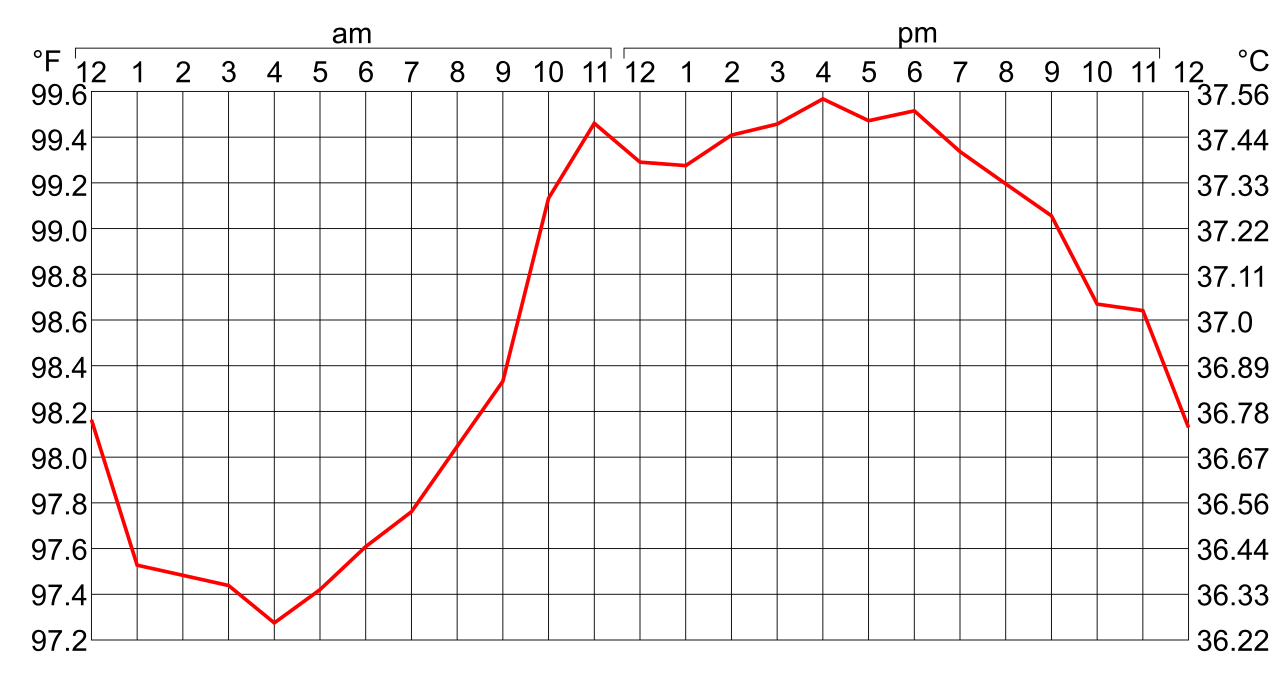
If a patient's temperature is 102∘F at 2:00 PM and drops to 99∘F by 5:00 PM, the dependent variable (temperature) changed by −3∘F. The independent variable (time) changed by 3 hours. The rate of change is −3/3=−1∘F per hour. The fever is breaking at a unit rate of one degree per hour.
In a clinical setting, no one will hand you a worksheet filled with clean fractions. Problems arrive as scenarios, verbal orders, and supply limitations. To solve them, you must translate the English language into mathematical operators. Recognizing specific vocabulary guarantees that you set up your equations correctly.
| English Vocabulary | Mathematical Operation | Example Translation |
|---|---|---|
| Sum | Addition | "The sum of the patient's fluid intake..." →X+Y |
| Difference | Subtraction | "The difference between systolic and diastolic..." →X−Y |
| Product | Multiplication | "The product of the dosage and patient weight..." →X×Y |
| Quotient | Division | "The quotient of total milligrams over total mL..." →X/Y |
| Per | Division (to find a rate) | "Milligrams per kilogram..." →mg/kg |
These vocabulary words frequently hide inside multi-step word problems, which require performing more than one distinct mathematical operation to reach the final answer. You might first need to find the difference in a patient's weight, and then calculate the product of that difference and a medication parameter. The secret to multi-step problems is patience: solve exactly one step at a time, labeling your units meticulously as you go.
Dimensional Analysis: The Ultimate Clinical Tool
The capstone of managing proportions, rates, and word problems is dimensional analysis. Dimensional analysis is a method of setting up proportions to convert values from one unit of measurement to another.
Imagine a physician orders a medication dosage of 5 mg per kg of body weight for a patient who weighs 176 pounds. The pharmacy provides the medication in a concentration of 100 mg per 5 mL. How many milliliters do you administer?
This is a multi-step word problem requiring dimensional analysis. You cannot simply multiply numbers together; you must align the units so that the ones you do not want cancel out, leaving only the unit you need.
- Convert pounds to kilograms: We know 1 kg =2.2 lbs. 1176 lbs×2.2 lbs1 kg=80 kg
- Calculate the required mg dosage: The rate is 5 mg per kg. 180 kg×1 kg5 mg=400 mg required
- Determine the mL to administer: Set up the proportion based on the pharmacy concentration. 1400 mg×100 mg5 mL=1002000 mL=20 mL
By chaining ratios together, we used the structural logic of proportions to navigate safely from pounds to milligrams to a final liquid volume. This is not just passing a mathematics test; this is guaranteeing the safety of the human being in the bed in front of you. When you master approximation, rates, and proportions, you are mastering the language of reality itself.