Evaluating an Argument
Not sure you’re ready?
Take the ~3-minute readiness diagnostic and see where you stand.
A patient presents with a fever, and the attending physician immediately declares, "They have a bacterial infection; start them on broad-spectrum antibiotics." As a healthcare professional, your mind should instinctively begin dissecting this statement. Is a localized fever alone enough to prove a systemic bacterial infection? What if the cause is viral? What if it is an inflammatory response to trauma? You are naturally evaluating the architecture of a conclusion. In the clinical setting, an argument is not a shouting match; it is a proposed diagnosis, a treatment plan, or a protocol change, and your ability to deconstruct it is a matter of patient safety. The ATI TEAS 7 exam tests this exact cognitive skill under the banner of reading comprehension: identifying what an author is trying to prove, weighing the evidence they provide, and spotting the hidden traps in their logic.
To critically read a passage on the TEAS, you must first dissect it into its working parts. Think of a text like a patient’s chart. There is a primary diagnosis, the lab values that support it, and the medical knowledge that connects the two.
In academic reading, an argument is a structured set of statements consisting of a central claim and the evidence used to support that claim.
- The claim is an assertion or proposition that an author attempts to prove within a written text. It is the destination.
- The evidence consists of verifiable facts, statistics, concrete examples, or expert opinions used to validate an author's claim. It is the fuel.
- The reasoning is the logical framework connecting provided evidence directly to an author's central claim. It is the engine.
Every argument is built upon a premise, which is a base statement or proposition that provides the logical foundation for drawing a specific conclusion. However, texts rarely state every single premise out loud. Often, you must search for an assumption—an unstated premise that an author believes to be true without providing explicit proof within the text. If a nurse says, "The patient's blood pressure is dropping, so we must administer IV fluids," the assumption is that the hypovolemia is the primary cause of the pressure drop and that fluids are the appropriate first-line intervention.
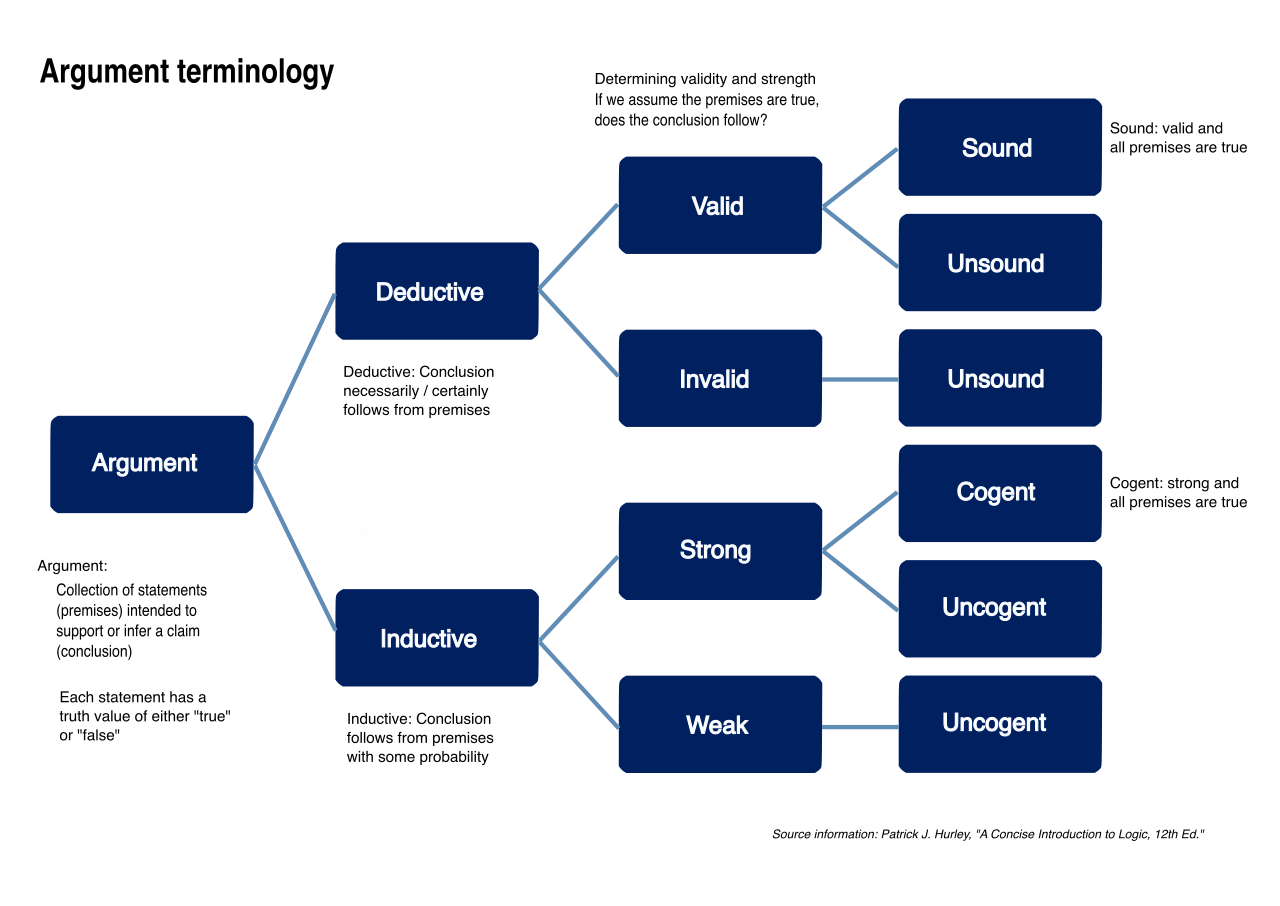
Evaluating an argument requires a reader to actively determine if an author's stated premises logically lead to the author's final conclusion. If the premises are faulty or the assumption is entirely wrong, the whole structure collapses, resulting in an unsupported claim: a stated assertion that completely lacks factual evidence or logical reasoning.
Deductive vs. Inductive Reasoning
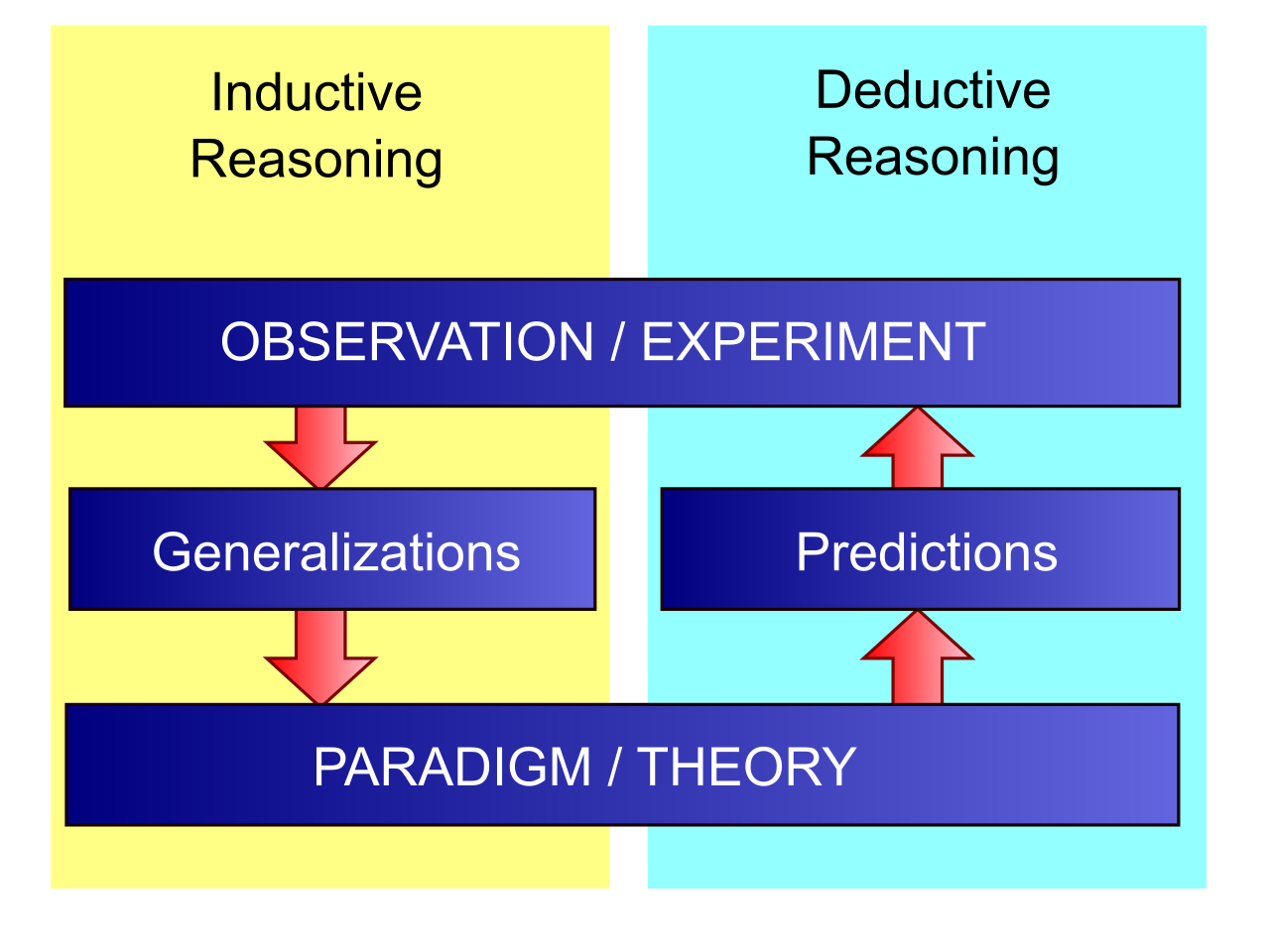
The architecture of an author's reasoning usually flows in one of two directions: from the top down, or from the bottom up.
| Type of Reasoning | Direction of Logic | Definition | Clinical Example |
|---|---|---|---|
| Deductive | Top-Down (General to Specific) | Starts with a general premise and applies strict logical steps to reach a specific guaranteed conclusion. | Premise: All patients with an airborne virus must be isolated. Fact: Patient X has tuberculosis (airborne). Conclusion: Patient X must be isolated. |
| Inductive | Bottom-Up (Specific to General) | Builds a generalized conclusion from multiple specific observations or discrete pieces of evidence. | Observations: The patient is coughing, has a high fever, and shows infiltrates on a chest X-ray. Conclusion: The patient likely has pneumonia. |
Not all evidence is created equal. To validate a claim, you must put the author's evidence through a rigorous stress test. Ask yourself: Is it objective or subjective? Is it relevant? Is it sufficient?
Objective vs. Subjective Objective evidence is strictly based on observable phenomena and verifiable facts rather than personal feelings or individual opinions (e.g., "The patient's heart rate is 110 bpm"). Conversely, subjective evidence relies heavily on personal feelings, individual opinions, or unique interpretations of events (e.g., "The patient seems highly anxious today").
Once you determine the nature of the evidence, you must evaluate its utility:
- Relevance: Relevant evidence directly addresses a specific claim without introducing unrelated topics or tangential information. If an author claims a new surgical technique reduces recovery time, citing the hospital's cafeteria menu is totally irrelevant.
- Sufficiency: Sufficient evidence provides an adequate amount of quantitative or qualitative data to convince a reasonable reader of a claim. A single successful surgery does not prove a technique is universally safe; hundreds of randomized controlled trials might.
- Validity: Valid evidence must come from a credible and unbiased source to effectively support an academic or scientific argument. A peer-reviewed medical journal is valid; a random blog post selling herbal supplements is not.
A brilliant author knows their argument will be attacked. Therefore, a logically sound argument often strengthens its position by proactively acknowledging and addressing potential counterclaims.
A counterclaim is a structured argument that directly opposes or challenges an author's primary claim. By introducing the counterclaim, the author demonstrates they have surveyed the entire landscape of the debate. They will then immediately follow it with a rebuttal—the author's direct response aimed at logically disproving a previously stated counterclaim.
Think of a rebuttal as an antibody. By introducing a weakened version of the opposing argument (the antigen) and systematically defeating it, the author's primary claim becomes immunized against future doubt.

Even with valid evidence, an author's reasoning can be structurally diseased. A logical fallacy is an inherent flaw in reasoning that weakens or entirely invalidates a presented argument. Fallacies are tricks of the mind—shortcuts that look like logic but are actually illusions. On the TEAS exam, you will be expected to identify these flaws.
We can categorize these fallacies by how they attempt to deceive you: Distraction, Distortion, and False Connections.
1. The Fallacies of Distraction
These fallacies try to pull your attention away from the weakness of the actual argument by pointing at something shiny, emotional, or personal.
- The Ad Hominem Fallacy: This occurs when a writer attacks an opponent's personal character instead of addressing the opponent's actual argument. (e.g., "Dr. Smith’s new hand-washing protocol is ridiculous; he’s incredibly arrogant and wears terrible ties.") Dr. Smith's personality has no bearing on microbiology.
- A Red Herring: This is a logical fallacy introducing irrelevant information to successfully distract the reader from the primary argument. (e.g., "We can't worry about upgrading the outdated ventilators right now; have you seen how much money we spend on landscaping?") The landscaping budget is a distraction from the life-saving equipment issue.
- Appeal to Emotion: This is a logical fallacy attempting to manipulate a reader's feelings rather than providing valid objective evidence. (e.g., "If you don't approve this budget increase, innocent patients will suffer and die in pain.") This plays on fear and guilt instead of providing data on why the budget is mathematically necessary.
2. The Fallacies of Distortion
These fallacies warp reality, presenting twisted versions of the truth to force you into agreeing with the author.
- The Straw Man Fallacy: This involves misrepresenting an opponent's original argument to make that argument much easier to attack and defeat. (e.g., "The nursing union wants mandated patient ratios. They basically want nurses to sit around drinking coffee all day while ignoring patients.") The union asked for safe workloads, not permission to abandon patients. The author built a "straw man" to knock down easily.
- A False Dilemma: This is a logical fallacy presenting only two extreme options as the only possible choices in a complex situation. (e.g., "We either completely privatize the healthcare system, or we accept that wait times will be ten years long.") This ignores the massive spectrum of hybrid models and policy adjustments that exist between those two extremes.
- A False Appeal to Authority: This occurs when a writer cites an individual who is not a genuine expert in the specific subject area being discussed. (e.g., "This new cardiovascular drug must be excellent because a famous Hollywood actor endorsed it on television.") An actor has no valid medical expertise.
3. The Fallacies of Flawed Connections
These fallacies occur when an author connects two dots that have no business being connected, either mathematically or chronologically.
- The False Cause Fallacy: This incorrectly assumes that a chronological sequence of events automatically proves a direct cause-and-effect relationship. (e.g., "The ward implemented a new electronic charting system on Tuesday. On Wednesday, three patients developed infections. Therefore, the new software causes infections.") Correlation does not equal causation.
- The Slippery Slope Fallacy: This asserts without evidence that a minor initial action will inevitably lead to a disastrous chain of events. (e.g., "If we allow nursing students to wear blue scrubs instead of white, next they'll want to wear jeans, and soon they'll be showing up to the OR in pajamas.") It assumes an extreme, catastrophic endpoint without logical stepping stones.
- A Hasty Generalization: This is a logical fallacy where a broad conclusion is incorrectly drawn from a very small or unrepresentative sample. (e.g., "I met two rude phlebotomists at that clinic. Therefore, every single staff member at that clinic is terribly rude.") Two people cannot accurately represent an entire organization.
- The Bandwagon Fallacy: This argues that a specific claim must be true simply because a large number of people believe the claim to be true. (e.g., "Thousands of people online are treating their ailments with this unverified essential oil, so it must be a valid medical treatment.") Popularity does not equate to scientific validity.
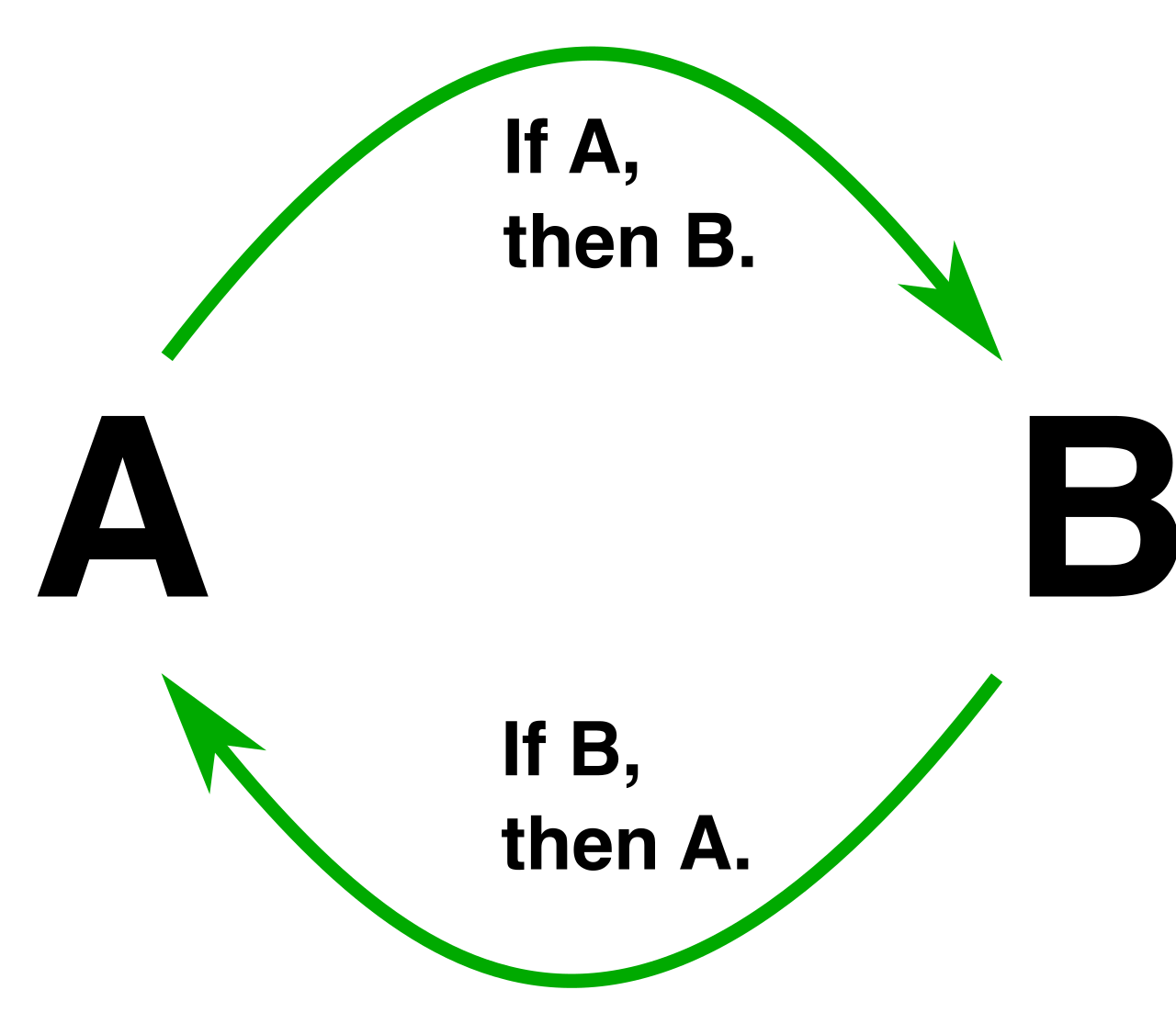
- Circular Reasoning: This is a logical fallacy where the writer includes the desired conclusion within the initial premise of the argument. It goes in a loop, proving nothing. (e.g., "This medication is the most effective treatment because it cures patients better than anything else.") The premise ("cures better") is exactly the same as the conclusion ("most effective").
When you sit down to take the ATI TEAS 7, approach reading comprehension passages exactly as you will approach patient diagnostics. Do not passively absorb the text. Actively hunt for the author's claim. Highlight the evidence they use, and interrogate it: Is it objective? Is it sufficient? Are they relying on deductive logic based on solid premises, or are they masking unsupported claims with emotional appeals and red herrings?
Mastering the evaluation of an argument is not just a test-taking strategy; it is the fundamental foundation of evidence-based practice in healthcare.