Fractions, Decimals, and Percentages
Not sure you’re ready?
Take the ~3-minute readiness diagnostic and see where you stand.
In the clinical environment, a single value often wears multiple disguises. A physician may prescribe 0.125 milligrams of a medication, the pharmacy might dispense a 1/8 milligram tablet, and the pharmacokinetic literature will describe its bioavailability as 12.5%. These are not three distinct quantities; they are identical values translated into different mathematical dialects. Fluency in fractions, decimals, and percentages is not merely a prerequisite for the TEAS 7 exam; it is the fundamental grammar of safe patient care. Misplacing a decimal point or misinterpreting a fraction is the difference between a therapeutic dose and a lethal one. Mastering these conversions ensures that whether a quantity is expressed as a part of a whole, a base-10 decimal, or a proportion of one hundred, its true magnitude remains unmistakably clear.
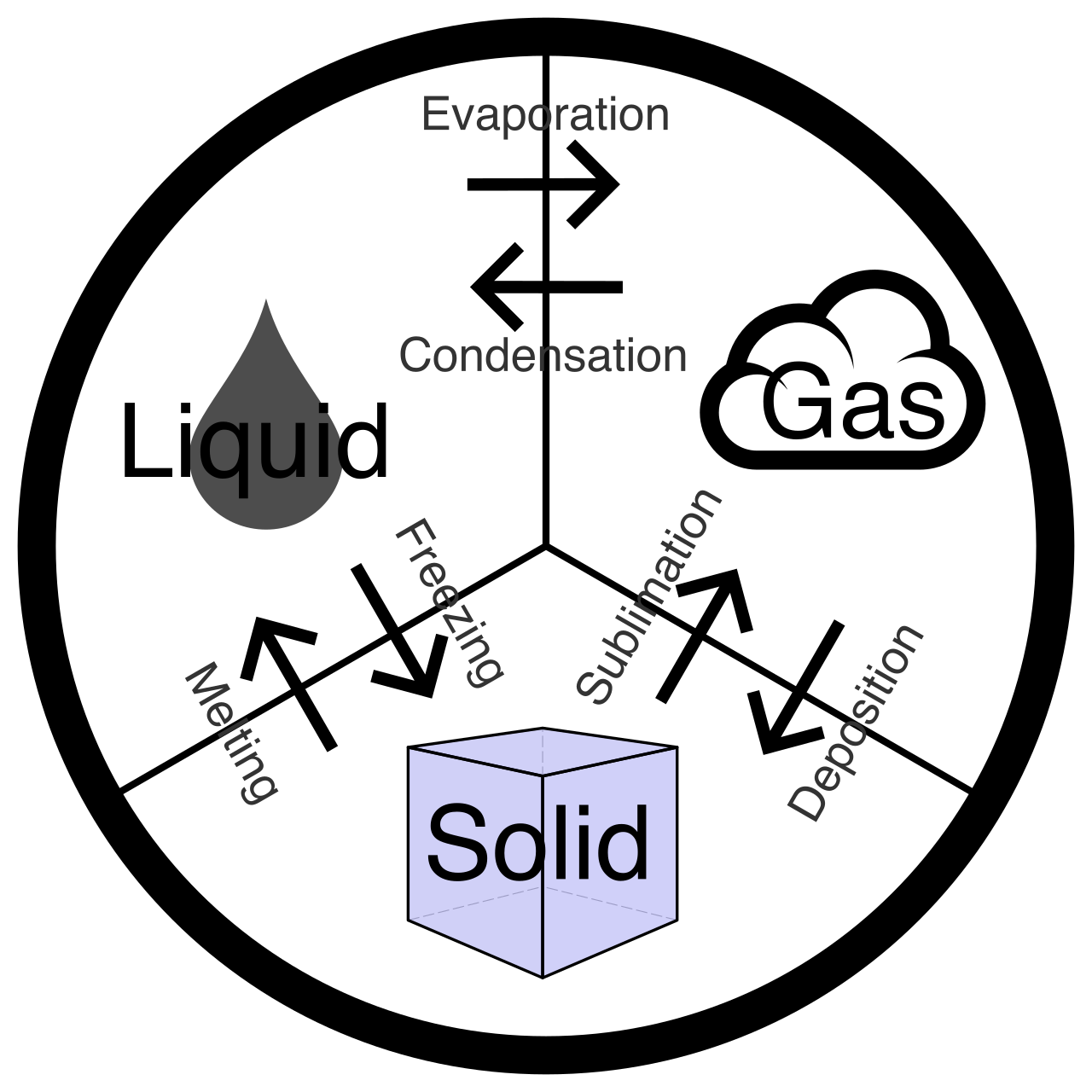
Think of fractions, decimals, and percentages as water, ice, and steam. The underlying substance is exactly the same; only the physical state has changed to suit the environment.
1. Fractions: The Architecture of Proportion
At its core, a fraction represents a part of a whole or a division of one quantity by another. It is built from three structural components:
- The Numerator: The top number of a fraction that indicates how many parts of the whole are present.
- The Denominator: The bottom number of a fraction that indicates the total number of equal parts in the whole.
- The Fraction Bar: The horizontal line separating the numerator and the denominator represents the mathematical operation of division.
This relationship applies universally. In fact, any whole number can be written as a fraction by placing the whole number over a denominator of 1 (e.g., 5=15).
2. Decimals: The Base-10 Landscape
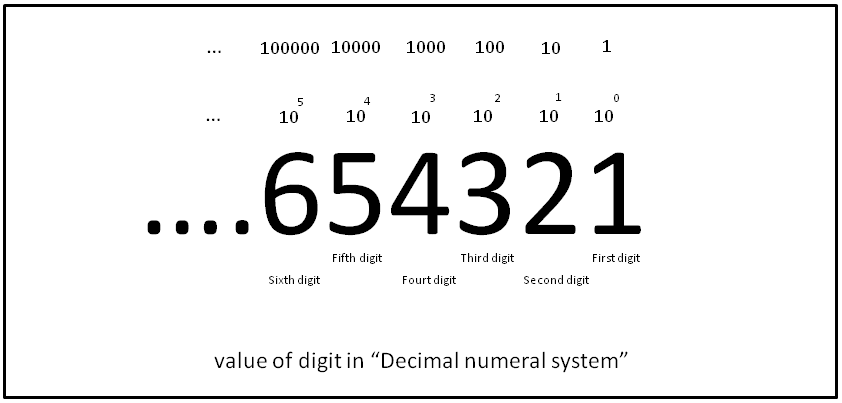
While fractions are flexible and can use any denominator, a decimal is a numerical value expressed in the base-10 system. It relies on rigid place values to communicate precise magnitudes.
- The tenths place: The first place value immediately to the right of the decimal point.
- The hundredths place: The second place value to the right of the decimal point.
- The thousandths place: The third place value to the right of the decimal point.
If you are measuring an IV fluid output of 2.45 liters, the "4" lives in the tenths place, and the "5" lives in the hundredths place.
3. Percentages: The Standardized Standard
Because comparing fractions with different denominators can be cumbersome, we often standardize them. A percentage is a ratio or proportion expressed as a fraction of 100. The word literally means per centum—for every hundred. Therefore, 45% simply means 45 parts out of 100.
Clinical Insight: A percentage value is not capped at 100%. A percentage value strictly greater than 100% represents a mathematical value that is greater than one whole. If a pediatric patient's weight increases by 150% over a year, they have gained their entire original body weight plus half of it again.
Before we convert between the three dialects, we must understand how fractions shift shape within their own ruleset.
Types of Fractions
- Proper Fraction: A fraction where the numerator is strictly less than the denominator (e.g., 43). This always represents a value less than one whole.
- Improper Fraction: A fraction where the numerator is greater than or equal to the denominator (e.g., 45). This represents a value equal to or greater than one.
- Mixed Number: A numerical value consisting of a whole number paired with a proper fraction (e.g., 141).
Mixed numbers and improper fractions are simply two ways of writing the same quantity. If a patient takes 221 pills, they are also taking 25 pills.
Converting Between Mixed Numbers and Improper Fractions
To convert a mixed number to an improper fraction:
- First, multiply the whole number by the denominator.
- After multiplying the whole number by the denominator, add the numerator to the product to establish the new improper fraction numerator.
- When converting a mixed number to an improper fraction, the denominator of the improper fraction remains identical to the original fraction's denominator. Example: For 341, multiply 3 by 4 (12), add 1 (13). The improper fraction is 413.
To convert an improper fraction to a mixed number:
- Divide the numerator by the denominator to determine the whole number component.
- When converting an improper fraction to a mixed number, the remainder of the division operation becomes the numerator of the fractional component. The denominator remains the same. Example: For 517, 17 divided by 5 is 3 with a remainder of 2. The mixed number is 352.
Equivalent Fractions and Simplification
Equivalent fractions are fractions that represent the exact same value despite possessing different numerators and denominators. Giving a patient 42 of a milligram is identical to giving them 21 of a milligram.
- Scaling up: Multiplying both the numerator and denominator of a fraction by the identical non-zero number produces a mathematically equivalent fraction.
- Scaling down: Dividing both the numerator and denominator of a fraction by their greatest common factor simplifies the fraction to its lowest possible terms.
Simplest Form: A fraction is in simplest form when the numerator and the denominator share no common factors other than the number 1.
In healthcare, you will constantly be translating a physician's order into a pump setting, or a lab result into a chartable metric. This requires flawless conversion between fractions, decimals, and percentages.
Decimals ↔ Percentages
This is the simplest translation, governed entirely by the number 100.
To convert a decimal to a percentage:
- Multiply the decimal value by 100 and add a percent sign.
- Why it works: Multiplying a decimal by 100 is mathematically equivalent to moving the decimal point exactly two places to the right.
- Example: 0.85 → move right two places → 85%.
To convert a percentage to a decimal:
- Divide the percentage value by 100 and remove the percent sign.
- Why it works: Dividing a percentage by 100 is mathematically equivalent to moving the decimal point exactly two places to the left.
- Crucial Warning: When a percentage is a single digit, converting the percentage to a decimal requires adding a placeholder zero immediately to the right of the decimal point. For example, moving the decimal left on 7% requires a zero to hold the tenths place, resulting in 0.07 (not 0.7, which would be 70%).
Fractions → Decimals
Because the fraction bar physically represents division, the translation is straightforward.
- To convert a fraction to a decimal, divide the numerator by the denominator.
- Example: 85 becomes 5÷8=0.625.
Decimals → Fractions
Translating the base-10 landscape back into parts of a whole relies heavily on place value terminology.
- To convert a terminating decimal to a fraction, write the digits that follow the decimal point as the numerator.
- When converting a terminating decimal to a fraction, the denominator must match the place value of the final decimal digit.
- Example: For 0.375, the final digit (5) is in the thousandths place. The fraction is 1000375. You then simplify this to lowest terms by dividing the numerator and denominator by their greatest common factor (125), yielding 83.
Fractions ↔ Percentages
Fractions and percentages do not communicate directly; they must pass through the decimal system as an intermediary.
To convert a fraction to a percentage:
- First, convert the fraction into a decimal by dividing the numerator by the denominator.
- After converting a fraction to a decimal, multiply that resulting decimal by 100 to find the equivalent percentage. Example: 53→3÷5=0.6→0.6×100=60%.
To convert a percentage to a fraction:
- Place the numerical percentage value as the numerator over a denominator of 100. From there, simplify to lowest terms.
- Example: 45% becomes 10045. Dividing top and bottom by 5 yields 209.
You will often encounter questions asking you to order a list of values such as 54, 0.85, and 78% from least to greatest. Attempting to compare these in their native formats is like trying to compare the speed of a car in mph, a boat in knots, and a runner in meters per second.
To correctly compare numbers presented in different formats, convert all the numbers to one identical format such as all decimals or all percentages.
If we choose decimals:
- 54 divides out to 0.80
- 0.85 is already 0.85
- 78% divides by 100 to become 0.78
- Comparison: 0.78 < 0.80 < 0.85 (so 78% < 54 < 0.85)
Similarly, to compare fractions containing different denominators, convert the fractions to equivalent fractions that share a common denominator. To compare 32 and 85, we find a common denominator of 24. 32 scales up by 8 to become 2416, and 85 scales up by 3 to become 2415. Clearly, 2416 is larger.
While you can always calculate equivalents using the rules above, speed is critical on the TEAS exam and in the clinical setting. Certain fundamental equivalencies should be memorized instantly, completely bypassing the need for calculation.
| Fraction | Decimal Equivalent | Percentage Equivalent |
|---|---|---|
| 1/10 | The fraction 1/10 is mathematically equivalent to the decimal 0.1 and the percentage 10%. | 10% |
| 1/8 | The fraction 1/8 is mathematically equivalent to the decimal 0.125 and the percentage 12.5%. | 12.5% |
| 1/5 | The fraction 1/5 is mathematically equivalent to the decimal 0.2 and the percentage 20%. | 20% |
| 1/4 | The fraction 1/4 is mathematically equivalent to the decimal 0.25 and the percentage 25%. | 25% |
| 1/3 | The fraction 1/3 is equivalent to the repeating decimal 0.333... and exactly the percentage 33 1/3%. | 33 31% |
| 1/2 | The fraction 1/2 is mathematically equivalent to the decimal 0.5 and the percentage 50%. | 50% |
| 2/3 | The fraction 2/3 is equivalent to the repeating decimal 0.666... and exactly the percentage 66 2/3%. | 66 32% |
| 3/4 | The fraction 3/4 is mathematically equivalent to the decimal 0.75 and the percentage 75%. | 75% |
Committing these exact equivalents to memory provides a mental scaffolding. If you know that 41 is 0.25, you can instantly intuit that 81 (half of a quarter) must be 0.125. This interconnected web of number sense is the hallmark of a confident, competent clinician.