Geometry and Measurement
Not sure you’re ready?
Take the ~3-minute readiness diagnostic and see where you stand.
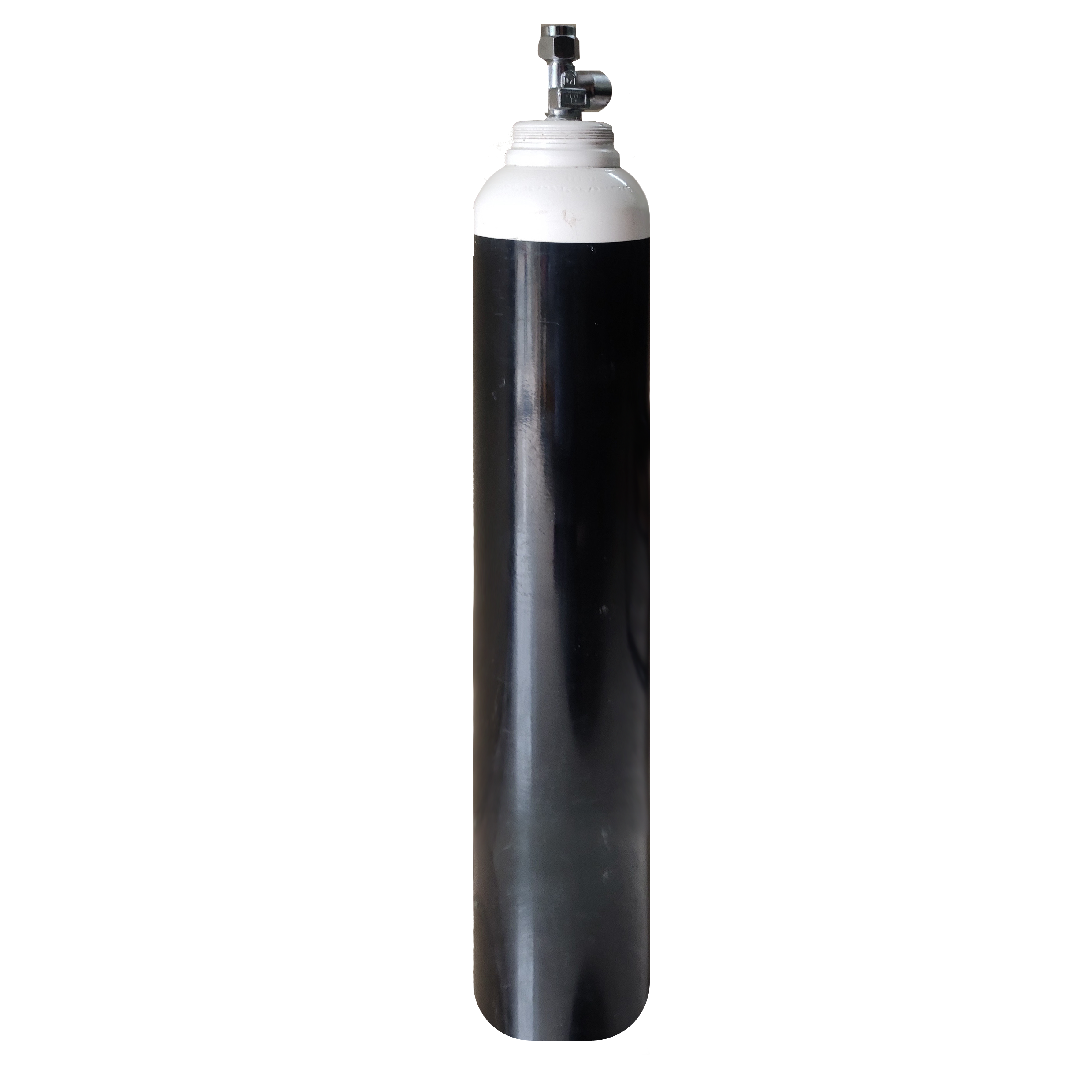
A syringe is a geometric cylinder. A sterile surgical drape is a rectangle. The angle at which you insert an IV needle dictates whether you successfully access a vein or accidentally puncture through it. In clinical practice, the physical space your patient occupies—and the tools you use to treat them—are governed by the immutable laws of geometry. Understanding how to measure these spaces is not an abstract mathematical exercise; it is the foundation of physical medicine. When a wound care nurse assesses a pressure ulcer, they are calculating area to track healing. When a respiratory therapist checks an oxygen tank, they are evaluating cylindrical volume. Geometry provides the precise language required to measure, map, and manipulate the physical reality of patient care.
To understand any physical object, we first map its boundaries. Whether you are measuring a patient's waistline or calculating the amount of privacy curtain needed for an isolation room, you are measuring the outer edge.
Perimeter is the total continuous length of the outside boundary of a two-dimensional geometric figure. Imagine taking a piece of string, tracing the exact outer edge of a shape, and then pulling that string taut against a ruler. That length is your perimeter.
Because a polygon is made of straight lines, the perimeter of a polygon is calculated by simply adding the lengths of all the sides of the polygon together.
For shapes with high symmetry, we can use mathematical shortcuts:
Perimeter of a Rectangle: P=2l+2w (where l is length and w is width). Because opposite sides of a rectangle are equal, we just double the length, double the width, and add them together. Perimeter of a Square: P=4s (where s is the length of one side). A square has four identical sides.
But what happens when the boundary has no straight edges? In medicine, cylinders and spheres are everywhere—from pupils and pills to cross-sections of blood vessels.
Circumference is the linear distance around the outside edge of a circle. It is exactly the same concept as perimeter, but strictly reserved for circles. To calculate it, we must first understand the anatomy of a circle:
- Radius (r): The straight-line distance from the exact center of a circle to any point on the outer edge of the circle. (Think of the spoke of a wheelchair tire).
- Diameter (d): A straight line segment that passes directly through the center of a circle and touches the edge at two points. By definition, the diameter of a circle is equal to exactly twice the length of the radius of the circle (d=2r).
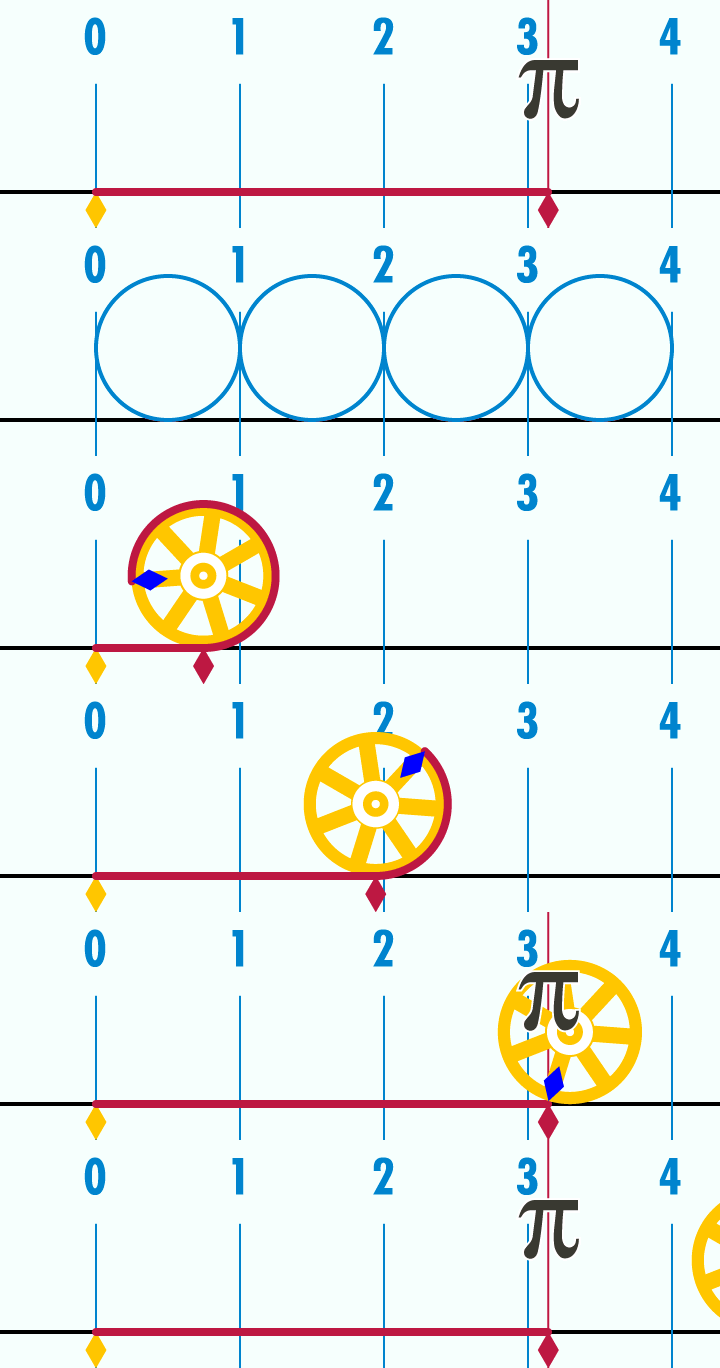
Every circle in the universe shares a magical, constant ratio: if you take its circumference and divide it by its diameter, you always get the exact same number. We call this constant pi (π), and the mathematical constant pi is approximately equal to 3.14.
Because of this constant relationship, we can define the circumference formulas:
Circumference: C=πd (where d is diameter) Circumference: C=2πr (where r is radius)
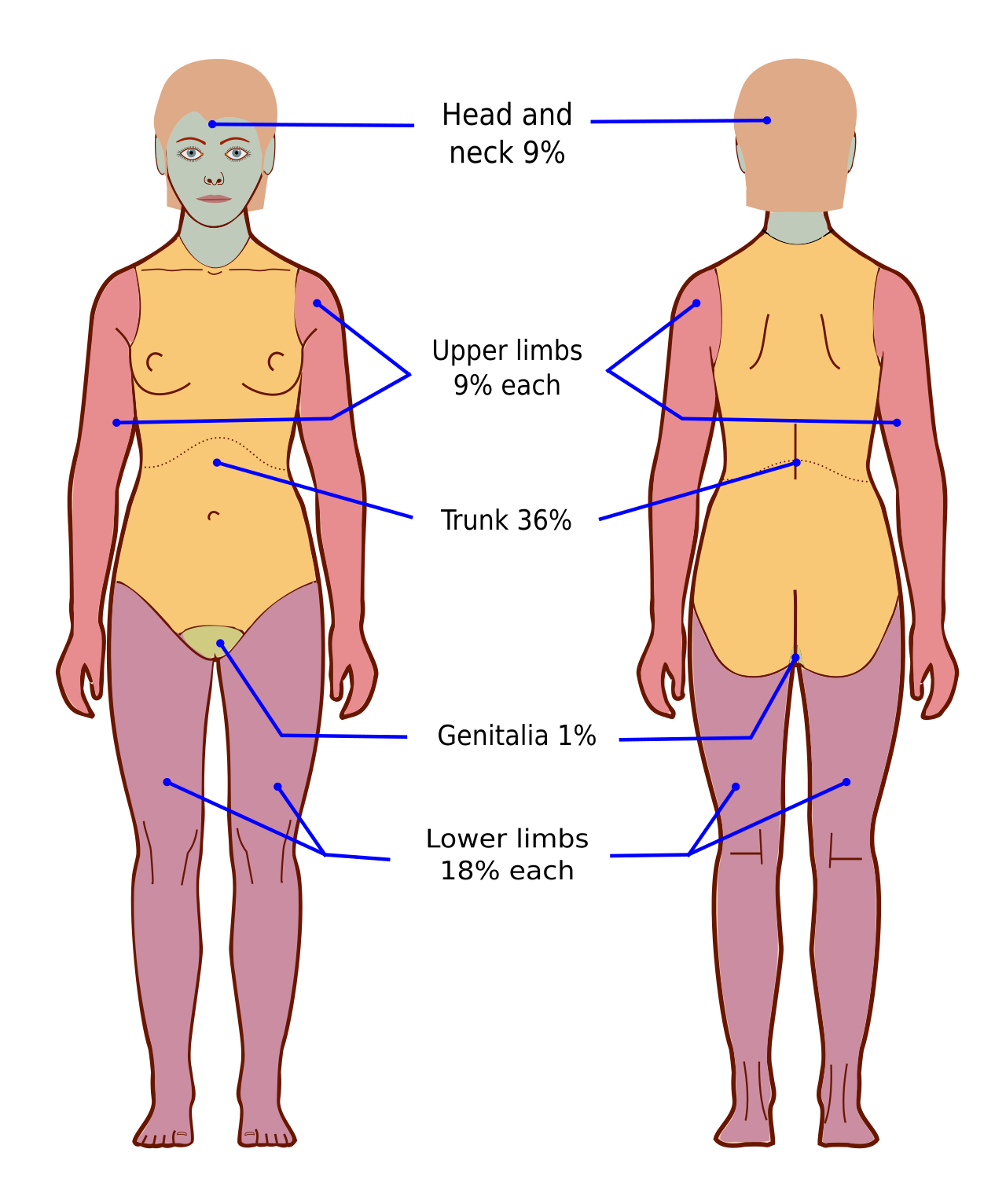
If perimeter is the fence, area is the grass inside it. Area is the quantity that expresses the extent of a two-dimensional surface or shape in a plane. When calculating dosages for burn victims, nurses use the "Rule of Nines" to estimate the Total Body Surface Area. You are no longer measuring a line; you are measuring the physical surface footprint.
Area is calculated by multiplying dimensions, which gives us square units (like square centimeters, cm2).
| Shape | Area Formula | The "Feynman" Logic |
|---|---|---|
| Rectangle | A=length×width | If a bandage is 4 cm long and 3 cm wide, you have 4 rows of 3 square centimeters. 4×3=12. |
| Square | A=side×side | A rectangle where length and width are identical. |
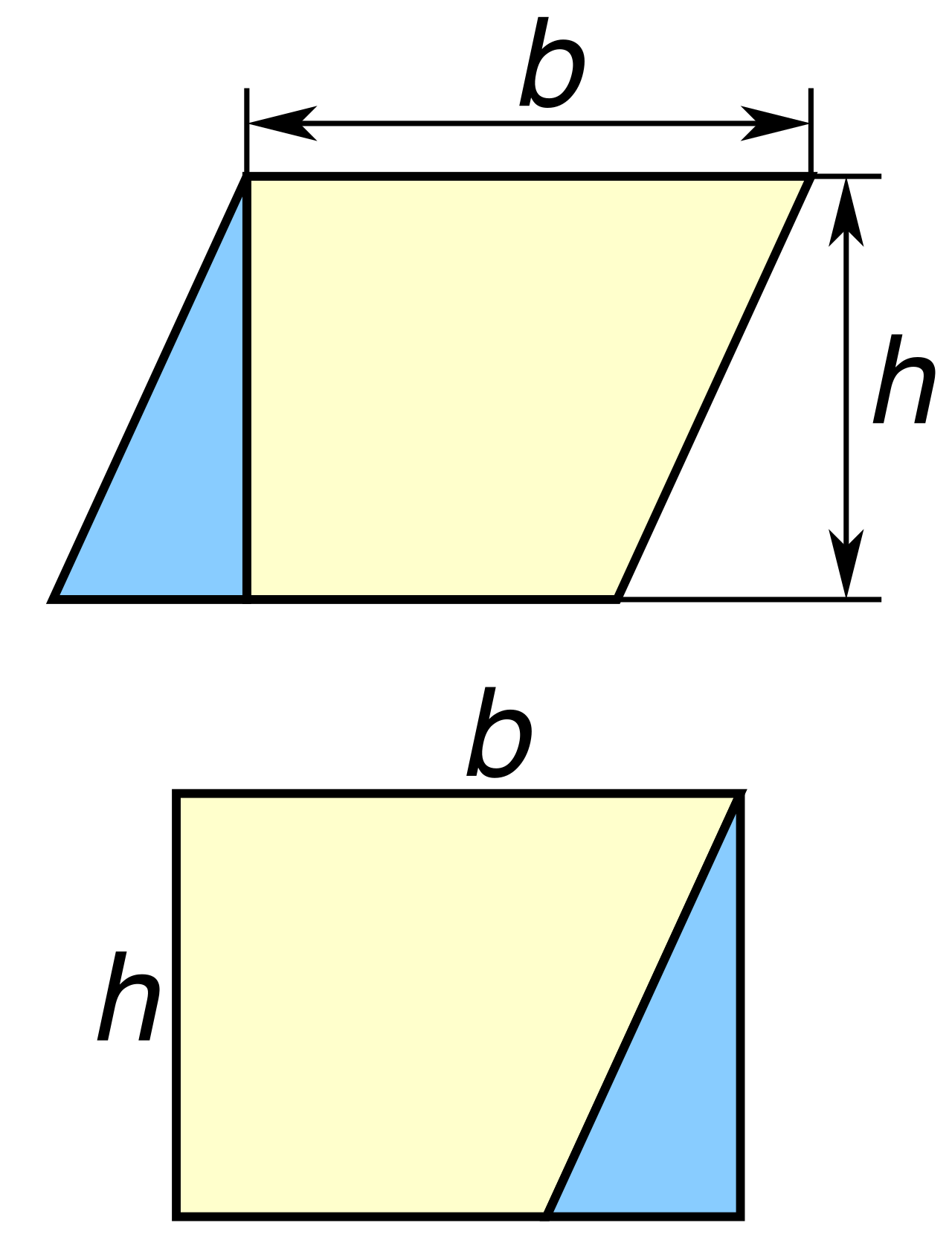
| Parallelogram | A=base×height | It's a slanted rectangle. If you chop off the slanted triangle on one end and move it to the other, it forms a perfect rectangle! |
| Triangle | A=21×base×height | Any triangle is exactly half of a parallelogram or rectangle. Find the area of the full rectangle (b×h) and cut it in half. |
| Trapezoid | A=21×(base1+base2)×height | Because the top and bottom are different widths, we simply take the average of the two bases and multiply by height. |
Circles, again, rely on our constant π to figure out their internal space.
Area of a Circle: The area of a circle is calculated using the formula A=π×r2, where r is the radius.
(Note: Never confuse 2πr for circumference with πr2 for area. Area always requires multiplying two spatial dimensions together, which is why the radius is squared!)
Healthcare does not happen in two dimensions. You push fluids, you pack wounds, and you measure oxygen. We must move into the third dimension.
Volume is the amount of three-dimensional space enclosed by a closed boundary or solid object. Think of the amount of saline inside an IV bag.
Surface area is a measure of the total area that the exterior surface of a three-dimensional object occupies. Think of the amount of cardboard needed to manufacture a medication box.
Prisms
The core principle of 3D geometry is wonderfully simple: the volume of a regular geometric prism is calculated by multiplying the area of the base of the prism by the height of the prism. Imagine a stack of printer paper. A single sheet is the 2D "base." If you know the area of that sheet, you just multiply it by how high you stack the paper.
Therefore, since the base of a rectangular prism is just a rectangle (length×width):
Volume of a Rectangular Prism: The volume of a rectangular prism is calculated using the formula V=length×width×height.
To find its surface area, imagine unfolding the box so it lays flat. You have six faces: a top and bottom, a front and back, and a left and right side.
Surface Area of a Rectangular Prism: Calculated using the formula SA=2(length×width)+2(length×height)+2(width×height).
Cylinders
A cylinder is mathematically just a prism with a circular base. Using our universal volume rule (Volume = Area of base × height), and knowing the area of a circle is πr2:
Volume of a Cylinder: The volume of a cylinder is calculated using the formula V=π×r2×height, where r is the radius of the base.
The surface area of a cylinder requires unfolding it. Think of a soup can. It has a circular metal top, a circular metal bottom, and a paper label wrapped around the middle. If you peel that label off, it's a rectangle! The length of that rectangle is exactly the circumference of the circle. Therefore:
Surface Area of a Cylinder: The surface area of a cylinder is calculated using the formula SA=2π(r2)+2πrh, where r is radius and h is height. (The 2πr2 accounts for the top and bottom circles, and the 2πrh accounts for the rectangular wrapped label).
When you elevate a patient's bed to Fowler's position to help them breathe, or document the limited range of motion in a contracted knee, you are utilizing angles.
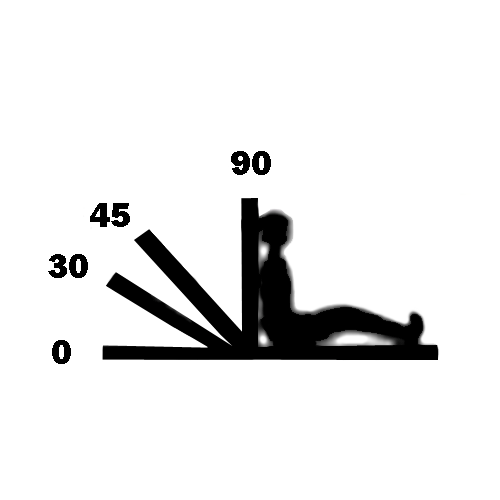
Angles are categorized by their measurement in degrees:
- Acute angle: An acute angle measures strictly greater than 0 degrees and strictly less than 90 degrees. (A subcutaneous injection is typically given at an acute 45-degree angle).
- Right angle: A right angle measures exactly 90 degrees. (Intramuscular injections are delivered straight down at a right angle).
- Obtuse angle: An obtuse angle measures strictly greater than 90 degrees and strictly less than 180 degrees.
- Straight angle: A straight angle measures exactly 180 degrees. (A patient lying perfectly flat, supine on a bed).
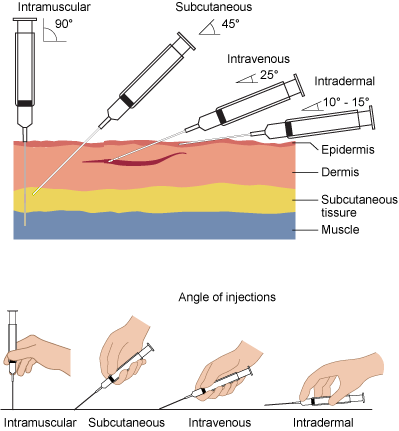
Angles frequently interact with one another. When they do, they form specific relationships:
- Complementary angles are a pair of angles whose measures sum to exactly 90 degrees.
- Supplementary angles are a pair of angles whose measures sum to exactly 180 degrees.
When two straight lines cross (like an X), they create four angles. Vertical angles are the opposite angles formed by the intersection of two straight lines. A vital rule of geometry dictates that vertical angles always have equal measure.
Finally, when straight lines enclose a shape, the internal angles follow strict sum rules:
- The sum of the interior angles of any triangle is exactly 180 degrees.
- The sum of the interior angles of any simple quadrilateral (four-sided shape) is exactly 360 degrees.
Of all the shapes in mathematics, the right triangle has perhaps the most powerful hidden property. When assessing biomechanics, physical therapy interventions, or even just calculating the shortest distance diagonally across a ward, we rely on a timeless mathematical relationship.
The Pythagorean theorem defines the relationship between the three sides of a right triangle. Notice the constraint: the Pythagorean theorem applies exclusively to right triangles. It will not work on acute or obtuse triangles.
A right triangle has three sides. The two sides that meet to form the 90-degree right angle are called the legs.
- In the Pythagorean theorem, the variables a and b represent the legs of the right triangle.
- The hypotenuse is the longest side of a right triangle.
- The hypotenuse of a right triangle is located directly opposite the right angle.
- In the Pythagorean theorem, the variable c represents the hypotenuse of the right triangle.
The theorem states that if you square the lengths of the two smaller legs and add them together, they perfectly equal the square of the hypotenuse:
The Pythagorean Theorem Formula: a2+b2=c2
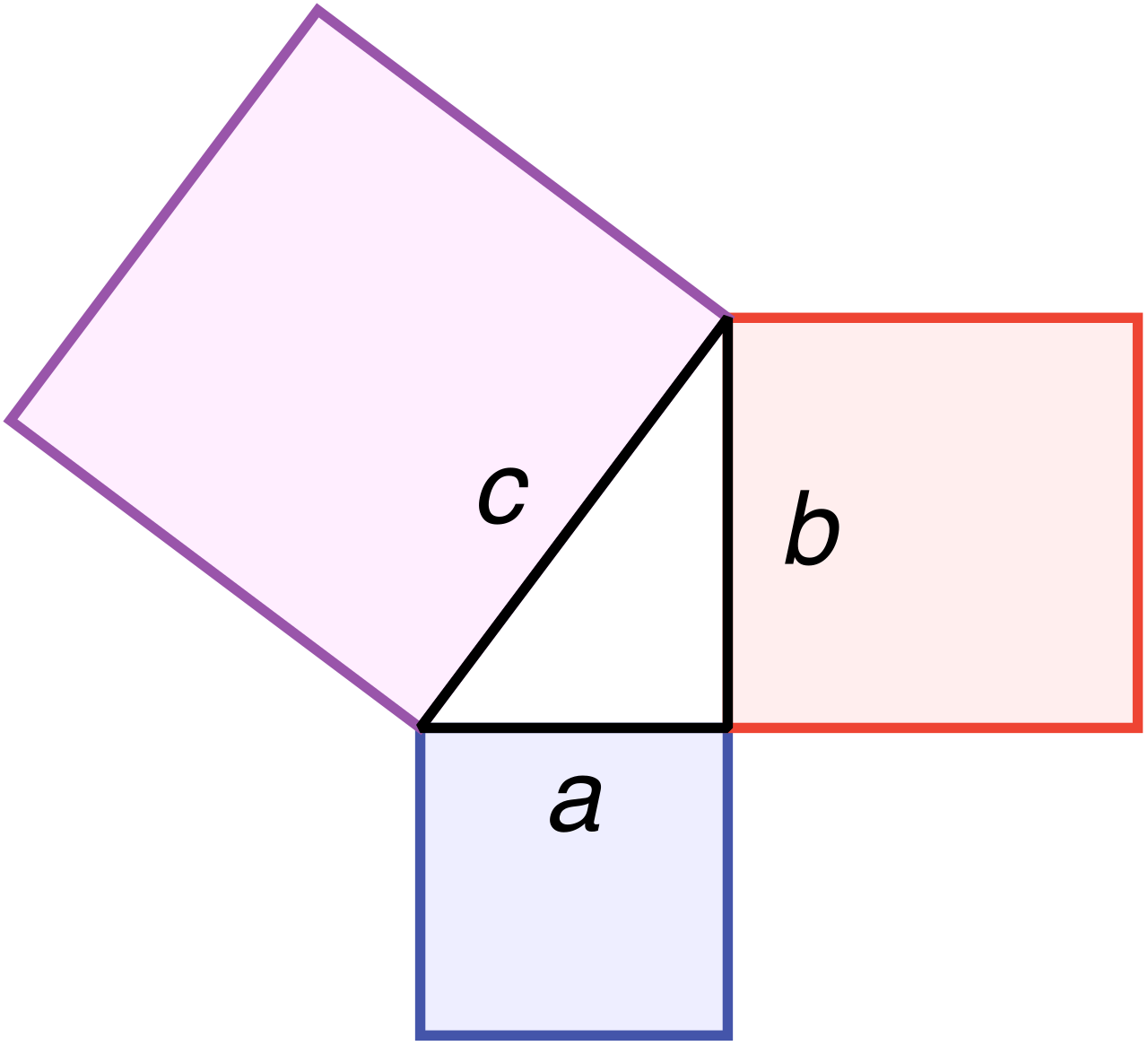
If you know the lengths of any two sides of a right triangle, this theorem acts as a master key, allowing you to seamlessly calculate the length of the third.
Geometry is not just lines on a chalkboard. It is the language of spatial reality. Every time you calculate a dosage based on body surface area, measure the circumference of an infant's head to track brain development, or adjust a bed angle to relieve pulmonary pressure, you are bringing geometry into the real world to save lives. Familiarize yourself with these foundational rules, and the physical spaces you navigate in your clinical practice will begin to make perfect, predictable sense.