Inferences and Conclusions
Not sure you’re ready?
Take the ~3-minute readiness diagnostic and see where you stand.
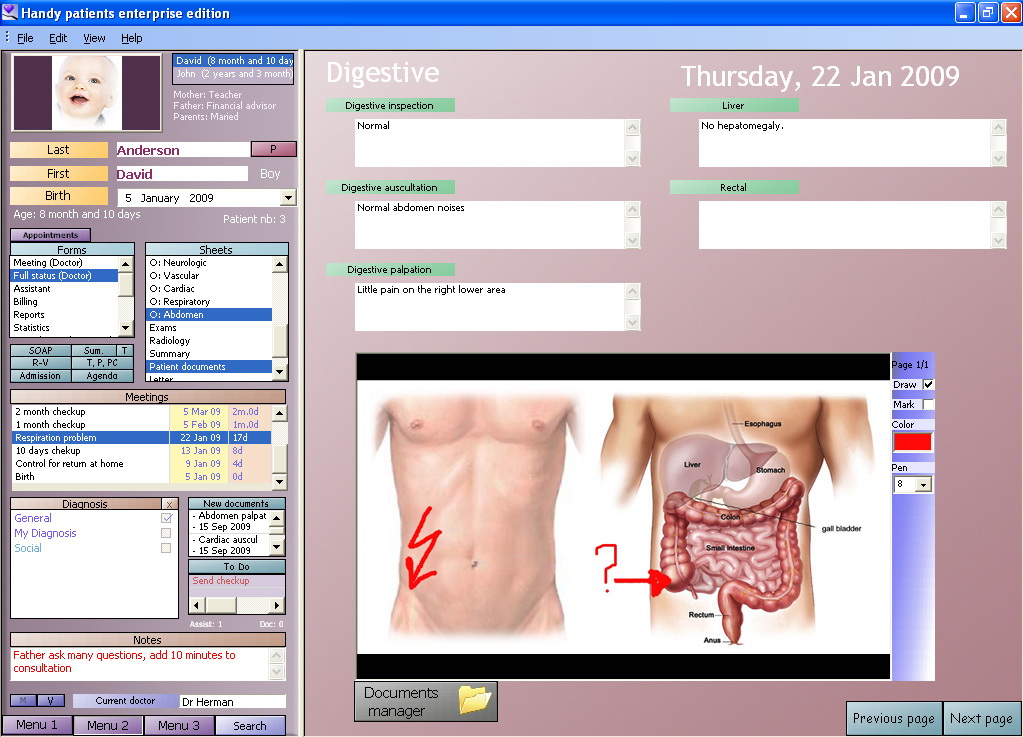
When a patient presents to the clinic with a flushed face, a temperature of 102.4°F, and a persistent, dry cough, the electronic health record does not explicitly state, "This patient is fighting an infection." It simply lists the vital signs and the observable symptoms. Yet, a skilled nurse instantly deduces the unwritten reality. This process—synthesizing raw, stated data to reach a logical, unstated reality—is the exact cognitive mechanism required to master inferences and conclusions on the ATI TEAS 7.
In clinical practice, a misinterpretation of data can harm a patient. On a standardized exam, a misinterpretation of a text will cost you points. The reading section of the TEAS is not testing your imagination; it is testing your precision. It measures your ability to look at a set of facts, filter out your own biases, and determine exactly what those facts prove.
Let us break down the machinery of logic, examine how authors hide meaning in plain sight, and learn how to extract the truth with the rigor of a scientist.
To understand how to draw a conclusion, we must first understand the materials we are building with. All text can be divided into two categories of information: explicit and implicit.
Explicit information is clearly and directly stated in the text. If a passage says, "The resting heart rate of the subject was 110 beats per minute," that is a hard, indisputable fact. There is no guessing involved.
Implicit information, however, is meaning that is suggested by the author without being directly stated. If the passage adds, "The subject was seated in a cool room, gripping the armrests, with wide eyes fixed on the clinic door," the author is communicating something implicit: the subject is anxious or terrified.
Reading between the lines is the active process of extracting this implicit information from explicit details. It is the bridge between what the author types and what the author actually means. But to cross that bridge safely, you must rely entirely on the foundation of the text. Textual evidence consists of specific details or quotes directly from the passage, and make no mistake—this textual evidence serves as the foundation for any valid inference. If your deduction is not anchored to a specific quote or detail, you are no longer reading; you are guessing.
While often used interchangeably in casual conversation, inferences and conclusions have distinct, sequential roles in reading comprehension.
An inference is a logical deduction based on information explicitly stated in a text. It is a single step forward from a fact.
A conclusion is a judgment made by analyzing multiple pieces of evidence within a text. It is the final destination.
Think of an inference as a single brick, and a conclusion as the wall. For instance, if a text states that a hospital ward is understaffed (Fact 1) and that patient admission rates have doubled (Fact 2), you can make a local inference: the current nurses are carrying a heavier workload.
When you zoom out, multiple pieces of explicit evidence can be synthesized to form a single logical conclusion. By pulling together the understaffing, the high admissions, and perhaps a sentence about the hospital's tight budget, a logical conclusion summarizes the logical endpoint of the evidence provided in a paragraph. The conclusion might be: "The hospital's current operational model is unsustainable."
Because conclusions operate on a macro-level, identifying the main idea of a passage aids in drawing accurate conclusions about the author's overall message. If you know the author's primary goal is to critique hospital management, your conclusions will naturally align with that overarching framework. Inference questions often ask what the author implies rather than what the author states. They want to see if you can follow the breadcrumbs to the logical endpoint.
Here is where many highly intelligent, highly capable nursing applicants lose points: they know too much.
When you sit down to take the ATI TEAS 7, you must imagine that the passage in front of you is the only information that exists in the universe. Readers must use only the information provided in the passage to draw valid conclusions.
Because you are likely studying anatomy, physiology, and biology, you possess a wealth of outside knowledge. Leave it at the door. Readers should avoid using personal outside knowledge to answer inference questions on standardized reading exams. If a passage discusses a novel treatment for hypertension, and you happen to know a recent medical journal debunked that treatment, you must ignore your outside knowledge. You answer based strictly on the text provided.
This leads us to the strict parameters of validity:
- A logical conclusion must be directly supported by the facts presented in the passage.
- A conclusion is considered invalid if the conclusion relies on information entirely absent from the passage.
- A valid inference cannot contradict explicitly stated facts within the same text.
If the text explicitly states the sky is green, your inferences must operate in a world where the sky is green.
Authors are not randomly scattering facts; they are deliberately engineering a path for you to follow. They want you to reach a specific conclusion, and they leave clues to help you get there.
Word Choice and Tone
Authors use specific word choices to guide readers toward a logical conclusion. Consider the difference between these two sentences:
- "The resident walked down the hallway."
- "The resident trudged down the hallway, dragging her stethoscope."
The verb "trudged" and the participle "dragging" are deliberate. By paying attention to these choices, authors provide clues through the tone of the passage to help readers infer unstated meanings. The tone here is exhausted and heavy, leading us to infer the resident is overworked.
Character Actions and Dialogue
In narrative or descriptive passages, readers can infer character motivations by analyzing character actions described in the text. If a patient repeatedly checks their watch and taps their foot while sitting in the waiting room, their actions betray impatience or anxiety.
Similarly, readers can infer character motivations by analyzing dialogue written in the text. If a character says, "I suppose I can take the night shift, if no one else will step up," the dialogue implies a sense of reluctant obligation or martyrdom, rather than genuine enthusiasm.
Signal Words
Logical reasoning is often signposted. Authors use transition words to map out the relationships between their ideas. Signal words like 'therefore' point toward a logical conclusion drawn by the author. When you see therefore, thus, ultimately, or in conclusion, the author is handing you the logical endpoint on a silver platter.
The ATI TEAS 7 Reading section tests the ability to distinguish between logical conclusions and unsupported assumptions. This is the primary battleground of the exam. The test-makers will intentionally provide answer choices that sound plausible, or even true in the real world, but are not supported by the specific text in front of you.
An unsupported assumption is a belief or idea that lacks explicit textual evidence.
How do you spot an unsupported assumption? Look for the leap. If the passage says, "Many nurses prefer wearing scrubs because they are comfortable," an unsupported assumption would be: "All healthcare professionals prioritize comfort over style."
The Red Flag of Extreme Language
The most reliable way to identify an unsupported assumption is to look at the vocabulary of the answer choice. Extreme language in an answer choice often indicates an unsupported assumption.
Words like 'always,' 'never,' or 'all' are examples of extreme language. Why are these words so dangerous? Because it takes only a single exception to prove them false. If an answer choice claims that "hospitals never operate efficiently during a holiday," the passage would have to explicitly provide evidence about every single hospital in existence to support that claim.
Because texts rarely provide absolute, universal evidence, answer choices containing extreme language are rarely the correct logical conclusion in reading comprehension tests.
| Feature | Logical Conclusion | Unsupported Assumption |
|---|---|---|
| Foundation | Derived from explicit textual evidence | Lacks explicit textual evidence |
| Language | Nuanced, measured (e.g., often, likely, may) | Extreme, absolute (e.g., always, never, all) |
| Scope | Stays within the boundaries of the text | Uses outside knowledge or leaps beyond the text |
| Contradictions | Cannot contradict stated facts | May ignore or contradict stated facts |
As a healthcare professional, your job is not only to assess the present but to anticipate the future. If a patient's blood pressure is steadily dropping, you predict a crash and intervene. Reading comprehension requires the exact same forward-thinking logic.
A prediction is a specific type of inference focused on anticipating what will happen next in a sequence.
You are not using a crystal ball; you are using data. Predicting an outcome involves using current textual evidence to forecast a future event. To make a valid prediction, you must look closely at the trajectory of the information provided:
- Trends established in a text serve as evidence for predicting likely outcomes. If a passage outlines a ten-year steady decline in funding for public health clinics, a logical prediction is that funding will continue to be tight or decrease in the eleventh year, absent new variables.
- Patterns of behavior described in a text serve as evidence for predicting likely outcomes. If a text describes a manager who routinely dismisses employee feedback and cuts corners on safety protocols, you can confidently predict that future employee complaints will be ignored.
Just as they do for conclusions, authors provide signposts for predictions. Signal words like 'consequently' indicate a cause-and-effect relationship useful for predicting outcomes. Words like subsequently, as a result, or if/then setups highlight the domino effect. If the text establishes the first domino falling, you are simply identifying which domino will be struck next.

Mastering inferences and conclusions on the ATI TEAS 7 does not require you to read the author's mind; it requires you to read the author's evidence.
Treat every passage like a sealed environment. Synthesize the explicit facts to uncover the implicit truths. Let the author's tone, word choices, and signal words guide your synthesis. Aggressively eliminate answer choices that rely on outside knowledge or hide behind the extreme language of unsupported assumptions. And when asked to look forward, trace the established patterns and trends to their logical consequence.
By applying this rigorous, evidence-based approach, you will navigate the reading section with the same cool, objective precision you will one day bring to the clinical floor.