Scientific Reasoning and Method
Not sure you’re ready?
Take the ~3-minute readiness diagnostic and see where you stand.
When a patient walks into a clinic complaining of severe fatigue, a rapid heart rate, and unintended weight loss, the attending clinician does not simply guess the diagnosis. The clinician relies on a deeply ingrained, systematic framework to evaluate the situation: gathering vital signs, ordering specific blood panels, and ruling out potential causes one by one. This clinical workflow is fundamentally identical to the scientific method, which is a systematic process used to investigate natural phenomena. The transition from observing a patient’s symptoms to definitively identifying an overactive thyroid requires stripping away human assumption and relying entirely on structured, measurable testing. To succeed in the health sciences, and to master the ATI TEAS 7, one must understand this exact architecture of reasoning—how to isolate variables, differentiate between what is seen and what is assumed, and measure reality with uncompromising precision.
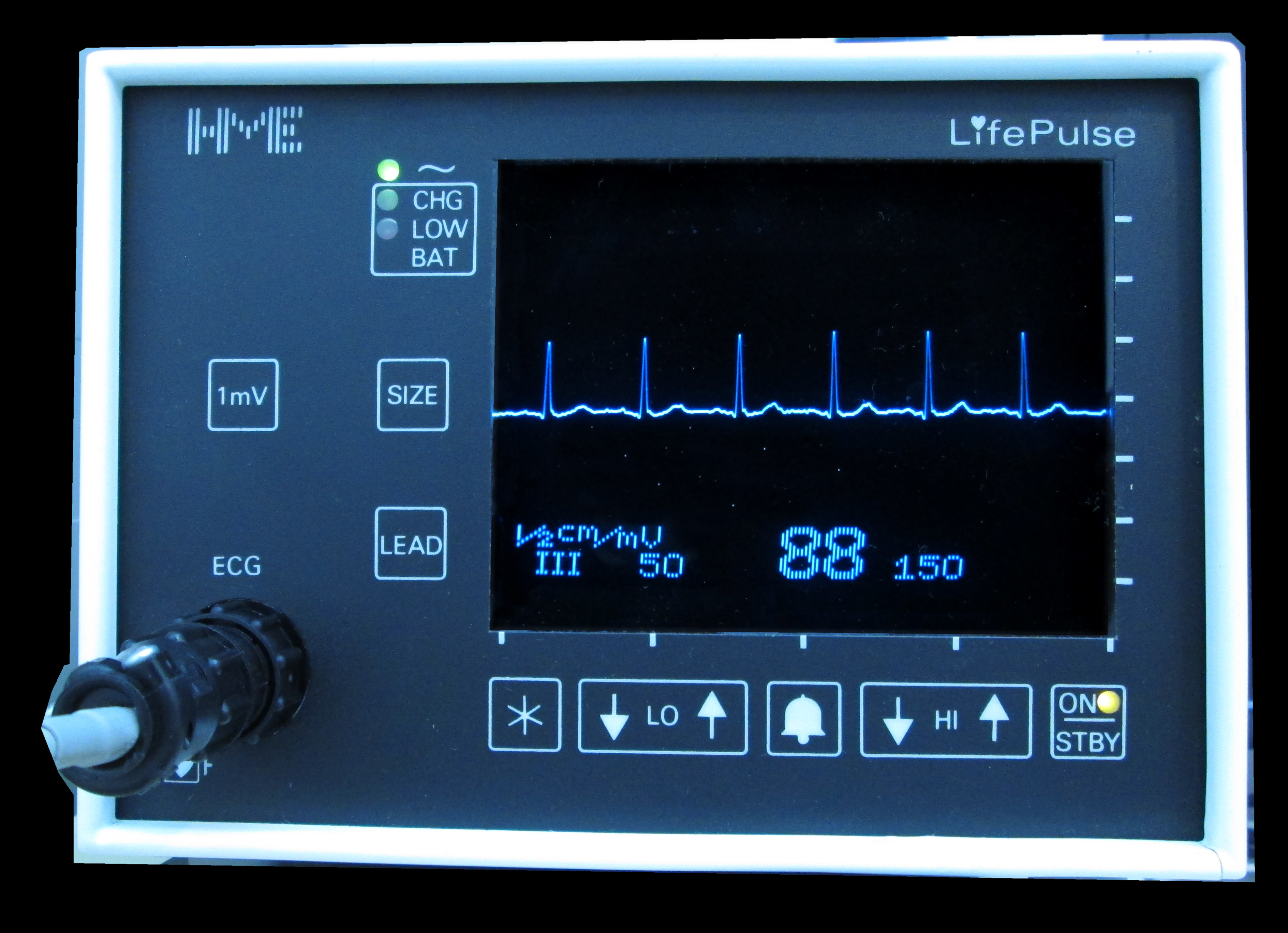
Science is not merely a collection of facts; it is a mechanism for filtering truth from fiction. This mechanism begins with a scientific question, which must be strictly testable through observation and experimentation. We cannot scientifically test whether a certain medication is "morally good," but we can test whether it lowers resting heart rate.
Once a testable question is established, we formulate a scientific hypothesis, which is a proposed explanation for a specific phenomenon. There is a crucial rule here that often trips up novice researchers: a scientific hypothesis must be formulated so that experimental results can prove the hypothesis false. This principle of falsifiability is the bedrock of scientific rigor. If an idea cannot be disproven by any possible test, it is not a scientific hypothesis.
To test this hypothesis, we build an experiment, defined as a controlled procedure designed to test a scientific hypothesis. As the experiment runs, nature gives us its answers in the form of experimental data, which refers to the information gathered during a scientific investigation. Finally, the researcher synthesizes this information into a conclusion, a statement summarizing whether experimental data supports the initial hypothesis. Note the phrasing: we say the data supports or fails to support the hypothesis. In science, we do not claim absolute, eternal proof; we build confidence through rigorous, repeated testing.
Before we can experiment, we must agree on what we are looking at. Human brains are storytelling machines, constantly jumping to conclusions based on limited information. Science demands we separate the raw input from the story.
An observation states an objectively detectable event or characteristic using the five senses. When evaluating a patient, observations fall into two distinct categories:
- Quantitative observations involve measurable numerical data. (e.g., "The patient has a core temperature of 39.2°C.")
- Qualitative observations describe properties or characteristics without using numbers. (e.g., "The patient’s skin is flushed, warm, and visibly diaphoretic.")
By contrast, an inference is a logical conclusion drawn from existing observations. It proposes an underlying cause or explanation for an observed event. If you observe a patient holding their abdomen and grimacing (observation), you might infer they are experiencing gastrointestinal pain (inference).
This distinction is vital because scientific claims must be supported by empirical evidence. Empirical evidence is information acquired by direct observation or experimentation, completely independent of personal belief or assumption.
To test a hypothesis reliably, we must isolate the exact mechanism we are studying. Imagine we are testing a novel blood pressure medication. The laboratory environment is full of moving parts, known as variables.
The Three Pillars of Experimental Design:
- The independent variable is the specific condition intentionally altered by the researcher. In our trial, this is the dosage of the new medication.
- The dependent variable is the measurable outcome responding to changes in the independent variable. This is the patient's resulting blood pressure reading.
- Controlled variables are environmental or experimental conditions kept strictly identical across all test groups. To ensure the drug is actually what is causing the change, we must control the patients' diets, age brackets, stress levels, and time of day the measurements are taken.
To prove our independent variable actually caused the change, we divide our subjects into two distinct camps. The experimental group is the subset of subjects receiving the active treatment being tested. Conversely, the control group is a baseline experimental subset that does not receive the active treatment.
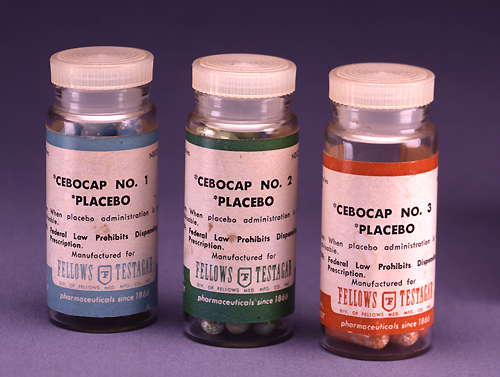
However, humans are uniquely susceptible to the power of suggestion. If patients know they are receiving a miracle drug, their blood pressure might drop purely due to psychological relief. To prevent this, the control group is often given a placebo, a pharmacologically inactive substance administered to a control group (like a sugar pill).
To push the rigor even further, researchers utilize a double-blind experiment, an elegant design that conceals the treatment group assignments from both the researchers and the subjects. If the nurse administering the pill doesn't know whether it is the drug or the placebo, they cannot accidentally hint the truth to the patient through body language.
Just because an experiment yields numbers does not mean those numbers are meaningful. We judge the quality of experimental tools and data based on two distinct metrics:
- Reliability is the degree to which an experimental assessment tool produces stable and consistent results over multiple trials.
- Validity refers to how accurately an experiment measures the specific phenomenon intended for study.
Imagine a broken hospital scale that reads exactly "50 pounds" every single time an adult steps onto it. Because it gives the same reading repeatedly, it has perfect reliability. However, because it does not actually measure the patient's true weight, it has absolutely zero validity. Both are required for sound science.
Even with valid tools, human error creeps in. We must constantly guard against bias, which is a systematic error introduced into an experiment by favoring a specific outcome. One of the most effective ways to dilute the impact of random errors and individual biological quirks is to increase the scale of the study. A larger experimental sample size reduces the margin of error in the final results, smoothing out the noise and revealing the true trend.
Sometimes, even in large studies, bizarre results emerge. These are anomalous data points: results that deviate significantly from the overall trend of an experiment. We do not simply delete them; we investigate them, as anomalies often point to equipment failure or entirely new scientific discoveries.
When analyzing trends, novice researchers frequently make a dangerous leap of logic by confusing correlation with causation.
- A causal relationship exists when a change in one variable directly produces a change in another variable (e.g., administering insulin directly lowers blood glucose).
- Correlation simply indicates a statistical relationship where two variables change together.
As a cardinal rule of scientific reasoning: correlation does not prove a causal relationship between variables. Ice cream sales and drowning incidents both rise in the summer. They are highly correlated, but eating ice cream does not cause drowning; the underlying variable is the hot weather causing both.

Before any experimental conclusion makes its way into a medical textbook or clinical guideline, it must pass through peer review, the process where independent experts evaluate a scientific study before publication. This gauntlet of skepticism exposes flaws in methodology and drastically increases the credibility of published scientific claims.
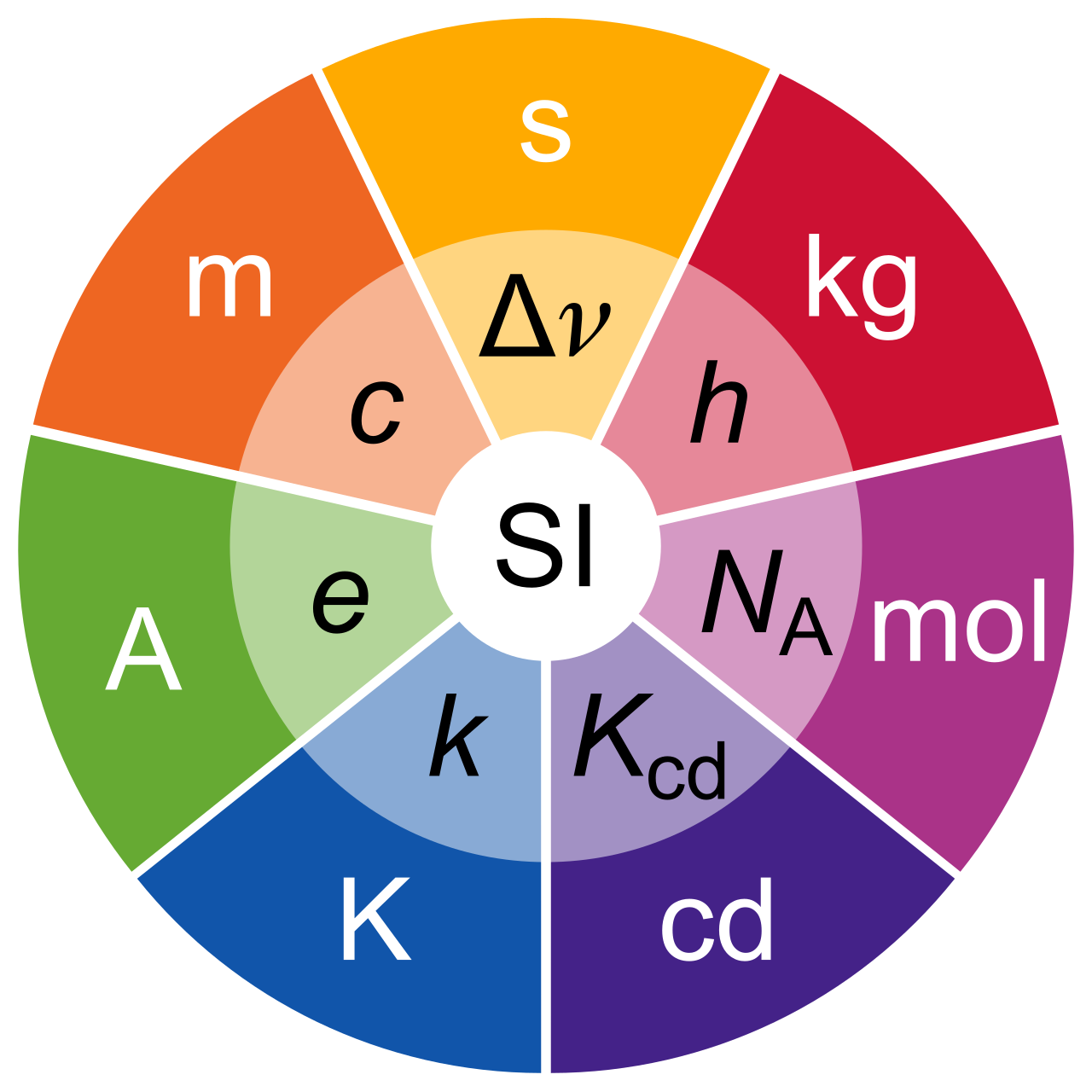
If a French physician, a Japanese pharmacologist, and an American nurse are collaborating on a critical care protocol, they cannot rely on miles, ounces, and Fahrenheit. Science requires a standardized, universal dialect. This is the International System of Units (SI), the globally accepted metric system for scientific measurement.
The SI system relies on a foundation of fundamental base units:
- The meter is the standard SI base unit for length.
- The kilogram is the standard SI base unit for mass.
- The second is the standard SI base unit for time.
- The Kelvin is the standard SI base unit for thermodynamic temperature (though Celsius is deeply intertwined and commonly used in clinical settings).
- The ampere is the standard SI base unit for electric current.
- The mole is the standard SI base unit for the amount of a substance (crucial in chemistry for counting atoms/molecules).
- The candela is the standard SI base unit for luminous intensity.
Additionally, while it is technically a derived unit, the liter is a common metric unit accepted for use with the SI system to measure volume.
The brilliance of the metric system lies in its prefixes, which scale these base units up or down by perfect powers of ten. You will use these prefixes daily when calculating medication dosages (like converting grams to milligrams).
| Prefix | Meaning | Mathematical Multiplier |
|---|---|---|
| kilo- | Indicates a multiplier of one thousand | 1,000 |
| hecto- | Indicates a multiplier of one hundred | 100 |
| deca- | Indicates a multiplier of ten | 10 |
| (Base) | (meter, liter, gram) | 1 |
| deci- | Indicates a multiplier of one-tenth | 0.1 |
| centi- | Indicates a multiplier of one-hundredth | 0.01 |
| milli- | Indicates a multiplier of one-thousandth | 0.001 |
| micro- | Indicates a multiplier of one-millionth | 0.000001 |
Finally, understanding the units is useless without the physical tools to measure them accurately. Different laboratory scenarios demand vastly different instruments.
Measuring Volume
When measuring liquids, glassware is categorized by its precision:
- A graduated cylinder is a tall cylindrical piece of laboratory glassware used to measure the volume of a liquid. It is excellent for general, everyday measurements.
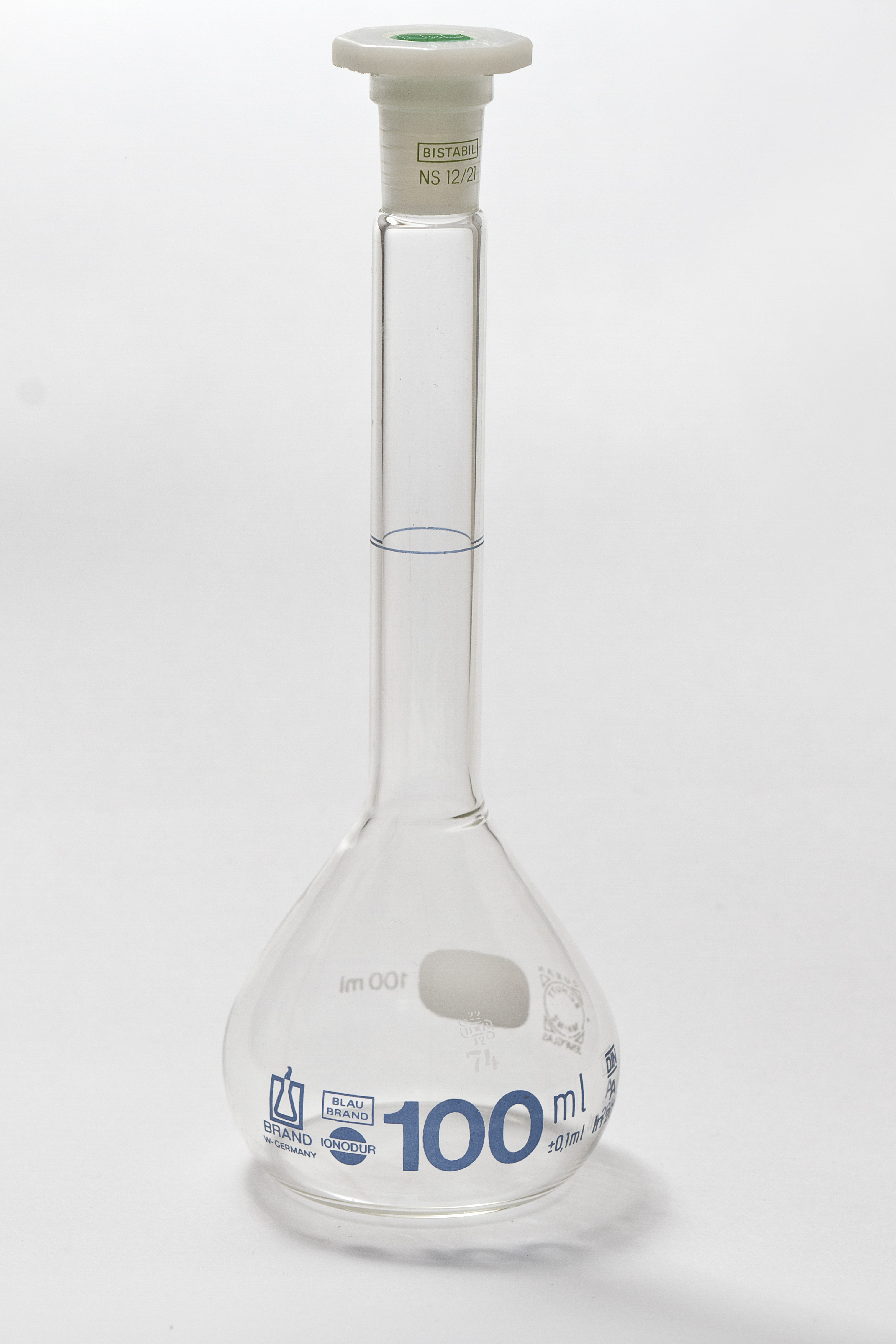
- A volumetric flask is a piece of laboratory glassware designed to measure a single precise volume of liquid. It features a wide base and a long, narrow neck with a single etched mark. It is predominantly used for preparing chemical solutions of a highly specific concentration.
- A volumetric pipette is a laboratory tool used to measure and transfer a highly precise volume of liquid. If you need to move exactly 5.00 mL of a reagent from one container to another, this is your instrument.
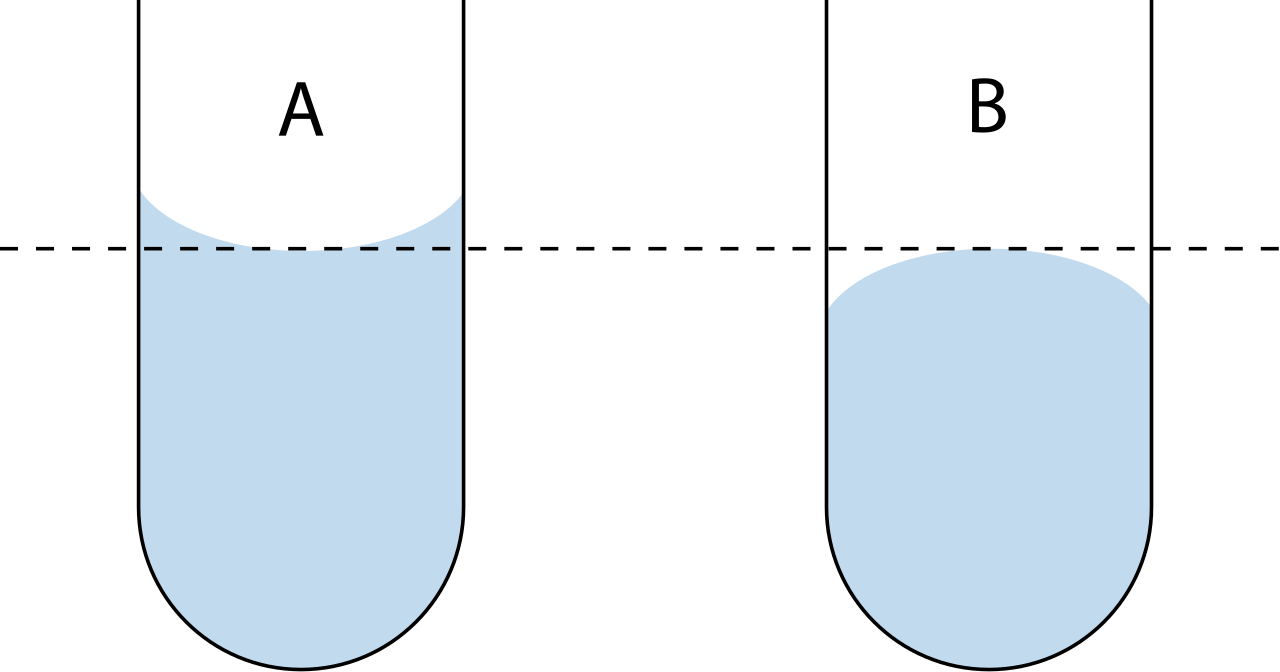
Water and aqueous solutions have an interesting property: they climb the walls of glass containers due to surface tension, creating a meniscus, which is the curved upper surface of a liquid within a cylindrical container.
Crucial Technique: How do you read a curved line? Accurate liquid volume is measured by reading the fluid level at the lowest point of a concave meniscus at eye level. If you look down at it from an angle, parallax error will ruin your measurement.
Measuring Mass and Temperature
When determining mass, the required precision again dictates the tool:
- A triple beam balance is a mechanical laboratory instrument used to measure the mass of an object. It operates by sliding weights along three distinct beams until equilibrium is reached, relying purely on gravity and mechanics.
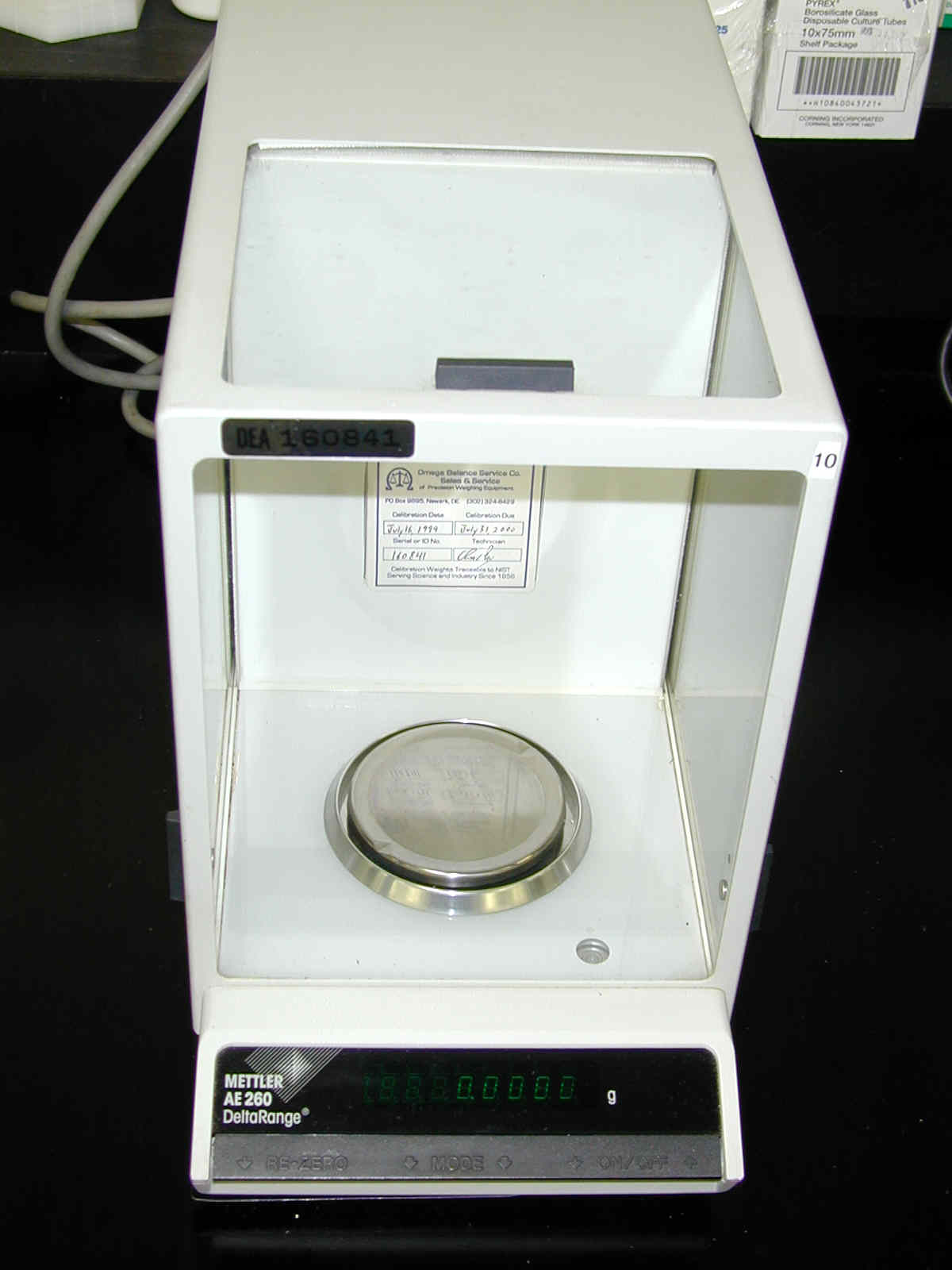
- An electronic balance is a digital laboratory instrument that measures the mass of an object. It is faster, often capable of far greater precision (down to the milligram or microgram), and is standard in modern biochemical labs.
Lastly, a thermometer is a laboratory instrument used to measure temperature. Whether filled with dyed alcohol or relying on digital thermocouples, measuring the thermal energy of a system is a fundamental observation in both physical chemistry and bedside triage.
Mastering the scientific method and its instruments is not simply about passing an exam. It is the adoption of a specific worldview—one where evidence outweighs assumption, precision eradicates error, and rigorous methodologies pave the way to genuine healing and discovery.