Spelling and Punctuation
Not sure you’re ready?
Take the ~3-minute readiness diagnostic and see where you stand.
Precision in written language is the invisible infrastructure of effective patient care. A misplaced decimal alters a dosage; similarly, a misplaced comma alters a diagnosis. In the fast-paced environment of clinical charting, spelling and punctuation are not merely academic formalities—they are the mechanical rules by which we ensure clarity, protect patient safety, and maintain professional authority. Understanding the structural rules of English orthography and punctuation separates dangerous ambiguity from absolute accuracy. Mastering these rules prepares you not only for the ATI TEAS 7 but for a career where exactness is non-negotiable.

English spelling often seems chaotic, but beneath the surface lies a predictable system of phonetic history and structural suffixes.
The "I Before E" Principle and Its Rebels
The traditional spelling rule states to place the letter i before the letter e (as in shield or achieve). However, this rule shifts based on adjacent letters and sounds.
- The letter e is placed before the letter i when the letters immediately follow the letter c (as in receive or ceiling).
- The letter e is placed before the letter i when the letters produce a long "a" sound (as in neighbor or weigh).
The Clinical Exceptions Language evolves, leaving behind exceptions. The words weird, caffeine, protein, and neither are strict exceptions to the "i before e" spelling rule. Given how frequently healthcare professionals interact with caffeine and protein, committing these exceptions to memory is vital.
Suffix Mechanics: The Silent E and Final Consonants
When we add a suffix to a base word, the end of the base word often morphs to accommodate the new vowel or consonant.
The Silent 'E'
- A final silent e is dropped from a word when adding a suffix that begins with a vowel (e.g., observe + -ation = observation). The invading vowel replaces the need for the 'e'.
- A final silent e is kept on a word when adding a suffix that begins with a consonant (e|g., manage + -ment = management).
- Exception: The word truly is an exception to the silent 'e' rule and drops the 'e' despite the suffix beginning with a consonant (true + -ly = truly).
Doubling the Final Consonant A final single consonant is doubled when adding a suffix beginning with a vowel if the word ends in a single consonant preceded by a single vowel and the stress is on the final syllable.
- Admit becomes admitted (stress on "mit", single vowel 'i', single consonant 't').
The Letter 'Y'
- A final y preceded by a consonant is changed to an i before adding a suffix (e.g., rely + -able = reliable).
- However, the final y is kept unchanged when adding the suffix -ing to a word to prevent a double 'i' (e.g., study + -ing = studying).
Pluralization
Most nouns take a simple 's', but terminal sounds dictate structural changes:
- The suffix -es is added to make a word plural if the word ends in ch, sh, s, x, or z (e.g., reflexes, rashes).
- A word ending in f or fe is often made plural by changing the f or fe to ves (e.g., half becomes halves; knife becomes knives).
High-Yield TEAS Orthography
The TEAS exam frequently tests words whose structures defy phonetic intuition. Memorize these specific architectures:
| Word | Structural Fact |
|---|---|
| accommodate | Correctly spelled with two c's and two m's. |
| embarrass | Correctly spelled with two r's and two s's. |
| occurrence | Correctly spelled with two c's and two r's. |
| definitely | Correctly spelled without the letter a. |
| separate | Contains the letter a immediately after the letter p (think: there is "a rat" in separate). |
| privilege | Correctly spelled with an i following the v and an e preceding the g. |
| vacuum | Correctly spelled with one c and two u's. |
| judgment | Correctly spelled without an e following the letter g in standard American English. |
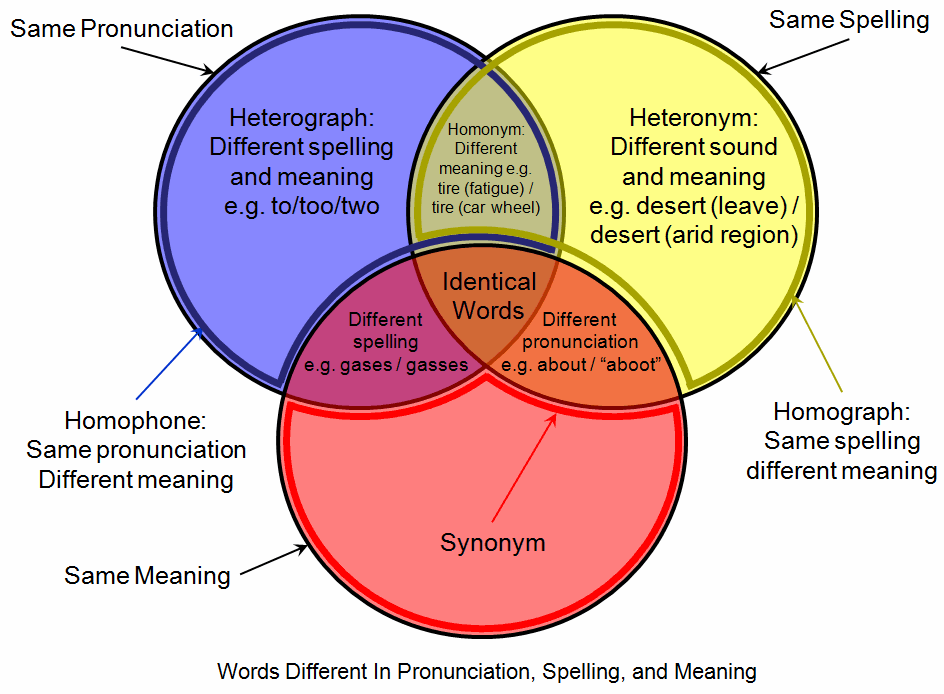
Homophones are words that sound exactly the same as another word. The danger lies in their definitions: homophones have different meanings and different spellings from the words they sound like. In healthcare, writing sight instead of site changes the entire meaning of a patient record.
Pronoun Traps
- their / there / they're: Their is a possessive pronoun indicating ownership by a group. There is an adverb referring to a specific location or position. They're is a contraction of the words "they are."
- its / it's: Its is a possessive pronoun indicating ownership by a singular entity. It's is a contraction of the words "it is" or "it has."
- your / you're: Your is a possessive pronoun indicating ownership. You're is a contraction of the words "you are."
Action and Consequence
- affect / effect: The word affect is primarily used as a verb meaning to influence or produce a change (e.g., The medication will affect her heart rate). The word effect is primarily used as a noun meaning a result, consequence, or outcome (e.g., The effect of the medication was immediate).
- accept / except: The word accept is a verb meaning to receive or to agree to something. The word except is a preposition meaning to exclude or leave out.
- loose / lose: The word loose is an adjective meaning not tight or not firmly fixed in place. The word lose is a verb meaning to be deprived of something or to fail to win.
Logic, Time, and Space
- than / then: The word than is a conjunction used to make comparisons (tachycardia is faster than bradycardia). The word then is an adverb indicating time or a sequence of events (draw the blood, then label the vial).
- cite / sight / site: The word cite is a verb meaning to quote as evidence or to mention as an example. The word sight is a noun referring to the faculty of seeing or a thing that can be seen. The word site is a noun referring to a physical location or a place where a structure is built (e.g., injection site).
- stationery / stationary: The word stationery refers to writing materials such as paper and envelopes. The word stationary is an adjective meaning not moving or not intended to be moved.

Nuance and Reference
- principal / principle: The word principal refers to a chief or head person or a capital sum of money. The word principle refers to a fundamental truth, rule, or standard of behavior.
- complement / compliment: The word complement refers to something that completes an object or brings it to perfection (e.g., complementary medicine). The word compliment refers to an expression of praise or admiration.
- capitol / capital: The word capitol refers to a physical building where a legislature meets. The word capital refers to a city serving as a seat of government or to financial wealth.
- illusion / allusion: The word illusion refers to a deceptive appearance or false impression. The word allusion refers to an indirect or passing reference to an external text or event.
Punctuation marks are the traffic signals of written language. They dictate when a reader must yield, pause, or stop entirely.
End Marks
Sentences must resolve, and their resolution matches their intent:
- A declarative sentence (makes a statement) ends with a period.
- An imperative sentence that issues a command or request typically ends with a period (e.g., Check the patient's vitals.).
- An interrogative sentence that asks a direct question ends with a question mark.
- An exclamatory sentence expressing strong emotion ends with an exclamation mark.
The Comma: The Great Separator
Commas organize internal sentence elements, keeping distinct ideas from crashing into one another.
- Series: A comma is used to separate three or more items in a series (e.g., gauze, tape, and saline).
- Independent Clauses: A comma is placed before a coordinating conjunction that links two independent clauses. The seven coordinating conjunctions are for, and, nor, but, or, yet, and so (often remembered by the acronym FANBOYS).
- Introductions: A comma is placed after an introductory dependent clause to separate it from the main independent clause (e.g., If the fever spikes, notify the attending physician.).
- Interruptions: Commas are used to set off nonrestrictive clauses that provide non-essential information to a sentence. Similarly, commas are used to set off an appositive phrase that renames a preceding noun without changing the core meaning of the sentence (e.g., Dr. Smith, the chief of surgery, will be arriving shortly.).
- Direct Address: Commas are used to set off the name of a person being directly addressed in a sentence (e.g., Please, Sarah, hand me the chart.).
- Formatting: A comma is used to separate a day of the month from the year in a standard date format. A comma is also used to separate a city from a state in an address.
Semicolons and Colons: The Clinical Links
Semicolons and colons act as hinges between closely related, heavily weighted ideas.
The Semicolon (;)
- A semicolon is used to connect two closely related independent clauses without the use of a coordinating conjunction.
- A semicolon is used before a conjunctive adverb that connects two independent clauses. Common conjunctive adverbs include therefore, moreover, furthermore, and consequently. (e.g., The patient refused the medication; therefore, we must document the refusal.)
- A semicolon is used to separate items in a series when the individual items already contain internal commas (e.g., The clinics are located in Austin, Texas; Denver, Colorado; and Portland, Oregon.). This prevents the sentence from degrading into a chaotic string of commas.
The Colon (:)
- A colon is used to introduce a list that immediately follows an independent clause.
- A colon is used to introduce a direct quotation that immediately follows an independent clause.
- A colon is used to separate hours from minutes in numerical time expressions (e.g., 14:30).
- A colon is used after the salutation in a formal business letter (e.g., Dear Admissions Committee:).
Apostrophes
Apostrophes perform two distinct jobs: they indicate possession, or they signal that letters have been surgically removed from a word.
- Singular Possession: An apostrophe and the letter s are added to a singular noun to show possession (e.g., the nurse's station).
- Plural Possession (ending in s): An apostrophe is added after the final s of a plural noun ending in s to show possession (e.g., the patients' rights).
- Plural Possession (not ending in s): An apostrophe and the letter s are added to a plural noun that does not end in s to show possession (e.g., the children's ward).
- Contractions: An apostrophe is used to replace missing letters in a contraction (e.g., do not becomes don't).

Quotation Marks
In healthcare, quoting a patient precisely is a legal and medical necessity.
- Quotation marks are used to enclose the exact spoken or written words of a direct quotation.
- Quotation marks are used to enclose the titles of short works such as poems, short stories, articles, and songs. (Larger works like books or journals are italicized).
The Geometry of Quotes and Punctuation The physical placement of punctuation marks around quotation marks follows strict rules in standard American English:
- Periods and commas are always placed inside closing quotation marks.
- Colons and semicolons are always placed outside closing quotation marks.
- Question marks vary based on logic: A question mark is placed inside closing quotation marks if the quotation itself is a question (e.g., The patient asked, "When can I go home?"). Conversely, a question mark is placed outside closing quotation marks if the entire sentence is a question containing a non-questioning quote (e.g., Did the doctor say, "Discharge him tomorrow"?).