Sentence Structure and Capitalization
Not sure you’re ready?
Take the ~3-minute readiness diagnostic and see where you stand.
Think of a patient’s medical chart as a map of their physical reality; if the map is fractured or poorly drawn, the next clinician to read it is left navigating in the dark. Sentence structure and capitalization are the anatomical framework of that map. Just as the human body relies on the structural integrity of bones and the functional rhythm of the heart, a sentence relies on subjects, predicates, and clauses to deliver precise, unambiguous meaning. In a clinical setting, an improperly joined clause or an ambiguous fragment is not merely an academic misstep—it is a potential breakdown in patient care. Mastering the rules of grammar ensures that when you document a sudden change in vital signs or a patient's reaction to a medication, your meaning transfers exactly as intended, without the dangerous static of a run-on sentence or a comma splice.
To understand how sentences function, we must first examine their cellular building blocks. Every valid sentence operates through a relationship between a subject and a predicate.
A sentence requires a subject to indicate who or what performs the action, and it requires a predicate to indicate the action or state of being.
For example, in the sentence "The physician arrives," The physician is the subject and arrives is the predicate.
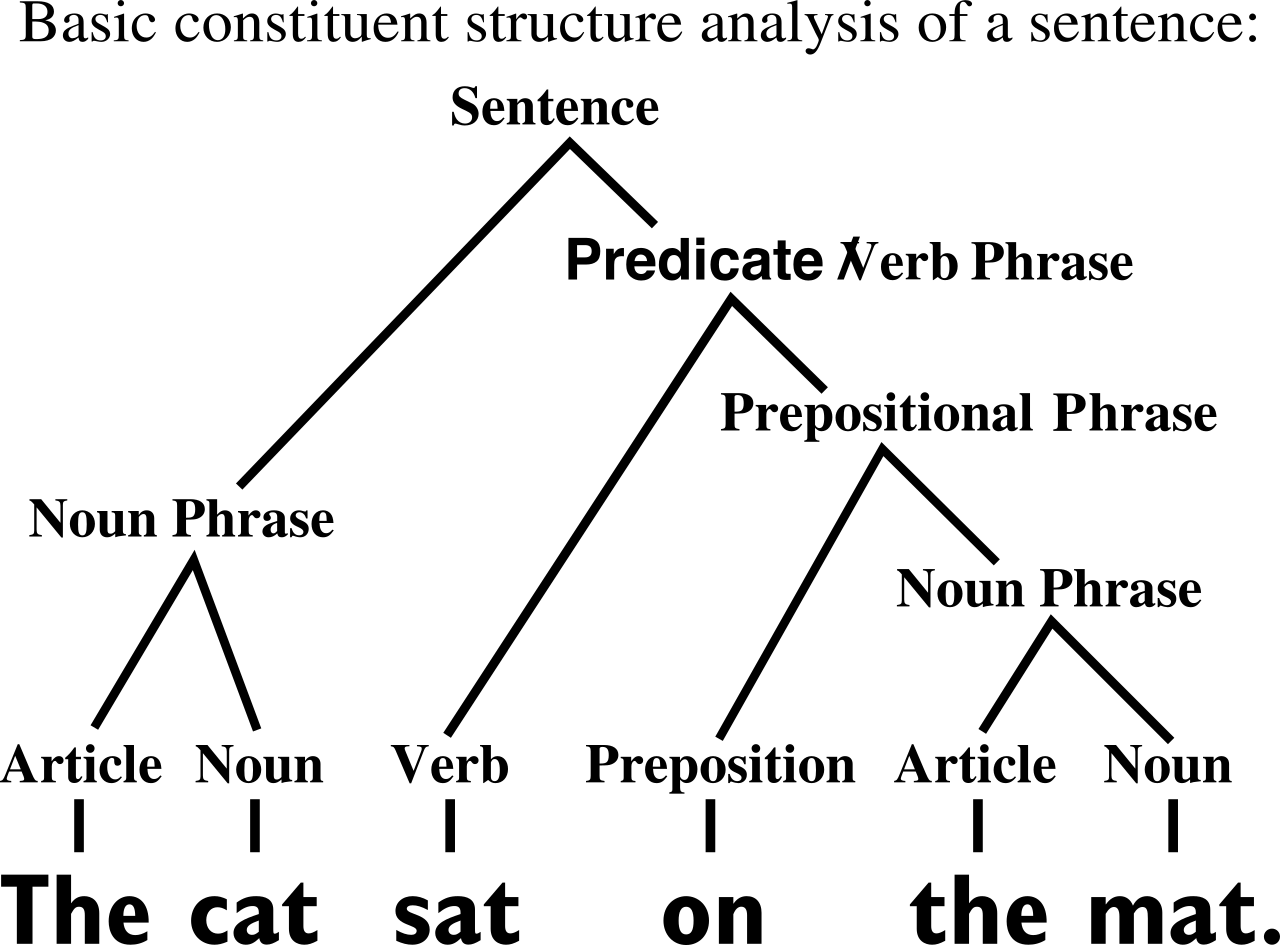
When we combine subjects and predicates, we form clauses. A clause is a cluster of words that always contains both a subject and a conjugated verb. However, not all clauses behave the same way. We divide them into two categories based on their grammatical independence.
The Independent Clause
An independent clause contains a subject and a conjugated verb, and—most importantly—it expresses a complete thought. Because it is grammatically stable, an independent clause can stand alone as a grammatically complete sentence.
The Dependent Clause
A dependent clause also contains a subject and a conjugated verb. However, it does not express a complete thought, which means a dependent clause cannot stand alone as a grammatically complete sentence.
Why does it fail to express a complete thought despite having a subject and a verb? Because it begins with a "trigger" word that forces it to rely on an independent clause. These triggers fall into two categories:
- Subordinating conjunctions: Common subordinating conjunctions include 'because', 'although', 'while', 'if', and 'until'.
- Relative pronouns: Common relative pronouns include 'who', 'whom', 'whose', 'which', and 'that'.
If you write, "While the patient slept," you have a subject (patient) and a verb (slept), but the subordinating conjunction While leaves the reader hanging. It demands an independent clause to finish the thought: "...the nurse checked the monitors."
By combining independent and dependent clauses, we construct the four fundamental sentence structures in the English language.
1. Simple Sentences
A simple sentence contains exactly one independent clause and zero dependent clauses. Do not let the word "simple" fool you; these sentences can be long and contain multiple descriptive phrases, but structurally, they possess only one primary subject-verb relationship that stands alone.
- Example: "The scrub nurse prepared the sterile field."
2. Compound Sentences
A compound sentence contains two or more independent clauses and zero dependent clauses. Think of this as two stable molecules bonded together. Because both clauses are independent, they require strong grammatical glue to hold them. There are two ways to join the independent clauses in a compound sentence:
- They can be joined by a semicolon. (The patient was dehydrated; the doctor ordered IV fluids.)
- They can be joined by a comma followed by a coordinating conjunction.
The FANBOYS Rule The coordinating conjunctions in English are 'for', 'and', 'nor', 'but', 'or', 'yet', and 'so'. The acronym FANBOYS is a mnemonic device used to remember these seven coordinating conjunctions.
3. Complex Sentences
A complex sentence contains exactly one independent clause and one or more dependent clauses. This structure is highly effective for showing cause-and-effect or timing.
- Example: "Because her blood pressure was critically low [dependent], she was transferred to the ICU [independent]."
4. Compound-Complex Sentences
A compound-complex sentence contains two or more independent clauses and one or more dependent clauses. This is the most intricate sentence structure, capable of carrying highly detailed relationships.
- Example: "Although the surgery was long [dependent], the team worked flawlessly [independent], and the patient is now recovering [independent]."
Structural Summary Matrix
| Sentence Type | Independent Clauses | Dependent Clauses |
|---|---|---|
| Simple | Exactly 1 | 0 |
| Compound | 2 or more | 0 |
| Complex | Exactly 1 | 1 or more |
| Compound-Complex | 2 or more | 1 or more |
When the rules of sentence construction are violated, meaning breaks down. On the TEAS exam, you must act as a diagnostician, identifying and correcting three primary pathologies: fragments, run-ons, and comma splices.
Sentence Fragments
A sentence fragment is an incomplete thought incorrectly punctuated as a complete sentence. Fragments occur when a vital anatomical part is missing or misidentified.
A sentence fragment may occur due to:
- A missing main subject: "Walked down the hospital corridor." (Who walked?)
- A missing main verb: "The new batch of antibiotics." (What did they do?)
- Standalone dependent clauses: A dependent clause is categorized as a sentence fragment when punctuated as a standalone sentence. "Because the lab results were delayed."
Run-on Sentences and Comma Splices
If a fragment is a failure to complete a thought, a run-on is a failure to establish boundaries. A run-on sentence incorrectly joins two or more independent clauses without proper punctuation.
There are two specific variations of this error:
- Fused sentence: A fused sentence is a specific type of run-on sentence that joins two independent clauses with absolutely no punctuation between them.
- Incorrect: "The alarm sounded the nurse ran into the room."
- Comma splice: A comma splice is a specific type of run-on sentence that incorrectly joins two independent clauses using only a comma. A comma alone is not strong enough to hold two complete thoughts together.
- Incorrect: "The alarm sounded, the nurse ran into the room."
Correcting Run-ons and Comma Splices
If you encounter a run-on sentence, you have four distinct methods to correct it:
- Create separate sentences: A run-on sentence can be corrected by placing a period between the independent clauses. (The alarm sounded. The nurse ran into the room.)
- Use a semicolon: A run-on sentence can be corrected by placing a semicolon between the independent clauses. (The alarm sounded; the nurse ran into the room.)
- Add a conjunction: A run-on sentence can be corrected by adding a comma and a coordinating conjunction (a FANBOYS word) between the independent clauses. (The alarm sounded, so the nurse ran into the room.)
- Subordinate a clause: A run-on sentence can be corrected by changing one of the independent clauses into a dependent clause. (When the alarm sounded, the nurse ran into the room.)
Capitalization is not merely aesthetic; it is a system of visual cues that signals hierarchy, specificity, and boundaries to the reader.

Sentence Boundaries and Quotes
The most fundamental rule of visual boundaries is that the very first word of a sentence must be capitalized. Additionally, the first word of a direct quotation must be capitalized if the quotation forms a complete sentence.
- Example: The attending physician looked up and said, "We need to operate immediately."
The Noun Divide: Common vs. Proper
Nouns represent the entities in your writing, but they are categorized by their specificity.
- Common nouns name general categories of people, places, or things (e.g., hospital, doctor, syringe). Common nouns are not capitalized in the middle of a sentence.
- Proper nouns name specific individuals, places, organizations, or things (e.g., Mayo Clinic, Dr. Smith, Tylenol). Proper nouns must always be capitalized.
Because they fall under the umbrella of proper nouns, specific brand names and trademarks must be capitalized. The names of languages (e.g., Spanish, Arabic) and the names of nationalities (e.g., Canadian, Japanese) must also be capitalized.
Time, Eras, and Events
Our tracking of time requires specific capitalization rules:
- The names of the days of the week must be capitalized.
- The names of the months of the year must be capitalized.
- The names of specific holidays must be capitalized.
- Seasons: The names of seasons (spring, summer, fall, winter) are not capitalized in general usage. However, the names of seasons are capitalized when they function as part of a specific proper noun (e.g., the Fall Festival, the Winter Olympics).
When referring to history, the names of specific historical eras (e.g., the Bronze Age) and specific historical events (e.g., World War II) must be capitalized.
Titles and Relationships
How we refer to people shifts based on context, which in turn alters capitalization.
- Pronoun 'I': The first-person singular pronoun 'I' must always be capitalized.
- Professional Titles: A professional or honorary title is capitalized when it immediately precedes a person's name (e.g., Nurse Practitioner Evans, Professor Hawking). Conversely, a professional or honorary title is not capitalized when used as a standalone descriptive noun (e.g., The nurse practitioner reviewed the chart.).
- Family Relationships: A family relationship term is capitalized when used in place of a person's proper name (e.g., Please call Mother to the waiting room.). However, a family relationship term is not capitalized when immediately preceded by a possessive pronoun (e.g., Please call my mother to the waiting room.).
Geography and Directions
Capitalization changes depending on whether you are giving directions or naming a region.
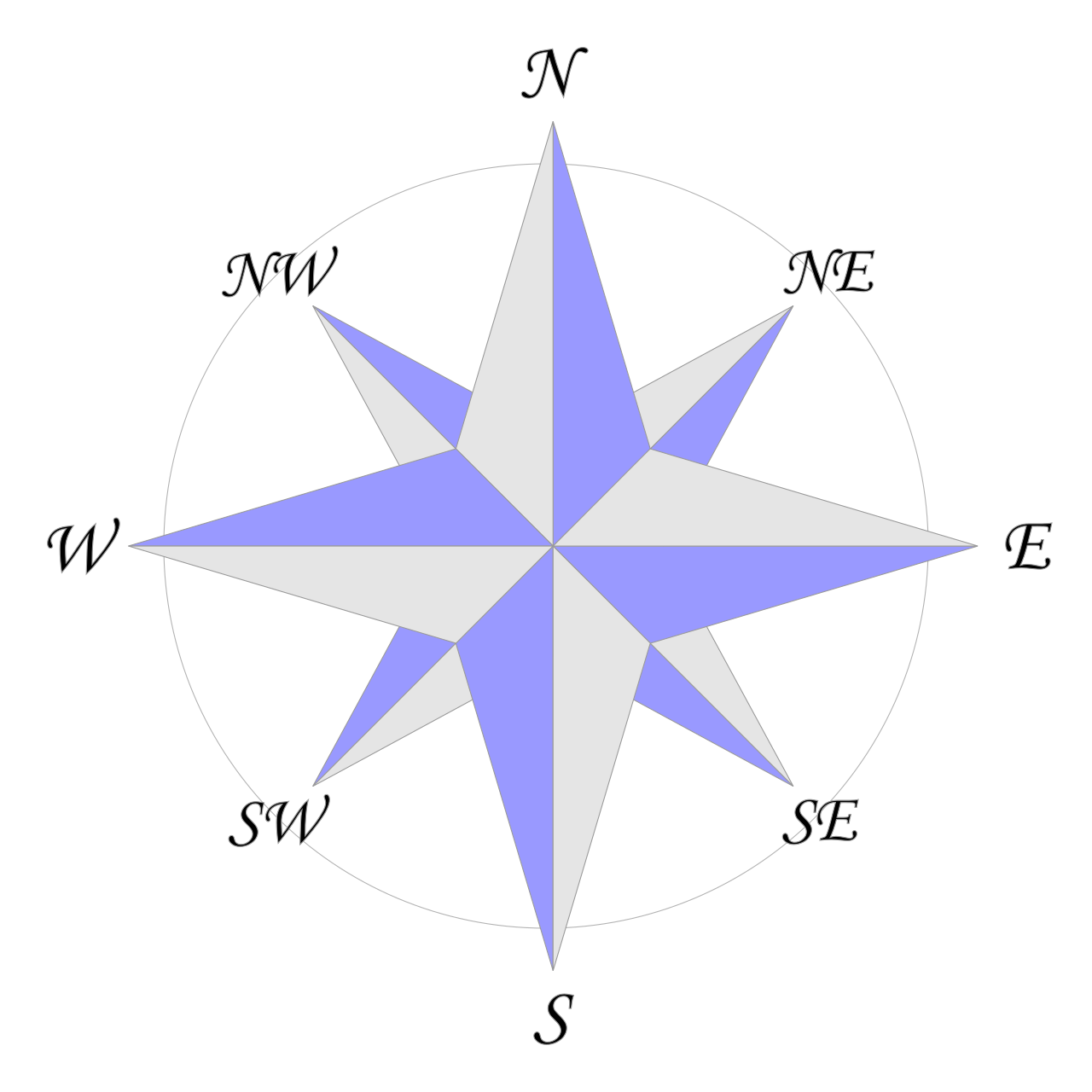
- Compass directions are not capitalized when they merely indicate a physical direction of travel or location (e.g., Drive south on Interstate 95.)
- Compass directions are capitalized when they designate a specific geographical region (e.g., She grew up in the Southern United States.)
Published Works
When citing a textbook, journal article, or novel, title case rules apply.
- The first word in the title of a published work must be capitalized.
- The last word in the title of a published work must be capitalized.
- All major words in the title of a published work must be capitalized.
What constitutes a "minor" word that shouldn't be capitalized?
Articles: The words 'a', 'an', and 'the' function as articles in the English language.
Articles located inside the title of a published work are generally not capitalized. Similarly, short prepositions (like in, on, of) located inside the title of a published work are generally not capitalized, and coordinating conjunctions (FANBOYS) located inside the title of a published work are generally not capitalized.
- Example: The Journal of the American Medical Association (Note that "of" and "the" inside the title remain lowercase).
By mastering these rules, you do more than just prepare for the ATI TEAS 7 exam. You begin practicing the precision, clarity, and attention to detail that the allied health professions demand every single day. Clear grammar is clear thinking, and clear thinking is the foundation of excellent care.